search the site


Maritime safety: Bridging the gap between procedures and onboard performance

During the 17th SAFETY4SEA Athens Forum, Capt. Ioakeim Diplas, Learning Solutions Manager & Subject Matter Expert at OneLearn Global, stressed that regulations, procedures and compliance frameworks such as STCW, MLC and SIRE 2.0 provide essential foundations for maritime safety, but safe operations ultimately depend on people.
He highlighted the importance of understanding human factors, assessing competence in practice and strengthening training to ensure that seafarers can respond effectively to real operational challenges.
The maritime industry does not lack regulations, policies or procedures. We have STCW, the ISM Code, the Maritime Labour Convention (MLC), SIRE 2.0, company procedures, permits to work, checklists and risk assessments. All these frameworks have an important purpose: they support safety. However, having the right procedures in place does not automatically mean that work will be carried out safely.
I believe the real challenge lies in understanding what happens between the written procedure and the person performing the task onboard.
Procedures support safety, but people make safety happen. This distinction should guide how we approach human factors, competence, working conditions and training across the maritime industry.
Looking beyond human error
When reviewing maritime incidents, we often encounter human error as an explanation for what went wrong.
However, identifying that someone made a mistake does not necessarily explain why the mistake occurred or how we can prevent it from happening again.
Instead of focusing only on who made the mistake, we should also examine what influenced that person’s performance at the time.
Was the procedure clear and accessible? Was the seafarer properly trained? Were fatigue, stress or excessive workload involved? Was communication effective? Was the equipment suitable and easy to operate? Did the working environment contribute to the situation?
These questions allow us to understand the circumstances surrounding an incident rather than looking only at the final action.
This does not remove individual responsibility. Instead, it helps us identify the conditions that may have contributed to the error and consider how similar incidents can be prevented.
I believe this is where human factors become particularly important. Understanding how people interact with procedures, equipment, colleagues and their working environment is essential for improving operational safety.
STCW: Certification is only the starting point
The International Convention on Standards of Training, Certification and Watchkeeping for Seafarers (STCW) establishes minimum international requirements for maritime training and competence.
However, holding a valid certificate does not necessarily demonstrate that a seafarer can apply the required knowledge and skills effectively in every operational situation.
Real competence means being able to use that knowledge correctly, safely and when it is needed onboard.
This distinction becomes increasingly important as shipping evolves. Digital technologies, automation and alternative fuels are changing shipboard operations and introducing new demands on seafarers.
Training and competence requirements must therefore reflect the realities of modern vessels.
The ongoing comprehensive review of STCW provides an opportunity to consider how these evolving requirements should be addressed.
Another important development is the introduction, from January 2026, of mandatory training elements concerning the prevention of and response to violence and harassment, including sexual harassment, bullying and sexual assault, within Personal Safety and Social Responsibilities training.
I consider this particularly relevant to safety culture because the way people treat and communicate with each other affects trust, teamwork and their willingness to raise concerns.
A seafarer who does not feel comfortable speaking up when something is wrong may remain silent even when a potential safety risk has been identified.
Competence therefore involves more than technical knowledge. It must also be supported by an environment in which people can communicate openly and work together effectively.
MLC: Working conditions influence performance
We cannot discuss human performance without considering the conditions in which seafarers live and work.
This is where the Maritime Labour Convention becomes closely connected with the objectives of STCW.
While STCW focuses on training and competence, the MLC addresses essential aspects of seafarers’ working and living conditions, including rest, welfare and dignity.
A qualified officer may hold every required certificate and still be affected by fatigue. Similarly, a trained crew member may struggle to perform effectively when experiencing stress, excessive workload or poor communication.
Certification does not eliminate these influences.
If we expect consistently high performance, we must also consider whether working conditions allow seafarers to apply their knowledge and skills effectively.
Rest hours, workload, fatigue management and crew welfare should therefore not be treated as separate matters from operational safety.
Competence and working conditions must be considered together because both influence how people perform onboard.
SIRE 2.0: Assessing how work is actually performed
Another important development is the greater emphasis on human factors and observable performance under SIRE 2.0.
Traditionally, inspection preparation could focus heavily on demonstrating that procedures existed and that crew members were familiar with their content.
However, knowing a procedure and applying it correctly are not necessarily the same thing.
SIRE 2.0 places greater emphasis on human factors and the practical execution of shipboard tasks. Through observations, interviews and the evaluation of performance influencing factors, the inspection process provides a more comprehensive understanding of how personnel, procedures and equipment interact during normal operations.
This changes the questions we should be asking.
Instead of simply checking whether a crew member can describe an emergency procedure, we should consider whether they can recognise the emergency, make the appropriate decisions and take the necessary actions.
When performance does not meet expectations, it is important to examine the circumstances. Was there a problem with communication? Was the procedure difficult to understand? Did workload or fatigue affect performance? Was the equipment or workplace layout a contributing factor?
The objective should not be limited to identifying non-compliance. It should be to understand why performance differed from expectations and what improvements may be necessary.
For me, this reflects an important shift from demonstrating knowledge towards assessing practical capability.
Training must connect knowledge with action
Training and development provide the bridge between knowing what a procedure requires and being able to apply it safely during real operations.
Providing information through a classroom presentation or digital learning course may establish the foundation, but it is not always sufficient to develop practical competence.
We need learning activities that reflect actual shipboard risks, operational conditions and individual development needs.
I believe an effective approach can be described through five simple stages:
- Tell me: Explain the task, procedure and associated risks clearly.
- Show me: Demonstrate how the task should be performed.
- Let me do it: Allow the seafarer to practise and make decisions.
- Give feedback: Identify areas for improvement and provide coaching.
- Do it again: Repeat the activity to reinforce learning and build confidence.
The final stage is particularly important. Repetition allows seafarers to strengthen their skills, correct mistakes and become more confident in applying procedures.
Training should also provide opportunities to respond to realistic situations, rather than focusing exclusively on memorising instructions.
During an emergency, I do not simply want a crew member to explain what the procedure says. I want them to recognise the situation, understand what needs to be done and take appropriate action.
This is the difference between having information and being prepared to use it.
Training should therefore not end when a certificate is issued, nor should it restart only when an inspection or audit is approaching.
Bringing the elements together
I do not see STCW, MLC, SIRE 2.0, human factors and training as separate subjects.
They are interconnected elements of a broader approach to safe performance.
STCW establishes competence requirements. MLC addresses the conditions that influence performance. Human factors help us understand how people interact with their working environment. SIRE 2.0 places greater attention on performance during actual tasks, while training and development help turn knowledge into practical capability.
When these elements are considered together, we can better understand what seafarers need to perform safely and how the organisation can support them.
The objective should be to close the gap between written requirements and onboard behaviour.
This means ensuring that procedures are clear, people understand the risks, training reflects actual operations and working conditions support safe performance.
Preparing crews for the unexpected
Ultimately, the goal of maritime safety should not be limited to preparing vessels and crews for the next inspection or audit.
We need to prepare people for the next unexpected situation.
An effective safety system should enable seafarers to recognise risks, understand the necessary controls, apply procedures correctly and feel confident speaking up when something is wrong.
When a crew member understands the risk, can apply the appropriate control and feels able to raise a concern, regulations have moved beyond the written page and become part of everyday onboard practice.
I believe this is the direction we should pursue: moving from compliance towards practical competence, from identifying human error towards understanding performance, and from providing training towards ensuring that people can act safely when it matters most.
Because, ultimately, regulations and procedures support safety, but it is people who make safety happen.
Above article has been edited from Capt. Ioakeim Diplas’ presentation during the 2026 SAFETY4SEA Athens Forum
source : safety4sea
Featured Post
 জাহাজ নির্মাণ শিল্প: হাতছাড়া হচ্ছে অপার সম্ভাবনা
 গোলাম সোহরাওয়ার্দি প্রকাশ : ২৭ অক্টোবর ২০২৬, ০৮: ০৪আপডেট : ২৭ অক্টোবর ২০২৬, ০৯: ২৪ সারা বিশ্ব এখন জাহাজ নির্মাণের এক বিশাল জোয়ার দেখছে। চীন, দক্ষিণ কোরিয়া ও জাপানের মতো দেশগুলো এ খাত থেকে বিপুল মুনাফা কামিয়ে নিচ্ছে। নতুন বাণিজ্যিক পথ তৈরি, জাহাজের […]
 Worldwide Shipbuilding Boom and Bangladesh’s Lost Opportunity: How Financial Mismanagement, Loan Defaults, and Weak Governance Crippled a Promising Industry
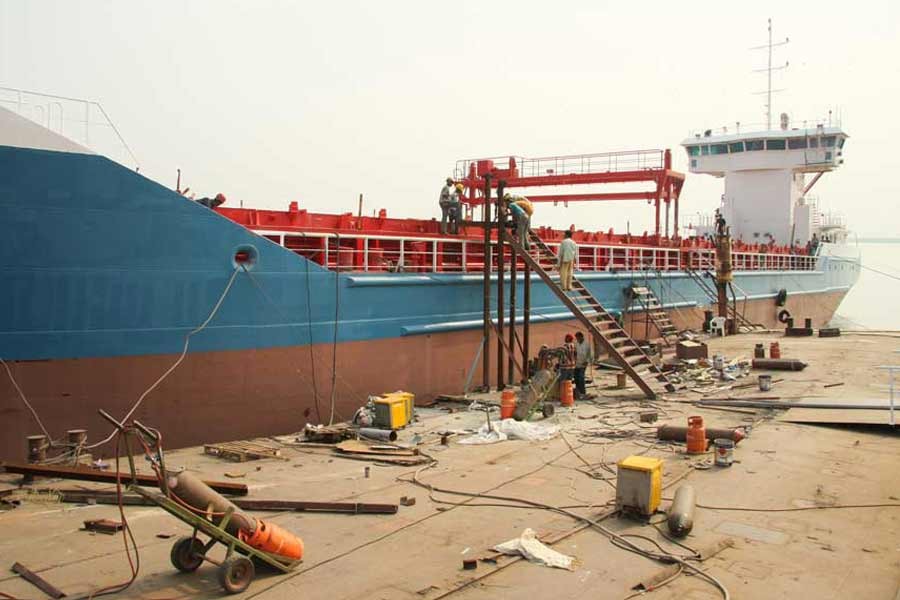
An investigative analysis by Ghulam Suhrawardi Today, the world is witnessing one of the largest shipbuilding booms in history. Many countries are profiting from it. China, South Korea, and Japan have benefited from increased demand for new vessels due to fleet renewal, changing trade routes, environmental regulations, and strong financial […]



JOB SITES
CONTENTS
LINKS
Happy New Year

Découvrez les avantages de MadCasino
Dans le monde des casinos en ligne, MadCasino se distingue par ses offres attrayantes et ses services de qualité. Que vous soyez un joueur débutant ou un parieur aguerri, vous trouverez ici une variété de jeux qui sauront satisfaire toutes vos envies. Les machines à sous, les jeux de table et les options de paris en direct sont tous disponibles pour vous offrir une expérience de jeu inégalée. De plus, le casino propose régulièrement des bonus qui permettent d'augmenter vos chances de gagner, vous offrant ainsi une excellente opportunité de maximiser vos gains.
En matière de sécurité, MadCasino est un nom de confiance. Il est entièrement licencié et régulé, ce qui garantit un environnement de jeu sûr et équitable. Les joueurs peuvent se concentrer sur leur expérience de jeu sans se soucier des problèmes de sécurité. Les transactions financières sont également sécurisées grâce à des technologies de pointe.
Les jeux proposés par MadCasino sont issus des développeurs les plus réputés de l'industrie, vous assurant des graphismes époustouflants et des mécaniques de jeu innovantes. Les joueurs peuvent également profiter d'une expérience de jeu en direct qui simule l'atmosphère d'un casino terrestre, tout en restant dans le confort de leur maison.
Enfin, la plateforme de MadCasino est optimisée pour les appareils mobiles, permettant aux joueurs de parier à tout moment et de n'importe où. Que vous soyez sur votre smartphone ou votre tablette, l'accès à vos jeux préférés n'a jamais été aussi simple. Ne manquez pas l'opportunité de découvrir ce casino exceptionnel.
Les offres de Cresus Casino
Cresus Casino est un autre acteur majeur dans le domaine des jeux en ligne, offrant des promotions généreuses et une vaste sélection de jeux. Les joueurs peuvent profiter d'une expérience de jeu enrichissante grâce aux nombreux bonus disponibles, qui sont conçus pour attirer tant les nouveaux utilisateurs que les joueurs réguliers. Ces avantages permettent non seulement de prolonger votre temps de jeu, mais aussi d'augmenter vos chances de gains conséquents.
Le casino se distingue également par sa ludothèque impressionnante, comprenant une sélection variée de machines à sous, de jeux de table et de jeux en direct. Les clients peuvent choisir parmi des titres populaires et appréciés, ainsi que des nouveautés qui enrichissent constamment l'offre. L'interface utilisateur est conviviale, rendant la navigation sur la plateforme fluide et agréable.
En termes de sécurité, Cresus Casino assure à ses joueurs un environnement de jeu fiable. La plateforme utilise des protocoles de sécurité avancés pour protéger les données personnelles et financières des utilisateurs. Cela permet aux joueurs de se sentir en sécurité tout en jouant à leurs jeux préférés.
Avec un service client réactif et professionnel, Cresus Casino s'assure que toutes vos questions et préoccupations sont traitées rapidement. Que ce soit pour des questions concernant les bonus, les retraits ou les jeux, vous bénéficierez d'une assistance rapide et efficace.
Explorez Nine Casino et ses avantages
Dans l'univers des casinos en ligne, Nine Casino a su se faire une place de choix grâce à son approche innovante et à ses nombreux avantages pour les joueurs. Les utilisateurs peuvent s'attendre à une expérience de jeu enrichissante, avec des bonus attractifs qui sont régulièrement mis à jour. Ces offres sont une excellente façon de découvrir de nouveaux jeux tout en maximisant votre potentiel de gain.
La plateforme de Nine Casino est riche en options de jeux, allant des machines à sous aux jeux de table, en passant par le live casino. Chaque jeu est conçu pour offrir une expérience immersive grâce à des graphismes de haute qualité et des fonctionnalités innovantes. Les parieurs peuvent profiter de sessions de jeu captivantes, comme s'ils étaient dans un véritable casino.
La sécurité est une priorité pour Nine Casino, qui utilise des technologies de cryptage avancées pour protéger les informations de ses joueurs. Cela garantit un environnement de jeu sûr et fiable, permettant aux utilisateurs de se concentrer sur ce qu'ils aiment le plus : jouer.
Enfin, le service clientèle fourni par Nine Casino est exceptionnel, avec des agents disponibles pour répondre à toutes vos questions et résoudre vos problèmes. Vous pourrez ainsi jouer en toute tranquillité, sachant que votre satisfaction est au cœur de leurs préoccupations.
Profitez de l'expérience Lucky31
Lucky31 est un casino en ligne qui se distingue par son approche orientée vers le joueur, offrant une multitude d'options de jeux et des bonus généreux. Que vous soyez amateur de machines à sous ou passionné de jeux de table, vous trouverez une large sélection pour satisfaire toutes vos envies de jeu. Les promotions fréquentes permettent aux joueurs de prolonger leur expérience tout en augmentant leurs chances de gains.
La convivialité de la plateforme de Lucky31 est l'un de ses plus grands atouts. Les joueurs peuvent naviguer facilement entre les différents jeux, et l'interface est conçue pour être intuitive, quel que soit le niveau d'expérience de l'utilisateur. De plus, le casino est entièrement optimisé pour les appareils mobiles, ce qui permet de parier où que vous soyez.
En matière de sécurité, Lucky31 prend les préoccupations des joueurs très au sérieux. Le casino est agréé et régulé, garantissant un environnement de jeu équitable et sécurisé. Les joueurs peuvent ainsi se concentrer sur leur expérience de jeu sans se soucier des risques liés à la sécurité.
Pour ceux qui recherchent un support client efficace, Lucky31 offre un service réactif et professionnel. Que ce soit pour des questions sur les bonus, les jeux ou les paiements, vous aurez accès à une assistance de qualité, vous garantissant une expérience de jeu fluide et agréable.