search the site


Crew welfare is a safety decision: Protecting people, preventing losses

During the 17th SAFETY4SEA Athens Forum, Capt. Konstantinos G. Karavasilis, Regional Director, Loss Prevention at UK P&I Club, addressed how fatigue, stress, isolation and reluctance to speak up can undermine safe performance.
He also explained how practical leadership can help identify concerns before they escalate into incidents and highlighted the growing impact of geopolitical conflicts on crew wellbeing and the need to involve all seafarers in safety decisions.
When discussing maritime safety and leadership, we tend to focus on Masters, Chief Engineers and other senior officers. However, we often overlook the Bosun, Able Seafarer, Motorman, Oiler or Assistant Cook. These people are equally important members of the crew. They have responsibilities, experience and knowledge, and they also make decisions that can affect safety onboard.
I believe we need to recognise that safety is everyone’s responsibility, and crew welfare must be part of every safety decision.
We cannot expect consistently good decisions or safe performance without considering the physical and psychological condition of the people working onboard.
Rest, health, trust and access to support influence attention, communication and judgement. In turn, these factors affect our ability to identify risks, raise concerns and apply appropriate safety controls before an incident occurs.
How crew welfare has changed
Drawing on 15 years of seagoing experience on bulk carriers and cruise ships, I have witnessed significant changes in working and living conditions onboard.
In the 1990s, a vessel might spend 15 days in a port such as Paranaguá, Brazil. After completing our duties, we often had time to go ashore, explore the surrounding area and experience different places and cultures.
Shore leave was an important part of our lives. We could visit cities, socialise and look forward to discovering new destinations.
Today, the same vessel may spend only 48 hours in port. Turnaround times are much shorter, terminals are often located far from city centres, and shore leave may be restricted or practically impossible.
I remember visiting Vitória, Brazil, when the terminal was only a short walk from the city centre. In comparison, some modern terminals are located considerable distances from urban areas, making even a brief visit ashore difficult.
Crewing arrangements vary between vessels and trades. The essential consideration is whether the personnel available, their competence and the organisation of work allow operations to be conducted safely, with sufficient opportunity for rest and recovery.
At the same time, operational demands have increased, leaving less opportunity for rest and recreation.
We did not necessarily have the connectivity, entertainment or facilities available on many vessels today. Nevertheless, I remember enjoying life onboard, learning seamanship and looking forward to the next port.
I am not suggesting that crew welfare was necessarily better in the past. It was different.
Today, we need to understand what welfare means within the realities of modern shipping, where shorter port stays, smaller crews and increasing operational demands can limit opportunities for recovery.
When seafarers are physically and mentally well, they are better able to make decisions, communicate effectively and contribute to smoother vessel operations.
This is why welfare should not be treated as something separate from safety management.
Everyone onboard has a role in crew wellbeing
Recognising concerns before an incident occurs requires attention to changes in behaviour and performance.
Poor sleep, irritability, withdrawal or repeated lapses in concentration may indicate that someone is struggling with their working conditions or personal circumstances.
However, identifying these concerns should not be the responsibility of the Master alone.
We need to encourage and prepare everyone onboard to look after colleagues, ask questions and raise concerns when something appears wrong.
The Master and senior officers have important leadership responsibilities, but they cannot observe every interaction or identify every developing problem.
Other crew members may notice changes earlier because they work and live closely together.
This is particularly relevant as modern crews become increasingly multinational.
I remember serving onboard a Greek-flagged vessel in 1994 with 16 Greek and nine Indian seafarers. Today, it is common to find four, five or six nationalities working together on the same ship.
I consider this cultural diversity a positive development. Working with people from different backgrounds provides opportunities to learn from one another.
However, it also introduces challenges that extend beyond the ability to communicate in English.
Different cultural traditions, religious practices, expectations and ways of socialising can influence relationships onboard.
For example, crew members may have different approaches to religious celebrations or alcohol consumption. These differences should not become reasons for exclusion or misunderstanding.
We need to recognise that each person has their own background, personality and expectations.
The Assistant Cook deserves to be heard just as much as a senior officer. Everyone should feel part of the team and confident that their concerns will be taken seriously.
Recognising changes in a colleague’s behaviour should lead to a supportive conversation and, where appropriate, confidential professional assistance; crew members should not be expected to diagnose mental-health conditions.
Making welfare part of everyday safety controls
Crew welfare becomes meaningful when it is reflected in practical decisions onboard.
It should influence how we plan operations, distribute workloads, manage rest and assess whether the crew is ready to perform particular tasks.
When preparing a job, we need to consider not only whether the required personnel are available, but whether they are sufficiently rested, properly informed and capable of completing the work safely.
Rest-hour records alone may not tell the whole story. We must also consider actual recovery time, interruptions and the cumulative effects of workload.
Similarly, an effective briefing should allow crew members to identify concerns, clarify responsibilities and question whether the proposed plan is realistic.
I believe speaking up must become operationally useful.
It is not enough to encourage seafarers to raise concerns if nobody responds when they do.
When someone identifies a problem, we should examine the issue, consider whether the plan needs to change and explain what action has been taken.
This approach requires practical leadership and an understanding that the conditions affecting people are directly connected with the strength of our safety controls.
Geopolitical conflicts add another layer of pressure
The challenges facing seafarers become even more complex when vessels operate in areas affected by geopolitical instability and armed conflict.
Consider a ship preparing to transit the Strait of Hormuz, sail towards Ukraine to load grain or operate in waters where security threats have increased.
These situations create several overlapping risks.
There are direct threats, including attacks, damage to the vessel, disruption to operations and possible restrictions on external assistance.
There are also operational pressures, such as uncertain navigation conditions, additional watches, prolonged security alerts and changes to established procedures.
However, we should not overlook the human consequences.
Crew members may experience fear, anxiety about possible attacks, concern for their families, uncertainty over relief arrangements and difficulty resting or recovering.
These pressures can influence concentration and judgement, particularly when combined with the normal demands of working onboard.
Seafaring is already a demanding profession. Spending months away from home, living and working in a confined environment and dealing with uncertainty require considerable resilience.
When armed conflict is added to these conditions, we must recognise that the psychological burden on crews may increase significantly.
Security risk assessments must therefore consider not only the threats to the vessel, but also whether the people onboard are prepared and capable of managing those threats.
Risk assessments must reflect the actual vessel and crew
Security intelligence, threat advisories and company policies are essential tools for assessing risk.
However, the decisions made ashore must be relevant to the specific vessel, voyage and crew involved.
A general advisory cannot replace an assessment of the actual operating conditions.
We need to consider the route, available alternatives, ship capabilities, equipment, crew readiness and the assistance that may be available if an incident occurs.
The information used should also be assessed for its source, timing, relevance and reliability.
Most importantly, decisions should not be based solely on company policy or general assumptions about a particular trading area.
A vessel preparing for a high-risk transit with an experienced, well-rested crew may face different operational challenges from another ship whose crew is fatigued or unfamiliar with the vessel.
The assessment must reflect these differences.
This also raises an important question about the responsibility placed on the Master.
Although decisions and instructions may originate from shore-based management, the Master is often expected to make or implement critical decisions onboard.
We should therefore ask whether the Master has the information, authority and support necessary to make those decisions effectively.
The Master’s overriding authority on safety matters must be respected, while the company remains responsible for providing the resources, information and shore-based support needed for safe decisions and their implementation.
Preparing for emergencies and changing conditions
Effective preparation should consider both the immediate response to a security incident and what happens afterwards.
Onboard, crew members need to understand threat-specific procedures, individual responsibilities, first-aid arrangements and available backup measures.
Ashore, companies should establish clear decision-making responsibilities, emergency contacts and arrangements for communicating with families.
Following an incident, appropriate medical assistance, practical support and assessment of the crew’s recovery needs are equally important.
However, even a well-prepared plan may need to change.
Consider a vessel preparing to enter a high-risk area. A new security advisory has been issued, several crew members have experienced disrupted sleep and a relief officer has recently joined the vessel.
The officer may be properly qualified but unfamiliar with the ship, its procedures or the expectations of the crew.
Individually, these circumstances may appear manageable. Together, they can significantly affect the vessel’s readiness.
We should therefore reassess whether the crew can safely implement the protective measures required for the voyage.
If important gaps are identified, additional precautions, changes to the plan or consideration of an alternative route or delayed transit may be necessary.
The key is to recognise that a risk assessment must remain responsive to changing conditions, rather than becoming a document that is completed once and then followed without further consideration.
Three questions every ship should ask
I believe there are three practical questions we should take back onboard.
First, are we listening? Can any crew member, regardless of rank, raise a concern and expect it to be considered and acted upon?
Second, are we ready? Do the crew, equipment and shore-based support teams have the capabilities and arrangements needed to respond to the risks involved?
Third, are we prepared to change the plan? When the situation changes, whether through a new threat, equipment problem or reduced crew capacity, are we willing to reassess our decisions?
These questions should apply to everyone onboard.
We should not expect the Master to identify every concern, solve every problem and carry the entire responsibility for the vessel’s safety.
Every seafarer has a role to play, and effective leadership means creating the conditions for the whole crew to contribute.
Protecting people means preventing losses
The maritime industry is becoming increasingly complex, with many crews facing demanding schedules, diverse operational pressures and geopolitical uncertainty.
In this environment, safety management cannot focus exclusively on procedures, equipment and technical risks.
We need to understand the people who operate our ships, the pressures they experience and how those conditions influence their ability to perform safely.
Crew welfare should therefore be considered throughout operational planning, risk assessment, communication and emergency preparedness.
Protecting people and preventing losses are not separate objectives. They are closely connected.
source : safety4sea
Featured Post
 জাহাজ নির্মাণ শিল্প: হাতছাড়া হচ্ছে অপার সম্ভাবনা
 গোলাম সোহরাওয়ার্দি প্রকাশ : ২৭ অক্টোবর ২০২৬, ০৮: ০৪আপডেট : ২৭ অক্টোবর ২০২৬, ০৯: ২৪ সারা বিশ্ব এখন জাহাজ নির্মাণের এক বিশাল জোয়ার দেখছে। চীন, দক্ষিণ কোরিয়া ও জাপানের মতো দেশগুলো এ খাত থেকে বিপুল মুনাফা কামিয়ে নিচ্ছে। নতুন বাণিজ্যিক পথ তৈরি, জাহাজের […]
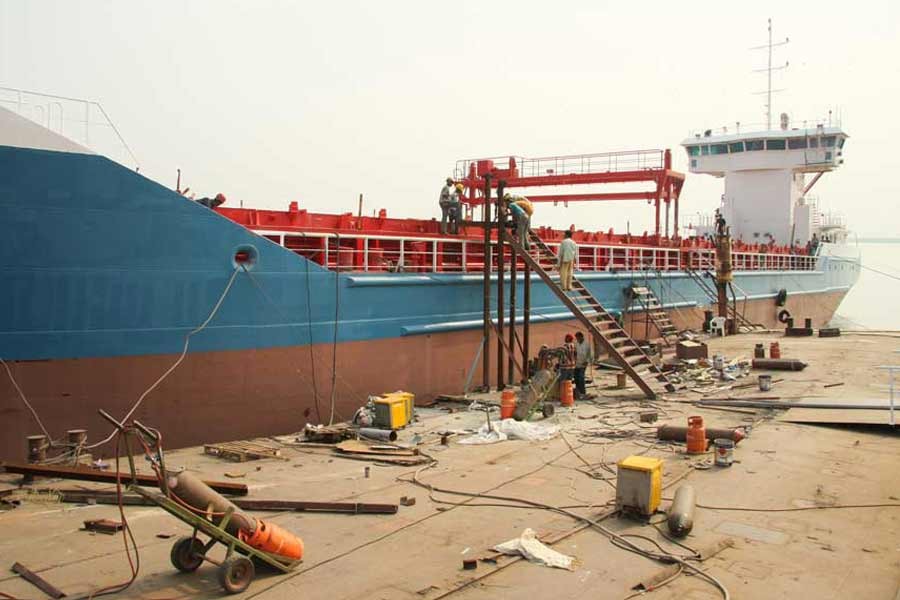 Worldwide Shipbuilding Boom and Bangladesh’s Lost Opportunity: How Financial Mismanagement, Loan Defaults, and Weak Governance Crippled a Promising Industry
An investigative analysis by Ghulam Suhrawardi Today, the world is witnessing one of the largest shipbuilding booms in history. Many countries are profiting from it. China, South Korea, and Japan have benefited from increased demand for new vessels due to fleet renewal, changing trade routes, environmental regulations, and strong financial […]



JOB SITES
CONTENTS
LINKS
Happy New Year

Découvrez les avantages de MadCasino
Dans le monde des casinos en ligne, MadCasino se distingue par ses offres attrayantes et ses services de qualité. Que vous soyez un joueur débutant ou un parieur aguerri, vous trouverez ici une variété de jeux qui sauront satisfaire toutes vos envies. Les machines à sous, les jeux de table et les options de paris en direct sont tous disponibles pour vous offrir une expérience de jeu inégalée. De plus, le casino propose régulièrement des bonus qui permettent d'augmenter vos chances de gagner, vous offrant ainsi une excellente opportunité de maximiser vos gains.
En matière de sécurité, MadCasino est un nom de confiance. Il est entièrement licencié et régulé, ce qui garantit un environnement de jeu sûr et équitable. Les joueurs peuvent se concentrer sur leur expérience de jeu sans se soucier des problèmes de sécurité. Les transactions financières sont également sécurisées grâce à des technologies de pointe.
Les jeux proposés par MadCasino sont issus des développeurs les plus réputés de l'industrie, vous assurant des graphismes époustouflants et des mécaniques de jeu innovantes. Les joueurs peuvent également profiter d'une expérience de jeu en direct qui simule l'atmosphère d'un casino terrestre, tout en restant dans le confort de leur maison.
Enfin, la plateforme de MadCasino est optimisée pour les appareils mobiles, permettant aux joueurs de parier à tout moment et de n'importe où. Que vous soyez sur votre smartphone ou votre tablette, l'accès à vos jeux préférés n'a jamais été aussi simple. Ne manquez pas l'opportunité de découvrir ce casino exceptionnel.
Les offres de Cresus Casino
Cresus Casino est un autre acteur majeur dans le domaine des jeux en ligne, offrant des promotions généreuses et une vaste sélection de jeux. Les joueurs peuvent profiter d'une expérience de jeu enrichissante grâce aux nombreux bonus disponibles, qui sont conçus pour attirer tant les nouveaux utilisateurs que les joueurs réguliers. Ces avantages permettent non seulement de prolonger votre temps de jeu, mais aussi d'augmenter vos chances de gains conséquents.
Le casino se distingue également par sa ludothèque impressionnante, comprenant une sélection variée de machines à sous, de jeux de table et de jeux en direct. Les clients peuvent choisir parmi des titres populaires et appréciés, ainsi que des nouveautés qui enrichissent constamment l'offre. L'interface utilisateur est conviviale, rendant la navigation sur la plateforme fluide et agréable.
En termes de sécurité, Cresus Casino assure à ses joueurs un environnement de jeu fiable. La plateforme utilise des protocoles de sécurité avancés pour protéger les données personnelles et financières des utilisateurs. Cela permet aux joueurs de se sentir en sécurité tout en jouant à leurs jeux préférés.
Avec un service client réactif et professionnel, Cresus Casino s'assure que toutes vos questions et préoccupations sont traitées rapidement. Que ce soit pour des questions concernant les bonus, les retraits ou les jeux, vous bénéficierez d'une assistance rapide et efficace.
Explorez Nine Casino et ses avantages
Dans l'univers des casinos en ligne, Nine Casino a su se faire une place de choix grâce à son approche innovante et à ses nombreux avantages pour les joueurs. Les utilisateurs peuvent s'attendre à une expérience de jeu enrichissante, avec des bonus attractifs qui sont régulièrement mis à jour. Ces offres sont une excellente façon de découvrir de nouveaux jeux tout en maximisant votre potentiel de gain.
La plateforme de Nine Casino est riche en options de jeux, allant des machines à sous aux jeux de table, en passant par le live casino. Chaque jeu est conçu pour offrir une expérience immersive grâce à des graphismes de haute qualité et des fonctionnalités innovantes. Les parieurs peuvent profiter de sessions de jeu captivantes, comme s'ils étaient dans un véritable casino.
La sécurité est une priorité pour Nine Casino, qui utilise des technologies de cryptage avancées pour protéger les informations de ses joueurs. Cela garantit un environnement de jeu sûr et fiable, permettant aux utilisateurs de se concentrer sur ce qu'ils aiment le plus : jouer.
Enfin, le service clientèle fourni par Nine Casino est exceptionnel, avec des agents disponibles pour répondre à toutes vos questions et résoudre vos problèmes. Vous pourrez ainsi jouer en toute tranquillité, sachant que votre satisfaction est au cœur de leurs préoccupations.
Profitez de l'expérience Lucky31
Lucky31 est un casino en ligne qui se distingue par son approche orientée vers le joueur, offrant une multitude d'options de jeux et des bonus généreux. Que vous soyez amateur de machines à sous ou passionné de jeux de table, vous trouverez une large sélection pour satisfaire toutes vos envies de jeu. Les promotions fréquentes permettent aux joueurs de prolonger leur expérience tout en augmentant leurs chances de gains.
La convivialité de la plateforme de Lucky31 est l'un de ses plus grands atouts. Les joueurs peuvent naviguer facilement entre les différents jeux, et l'interface est conçue pour être intuitive, quel que soit le niveau d'expérience de l'utilisateur. De plus, le casino est entièrement optimisé pour les appareils mobiles, ce qui permet de parier où que vous soyez.
En matière de sécurité, Lucky31 prend les préoccupations des joueurs très au sérieux. Le casino est agréé et régulé, garantissant un environnement de jeu équitable et sécurisé. Les joueurs peuvent ainsi se concentrer sur leur expérience de jeu sans se soucier des risques liés à la sécurité.
Pour ceux qui recherchent un support client efficace, Lucky31 offre un service réactif et professionnel. Que ce soit pour des questions sur les bonus, les jeux ou les paiements, vous aurez accès à une assistance de qualité, vous garantissant une expérience de jeu fluide et agréable.