search the site


Beyond human error: Why maritime safety must address the conditions behind mistakes

A new scientific review challenges the traditional focus on individual human error in maritime accidents, calling for a more systematic approach to prevention that addresses organisational, operational and technological conditions.
Human error has long been recognised as an important contributor to maritime accidents. Yet identifying an error does not necessarily explain why an accident occurred, nor does it establish what could have prevented it. The study, titled ”Human factors in maritime safety: An integrative narrative review of cognitive, behavioural and organisational determinants”, was conducted by Panagiotis Nikiteas and George Boustras of the European University of Cyprus.
Drawing on 20 core maritime research sources, supported by additional theoretical and cross-industry literature, the researchers examine how human performance interacts with work organisation, technology, environmental conditions, leadership and organisational culture.
Their central argument is that human error should not automatically be treated as the root cause of an accident. Instead, it may be the visible outcome of multiple interacting conditions, many of which originate well beyond the individual seafarer.
This distinction has significant implications for accident investigation, safety management systems and the design of preventive measures.
Four findings that challenge conventional approaches to human error
1. Fatigue is a consequence of working conditions, not simply individual behaviour
Fatigue emerges as one of the most consistently documented human-factor concerns in maritime operations.
However, the research highlights that fatigue cannot be adequately understood or managed solely through individual alertness, training or compliance with work-rest schedules.
Crew scheduling, inadequate recovery opportunities, noise exposure, circadian disruption, staffing arrangements and commercial pressures can all contribute to fatigue-related risks.
The review also identifies a potentially important gap in accident investigations. One study examined by the authors found that fatigue was formally identified in only 5.6% of the marine casualty reports analysed, raising concerns about its possible under-recognition as a contributing factor.
This does not establish the actual proportion of accidents involving fatigue. Rather, it suggests that conventional investigation and reporting practices may not always capture the underlying conditions affecting human performance.
The practical implication: Effective fatigue management requires attention to how work is organised, not simply whether documented rest-hour requirements have been satisfied.
2. Communication failures extend beyond language barriers
Communication problems are frequently associated with multinational crews, but the review identifies a more complex set of contributing factors.
Language proficiency is only one dimension. Hierarchical relationships, cultural expectations, command structures and the willingness of junior crew members to challenge decisions can also influence operational communication.
A crew member may understand an instruction perfectly yet remain reluctant to question it, even when recognising a potential safety concern.
The researchers highlight the importance of closed-loop communication, clear operational responsibilities and environments in which concerns can be raised without fear of negative consequences.
The practical implication: Communication competence should not be assessed only through language training. It must also include team coordination, leadership behaviour, effective challenge procedures and psychological safety.
3. Safety culture determines whether organisations recognise emerging risks
The review identifies organisational culture as a critical influence on how risks are recognised, reported and addressed.
Near misses, unsafe conditions and operational difficulties provide valuable opportunities for prevention. However, their usefulness depends on whether personnel feel able to report them and whether organisations respond constructively.
Punitive reporting environments, weak feedback mechanisms and commercial pressures can discourage the disclosure of safety concerns.
Consequently, the absence of reported problems does not necessarily demonstrate the absence of underlying risks.
The researchers argue that safety management systems must move beyond documenting incidents and corrective actions toward understanding the organisational conditions that allow problems to develop or remain undetected.
The practical implication: The effectiveness of an SMS depends not only on the procedures it contains, but also on the quality of reporting, organisational learning, leadership accountability and preventive follow-up.
4. Human error reflects interactions across multiple levels of the safety system
Perhaps the most important finding is that maritime accidents rarely emerge from a single, isolated factor.
Fatigue may affect situational awareness. Communication barriers may prevent concerns from being raised. Organisational pressures may encourage unsafe adaptations, while poorly designed interfaces or excessive alarm loads may increase cognitive demands.
These conditions can interact and reinforce one another.
The review also addresses the growing implications of digitalisation and automation.
Rather than eliminating human-related risks, increasing automation may redistribute them toward system supervision, exception management, human-machine interaction and coordination between ships and shore-based operations.
Seafarers and shore-based personnel may therefore face new competence and decision-making requirements, particularly when automated systems fail or require unexpected human intervention.
The practical implication: Accident prevention must consider how people, technology, work processes and organisational decisions interact, rather than treating individual errors as independent events.
From accident investigation to preventive diagnosis
One of the study’s most practical contributions is a proposed preventive diagnostic framework that connects different levels of the maritime safety system with observable risk conditions, assessment indicators and possible preventive actions.
The framework encourages maritime organisations to identify the conditions that make errors more likely before those conditions contribute to an accident.
The following table presents an adapted version of the researchers’ preventive diagnostic matrix.

The authors emphasise that this framework is a conceptual tool derived from the literature, rather than a validated assessment instrument. Its effectiveness and predictive value require further evaluation in operational maritime environments.
Nevertheless, it offers a useful starting point for companies seeking to broaden their approach to human-factor risk management.
What should maritime safety management do differently?
The findings point toward a fundamental distinction between correcting mistakes and preventing the conditions that produce them.
Traditional corrective actions frequently focus on additional training, revised procedures, increased supervision or reminders to exercise greater care.
Such measures may be necessary, but they can be insufficient when the underlying problems involve work design, operational pressures, organisational culture or technology.
For example, additional fatigue-awareness training is unlikely to address risks caused by inadequate recovery opportunities. Communication training may have limited impact where crew members fear challenging authority. Similarly, automation training cannot fully compensate for poorly designed interfaces or unclear responsibilities.
This does not diminish individual accountability or the importance of professional competence. Rather, it recognises that safe performance depends on both individual capabilities and the operating environment in which those capabilities are exercised.
The study also acknowledges an important limitation in the current research: although recurring human-factor conditions are well documented, stronger evidence is still needed to establish which organisational and preventive interventions are most effective.
This creates an important challenge for maritime safety management: moving beyond identifying contributing factors toward measuring whether preventive actions genuinely improve operational performance.
The broader lesson: Prevention must address the system, not only the individual
The significance of this review lies less in identifying entirely new human-factor risks and more in bringing together existing evidence into a coherent prevention-oriented approach.
Its message is particularly relevant as shipping becomes increasingly digitalised and operational decisions involve more complex interactions between seafarers, shore-based personnel and automated systems.
For maritime organisations, the central question should no longer be limited to identifying who made a mistake or which procedure was not followed.
It should also examine why the mistake became possible, which organisational or technical conditions contributed to it, and what could be changed to reduce the likelihood of recurrence.
Ultimately, improving maritime safety requires more than improving individual human performance. It requires creating the conditions in which safe performance becomes the natural outcome of how work is designed, managed and carried out.
The challenge for the industry is whether safety management systems are sufficiently focused on preventing the conditions behind human error, or remain primarily designed to identify, document and correct mistakes after they occur.
Featured Post
 জাহাজ নির্মাণ শিল্প: হাতছাড়া হচ্ছে অপার সম্ভাবনা
 গোলাম সোহরাওয়ার্দি প্রকাশ : ২৭ অক্টোবর ২০২৬, ০৮: ০৪আপডেট : ২৭ অক্টোবর ২০২৬, ০৯: ২৪ সারা বিশ্ব এখন জাহাজ নির্মাণের এক বিশাল জোয়ার দেখছে। চীন, দক্ষিণ কোরিয়া ও জাপানের মতো দেশগুলো এ খাত থেকে বিপুল মুনাফা কামিয়ে নিচ্ছে। নতুন বাণিজ্যিক পথ তৈরি, জাহাজের […]
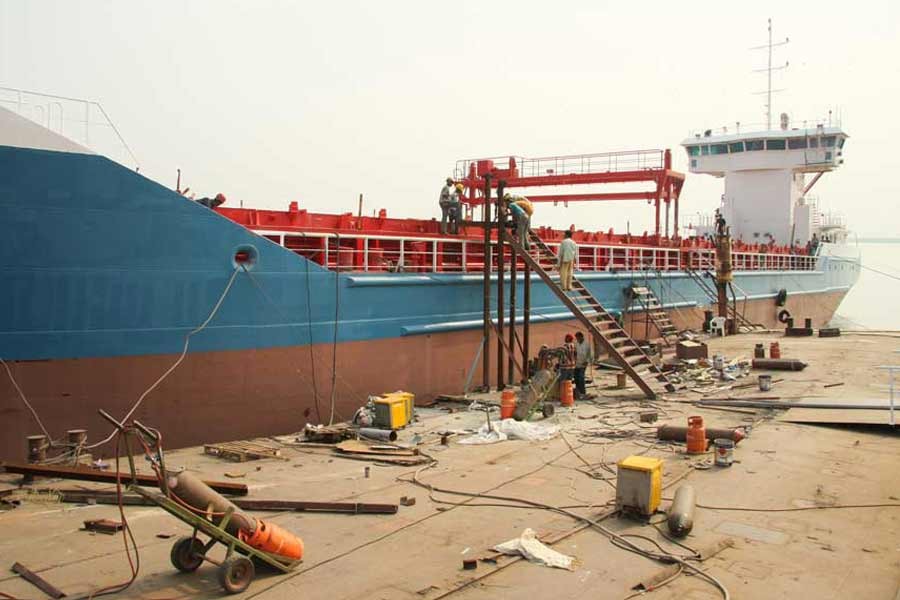 Worldwide Shipbuilding Boom and Bangladesh’s Lost Opportunity: How Financial Mismanagement, Loan Defaults, and Weak Governance Crippled a Promising Industry
An investigative analysis by Ghulam Suhrawardi Today, the world is witnessing one of the largest shipbuilding booms in history. Many countries are profiting from it. China, South Korea, and Japan have benefited from increased demand for new vessels due to fleet renewal, changing trade routes, environmental regulations, and strong financial […]



JOB SITES
CONTENTS
LINKS
Happy New Year

Découvrez les avantages de MadCasino
Dans le monde des casinos en ligne, MadCasino se distingue par ses offres attrayantes et ses services de qualité. Que vous soyez un joueur débutant ou un parieur aguerri, vous trouverez ici une variété de jeux qui sauront satisfaire toutes vos envies. Les machines à sous, les jeux de table et les options de paris en direct sont tous disponibles pour vous offrir une expérience de jeu inégalée. De plus, le casino propose régulièrement des bonus qui permettent d'augmenter vos chances de gagner, vous offrant ainsi une excellente opportunité de maximiser vos gains.
En matière de sécurité, MadCasino est un nom de confiance. Il est entièrement licencié et régulé, ce qui garantit un environnement de jeu sûr et équitable. Les joueurs peuvent se concentrer sur leur expérience de jeu sans se soucier des problèmes de sécurité. Les transactions financières sont également sécurisées grâce à des technologies de pointe.
Les jeux proposés par MadCasino sont issus des développeurs les plus réputés de l'industrie, vous assurant des graphismes époustouflants et des mécaniques de jeu innovantes. Les joueurs peuvent également profiter d'une expérience de jeu en direct qui simule l'atmosphère d'un casino terrestre, tout en restant dans le confort de leur maison.
Enfin, la plateforme de MadCasino est optimisée pour les appareils mobiles, permettant aux joueurs de parier à tout moment et de n'importe où. Que vous soyez sur votre smartphone ou votre tablette, l'accès à vos jeux préférés n'a jamais été aussi simple. Ne manquez pas l'opportunité de découvrir ce casino exceptionnel.
Les offres de Cresus Casino
Cresus Casino est un autre acteur majeur dans le domaine des jeux en ligne, offrant des promotions généreuses et une vaste sélection de jeux. Les joueurs peuvent profiter d'une expérience de jeu enrichissante grâce aux nombreux bonus disponibles, qui sont conçus pour attirer tant les nouveaux utilisateurs que les joueurs réguliers. Ces avantages permettent non seulement de prolonger votre temps de jeu, mais aussi d'augmenter vos chances de gains conséquents.
Le casino se distingue également par sa ludothèque impressionnante, comprenant une sélection variée de machines à sous, de jeux de table et de jeux en direct. Les clients peuvent choisir parmi des titres populaires et appréciés, ainsi que des nouveautés qui enrichissent constamment l'offre. L'interface utilisateur est conviviale, rendant la navigation sur la plateforme fluide et agréable.
En termes de sécurité, Cresus Casino assure à ses joueurs un environnement de jeu fiable. La plateforme utilise des protocoles de sécurité avancés pour protéger les données personnelles et financières des utilisateurs. Cela permet aux joueurs de se sentir en sécurité tout en jouant à leurs jeux préférés.
Avec un service client réactif et professionnel, Cresus Casino s'assure que toutes vos questions et préoccupations sont traitées rapidement. Que ce soit pour des questions concernant les bonus, les retraits ou les jeux, vous bénéficierez d'une assistance rapide et efficace.
Explorez Nine Casino et ses avantages
Dans l'univers des casinos en ligne, Nine Casino a su se faire une place de choix grâce à son approche innovante et à ses nombreux avantages pour les joueurs. Les utilisateurs peuvent s'attendre à une expérience de jeu enrichissante, avec des bonus attractifs qui sont régulièrement mis à jour. Ces offres sont une excellente façon de découvrir de nouveaux jeux tout en maximisant votre potentiel de gain.
La plateforme de Nine Casino est riche en options de jeux, allant des machines à sous aux jeux de table, en passant par le live casino. Chaque jeu est conçu pour offrir une expérience immersive grâce à des graphismes de haute qualité et des fonctionnalités innovantes. Les parieurs peuvent profiter de sessions de jeu captivantes, comme s'ils étaient dans un véritable casino.
La sécurité est une priorité pour Nine Casino, qui utilise des technologies de cryptage avancées pour protéger les informations de ses joueurs. Cela garantit un environnement de jeu sûr et fiable, permettant aux utilisateurs de se concentrer sur ce qu'ils aiment le plus : jouer.
Enfin, le service clientèle fourni par Nine Casino est exceptionnel, avec des agents disponibles pour répondre à toutes vos questions et résoudre vos problèmes. Vous pourrez ainsi jouer en toute tranquillité, sachant que votre satisfaction est au cœur de leurs préoccupations.
Profitez de l'expérience Lucky31
Lucky31 est un casino en ligne qui se distingue par son approche orientée vers le joueur, offrant une multitude d'options de jeux et des bonus généreux. Que vous soyez amateur de machines à sous ou passionné de jeux de table, vous trouverez une large sélection pour satisfaire toutes vos envies de jeu. Les promotions fréquentes permettent aux joueurs de prolonger leur expérience tout en augmentant leurs chances de gains.
La convivialité de la plateforme de Lucky31 est l'un de ses plus grands atouts. Les joueurs peuvent naviguer facilement entre les différents jeux, et l'interface est conçue pour être intuitive, quel que soit le niveau d'expérience de l'utilisateur. De plus, le casino est entièrement optimisé pour les appareils mobiles, ce qui permet de parier où que vous soyez.
En matière de sécurité, Lucky31 prend les préoccupations des joueurs très au sérieux. Le casino est agréé et régulé, garantissant un environnement de jeu équitable et sécurisé. Les joueurs peuvent ainsi se concentrer sur leur expérience de jeu sans se soucier des risques liés à la sécurité.
Pour ceux qui recherchent un support client efficace, Lucky31 offre un service réactif et professionnel. Que ce soit pour des questions sur les bonus, les jeux ou les paiements, vous aurez accès à une assistance de qualité, vous garantissant une expérience de jeu fluide et agréable.