search the site


Analysis: Is shipping’s digital transformation outpacing its cyber resilience?

As artificial intelligence gains ground in cybersecurity and maritime systems become increasingly interconnected, the shipping industry faces a critical challenge: ensuring that technological progress is matched by the ability to prevent, manage and recover from cyber incidents.
Recent findings suggest that the issue is no longer simply whether shipping is investing in cybersecurity, but whether its approach to digital risk is keeping pace with operational change.
Digital shipping, rising risks
The shipping industry’s relationship with technology is changing. Digitalisation is no longer confined to administrative functions or isolated shipboard applications. Increasingly, navigation, machinery monitoring, cargo operations, communications and shore-based fleet management depend on connected systems and the continuous exchange of operational data.
This transformation offers considerable opportunities for efficiency, situational awareness and decision-making. However, it also creates dependencies that traditional approaches to maritime safety and cybersecurity were not necessarily designed to address.
Recent developments suggest that the industry is entering a more demanding phase of cyber risk management. New regulations are placing greater emphasis on implementation, classification requirements are bringing cybersecurity into ship design, and emerging tools are helping operators identify vulnerabilities across increasingly complex digital environments.
At the same time, artificial intelligence is becoming part of both the cybersecurity response and the wider digital transformation of business.
The question is whether these developments are producing more resilient maritime operations or simply adding further complexity to systems that are already difficult to manage.
This concern was also raised at the UN Security Council in October 2026, when Singapore’s Minister for Law Edwin Tong warned that emerging technologies, including artificial intelligence, drones and autonomous vessels, could introduce new cybersecurity threats and risks of weaponisation alongside their potential benefits for maritime operations.
His call for greater accountability, transparency, human oversight and international cooperation reinforces the need to ensure that technological innovation is accompanied by safeguards against threats to civilian shipping and freedom of navigation.
AI adoption is accelerating, but cybersecurity capabilities remain uneven
New data published by the Organisation for Economic Co-operation and Development (OECD) on 26 October 2026 provide useful context for understanding the wider cybersecurity environment in which shipping operates.
According to the OECD, 17.7% of enterprises experienced information and communication technology (ICT) security incidents in 2023, representing a 28.2% increase compared with 2018.
Businesses are responding partly by adopting artificial intelligence. In 2025, 5.3% of enterprises used AI for ICT security, approximately one-quarter of all enterprises using AI. Adoption was 23.2% higher than in 2024 and more than double its 2021 level.
However, the figures reveal substantial differences according to company size. While 26.7% of large enterprises used AI for cybersecurity in 2025, the corresponding shares were 9.6% among medium-sized enterprises and just 3.7% among small businesses.
These are economy-wide findings rather than maritime-specific statistics. Nevertheless, they raise an important question for shipping, an industry whose operational ecosystem includes major international operators alongside smaller ship-management companies, port service providers, equipment suppliers and specialist contractors.
Cybersecurity increasingly depends on the security of this wider network, not only on the technological capabilities of individual shipowners.
A shipping company may invest in advanced security monitoring, yet still depend on third-party software, remote maintenance arrangements and external service providers with different levels of cybersecurity maturity.
Consequently, the adoption of more sophisticated technology by one organisation does not necessarily eliminate vulnerabilities elsewhere in its operational environment.
For maritime companies, this makes the consistency of cybersecurity arrangements across business relationships as important as the sophistication of individual security tools.
Maritime cyber risks are already affecting the operational environment
Evidence from the maritime sector reinforces the need to examine cybersecurity beyond corporate information systems.
In its 2026 Cyber Trends and Insights in the Marine Environment report, the US Coast Guard Cyber Command identified a 17% year-on-year increase in reported maritime cyber incidents, based on 2025 data.
Phishing remained a primary method used to gain access to systems, while operational technology featured in 62% of the Coast Guard’s cyber missions.
The latter figure should not be interpreted as the proportion of cyberattacks involving operational technology. Nevertheless, it illustrates the importance of examining cyber exposure in systems directly supporting maritime operations.
Operational technology presents particular challenges because it can involve equipment whose availability, reliability and integrity are essential to vessel or port operations.
Unlike conventional corporate IT systems, operational systems cannot always be disconnected, updated or restarted without consequences for the activity they support.
A cybersecurity measure that is appropriate for an office network may therefore require a different implementation strategy when applied to propulsion controls, cargo systems or other safety-related equipment.
This distinction becomes increasingly important as ships integrate additional digital applications.
In September, a white paper by Rakuten Maritime and ClassNK warned that fragmented shipboard technologies could expand cybersecurity exposure and complicate data integration. Cloud services, satellite communications, connected sensors and independent software platforms may improve individual functions while creating additional interfaces between systems.
The difficulty is not connectivity itself. It is the possibility that new connections are introduced without sufficient understanding of how they affect the vessel’s overall risk profile.
A ship may consequently become more digitally capable without becoming proportionately more resilient.
From cyber compliance to operational resilience
Regulatory developments suggest that cybersecurity is increasingly being treated as a continuing operational responsibility rather than a separate technical requirement.
On 19 October 2026, the US Coast Guard issued Navigation and Vessel Inspection Circular (NVIC) 02-26, providing guidance for implementing cybersecurity requirements applicable to regulated vessels, facilities and Outer Continental Shelf installations.
The guidance clarifies how covered operators should assess cyber risks, establish cybersecurity plans, allocate responsibilities and demonstrate that their protective measures are effectively implemented.
By 16 July 2027, applicable entities must meet the relevant cybersecurity requirements and operate in accordance with their submitted cybersecurity plans.
The significance lies in the emphasis on evidence of implementation.
Identifying cyber risks and documenting procedures are necessary, but they do not establish whether an organisation can detect a developing incident, maintain essential operations or restore affected systems.
This creates a distinction between cybersecurity compliance and cyber resilience.
Compliance establishes whether specified requirements have been addressed. Resilience concerns the organisation’s practical ability to anticipate disruption, respond effectively and recover while protecting critical functions.
Both are necessary, but they are not interchangeable.
Similar developments can be observed in ship design and classification.
The IACS Unified Requirements E26 and E27 have introduced a stronger emphasis on the cyber resilience of ships and onboard systems and equipment within their applicable scope.
Recent developments, including the delivery of a tanker incorporating UR E26 compliance and Korean Register’s introduction of a platform supporting related documentation, demonstrate how cybersecurity considerations are moving further into ship design, system integration and lifecycle management.
For operators, this represents an important change. Decisions about equipment, system architecture, access controls and software maintenance can have consequences long after a vessel enters service.
Cybersecurity therefore needs to be considered not only during newbuilding projects, but also when vessels undergo equipment upgrades, software changes and modifications to existing connections.
More information does not automatically mean better risk management
Another emerging challenge concerns the growing volume of information available about cyber vulnerabilities.
In October 2026, several maritime organisations launched the Blue Initiative, a publicly accessible database intended to help the industry identify vulnerabilities affecting shipboard, port and offshore IT and OT systems.
The initiative reflects a practical difficulty: the number of published software and equipment vulnerabilities is expanding, while maritime companies must determine which are relevant to their own vessels and operations.
A vulnerability affecting a particular product does not necessarily create the same operational risk across every installation.
The consequences depend on factors including system configuration, exposure to external networks, existing protective measures and the criticality of the affected function.
This makes prioritisation essential.
For example, a vulnerability affecting a system with limited connectivity and effective isolation may present a different risk from a similar weakness in equipment accessible through remote connections.
The implications also depend on whether compromise could interrupt essential operations, affect data integrity or prevent the crew from using a critical function.
A September 2026 analysis by CYTUR found that 94% of the marine equipment assessments examined reached a level at which cyber risk treatment should be considered or was required.
Importantly, the assessments were not a representative sample of maritime equipment. The findings therefore cannot establish how widespread vulnerabilities are across the global fleet.
They do, however, reinforce the importance of evaluating cyber risks according to operational circumstances rather than relying exclusively on lists of technical vulnerabilities.
For shipping companies, the challenge is increasingly to turn cybersecurity information into decisions about which systems need attention first, who is responsible for taking action and what measures can be implemented without compromising safe operations.
Can artificial intelligence close the gap?
The expanding use of AI for cybersecurity introduces an additional dimension.
AI-enabled systems can support the identification of unusual activity, analyse large volumes of security data and assist specialists in detecting potential threats.
For maritime operators managing fleets across multiple locations, such capabilities may help improve visibility and support earlier identification of suspicious behaviour.
However, the effectiveness of these tools depends on the quality of available data, their integration with existing systems and the ability of personnel to interpret and act upon their findings.
An automated warning has limited operational value if responsibility for investigating it is unclear, if shore-based specialists cannot assess its relevance to shipboard equipment, or if the vessel lacks a practical response procedure.
AI systems may also generate false alarms, overlook unfamiliar threats or produce assessments that require human verification.
There is therefore a risk that greater automation could create additional dependence on systems whose limitations are not fully understood.
The relevant question is not whether AI can improve cybersecurity. It is whether the technology strengthens the organisation’s ability to make timely and informed decisions.
For shipping, this means defining the boundaries of automation, retaining appropriate human oversight and ensuring that onboard and shore-based personnel understand the response expected when a potential cyber incident is identified.
The introduction of AI should strengthen existing security arrangements, not become a substitute for fundamental practices such as access management, software maintenance, network protection and personnel training.
Cyber resilience is ultimately a ship-shore responsibility
Much of the discussion about maritime cybersecurity understandably focuses on technology. Yet the effectiveness of cyber risk management also depends on coordination between people, systems and organisations.
Modern vessels operate within a network of relationships involving crews, technical managers, equipment manufacturers, software providers, terminals and external service companies.
During normal operations, these relationships support efficient maintenance, communication and technical assistance.
During a cyber incident, however, unclear responsibilities can delay decisions precisely when rapid coordination is needed.
Consider a hypothetical situation in which unusual activity is detected in a shipboard system maintained remotely by an external supplier.
The immediate questions are operational as well as technical. Who determines whether the connection should be suspended? Who assesses the possible consequences for vessel operations? What alternative procedures are available? Who communicates with the master, the technical department and the relevant external parties?
The answers should not have to be developed during the incident itself.
Effective cyber resilience requires clearly assigned responsibilities, practical contingency arrangements and exercises that reflect the systems actually used onboard.
It also requires recognising the position of seafarers, who may be expected to respond to digital failures while managing navigation, cargo operations or other safety-critical tasks.
Crew training should therefore extend beyond identifying phishing emails or understanding general cybersecurity policies.
Relevant personnel need to know how to recognise abnormal system behaviour, report suspected incidents, apply approved contingency procedures and avoid actions that could inadvertently worsen a disruption.
Equally, shore-based teams must understand the operational limitations under which crews work.
The objective is not to turn seafarers into cybersecurity specialists, but to ensure that technical expertise and operational decision-making can function together when needed.
The next test for maritime cybersecurity
The latest evidence points to an industry confronting a more complex form of risk.
Cybersecurity is becoming embedded in regulation, ship design, equipment management and operational decision-making. At the same time, AI and connectivity are expanding the range of technologies that companies must understand and control.
These developments represent progress, but they also expose a potential weakness: cybersecurity maturity may not advance at the same pace across the different organisations and systems on which maritime operations depend.
A highly protected vessel can still rely on vulnerable external connections. A company may maintain detailed cybersecurity policies without having adequately tested its response capabilities. An advanced monitoring platform may identify a threat without ensuring that the operational consequences are properly managed.
For shipowners and operators, the next stage should therefore focus on the effectiveness of cybersecurity arrangements in practice.
This includes understanding critical system dependencies, assessing third-party exposure, prioritising vulnerabilities according to operational consequences, testing contingency procedures and ensuring that responsibilities remain clear across the ship-shore interface.
It also means assessing new technologies according to their contribution to safety and resilience, rather than treating their adoption as an achievement in itself.
The central issue is no longer simply how digital shipping can become, but how safely it can continue to operate when its digital systems are challenged.
source : safety4sea
Featured Post
 জাহাজ নির্মাণ শিল্প: হাতছাড়া হচ্ছে অপার সম্ভাবনা
 গোলাম সোহরাওয়ার্দি প্রকাশ : ২৭ অক্টোবর ২০২৬, ০৮: ০৪আপডেট : ২৭ অক্টোবর ২০২৬, ০৯: ২৪ সারা বিশ্ব এখন জাহাজ নির্মাণের এক বিশাল জোয়ার দেখছে। চীন, দক্ষিণ কোরিয়া ও জাপানের মতো দেশগুলো এ খাত থেকে বিপুল মুনাফা কামিয়ে নিচ্ছে। নতুন বাণিজ্যিক পথ তৈরি, জাহাজের […]
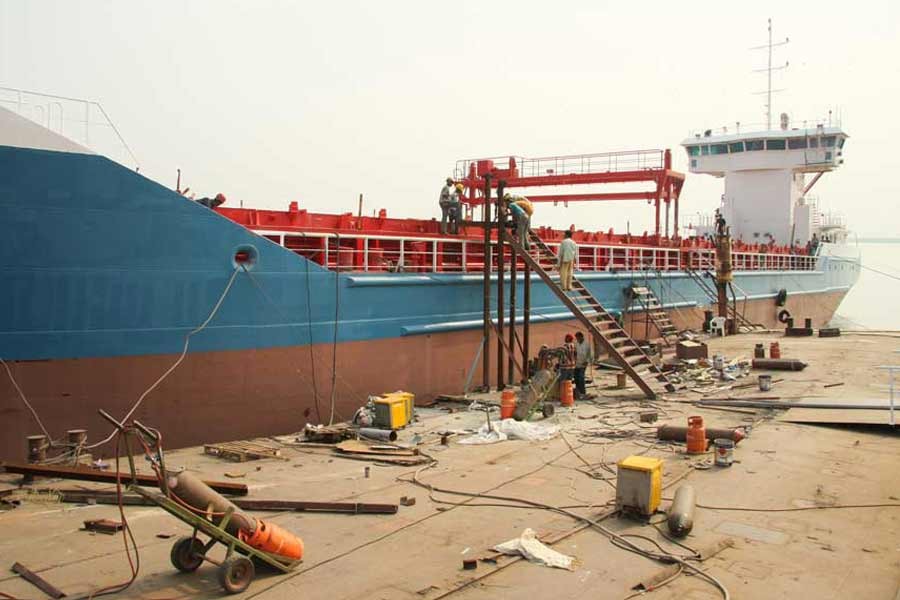 Worldwide Shipbuilding Boom and Bangladesh’s Lost Opportunity: How Financial Mismanagement, Loan Defaults, and Weak Governance Crippled a Promising Industry
An investigative analysis by Ghulam Suhrawardi Today, the world is witnessing one of the largest shipbuilding booms in history. Many countries are profiting from it. China, South Korea, and Japan have benefited from increased demand for new vessels due to fleet renewal, changing trade routes, environmental regulations, and strong financial […]



JOB SITES
CONTENTS
LINKS
Happy New Year

Découvrez les avantages de MadCasino
Dans le monde des casinos en ligne, MadCasino se distingue par ses offres attrayantes et ses services de qualité. Que vous soyez un joueur débutant ou un parieur aguerri, vous trouverez ici une variété de jeux qui sauront satisfaire toutes vos envies. Les machines à sous, les jeux de table et les options de paris en direct sont tous disponibles pour vous offrir une expérience de jeu inégalée. De plus, le casino propose régulièrement des bonus qui permettent d'augmenter vos chances de gagner, vous offrant ainsi une excellente opportunité de maximiser vos gains.
En matière de sécurité, MadCasino est un nom de confiance. Il est entièrement licencié et régulé, ce qui garantit un environnement de jeu sûr et équitable. Les joueurs peuvent se concentrer sur leur expérience de jeu sans se soucier des problèmes de sécurité. Les transactions financières sont également sécurisées grâce à des technologies de pointe.
Les jeux proposés par MadCasino sont issus des développeurs les plus réputés de l'industrie, vous assurant des graphismes époustouflants et des mécaniques de jeu innovantes. Les joueurs peuvent également profiter d'une expérience de jeu en direct qui simule l'atmosphère d'un casino terrestre, tout en restant dans le confort de leur maison.
Enfin, la plateforme de MadCasino est optimisée pour les appareils mobiles, permettant aux joueurs de parier à tout moment et de n'importe où. Que vous soyez sur votre smartphone ou votre tablette, l'accès à vos jeux préférés n'a jamais été aussi simple. Ne manquez pas l'opportunité de découvrir ce casino exceptionnel.
Les offres de Cresus Casino
Cresus Casino est un autre acteur majeur dans le domaine des jeux en ligne, offrant des promotions généreuses et une vaste sélection de jeux. Les joueurs peuvent profiter d'une expérience de jeu enrichissante grâce aux nombreux bonus disponibles, qui sont conçus pour attirer tant les nouveaux utilisateurs que les joueurs réguliers. Ces avantages permettent non seulement de prolonger votre temps de jeu, mais aussi d'augmenter vos chances de gains conséquents.
Le casino se distingue également par sa ludothèque impressionnante, comprenant une sélection variée de machines à sous, de jeux de table et de jeux en direct. Les clients peuvent choisir parmi des titres populaires et appréciés, ainsi que des nouveautés qui enrichissent constamment l'offre. L'interface utilisateur est conviviale, rendant la navigation sur la plateforme fluide et agréable.
En termes de sécurité, Cresus Casino assure à ses joueurs un environnement de jeu fiable. La plateforme utilise des protocoles de sécurité avancés pour protéger les données personnelles et financières des utilisateurs. Cela permet aux joueurs de se sentir en sécurité tout en jouant à leurs jeux préférés.
Avec un service client réactif et professionnel, Cresus Casino s'assure que toutes vos questions et préoccupations sont traitées rapidement. Que ce soit pour des questions concernant les bonus, les retraits ou les jeux, vous bénéficierez d'une assistance rapide et efficace.
Explorez Nine Casino et ses avantages
Dans l'univers des casinos en ligne, Nine Casino a su se faire une place de choix grâce à son approche innovante et à ses nombreux avantages pour les joueurs. Les utilisateurs peuvent s'attendre à une expérience de jeu enrichissante, avec des bonus attractifs qui sont régulièrement mis à jour. Ces offres sont une excellente façon de découvrir de nouveaux jeux tout en maximisant votre potentiel de gain.
La plateforme de Nine Casino est riche en options de jeux, allant des machines à sous aux jeux de table, en passant par le live casino. Chaque jeu est conçu pour offrir une expérience immersive grâce à des graphismes de haute qualité et des fonctionnalités innovantes. Les parieurs peuvent profiter de sessions de jeu captivantes, comme s'ils étaient dans un véritable casino.
La sécurité est une priorité pour Nine Casino, qui utilise des technologies de cryptage avancées pour protéger les informations de ses joueurs. Cela garantit un environnement de jeu sûr et fiable, permettant aux utilisateurs de se concentrer sur ce qu'ils aiment le plus : jouer.
Enfin, le service clientèle fourni par Nine Casino est exceptionnel, avec des agents disponibles pour répondre à toutes vos questions et résoudre vos problèmes. Vous pourrez ainsi jouer en toute tranquillité, sachant que votre satisfaction est au cœur de leurs préoccupations.
Profitez de l'expérience Lucky31
Lucky31 est un casino en ligne qui se distingue par son approche orientée vers le joueur, offrant une multitude d'options de jeux et des bonus généreux. Que vous soyez amateur de machines à sous ou passionné de jeux de table, vous trouverez une large sélection pour satisfaire toutes vos envies de jeu. Les promotions fréquentes permettent aux joueurs de prolonger leur expérience tout en augmentant leurs chances de gains.
La convivialité de la plateforme de Lucky31 est l'un de ses plus grands atouts. Les joueurs peuvent naviguer facilement entre les différents jeux, et l'interface est conçue pour être intuitive, quel que soit le niveau d'expérience de l'utilisateur. De plus, le casino est entièrement optimisé pour les appareils mobiles, ce qui permet de parier où que vous soyez.
En matière de sécurité, Lucky31 prend les préoccupations des joueurs très au sérieux. Le casino est agréé et régulé, garantissant un environnement de jeu équitable et sécurisé. Les joueurs peuvent ainsi se concentrer sur leur expérience de jeu sans se soucier des risques liés à la sécurité.
Pour ceux qui recherchent un support client efficace, Lucky31 offre un service réactif et professionnel. Que ce soit pour des questions sur les bonus, les jeux ou les paiements, vous aurez accès à une assistance de qualité, vous garantissant une expérience de jeu fluide et agréable.