
search the site


The 16th EU Ship Recycling List: A test of regulatory consistency

The forthcoming 16th edition of the European List of Ship Recycling Facilities could become an important moment not only for the Indian ship recycling industry, but also for the credibility of the European Union’s own regulatory framework, explained Rohit Agarwal, Chief Executive Officer at GUIDESHIP CONSULTING SERVICES LLP.
If Indian facilities that have entered the prescribed European assessment process, undergone inspections and demonstrated compliance with the applicable requirements are ultimately not included, the question will extend beyond the commercial interests of two ship recycling yards. It will raise a broader issue about consistency, transparency, equal treatment and the predictability of rules-based regulation.
The European Union has established a formal mechanism through Regulation (EU) No. 1257/2013 for ship recycling facilities located outside the EU to seek inclusion on the European List. Article 15 establishes the application framework for third-country facilities, while Article 16 provides for the establishment and updating of the European List on the basis of an assessment of the information and supporting evidence provided or gathered under that process.
The Regulation also establishes substantive requirements that third-country facilities must satisfy. In other words, the system is built around a recognisable sequence: application, evidence, assessment, verification and regulatory decision.
This creates a fundamental question for the 16th List. If a facility has entered that process in good faith, invested substantial resources to satisfy the applicable requirements, undergone the required assessments and provided evidence against the European regulatory criteria, what should happen if the final decision is nevertheless not to include it?
A negative decision is certainly possible within a regulatory process; an inspection or application does not by itself create an unconditional legal entitlement to inclusion. However, the more important question is whether such a decision would be accompanied by clear, objective and facility-specific reasons connected to the applicable legal requirements.
This distinction is critical. The argument should not be that an Indian yard must automatically be included merely because it has been inspected. Nor should it be suggested that the European Commission has no institutional discretion. The stronger and more defensible question is whether that discretion is exercised consistently with the criteria, evidence and regulatory methodology established by the EU itself.
The Regulation expressly provides a route for facilities located outside the European Union. The European List has, in fact, always contained facilities outside EU territory. The framework therefore does not establish a geographical prohibition against non-European ship recycling facilities. If an Indian facility is assessed under the same regulatory framework as other third-country facilities, the central question should logically remain whether that particular facility satisfies the applicable requirements.
This becomes particularly important because the Regulation itself refers to the principle of equality in Union law in the establishment and updating of the European List. That principle does not mean that every facility must receive the same outcome regardless of its circumstances. Different facilities may have different infrastructure, operational practices, environmental controls, downstream waste arrangements or safety performance.
This is where the hypothetical non-inclusion of an otherwise compliant Indian facility becomes a difficult question for the European Commission. If the reason for exclusion is a specific technical or regulatory deficiency, there is a straightforward explanation: the facility did not satisfy a particular requirement, and the decision can be understood in relation to that requirement.
But if the facility has satisfied the applicable criteria and the decision is instead based on considerations that are not clearly connected to those criteria, the Commission could face legitimate questions about the consistency of its own regulatory methodology.
One particularly sensitive issue would be the role of geography. India is one of the world’s major ship recycling jurisdictions, and the overwhelming majority of its recycling capacity is concentrated at Alang in Gujarat. There are legitimate debates concerning beaching, intertidal operations, occupational safety, environmental protection and downstream waste management.
These issues deserve rigorous scrutiny. However, if those concerns are already addressed through the requirements of the EU Ship Recycling Regulation, then the regulatory question should be whether the individual facility has satisfied those requirements. Geography should not quietly become an additional eligibility criterion unless there is a legally relevant basis for treating geography as such.
The distinction between a facility-specific assessment and a country-wide perception is therefore extremely important. A country may have facilities operating at different standards. A particular yard may have stronger infrastructure, better documentation, stronger downstream controls or more mature safety systems than another facility in the same jurisdiction.
The European List itself operates at the level of individual facilities. Consequently, a decision concerning one Indian yard should ideally be grounded in the evidence relating to that facility rather than in assumptions about the entire Indian ship recycling industry.
There is also a potential “moving goalposts” issue. Ship recycling facilities seeking European recognition can make significant investments based on the requirements communicated by the regulatory framework. These investments can include hazardous-material management systems, environmental infrastructure, worker-safety systems, waste-management arrangements, emergency preparedness, monitoring, documentation and independent verification.
If the regulatory expectations subsequently change, there should be a transparent regulatory mechanism through which those changes are communicated and implemented. A facility should not reasonably be expected to discover only at the final stage that it was being assessed against a material criterion that was not part of the applicable framework communicated to applicants.
This does not mean that the EU should lower its standards. The opposite is true. The EU has every reason to maintain demanding environmental and occupational-safety requirements. If experience demonstrates that the existing framework is inadequate, the appropriate response is to strengthen the regulatory framework transparently and apply the strengthened requirements through the appropriate process.
The concern arises when a policy objective is effectively converted into an additional eligibility requirement without a clear connection to the existing regulatory criteria.
There is also a question of regulatory incentives. The European List is intended to encourage higher standards in ship recycling. The European Commission has described the List as an important benchmark for environmental and social standards in the sector.
If a third-country facility invests heavily in meeting those standards, undergoes inspection and demonstrates compliance, the regulatory system should provide a credible pathway by which that investment can lead to recognition. Otherwise, a potentially unintended message could reach other ship recycling facilities around the world: that improving to meet European requirements does not necessarily provide a predictable route to European recognition.
Such an outcome could weaken one of the fundamental incentives behind international environmental regulation. Regulation works most effectively when economic operators can understand the rules, invest in meeting them and have reasonable confidence that demonstrable compliance will be assessed according to those rules. If compliance becomes disconnected from regulatory recognition, the incentive structure becomes less clear.
This issue is particularly relevant at a time when the international ship recycling landscape has changed significantly. The Hong Kong International Convention for the Safe and Environmentally Sound Recycling of Ships entered into force on 26 June 2025, creating an international regulatory baseline for ship recycling.
The European Union continues to operate its own Ship Recycling Regulation, which incorporates the Hong Kong Convention framework while retaining additional European requirements in certain areas. The emergence of the 16th European List therefore takes place at an important moment in the evolution from nationally regulated ship recycling towards increasingly internationalised standards.
If an Indian facility demonstrates compliance with both the international framework and the additional requirements applicable under the EU system, the European decision could demonstrate that the European regulatory system is genuinely capable of recognising compliant capacity wherever it is located. Conversely, if such a facility is excluded despite apparently satisfying the applicable requirements, international observers may reasonably ask what additional consideration prevented recognition.
Again, that question should not be framed as an accusation. It should be framed as a request for transparency. What specific requirement was not satisfied? What evidence led to that conclusion? Did the Commission identify a material deficiency during the inspection or subsequent assessment?
Did new information become available? Was the same criterion applied to comparable facilities in other jurisdictions? If the decision departed from an earlier technical assessment, what justified that departure? And if the reason was based on a broader policy concern rather than facility-specific non-compliance, where is that consideration anchored within the applicable regulatory framework? These are legitimate questions for any sophisticated regulatory system.
The principle of good administration also becomes relevant in this context. The EU Charter of Fundamental Rights recognises a right to good administration, including impartial and fair treatment and the obligation to give reasons for decisions.
The European Ombudsman has likewise addressed principles including consistency, equal treatment and legitimate expectations in the conduct of EU administration. These principles do not create an automatic right for an applicant to receive regulatory approval.
They do, however, underline the importance of decisions being understandable, reasoned and consistent with the applicable administrative framework.
The potential consequences therefore extend in several directions. For Indian ship recycling facilities, non-inclusion could affect market access and international positioning. For the wider Alang industry, it could influence future investment decisions and the willingness of other yards to undertake the cost and effort associated with European-level compliance.
For European shipowners, it could affect the availability of compliant recycling capacity. For the EU itself, the issue would concern the credibility of a regulatory mechanism that has been presented as a benchmark for higher environmental and social standards.
There is also a circular-economy dimension. Ship recycling is fundamentally a resource-recovery activity. Large quantities of steel and other materials are recovered from end-of-life vessels, and the EU itself recognises the role of ship recycling within the broader circular economy.
If compliant recycling capacity exists in a major global recycling jurisdiction, the policy question is not necessarily whether that capacity should be excluded because of its location, but whether it can be brought within a sufficiently robust regulatory framework to ensure that recycling occurs safely and environmentally responsibly.
This is why the strongest Indian argument should not be based on nationality, commercial importance or the historical significance of Alang. Nor should it be based on the assertion that an audit automatically creates a right to inclusion. The strongest argument is much simpler and much harder to dismiss: apply the same applicable criteria, assess the evidence objectively, and explain the decision transparently.
If an Indian facility does not meet the requirements, it should not be listed merely for the sake of geographical representation. If it does meet the requirements, however, the regulatory system should be able to explain why the evidence does or does not justify inclusion. That is the principle that gives regulatory systems their credibility.
The 16th List could therefore become an important test of something larger than Indian ship recycling. It could test whether international environmental regulation is genuinely based on demonstrable compliance, or whether additional considerations can influence the outcome without being clearly visible within the regulatory criteria.
For the European Commission, the issue is ultimately one of institutional credibility. The strength of a regulator is not demonstrated merely by how rigorously it rejects non-compliant facilities. It is also demonstrated by how consistently it recognises facilities that can establish compliance with the rules it has itself created.
For India, the lesson is equally important. Indian ship recycling yards cannot expect recognition merely because they are improving. They must be prepared to demonstrate compliance through evidence, implementation, independent verification and continuous performance. The responsibility of the industry is therefore clear: meet the standard, document the standard and be prepared to defend the evidence.
But there is a corresponding responsibility on the regulatory side. If the rules establish a pathway to recognition, the pathway must remain credible.
The most important question surrounding the 16th European List may therefore not be whether India deserves a place on it. It is whether the European regulatory system, after inviting third-country facilities into a defined compliance pathway, will ultimately apply its own criteria consistently, transparently and predictably.
That is the real test. And if the final decision is not to include an Indian facility that has apparently satisfied the prescribed requirements, the most important response should not be political confrontation or industry rhetoric. It should be a clear request for evidence, reasons and regulatory consistency. Because the credibility of a rules-based system is tested most seriously not when an applicant fails to meet the rules, but when an applicant appears to have met them.
The question then becomes simple: if the rules are the basis for recognition, can the final decision be clearly explained through the same rules? That is the question the 16th European List may ultimately put before the European Commission—not only in relation to India, but in relation to the credibility of the European List itself.
source : safety4sea
Featured Post
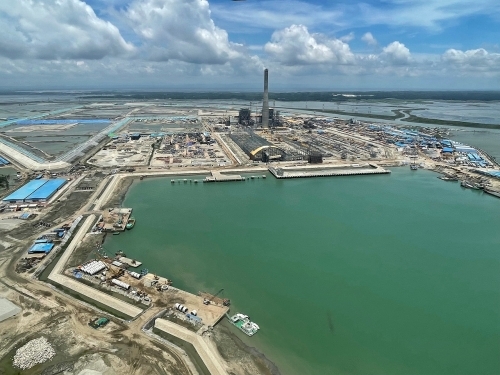 বড় জাহাজ মেরামতে মাতারবাড়ীতে ১ বিলিয়ন ডলারের প্রকল্প
 মাতারবাড়ীতে প্রায় ১ বিলিয়ন মার্কিন ডলার ব্যয়ে পরিবেশবান্ধব ডকইয়ার্ড ও জাহাজ নির্মাণ কেন্দ্র স্থাপনের উদ্যোগে নীতিগত অনুমোদন দিয়েছে নৌপরিবহন মন্ত্রণালয়। এখন প্রকল্পটির কারিগরি ও আর্থিক মূল্যায়নের জন্য প্রস্তাবটি সরকারি-বেসরকারি অংশীদারত্ব (পিপিপি) কর্তৃপক্ষের কাছে পাঠানো হয়েছে। সম্পূর্ণ বেসরকারি অর্থায়নে সরকারি জমির মালিকানা অক্ষুণ্ন রেখে প্রকল্পটি বাস্তবায়নের পরিকল্পনা রয়েছে। বন্দর কর্তৃপক্ষ জানায়, […]
 Industry on alert over scam messages offering ships “safe passage” on Hormuz
 Credit: Shutterstock Fraudulent messages offering safe passage through the Strait of Hormuz in exchange for cryptocurrency have been circulated to shipping companies with vessels stranded west of the waterway, according to MARISKS. In an alert issued on 20 April, MARISKS cautioned that unknown actors posing as Iranian authorities had contacted […]



JOB SITES
CONTENTS
LINKS
Happy New Year

Découvrez les avantages de MadCasino
Dans le monde des casinos en ligne, MadCasino se distingue par ses offres attrayantes et ses services de qualité. Que vous soyez un joueur débutant ou un parieur aguerri, vous trouverez ici une variété de jeux qui sauront satisfaire toutes vos envies. Les machines à sous, les jeux de table et les options de paris en direct sont tous disponibles pour vous offrir une expérience de jeu inégalée. De plus, le casino propose régulièrement des bonus qui permettent d'augmenter vos chances de gagner, vous offrant ainsi une excellente opportunité de maximiser vos gains.
En matière de sécurité, MadCasino est un nom de confiance. Il est entièrement licencié et régulé, ce qui garantit un environnement de jeu sûr et équitable. Les joueurs peuvent se concentrer sur leur expérience de jeu sans se soucier des problèmes de sécurité. Les transactions financières sont également sécurisées grâce à des technologies de pointe.
Les jeux proposés par MadCasino sont issus des développeurs les plus réputés de l'industrie, vous assurant des graphismes époustouflants et des mécaniques de jeu innovantes. Les joueurs peuvent également profiter d'une expérience de jeu en direct qui simule l'atmosphère d'un casino terrestre, tout en restant dans le confort de leur maison.
Enfin, la plateforme de MadCasino est optimisée pour les appareils mobiles, permettant aux joueurs de parier à tout moment et de n'importe où. Que vous soyez sur votre smartphone ou votre tablette, l'accès à vos jeux préférés n'a jamais été aussi simple. Ne manquez pas l'opportunité de découvrir ce casino exceptionnel.
Les offres de Cresus Casino
Cresus Casino est un autre acteur majeur dans le domaine des jeux en ligne, offrant des promotions généreuses et une vaste sélection de jeux. Les joueurs peuvent profiter d'une expérience de jeu enrichissante grâce aux nombreux bonus disponibles, qui sont conçus pour attirer tant les nouveaux utilisateurs que les joueurs réguliers. Ces avantages permettent non seulement de prolonger votre temps de jeu, mais aussi d'augmenter vos chances de gains conséquents.
Le casino se distingue également par sa ludothèque impressionnante, comprenant une sélection variée de machines à sous, de jeux de table et de jeux en direct. Les clients peuvent choisir parmi des titres populaires et appréciés, ainsi que des nouveautés qui enrichissent constamment l'offre. L'interface utilisateur est conviviale, rendant la navigation sur la plateforme fluide et agréable.
En termes de sécurité, Cresus Casino assure à ses joueurs un environnement de jeu fiable. La plateforme utilise des protocoles de sécurité avancés pour protéger les données personnelles et financières des utilisateurs. Cela permet aux joueurs de se sentir en sécurité tout en jouant à leurs jeux préférés.
Avec un service client réactif et professionnel, Cresus Casino s'assure que toutes vos questions et préoccupations sont traitées rapidement. Que ce soit pour des questions concernant les bonus, les retraits ou les jeux, vous bénéficierez d'une assistance rapide et efficace.
Explorez Nine Casino et ses avantages
Dans l'univers des casinos en ligne, Nine Casino a su se faire une place de choix grâce à son approche innovante et à ses nombreux avantages pour les joueurs. Les utilisateurs peuvent s'attendre à une expérience de jeu enrichissante, avec des bonus attractifs qui sont régulièrement mis à jour. Ces offres sont une excellente façon de découvrir de nouveaux jeux tout en maximisant votre potentiel de gain.
La plateforme de Nine Casino est riche en options de jeux, allant des machines à sous aux jeux de table, en passant par le live casino. Chaque jeu est conçu pour offrir une expérience immersive grâce à des graphismes de haute qualité et des fonctionnalités innovantes. Les parieurs peuvent profiter de sessions de jeu captivantes, comme s'ils étaient dans un véritable casino.
La sécurité est une priorité pour Nine Casino, qui utilise des technologies de cryptage avancées pour protéger les informations de ses joueurs. Cela garantit un environnement de jeu sûr et fiable, permettant aux utilisateurs de se concentrer sur ce qu'ils aiment le plus : jouer.
Enfin, le service clientèle fourni par Nine Casino est exceptionnel, avec des agents disponibles pour répondre à toutes vos questions et résoudre vos problèmes. Vous pourrez ainsi jouer en toute tranquillité, sachant que votre satisfaction est au cœur de leurs préoccupations.
Profitez de l'expérience Lucky31
Lucky31 est un casino en ligne qui se distingue par son approche orientée vers le joueur, offrant une multitude d'options de jeux et des bonus généreux. Que vous soyez amateur de machines à sous ou passionné de jeux de table, vous trouverez une large sélection pour satisfaire toutes vos envies de jeu. Les promotions fréquentes permettent aux joueurs de prolonger leur expérience tout en augmentant leurs chances de gains.
La convivialité de la plateforme de Lucky31 est l'un de ses plus grands atouts. Les joueurs peuvent naviguer facilement entre les différents jeux, et l'interface est conçue pour être intuitive, quel que soit le niveau d'expérience de l'utilisateur. De plus, le casino est entièrement optimisé pour les appareils mobiles, ce qui permet de parier où que vous soyez.
En matière de sécurité, Lucky31 prend les préoccupations des joueurs très au sérieux. Le casino est agréé et régulé, garantissant un environnement de jeu équitable et sécurisé. Les joueurs peuvent ainsi se concentrer sur leur expérience de jeu sans se soucier des risques liés à la sécurité.
Pour ceux qui recherchent un support client efficace, Lucky31 offre un service réactif et professionnel. Que ce soit pour des questions sur les bonus, les jeux ou les paiements, vous aurez accès à une assistance de qualité, vous garantissant une expérience de jeu fluide et agréable.