search the site


Psychological safety and leadership: Building a strong safety culture onboard
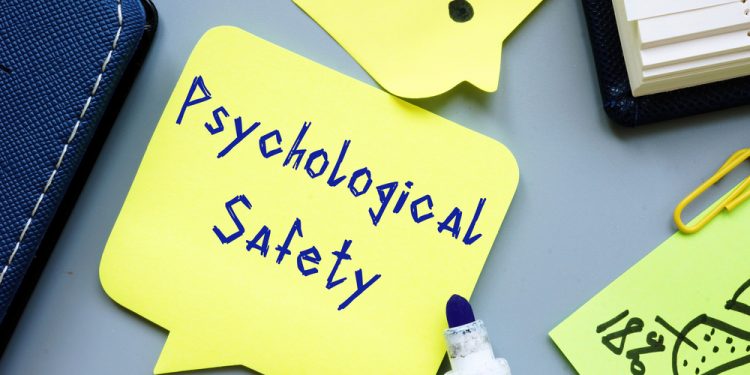
During the 2026 SAFETY4SEA Limassol Forum, Capt. Alexandros Gerokounas, MSQ Manager, DPA / CSO at LMZ Shipping emphasized that without psychological safety, effective teamwork cannot exist, concluding that trust and wellbeing are essential pillars of any successful onboard environment.
Despite the existence of Safety Management Systems (SMS), regulatory compliance requirements, and established procedures, incidents continue to occur. Investigations consistently show that human factors contribute significantly, but also that organizational factors, environmental conditions, and sometimes even luck are involved.
This raises a fundamental question: it is not only whether procedures exist, but whether the organizational culture actually enables people to follow them effectively in real operational conditions.
What is psychological safety?
Psychological safety is the shared belief that individuals can raise safety concerns, report errors, challenge decisions, and speak up about risk without fear of retaliation, embarrassment, or negative career impact.
It is also important to emphasize what it is not. It is not about lowering standards. It is not about removing accountability. It is not about tolerating unsafe behavior. Instead, it is about ensuring that safety-critical information flows freely across all levels of the organization.
Why psychological safety matters
Without psychological safety, organizations develop blind spots. Near misses often go unreported. Minor hazards become normalized over time, as repeated exposure makes them appear “acceptable” or “part of the job.”
Junior personnel, including both officers and ratings, may hesitate to challenge decisions or raise concerns, especially in environments where hierarchy is strong.
Over time, this leads to a situation where only major incidents become visible, while the early warning signs remain hidden.
This creates a critical weakness in the safety system: the organization reacts to incidents rather than preventing them.
With psychological safety in place, the dynamic changes significantly. Hazards are identified earlier. Decision-making improves because information is more complete and more accurate. Thus, operational resilience is strengthened because small issues are addressed before they escalate.
The role of leadership and shore management
Shore management and leadership behavior are central in shaping psychological safety onboard.
Crew members continuously observe how the office responds to incidents, how feedback is treated, how investigations are conducted, and what type of key performance indicators are emphasized. They also observe how commercial pressure is communicated across the fleet.
If personnel observe that reporting leads to blame, punishment, or career consequences, they will naturally become more cautious and less open. If they observe that reporting leads to understanding, learning, and improvement, they are more likely to speak up.
Organizational barriers
Several structural and operational factors can weaken psychological safety in maritime environments.
#1 Hierarchical structures
Strong hierarchical structures, while necessary for operational clarity, can discourage open communication if not balanced properly. In some cases, personnel may feel that questioning decisions is inappropriate or risky.
#2 Different communication norms
Multicultural crews add another layer of complexity. Different communication norms, cultural expectations, and attitudes toward authority can affect whether individuals feel comfortable speaking up. Without awareness of these differences, important information may remain unspoken.
#3 Fatigue reduces willingness
Fatigue and workload pressure also play a significant role. Both onboard and ashore, personnel often operate under demanding conditions, and fatigue reduces not only performance but also willingness to escalate concerns.
Commercial pressure can further reinforce silence if individuals believe that reporting issues will disrupt schedules or create operational difficulties.
Speaking up as a safety behavior
A very important element of psychological safety is encouraging people to speak up consistently. This includes raising concerns that may seem minor, unclear, or even “silly” at first glance.
However, experience shows that many serious incidents are preceded by small, often overlooked signals. Without discussion, these signals remain isolated and unaddressed.
Open communication is therefore not a formality but a functional safety requirement. Without it, the organization loses visibility of emerging risks.
Practical actions to strengthen psychological safety: The Four Pillars model
To integrate psychological safety, ensure that the SMS covers these four specific pillars:
- Safety policy: Explicitly state a “no-blame” policy for reporting mistakes or near-misses.
- Safety risk management: Include “human element” risks, such as fatigue or poor communication, in your hazard assessments.
- Safety assurance: Use anonymous surveys or “safety climate” audits to monitor how safe crew members actually feel when speaking up.
- Safety promotion: Standardize regular safety briefings (e.g., Toolbox Meetings, SCM, etc.) that require input from all ranks, not just the officer in charge.
Apart from these, several practical approaches can support the development of psychological safety.
One important mechanism is “stop work authority”. Personnel should be trained and empowered to stop work immediately if they observe something unsafe or outside procedure. This reinforces the principle that safety takes priority over operational pressure.
Furthermore, organizations should prioritize meaningful safety indicators. While many KPIs exist, not all reflect real safety performance. The focus should shift toward indicators that reflect actual operational risk and early warning signals, rather than purely numerical or administrative measures.
Finally, when incidents occur, responses should be constructive and realistic. The objective is to understand what conditions contributed to the event and how recurrence can be prevented, rather than focusing on individual faults.
Moving away from blame culture
A major cultural transformation is required in many organizations: reducing reliance on blame.
Blame culture is often easier in the short term, as it provides quick answers. However, it does not address underlying causes and therefore allows similar incidents to be repeated.
A more effective approach is to consistently analyze:
- What conditions existed at the time
- What organizational or environmental factors contributed
- What system weaknesses were present
- How similar situations can be prevented in the future
This shifts safety management from reactive punishment to proactive prevention.
People as the first safety system
Even with frameworks, procedures, and compliance systems, the most important safety barrier remains the people within the organization.
Personnel onboard are often the first to detect weak signals of risk. They are effectively the first warning system. When their observations are heard and acted upon, the entire safety system becomes stronger.
This requires leadership to prioritize listening, openness, and trust. Small pieces of information, when shared early, can prevent far larger incidents later.
source : safety4sea
Featured Post
 বিশ্ব সমুদ্র দিবস: মেরিন একাডেমিকে আবার সামুদ্রিক শিক্ষার প্রাণকেন্দ্রে ফেরাতে হবে বাংলাদেশকে
 গোলাম সোহরাওয়ার্দি বিশ্ব সমুদ্র দিবস ২০২৬ এবং সমন্বিত জাতীয় প্রশিক্ষণ কৌশলের প্রয়োজনীয়তা বিশ্ব সমুদ্র দিবসে আন্তর্জাতিক সামুদ্রিক সংস্থার (আইএমও) মহাসচিব আর্সেনিও ডমিঙ্গেজ খুব সহজ কিন্তু গভীর একটি বার্তা দিয়েছেন। আন্তর্জাতিক নিয়মকানুন সমুদ্র পরিবহন ব্যবস্থার উন্নতি তখনই করতে পারে, যখন দেশগুলো তা ঠিকমতো মেনে চলে। তিনি বলেন, “নাবিকদের কথাই সবার আগে […]
 World Maritime Day: Bangladesh Must Put Its Marine Academy Back at the Center of Maritime Education
 World Maritime Day: Bangladesh Must Put Its Marine Academy Back at the Center of Maritime Education by Ghulam Suhrawardi World Maritime Day 2026 and the case for a coherent national training strategy On World Maritime Day, International Maritime Organization Secretary-General Arsenio Dominguez delivered a deceptively simple message: international rules improve […]



JOB SITES
CONTENTS
LINKS
Happy New Year

Découvrez les avantages de MadCasino
Dans le monde des casinos en ligne, MadCasino se distingue par ses offres attrayantes et ses services de qualité. Que vous soyez un joueur débutant ou un parieur aguerri, vous trouverez ici une variété de jeux qui sauront satisfaire toutes vos envies. Les machines à sous, les jeux de table et les options de paris en direct sont tous disponibles pour vous offrir une expérience de jeu inégalée. De plus, le casino propose régulièrement des bonus qui permettent d'augmenter vos chances de gagner, vous offrant ainsi une excellente opportunité de maximiser vos gains.
En matière de sécurité, MadCasino est un nom de confiance. Il est entièrement licencié et régulé, ce qui garantit un environnement de jeu sûr et équitable. Les joueurs peuvent se concentrer sur leur expérience de jeu sans se soucier des problèmes de sécurité. Les transactions financières sont également sécurisées grâce à des technologies de pointe.
Les jeux proposés par MadCasino sont issus des développeurs les plus réputés de l'industrie, vous assurant des graphismes époustouflants et des mécaniques de jeu innovantes. Les joueurs peuvent également profiter d'une expérience de jeu en direct qui simule l'atmosphère d'un casino terrestre, tout en restant dans le confort de leur maison.
Enfin, la plateforme de MadCasino est optimisée pour les appareils mobiles, permettant aux joueurs de parier à tout moment et de n'importe où. Que vous soyez sur votre smartphone ou votre tablette, l'accès à vos jeux préférés n'a jamais été aussi simple. Ne manquez pas l'opportunité de découvrir ce casino exceptionnel.
Les offres de Cresus Casino
Cresus Casino est un autre acteur majeur dans le domaine des jeux en ligne, offrant des promotions généreuses et une vaste sélection de jeux. Les joueurs peuvent profiter d'une expérience de jeu enrichissante grâce aux nombreux bonus disponibles, qui sont conçus pour attirer tant les nouveaux utilisateurs que les joueurs réguliers. Ces avantages permettent non seulement de prolonger votre temps de jeu, mais aussi d'augmenter vos chances de gains conséquents.
Le casino se distingue également par sa ludothèque impressionnante, comprenant une sélection variée de machines à sous, de jeux de table et de jeux en direct. Les clients peuvent choisir parmi des titres populaires et appréciés, ainsi que des nouveautés qui enrichissent constamment l'offre. L'interface utilisateur est conviviale, rendant la navigation sur la plateforme fluide et agréable.
En termes de sécurité, Cresus Casino assure à ses joueurs un environnement de jeu fiable. La plateforme utilise des protocoles de sécurité avancés pour protéger les données personnelles et financières des utilisateurs. Cela permet aux joueurs de se sentir en sécurité tout en jouant à leurs jeux préférés.
Avec un service client réactif et professionnel, Cresus Casino s'assure que toutes vos questions et préoccupations sont traitées rapidement. Que ce soit pour des questions concernant les bonus, les retraits ou les jeux, vous bénéficierez d'une assistance rapide et efficace.
Explorez Nine Casino et ses avantages
Dans l'univers des casinos en ligne, Nine Casino a su se faire une place de choix grâce à son approche innovante et à ses nombreux avantages pour les joueurs. Les utilisateurs peuvent s'attendre à une expérience de jeu enrichissante, avec des bonus attractifs qui sont régulièrement mis à jour. Ces offres sont une excellente façon de découvrir de nouveaux jeux tout en maximisant votre potentiel de gain.
La plateforme de Nine Casino est riche en options de jeux, allant des machines à sous aux jeux de table, en passant par le live casino. Chaque jeu est conçu pour offrir une expérience immersive grâce à des graphismes de haute qualité et des fonctionnalités innovantes. Les parieurs peuvent profiter de sessions de jeu captivantes, comme s'ils étaient dans un véritable casino.
La sécurité est une priorité pour Nine Casino, qui utilise des technologies de cryptage avancées pour protéger les informations de ses joueurs. Cela garantit un environnement de jeu sûr et fiable, permettant aux utilisateurs de se concentrer sur ce qu'ils aiment le plus : jouer.
Enfin, le service clientèle fourni par Nine Casino est exceptionnel, avec des agents disponibles pour répondre à toutes vos questions et résoudre vos problèmes. Vous pourrez ainsi jouer en toute tranquillité, sachant que votre satisfaction est au cœur de leurs préoccupations.
Profitez de l'expérience Lucky31
Lucky31 est un casino en ligne qui se distingue par son approche orientée vers le joueur, offrant une multitude d'options de jeux et des bonus généreux. Que vous soyez amateur de machines à sous ou passionné de jeux de table, vous trouverez une large sélection pour satisfaire toutes vos envies de jeu. Les promotions fréquentes permettent aux joueurs de prolonger leur expérience tout en augmentant leurs chances de gains.
La convivialité de la plateforme de Lucky31 est l'un de ses plus grands atouts. Les joueurs peuvent naviguer facilement entre les différents jeux, et l'interface est conçue pour être intuitive, quel que soit le niveau d'expérience de l'utilisateur. De plus, le casino est entièrement optimisé pour les appareils mobiles, ce qui permet de parier où que vous soyez.
En matière de sécurité, Lucky31 prend les préoccupations des joueurs très au sérieux. Le casino est agréé et régulé, garantissant un environnement de jeu équitable et sécurisé. Les joueurs peuvent ainsi se concentrer sur leur expérience de jeu sans se soucier des risques liés à la sécurité.
Pour ceux qui recherchent un support client efficace, Lucky31 offre un service réactif et professionnel. Que ce soit pour des questions sur les bonus, les jeux ou les paiements, vous aurez accès à une assistance de qualité, vous garantissant une expérience de jeu fluide et agréable.