search the site


IMO ISWG GHG 21: Key outcomes
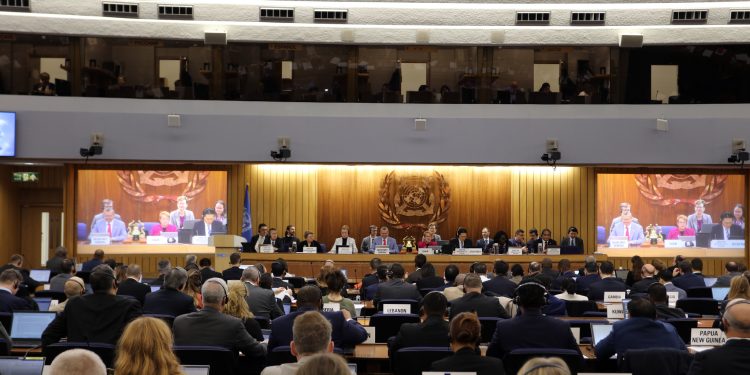
A UCL Shipping and Oceans Research Group readout says that the 21st session of IMO’s Intersessional Working Group on greenhouse gas emissions (IMO ISWG GHG 21) has made steady progress ahead of MEPC 84, set to take place 27 April to 1st May.
The discussions focused on implementing the IMO’s Net Zero Framework (NZF), particularly the detailed guidelines needed to understand how it would work in practice for both governments and the shipping industry. Compared with the situation in October 2025, when a decision on adopting the NZF was postponed for 12 months, the group says there is now significantly greater clarity on how the framework could operate. This includes a more developed evidence base for assessing its potential to shape investment decisions for shipowners and broader energy transition pathways in the maritime sector.
Given the outcome of MEPC.ES2 in October 2025, many have assumed that the NZF had no future and the IMO faced a long delay and a major redesign of this key policy. This meeting’s cooperation, outputs and political landscape challenges that assumption, and suggests that renewed efforts to find a way forwards inclusive of GHG pricing are important to avoid deadlock, as well as to ensure delivery on IMO’s revised strategy commitments
… said Dr Tristan Smith, Professor of Energy and Transport at UCL Shipping and Oceans Research Group.
At a glance
- Further technical work is still required, particularly on lifecycle analysis and on the design and governance of the IMO Net Zero Fund, which were already anticipated in earlier workplans.
- There was strong and broad engagement from member states, including developing countries, SIDS and LDCs, with most participants actively discussing revenue collection and distribution mechanisms such as fuel rewards and the Net Zero Fund.
- A large majority of participating countries supported discussions on how revenues should be used, including rewards for zero/near-zero fuels, maritime transition projects, resilience and adaptation for coastal communities, and targeted support for SIDS and LDCs.
- There is growing consensus that the economic elements of the NZF, particularly the Net Zero Fund, are central to its design and implementation.
- The meeting agreed not to advance the multiplier concept further at this stage, while continuing work on reward mechanisms linked to the Net Zero Fund and GHG pricing.
- Member states remain split between an IMO-determined flat-rate reward and a reverse auction approach, with both options carried forward into draft guidelines for further development.
- GHG pricing and revenue use have become increasingly politically sensitive issues, with notable opposition from some states, including the United States, to MARPOL amendments incorporating these mechanisms.
Economic mechanisms and the net zero fund
A key theme of the meeting was strong engagement around the economic elements of the NZF, especially the Net Zero Fund and related revenue collection and distribution mechanisms. A large majority of participating countries actively contributed to these discussions, including many developing countries, Small Island Developing States (SIDS), and Least Developed Countries (LDCs). Only a small minority explicitly avoided engaging on the issue, suggesting broad interest in the financial architecture of the framework.
Strong and continued engagement on the Net Zero Fund underscores broad interest in an economic element within the IMO’s Net Zero Framework, with many countries pushing for accelerated and intersessional work, an indication that such mechanisms remain central
… commented Dr Annika Frosch, Research Fellow at UCL Shipping and Oceans Research Group.
Technical design options under consideration
On technical design choices, the group agreed not to advance the “multiplier” concept for now, while continuing to develop options for a zero/near-zero (ZNZ) reward mechanism funded through the Net Zero Fund. Member states were split between preferring a flat IMO-determined reward rate and others supporting further exploration of reverse auctions, or a combination of both approaches, both of which will be carried forward into draft guidelines.
Renewed momentum for a workable pathway
Overall, UCL researchers conclude that despite earlier doubts about the NZF’s future, momentum has returned around finding a workable path forward, particularly one that includes some form of greenhouse gas pricing and financial incentives to support early adopters in shipping’s energy transition.
Dr Marie Fricaudet, Senior Research Fellow at UCL Shipping & Oceans Research Group said: “There remain key questions for further work, on how IMO’s policy could incentivise shipping’s energy transition, particularly how the reward mechanism might support the early adopters – crucial as the pre-cursors to shipping’s mass market transition.”
source : safety4sea
Featured Post
 বিশ্ব সমুদ্র দিবস: মেরিন একাডেমিকে আবার সামুদ্রিক শিক্ষার প্রাণকেন্দ্রে ফেরাতে হবে বাংলাদেশকে
 গোলাম সোহরাওয়ার্দি বিশ্ব সমুদ্র দিবস ২০২৬ এবং সমন্বিত জাতীয় প্রশিক্ষণ কৌশলের প্রয়োজনীয়তা বিশ্ব সমুদ্র দিবসে আন্তর্জাতিক সামুদ্রিক সংস্থার (আইএমও) মহাসচিব আর্সেনিও ডমিঙ্গেজ খুব সহজ কিন্তু গভীর একটি বার্তা দিয়েছেন। আন্তর্জাতিক নিয়মকানুন সমুদ্র পরিবহন ব্যবস্থার উন্নতি তখনই করতে পারে, যখন দেশগুলো তা ঠিকমতো মেনে চলে। তিনি বলেন, “নাবিকদের কথাই সবার আগে […]
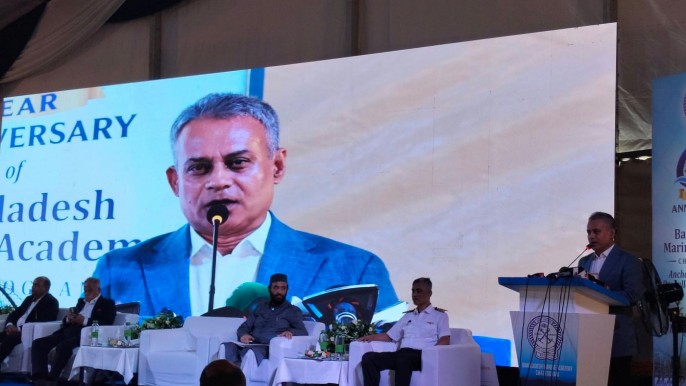 World Maritime Day: Bangladesh Must Put Its Marine Academy Back at the Center of Maritime Education
 World Maritime Day: Bangladesh Must Put Its Marine Academy Back at the Center of Maritime Education by Ghulam Suhrawardi World Maritime Day 2026 and the case for a coherent national training strategy On World Maritime Day, International Maritime Organization Secretary-General Arsenio Dominguez delivered a deceptively simple message: international rules improve […]



JOB SITES
CONTENTS
LINKS
Happy New Year

Découvrez les avantages de MadCasino
Dans le monde des casinos en ligne, MadCasino se distingue par ses offres attrayantes et ses services de qualité. Que vous soyez un joueur débutant ou un parieur aguerri, vous trouverez ici une variété de jeux qui sauront satisfaire toutes vos envies. Les machines à sous, les jeux de table et les options de paris en direct sont tous disponibles pour vous offrir une expérience de jeu inégalée. De plus, le casino propose régulièrement des bonus qui permettent d'augmenter vos chances de gagner, vous offrant ainsi une excellente opportunité de maximiser vos gains.
En matière de sécurité, MadCasino est un nom de confiance. Il est entièrement licencié et régulé, ce qui garantit un environnement de jeu sûr et équitable. Les joueurs peuvent se concentrer sur leur expérience de jeu sans se soucier des problèmes de sécurité. Les transactions financières sont également sécurisées grâce à des technologies de pointe.
Les jeux proposés par MadCasino sont issus des développeurs les plus réputés de l'industrie, vous assurant des graphismes époustouflants et des mécaniques de jeu innovantes. Les joueurs peuvent également profiter d'une expérience de jeu en direct qui simule l'atmosphère d'un casino terrestre, tout en restant dans le confort de leur maison.
Enfin, la plateforme de MadCasino est optimisée pour les appareils mobiles, permettant aux joueurs de parier à tout moment et de n'importe où. Que vous soyez sur votre smartphone ou votre tablette, l'accès à vos jeux préférés n'a jamais été aussi simple. Ne manquez pas l'opportunité de découvrir ce casino exceptionnel.
Les offres de Cresus Casino
Cresus Casino est un autre acteur majeur dans le domaine des jeux en ligne, offrant des promotions généreuses et une vaste sélection de jeux. Les joueurs peuvent profiter d'une expérience de jeu enrichissante grâce aux nombreux bonus disponibles, qui sont conçus pour attirer tant les nouveaux utilisateurs que les joueurs réguliers. Ces avantages permettent non seulement de prolonger votre temps de jeu, mais aussi d'augmenter vos chances de gains conséquents.
Le casino se distingue également par sa ludothèque impressionnante, comprenant une sélection variée de machines à sous, de jeux de table et de jeux en direct. Les clients peuvent choisir parmi des titres populaires et appréciés, ainsi que des nouveautés qui enrichissent constamment l'offre. L'interface utilisateur est conviviale, rendant la navigation sur la plateforme fluide et agréable.
En termes de sécurité, Cresus Casino assure à ses joueurs un environnement de jeu fiable. La plateforme utilise des protocoles de sécurité avancés pour protéger les données personnelles et financières des utilisateurs. Cela permet aux joueurs de se sentir en sécurité tout en jouant à leurs jeux préférés.
Avec un service client réactif et professionnel, Cresus Casino s'assure que toutes vos questions et préoccupations sont traitées rapidement. Que ce soit pour des questions concernant les bonus, les retraits ou les jeux, vous bénéficierez d'une assistance rapide et efficace.
Explorez Nine Casino et ses avantages
Dans l'univers des casinos en ligne, Nine Casino a su se faire une place de choix grâce à son approche innovante et à ses nombreux avantages pour les joueurs. Les utilisateurs peuvent s'attendre à une expérience de jeu enrichissante, avec des bonus attractifs qui sont régulièrement mis à jour. Ces offres sont une excellente façon de découvrir de nouveaux jeux tout en maximisant votre potentiel de gain.
La plateforme de Nine Casino est riche en options de jeux, allant des machines à sous aux jeux de table, en passant par le live casino. Chaque jeu est conçu pour offrir une expérience immersive grâce à des graphismes de haute qualité et des fonctionnalités innovantes. Les parieurs peuvent profiter de sessions de jeu captivantes, comme s'ils étaient dans un véritable casino.
La sécurité est une priorité pour Nine Casino, qui utilise des technologies de cryptage avancées pour protéger les informations de ses joueurs. Cela garantit un environnement de jeu sûr et fiable, permettant aux utilisateurs de se concentrer sur ce qu'ils aiment le plus : jouer.
Enfin, le service clientèle fourni par Nine Casino est exceptionnel, avec des agents disponibles pour répondre à toutes vos questions et résoudre vos problèmes. Vous pourrez ainsi jouer en toute tranquillité, sachant que votre satisfaction est au cœur de leurs préoccupations.
Profitez de l'expérience Lucky31
Lucky31 est un casino en ligne qui se distingue par son approche orientée vers le joueur, offrant une multitude d'options de jeux et des bonus généreux. Que vous soyez amateur de machines à sous ou passionné de jeux de table, vous trouverez une large sélection pour satisfaire toutes vos envies de jeu. Les promotions fréquentes permettent aux joueurs de prolonger leur expérience tout en augmentant leurs chances de gains.
La convivialité de la plateforme de Lucky31 est l'un de ses plus grands atouts. Les joueurs peuvent naviguer facilement entre les différents jeux, et l'interface est conçue pour être intuitive, quel que soit le niveau d'expérience de l'utilisateur. De plus, le casino est entièrement optimisé pour les appareils mobiles, ce qui permet de parier où que vous soyez.
En matière de sécurité, Lucky31 prend les préoccupations des joueurs très au sérieux. Le casino est agréé et régulé, garantissant un environnement de jeu équitable et sécurisé. Les joueurs peuvent ainsi se concentrer sur leur expérience de jeu sans se soucier des risques liés à la sécurité.
Pour ceux qui recherchent un support client efficace, Lucky31 offre un service réactif et professionnel. Que ce soit pour des questions sur les bonus, les jeux ou les paiements, vous aurez accès à une assistance de qualité, vous garantissant une expérience de jeu fluide et agréable.