search the site


Chokepoints Under Pressure: When Geography and Conflict Strain the Arteries of Global Trade
There are moments when geopolitics feels distant from daily life. This is not one of them.
By Paul Morgan (gCaptain) – With confirmed US–Israeli strikes on Iran, renewed Houthi threat signalling in the Red Sea, and elevated instability across parts of the North Arabian Sea and Pakistan’s coastal flank, as well as the Russia – Ukraine conflict, the world’s maritime system is once again operating under simultaneous pressure. Two of the most critical corridors on the planet are under strain at the same time. That is not a theoretical modelling exercise for risk analysts. It is operational reality.
Around 80 per cent of international trade by volume moves by sea. Energy, grain, fertiliser, industrial components, medical supplies and consumer goods all depend on uninterrupted maritime flow. When shipping works, it is invisible. When it falters, consequences appear quickly, first in energy markets, then in food supply, then in industrial production. The link between conflict at sea and the price of bread or fuel is not emotional. It is mechanical.
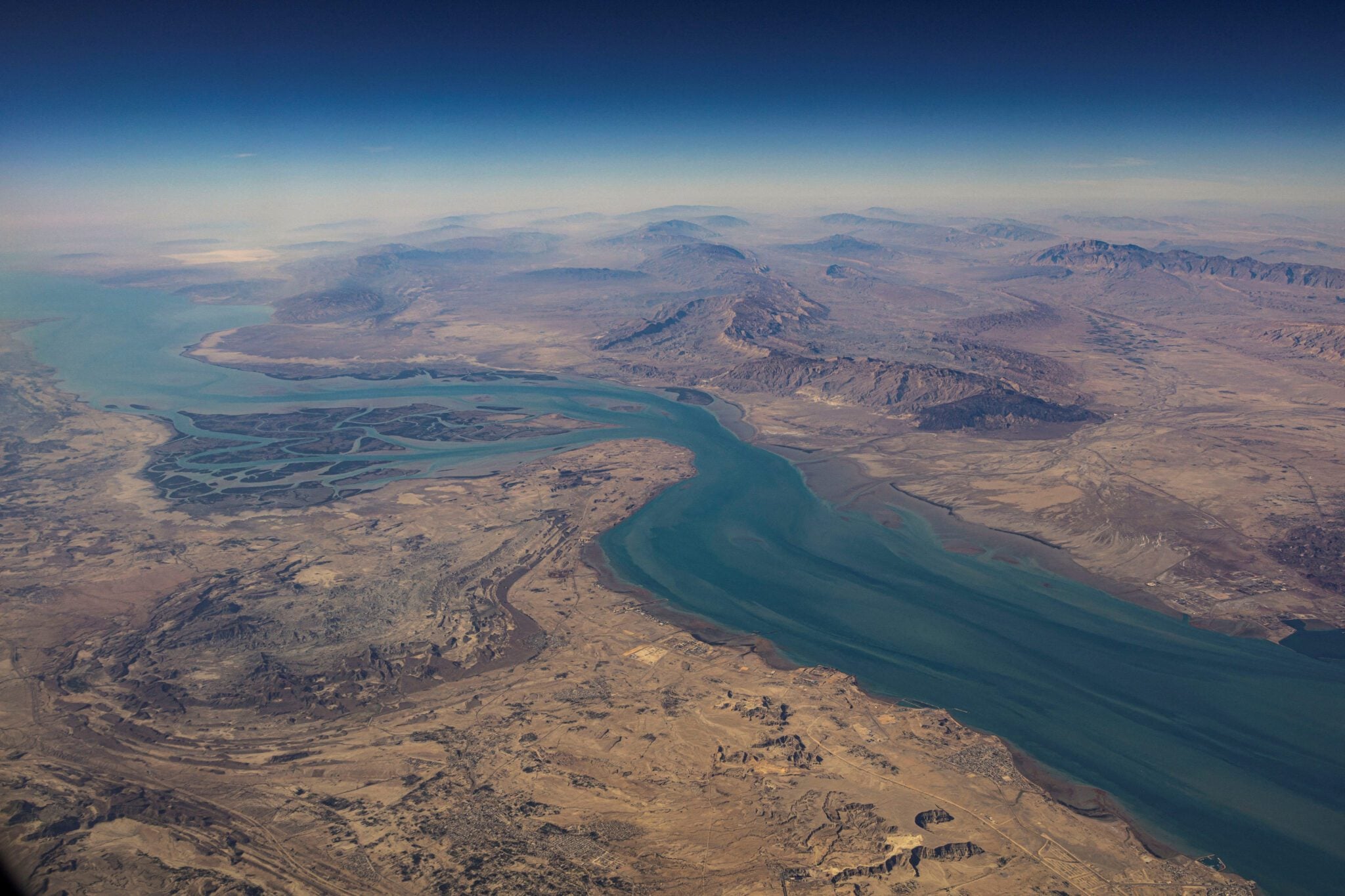
The Strait of Hormuz remains the focal point of that mechanism. Roughly a fifth of global oil consumption and a significant share of global LNG exports transit the narrow channel between Iran and Oman. There is no realistic maritime alternative. Pipelines can offset a fraction of volume; they cannot replace it.
Strip away politics and rhetoric, and the reason Iran occupies such a central position in strategic thinking becomes clear. It is not abstract ideology. It is geography.
Iran sits along the northern shore of Hormuz, directly adjacent to one of the world’s most critical energy arteries. Beyond the strait itself, it links the Middle East to Central Asia, borders the Caucasus, and faces the Indian Ocean. Land corridors, pipeline routes and maritime lanes intersect around it. Influence in that geography carries influence over energy flow and trade routes that reach far beyond the region.
When tension rises involving Iran, it is not a contained event. It radiates through shipping lanes that connect Gulf producers to Asian refiners, European utilities and global commodity markets. Markets respond not only to physical disruption, but to the perception of vulnerability in that corridor.
Following the 28 February strikes, that vulnerability moved from background risk to immediate operational concern. Reports emerged of Iranian Revolutionary Guard elements broadcasting warnings over VHF radio to vessels transiting the Strait. International law does not recognise unilateral closure of an international strait, but maritime traffic is influenced as much by perceived threat as by legal position.
Within hours, vessel behaviour shifted. Tankers slowed or stood off. Some reportedly altered course. Oil traders and majors were cited as suspending certain shipments pending clarification. Electronic interference affecting navigation systems was also reported in the region. GNSS and AIS disruption may appear technical, but in confined waters with dense commercial and military traffic, ambiguity increases risk. In a tense environment, miscalculation can be misinterpreted.
UK Maritime Trade Operations issued a verified advisory warning of significant military activity across the Arabian Gulf, Gulf of Oman and Strait of Hormuz, including the potential for interference with navigation and communications systems. Greece advised its flagged vessels to avoid high-risk Gulf areas. Such signals are closely watched by insurers and charterers.
Insurance often moves faster than diplomacy. War-risk underwriters were reported to be reassessing exposure and preparing for premium escalation. In previous Gulf crises, additional war-risk premiums have reached six-figure sums per voyage. When insurance tightens, voyages become commercially marginal. Charterers hesitate. Refiners hedge. The chain reaction from geopolitical tension to energy pricing runs directly through the insurance market.
Simultaneously, the Red Sea corridor faces renewed instability. Houthi officials signalled an intention to resume attacks on shipping in response to developments involving Iran. During the 2024–2025 campaign, missiles and drones struck commercial vessels. Major container lines diverted around the Cape of Good Hope. Crews were injured. Schedules collapsed.
When the Red Sea becomes unsafe for sustained commercial transit, the world effectively grows larger. Asia–Europe voyages via the Cape add ten to fourteen days compared to the Suez route, with of course associated cost to owners/charterers. Ships are tied up longer. Effective fleet capacity tightens. UN trade data previously documented how earlier Red Sea disruption reduced Suez Canal volumes sharply and structurally increased global ton-mile demand. That structural extension translates into higher freight, longer delivery times and additional fuel consumption even when global trade volumes remain constant.
Container carriers had been cautiously evaluating partial returns to Suez transits earlier this year. Those calculations are now under review again. Freight data had already shown rate increases on Asia–Middle East trades driven by security concerns alone. A renewed missile threat environment closes the door to meaningful normalisation.
Further east, Pakistan introduces a different layer of risk. More than 95 per cent of Pakistan’s trade is seaborne. Karachi is a major regional gateway. Gwadar carries strategic significance in regional infrastructure planning. Escalating militant violence in Balochistan and heightened national security measures add complexity along the Arabian Sea flank.
This is not equivalent to Hormuz in strategic weight, but instability in the general region and coastal infrastructure can affect logistics, insurance assessment and vessel call decisions. During previous Indo-Pakistani escalations, insurers elevated threat levels in the Eastern Arabian Sea and certain tanker owners declined calls. Charterparty disputes followed. Even when sea lanes remain open, perception reshapes commercial behaviour.
The defining feature of the present moment is simultaneity. Each theatre alone is manageable. Together they compress flexibility. Rerouting away from one corridor pushes tonnage into another already strained space. Insurance exposure aggregates across fleets trading multiple regions. Energy and container markets respond to cumulative risk, not isolated incidents.
Lost in the general market commentary is the human architecture that keeps global trade functioning. On the bridge of a VLCC approaching Hormuz, the master is not thinking about geopolitics in abstract terms. He or she is monitoring traffic separation schemes, assessing navigation integrity amid electronic interference, listening to VHF traffic, reviewing security advisories and balancing commercial pressure against crew safety.
Chief engineers calculate fuel margins for potential diversion. Company security officers coordinate with naval liaison centres and intelligence providers. Charterers renegotiate war-risk clauses. Brokers recalculate voyage economics. Port authorities adjust anchorage plans for vessels choosing to stand off rather than enter.
Shore leave is curtailed. Fatigue accumulates. Crews operate under sustained uncertainty. The resilience of the maritime system rests on professionals who rarely appear in headlines.
The burden of disruption is uneven. Wealthier economies absorb higher prices and longer transit times. Import-dependent states with limited reserves face tighter margins and increased vulnerability. When energy or grain shipments are delayed, it is not freight analysts who feel the first impact; it is consumers. Sea lanes remain open, energy continues to flow, and containers are still moving. But the margin for error has narrowed.
The indicators to watch are behavioural rather than rhetorical. Sustained tanker stand-offs near Fujairah, confirmed missile incidents against commercial vessels in the Red Sea; significant withdrawal or repricing of war-risk cover; instability affecting port operations in Karachi or Gwadar. These signals will determine whether the system absorbs the shock or begins to fracture under it.
Global shipping has repeatedly acted as the world’s shock absorber, through the Suez blockage, through pandemic congestion, through earlier Red Sea attacks. It has absorbed those shocks at cost.
What is different now is the compression of pressure across multiple chokepoints at once. Geography has placed key energy and trade arteries within reach of conflict. Shipping stands in that geography every day.
The world rarely notices the system until it falters. The people who keep ships moving operate in that space between risk and continuity. At moments like this, their role is not peripheral to global stability. It is central.
source : gcaptain
Featured Post
 বড় জাহাজ মেরামতে মাতারবাড়ীতে ১ বিলিয়ন ডলারের প্রকল্প
 মাতারবাড়ীতে প্রায় ১ বিলিয়ন মার্কিন ডলার ব্যয়ে পরিবেশবান্ধব ডকইয়ার্ড ও জাহাজ নির্মাণ কেন্দ্র স্থাপনের উদ্যোগে নীতিগত অনুমোদন দিয়েছে নৌপরিবহন মন্ত্রণালয়। এখন প্রকল্পটির কারিগরি ও আর্থিক মূল্যায়নের জন্য প্রস্তাবটি সরকারি-বেসরকারি অংশীদারত্ব (পিপিপি) কর্তৃপক্ষের কাছে পাঠানো হয়েছে। সম্পূর্ণ বেসরকারি অর্থায়নে সরকারি জমির মালিকানা অক্ষুণ্ন রেখে প্রকল্পটি বাস্তবায়নের পরিকল্পনা রয়েছে। বন্দর কর্তৃপক্ষ জানায়, […]
 Industry on alert over scam messages offering ships “safe passage” on Hormuz
 Credit: Shutterstock Fraudulent messages offering safe passage through the Strait of Hormuz in exchange for cryptocurrency have been circulated to shipping companies with vessels stranded west of the waterway, according to MARISKS. In an alert issued on 20 April, MARISKS cautioned that unknown actors posing as Iranian authorities had contacted […]



JOB SITES
CONTENTS
LINKS
Happy New Year

Découvrez les avantages de MadCasino
Dans le monde des casinos en ligne, MadCasino se distingue par ses offres attrayantes et ses services de qualité. Que vous soyez un joueur débutant ou un parieur aguerri, vous trouverez ici une variété de jeux qui sauront satisfaire toutes vos envies. Les machines à sous, les jeux de table et les options de paris en direct sont tous disponibles pour vous offrir une expérience de jeu inégalée. De plus, le casino propose régulièrement des bonus qui permettent d'augmenter vos chances de gagner, vous offrant ainsi une excellente opportunité de maximiser vos gains.
En matière de sécurité, MadCasino est un nom de confiance. Il est entièrement licencié et régulé, ce qui garantit un environnement de jeu sûr et équitable. Les joueurs peuvent se concentrer sur leur expérience de jeu sans se soucier des problèmes de sécurité. Les transactions financières sont également sécurisées grâce à des technologies de pointe.
Les jeux proposés par MadCasino sont issus des développeurs les plus réputés de l'industrie, vous assurant des graphismes époustouflants et des mécaniques de jeu innovantes. Les joueurs peuvent également profiter d'une expérience de jeu en direct qui simule l'atmosphère d'un casino terrestre, tout en restant dans le confort de leur maison.
Enfin, la plateforme de MadCasino est optimisée pour les appareils mobiles, permettant aux joueurs de parier à tout moment et de n'importe où. Que vous soyez sur votre smartphone ou votre tablette, l'accès à vos jeux préférés n'a jamais été aussi simple. Ne manquez pas l'opportunité de découvrir ce casino exceptionnel.
Les offres de Cresus Casino
Cresus Casino est un autre acteur majeur dans le domaine des jeux en ligne, offrant des promotions généreuses et une vaste sélection de jeux. Les joueurs peuvent profiter d'une expérience de jeu enrichissante grâce aux nombreux bonus disponibles, qui sont conçus pour attirer tant les nouveaux utilisateurs que les joueurs réguliers. Ces avantages permettent non seulement de prolonger votre temps de jeu, mais aussi d'augmenter vos chances de gains conséquents.
Le casino se distingue également par sa ludothèque impressionnante, comprenant une sélection variée de machines à sous, de jeux de table et de jeux en direct. Les clients peuvent choisir parmi des titres populaires et appréciés, ainsi que des nouveautés qui enrichissent constamment l'offre. L'interface utilisateur est conviviale, rendant la navigation sur la plateforme fluide et agréable.
En termes de sécurité, Cresus Casino assure à ses joueurs un environnement de jeu fiable. La plateforme utilise des protocoles de sécurité avancés pour protéger les données personnelles et financières des utilisateurs. Cela permet aux joueurs de se sentir en sécurité tout en jouant à leurs jeux préférés.
Avec un service client réactif et professionnel, Cresus Casino s'assure que toutes vos questions et préoccupations sont traitées rapidement. Que ce soit pour des questions concernant les bonus, les retraits ou les jeux, vous bénéficierez d'une assistance rapide et efficace.
Explorez Nine Casino et ses avantages
Dans l'univers des casinos en ligne, Nine Casino a su se faire une place de choix grâce à son approche innovante et à ses nombreux avantages pour les joueurs. Les utilisateurs peuvent s'attendre à une expérience de jeu enrichissante, avec des bonus attractifs qui sont régulièrement mis à jour. Ces offres sont une excellente façon de découvrir de nouveaux jeux tout en maximisant votre potentiel de gain.
La plateforme de Nine Casino est riche en options de jeux, allant des machines à sous aux jeux de table, en passant par le live casino. Chaque jeu est conçu pour offrir une expérience immersive grâce à des graphismes de haute qualité et des fonctionnalités innovantes. Les parieurs peuvent profiter de sessions de jeu captivantes, comme s'ils étaient dans un véritable casino.
La sécurité est une priorité pour Nine Casino, qui utilise des technologies de cryptage avancées pour protéger les informations de ses joueurs. Cela garantit un environnement de jeu sûr et fiable, permettant aux utilisateurs de se concentrer sur ce qu'ils aiment le plus : jouer.
Enfin, le service clientèle fourni par Nine Casino est exceptionnel, avec des agents disponibles pour répondre à toutes vos questions et résoudre vos problèmes. Vous pourrez ainsi jouer en toute tranquillité, sachant que votre satisfaction est au cœur de leurs préoccupations.
Profitez de l'expérience Lucky31
Lucky31 est un casino en ligne qui se distingue par son approche orientée vers le joueur, offrant une multitude d'options de jeux et des bonus généreux. Que vous soyez amateur de machines à sous ou passionné de jeux de table, vous trouverez une large sélection pour satisfaire toutes vos envies de jeu. Les promotions fréquentes permettent aux joueurs de prolonger leur expérience tout en augmentant leurs chances de gains.
La convivialité de la plateforme de Lucky31 est l'un de ses plus grands atouts. Les joueurs peuvent naviguer facilement entre les différents jeux, et l'interface est conçue pour être intuitive, quel que soit le niveau d'expérience de l'utilisateur. De plus, le casino est entièrement optimisé pour les appareils mobiles, ce qui permet de parier où que vous soyez.
En matière de sécurité, Lucky31 prend les préoccupations des joueurs très au sérieux. Le casino est agréé et régulé, garantissant un environnement de jeu équitable et sécurisé. Les joueurs peuvent ainsi se concentrer sur leur expérience de jeu sans se soucier des risques liés à la sécurité.
Pour ceux qui recherchent un support client efficace, Lucky31 offre un service réactif et professionnel. Que ce soit pour des questions sur les bonus, les jeux ou les paiements, vous aurez accès à une assistance de qualité, vous garantissant une expérience de jeu fluide et agréable.