search the site


PORT STATE CONTROL (PSC)
F R Chowdhury
- What is PSC: It is customary to respect law of the land. You will appreciate that I will have to comply with laws of Malaysia so long I am in Malaysia no matter what my nationality is. The principle of Port State Control is based on this simple philosophy. A ship that enters my waters will have to comply with my legal requirements and standards. You might wonder as to how many countries’ laws the ship has to comply with? Fortunately the national laws are based on requirements of common international conventions. This means to say that the requirements relating to safety, security and protection of marine environment are derived from common international conventions and as such are similar to each other’s. This amounts to say that all merchant ships trading around the world have to comply with minimum standards specified in international conventions. Ships will have to meet national standards (whichever flag they are registered in) and when abroad will have to meet the standards of the trading partner. With checks at both ends there is no room for rogue ship-owners to operate. This is how the world of shipping is expected to reach a level of ever higher standards.
- Spirit of cooperation: PSC does not mean tit for tat. “You detain my ship and now I detain your ship”. – No, it is not that. It is rather “Don’t worry. You may not be there. I will be there to ensure the safety of your ship and crew.” All responsible administrations have the same common goals and through FSI (Flag State Implementation) and PSC (Port State Control) they achieve the same. FSI and PSC are complimentary to each other to achieve safer and cleaner sea.
- International instruments that make reference to PSC: All major international conventions have reference to the provision of port state control. The philosophy is: it applies to own ships (wherever they may be) and other ships when in my waters. This is how it is imposed on one and all equally. The major international conventions that make reference to PSC are:
- International Convention on the Law of the Seas, 1982 (UNCLOS-82);
- International Convention on Safety of Life at Sea, 1974 (SOLAS-74);
- International Convention on Prevention of Pollution at Sea, 1973/ 78 (MARPOL-73/ 78);
- International Convention on Standards of Training, Certification and Watch-keeping for Seafarers, 1978 (STCW-78);
- International Convention on Load Lines, 1966 (LL-66);
- Con. On Civil Liability for Oil Pollution Damage, 1969 (CLC-1969-92);
- International Convention on Prevention of Collision at Sea, 1977 (COLREG-77);
- International Convention on Ballast Control and Monitor, 2004 (BWCM-2004);
- International Maritime Labour Convention, 2006 (ILO-MLC-2006).
- Standards higher than Convention requirements: Every member state has the right to set a level of standards higher than the convention requirements. Such higher standards may only be applied to their own ships. Convention does not allow a member state to impose such higher standards to visiting foreign ships. Being a party to a convention means a commitment to implement, support and promote the convention requirements and standards.
However, this should not be confused with the inherent right of a sovereign state to make their own law to apply to all if the state is convinced that such requirement is in the common interest. However, such law should have no reference to any international instrument.
- National legislation implementing international conventions: A sate is governed by its own laws. The court recognises national laws published in the official gazette. It does not go by what any official may sign abroad.
However, once a state becomes a party to an international convention, it can freely refer to various provisions of the convention in its legislation. As a matter of fact, it is a better way of drafting legislation rather than re-writing the entire convention again. However, certain things are not specified in the convention. They are for each state to do their own way. Those points must be covered otherwise the law will remain incomplete. The law must make a focal administrative authority responsible for its execution and compliance including issue of any exemption, equivalence etc. The law must have appropriate penal provision.
- Ships flagged under non-party states: While exercising PSC, shall we exonerate ships that fly flag of states that are not party to any specific convention? No, if such ships are allowed to get away with their deficiencies on the plea of not being a party to the convention then the spirit of the convention shall be defeated. The world will be full of sub-standard ships. That is why the convention stipulates that no favourable treatment shall be given to ships of non-party states. They will have to meet the same standards. This is a unique way to bring states under the conventions and ensure compliance of required standards by all ships. In other words, it means global compliance of convention standards.
- Ethical principle of practise before preach: There is something known as FSI (Flag State Implementation). It is the duty of the national administration to ensure that all ships under its flag comply with convention standards. The Flag Administration have jurisdiction over its own ships wherever they may be. The Administration can inspect its ship at random in addition to the requirements of statutory survey and certification. This is one way to ensure that ships maintain the highest standards of safety at all times. The Administration can then stand high above head and shoulders to say that it preaches what it practices and that there is no double standards. Importance of life and environment is equally important whether on own ships or foreign ships.
- National maritime administration and Port authority: The term “Port State Control” has nothing to do with Port Administration. The responsibility rests with the Administration of the state to which the port belongs. Port authority shall keep Administration informed of ships’ movement. The Administration shall then decide which ships it would like to inspect. The decision shall be based on various factors:
- Flag of the ship and its reputation;
- Age of the ship;
- The RO (society it is classed with) and class records;
- Any previous history of PSC detention;
- If operating under any MOU then any exchange of information;
- Any complaint or any other report.
- Limited role of port authority: The port authority cannot conduct PSC because of conflict of interest. Supposing that the Port Authority was allowed to conduct the PSC, then the Harbour Master could detain a ship with minor deficiencies and then charge the ship for over stay to make additional revenue earning for the port.
However, the Port Authority may like to see that the ship has sufficient insurance cover to pay for any harm or damage done to the port or environment. The pilot may confirm this as s/he boards the vessel and may refuse to handle the vessel that has no cover.
- Role of Classification Societies: PSC is essentially an Administration responsibility that cannot be delegated. The inspection is supposed to be free of charge and as such administration cannot ask someone else to do it. Besides a particular ship may have been certified by the relevant society and as such it cannot supervise its own work. As a matter of principle a classification society would not like to displease a ship-owner. So, ROs cannot be employed to conduct PSC.
However, relevant RO gets involved as soon as any deficiency is noted. The Society will ensure that all appropriate actions are taken to put the ship back in good order as it existed before the deficiency was noted. In some cases new certificates are issued (after restoration work is satisfactorily completed).
- MOU: The term MOU means Memorandum of Understanding. It is normally a regional agreement among a number of neighbouring states to conduct PSC in a coordinated manner. MOU normally has a secretariat which maintains all necessary data and through this centre they exchange necessary information. If a vessel is released from previous port with a commitment to conduct repairs next port, the information is relayed accordingly. If the vessel does not turn up in next port, she may even be banned from entering the MOU region. If a ship has been inspected in previous port with no deficiency then the information is available to avoid any duplication. This is how MOU saves time and energy but makes coordinated action more effective. MOU also gives the opportunity to share knowledge and experience.
Each MOU Secretariat develops its own convenient reporting form in the shape of check-list. A number of easy to understand codes are used. There is also additional space to write important observations to complement the check-list. On return to office the surveyor feeds the report on the computer and all MOU states get to see and know.
However, it must be understood that international conventions make no reference to MOU. These are voluntary regional agreements based on common requirements and understanding to facilitate coordinated operation of PSC. The United States (USA) is not a party to any MOU. It operates PSC on its own. Canada is a party to two MOUs – one for Atlantic region (Paris MOU) and other for Pacific region (Tokyo MOU).
- Three stages of PSC: There are three logical stages of PSC. They are:
- Certificates and documents – whether the ship has all statutory certificates, documents and other information valid and up to date;
- Whether all machinery and equipment are in Good Working Order;
- If the crew are well trained and familiar with their assigned responsibilities.
It is not necessary that all three stages will always be carried out. The surveyor should be competent enough to know and understand in each case how essential it is to progress further.
- Three categories of report: On conclusion of the inspection there could be one of the three types of reporting:
- Clean report – no deficiency;
- Minor deficiency – not serious enough for detention. There are again two courses of action – to give a warning that vessel must not come again with such deficiency – to attach a condition that deficiency must be rectified within a period, preferably in next port. Next port or MOU members must be notified.
- Detention – serious deficiency leading to detention.
- Detention: Detention is justified only when the inspector is convinced that allowing the ship to proceed to sea may endanger life, property or environment. However, vessel should be allowed to proceed to a port with necessary repair facilities if such facilities are not available in the port of inspection. In extreme cases ship may be advised to carry some substitute equipment for such journey.
Since detention may eventually lead to legal challenge, the detention notice must also make reference to provisions of national law in addition to convention requirements.
Ship shall be served with a detention notice. It is for the ship to let owners/ managers, agents and RO/ Classification Society know about it. PSC authority shall notify flag state or their local mission. In order that the detention is duly enforced the authority shall also notify port and customs authority as well as the Coastguard.
- Difference between arrest and detention: Detention by PSC inspector is an administrative action permissible under the law for reasons of safety whereas ships may be arrested by a court order against any claim. Arrest of ship is a judicial matter.
- Can fine/ penalty be imposed for deficiencies found under PSC? No, ships may only be detained until it is made safe to proceed to sea. No judicial measure need to be taken. The question of imposing fine/ penalty does not arise and is not permissible.
- Can the Administration charge fees for PSC inspection? No, PSC inspections are done for reasons of safety. It is humanitarian service to protect life and environment. Ship-owner cannot be charged because they never asked for such inspection.
However, when the ship asks for a further visit of a surveyor/ inspector to give clearance certificate, it will be justified to charge for such services.
- What PSC means to seafarers: Seafarers want to sail on a safe ship. A good PSC inspection goes a long way in making the ship safer. Seafarers must provide full cooperation to PSC inspector in their own interest.
- How to avoid PSC detention: Ships should comply with all applicable requirements and maintain to the highest standards of safety and pollution prevention. A list of certificates and documents is attached herewith. Ships should comply with those requirements that apply to them.
- Good governance by Administration: Every Flag State should be concerned about their own reputation. It is important that following points are taken into account:
- Be a Party to all applicable International Conventions and Protocols;
- Appropriate legislation giving force of law to applicable provisions of international instruments;
- Well trained and competent persons in the Administration;
- Documented procedures for major operational matters;
- Conduct FSI and PSC with the same equal motive and goals;
- Audit/ review of performance by ROs;
- Maintaining highest standards of seafarers’ training and certification;
- Inquiry/ investigation of accident/ casualty only to find root causes for possible improvement (no-blame culture ensuring that such inquiry should have no bearing on any judicial inquiry or right to sue each other for damages);
- Record-keeping;
- Periodical review of all activities and possible improvements.
London, 12-March-2017 <fazlu.chowdhury@btinternet.com>
Featured Post
 বড় জাহাজ মেরামতে মাতারবাড়ীতে ১ বিলিয়ন ডলারের প্রকল্প
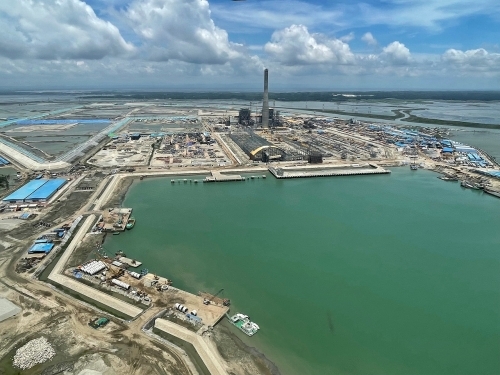
 মাতারবাড়ীতে প্রায় ১ বিলিয়ন মার্কিন ডলার ব্যয়ে পরিবেশবান্ধব ডকইয়ার্ড ও জাহাজ নির্মাণ কেন্দ্র স্থাপনের উদ্যোগে নীতিগত অনুমোদন দিয়েছে নৌপরিবহন মন্ত্রণালয়। এখন প্রকল্পটির কারিগরি ও আর্থিক মূল্যায়নের জন্য প্রস্তাবটি সরকারি-বেসরকারি অংশীদারত্ব (পিপিপি) কর্তৃপক্ষের কাছে পাঠানো হয়েছে। সম্পূর্ণ বেসরকারি অর্থায়নে সরকারি জমির মালিকানা অক্ষুণ্ন রেখে প্রকল্পটি বাস্তবায়নের পরিকল্পনা রয়েছে। বন্দর কর্তৃপক্ষ জানায়, […]
 Industry on alert over scam messages offering ships “safe passage” on Hormuz
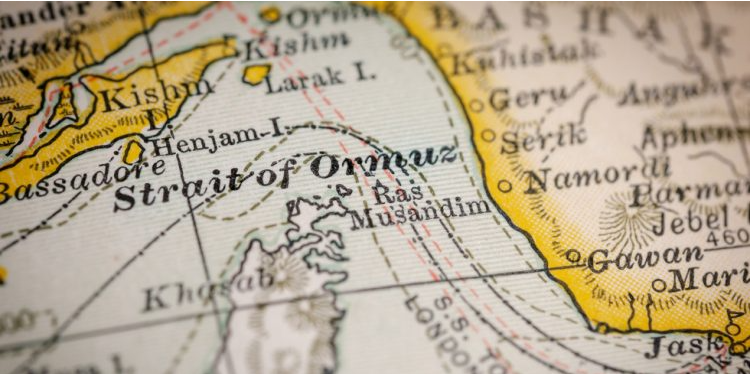
 Credit: Shutterstock Fraudulent messages offering safe passage through the Strait of Hormuz in exchange for cryptocurrency have been circulated to shipping companies with vessels stranded west of the waterway, according to MARISKS. In an alert issued on 20 April, MARISKS cautioned that unknown actors posing as Iranian authorities had contacted […]



JOB SITES
CONTENTS
LINKS
Happy New Year

Découvrez les avantages de MadCasino
Dans le monde des casinos en ligne, MadCasino se distingue par ses offres attrayantes et ses services de qualité. Que vous soyez un joueur débutant ou un parieur aguerri, vous trouverez ici une variété de jeux qui sauront satisfaire toutes vos envies. Les machines à sous, les jeux de table et les options de paris en direct sont tous disponibles pour vous offrir une expérience de jeu inégalée. De plus, le casino propose régulièrement des bonus qui permettent d'augmenter vos chances de gagner, vous offrant ainsi une excellente opportunité de maximiser vos gains.
En matière de sécurité, MadCasino est un nom de confiance. Il est entièrement licencié et régulé, ce qui garantit un environnement de jeu sûr et équitable. Les joueurs peuvent se concentrer sur leur expérience de jeu sans se soucier des problèmes de sécurité. Les transactions financières sont également sécurisées grâce à des technologies de pointe.
Les jeux proposés par MadCasino sont issus des développeurs les plus réputés de l'industrie, vous assurant des graphismes époustouflants et des mécaniques de jeu innovantes. Les joueurs peuvent également profiter d'une expérience de jeu en direct qui simule l'atmosphère d'un casino terrestre, tout en restant dans le confort de leur maison.
Enfin, la plateforme de MadCasino est optimisée pour les appareils mobiles, permettant aux joueurs de parier à tout moment et de n'importe où. Que vous soyez sur votre smartphone ou votre tablette, l'accès à vos jeux préférés n'a jamais été aussi simple. Ne manquez pas l'opportunité de découvrir ce casino exceptionnel.
Les offres de Cresus Casino
Cresus Casino est un autre acteur majeur dans le domaine des jeux en ligne, offrant des promotions généreuses et une vaste sélection de jeux. Les joueurs peuvent profiter d'une expérience de jeu enrichissante grâce aux nombreux bonus disponibles, qui sont conçus pour attirer tant les nouveaux utilisateurs que les joueurs réguliers. Ces avantages permettent non seulement de prolonger votre temps de jeu, mais aussi d'augmenter vos chances de gains conséquents.
Le casino se distingue également par sa ludothèque impressionnante, comprenant une sélection variée de machines à sous, de jeux de table et de jeux en direct. Les clients peuvent choisir parmi des titres populaires et appréciés, ainsi que des nouveautés qui enrichissent constamment l'offre. L'interface utilisateur est conviviale, rendant la navigation sur la plateforme fluide et agréable.
En termes de sécurité, Cresus Casino assure à ses joueurs un environnement de jeu fiable. La plateforme utilise des protocoles de sécurité avancés pour protéger les données personnelles et financières des utilisateurs. Cela permet aux joueurs de se sentir en sécurité tout en jouant à leurs jeux préférés.
Avec un service client réactif et professionnel, Cresus Casino s'assure que toutes vos questions et préoccupations sont traitées rapidement. Que ce soit pour des questions concernant les bonus, les retraits ou les jeux, vous bénéficierez d'une assistance rapide et efficace.
Explorez Nine Casino et ses avantages
Dans l'univers des casinos en ligne, Nine Casino a su se faire une place de choix grâce à son approche innovante et à ses nombreux avantages pour les joueurs. Les utilisateurs peuvent s'attendre à une expérience de jeu enrichissante, avec des bonus attractifs qui sont régulièrement mis à jour. Ces offres sont une excellente façon de découvrir de nouveaux jeux tout en maximisant votre potentiel de gain.
La plateforme de Nine Casino est riche en options de jeux, allant des machines à sous aux jeux de table, en passant par le live casino. Chaque jeu est conçu pour offrir une expérience immersive grâce à des graphismes de haute qualité et des fonctionnalités innovantes. Les parieurs peuvent profiter de sessions de jeu captivantes, comme s'ils étaient dans un véritable casino.
La sécurité est une priorité pour Nine Casino, qui utilise des technologies de cryptage avancées pour protéger les informations de ses joueurs. Cela garantit un environnement de jeu sûr et fiable, permettant aux utilisateurs de se concentrer sur ce qu'ils aiment le plus : jouer.
Enfin, le service clientèle fourni par Nine Casino est exceptionnel, avec des agents disponibles pour répondre à toutes vos questions et résoudre vos problèmes. Vous pourrez ainsi jouer en toute tranquillité, sachant que votre satisfaction est au cœur de leurs préoccupations.
Profitez de l'expérience Lucky31
Lucky31 est un casino en ligne qui se distingue par son approche orientée vers le joueur, offrant une multitude d'options de jeux et des bonus généreux. Que vous soyez amateur de machines à sous ou passionné de jeux de table, vous trouverez une large sélection pour satisfaire toutes vos envies de jeu. Les promotions fréquentes permettent aux joueurs de prolonger leur expérience tout en augmentant leurs chances de gains.
La convivialité de la plateforme de Lucky31 est l'un de ses plus grands atouts. Les joueurs peuvent naviguer facilement entre les différents jeux, et l'interface est conçue pour être intuitive, quel que soit le niveau d'expérience de l'utilisateur. De plus, le casino est entièrement optimisé pour les appareils mobiles, ce qui permet de parier où que vous soyez.
En matière de sécurité, Lucky31 prend les préoccupations des joueurs très au sérieux. Le casino est agréé et régulé, garantissant un environnement de jeu équitable et sécurisé. Les joueurs peuvent ainsi se concentrer sur leur expérience de jeu sans se soucier des risques liés à la sécurité.
Pour ceux qui recherchent un support client efficace, Lucky31 offre un service réactif et professionnel. Que ce soit pour des questions sur les bonus, les jeux ou les paiements, vous aurez accès à une assistance de qualité, vous garantissant une expérience de jeu fluide et agréable.
Learn something about shipping law, very interesting. Thank you Capt Chowdhury.