search the site


World Maritime Day 2026: Bangladesh Must Put Its Marine Academy Back at the Center of Maritime Excellence
World Maritime Day 2026: Bangladesh Must Put Its Marine Academy Back at the Center of Maritime Excellence
As Bangladesh observes World Maritime Day 2026, the occasion should prompt more than celebration. The country must connect its ports, maritime administration, seafarers, blue-economy ambitions, and educational institutions within a coherent national strategy and place professional maritime education at its center.
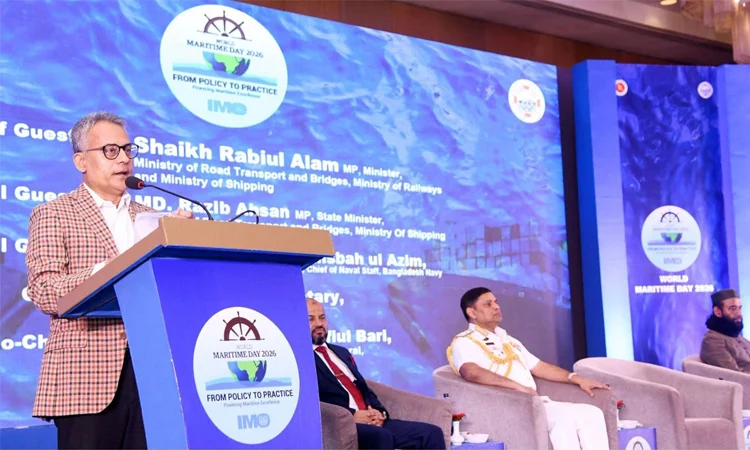
The Department of Shipping organized Bangladesh’s principal World Maritime Day 2026 observance in Dhaka under the supervision of the Ministry of Shipping. Bangladesh adopted this year’s International Maritime Organization (IMO) theme, “From Policy to Practice: Powering Maritime Excellence,” to emphasize achieving excellence in the maritime sector.
The gathering brought together senior government officials, naval leadership, port authorities, shipowners and operators, ship-management and ship-recycling companies, maritime education and training institutions, seafarers and other maritime professionals. Shipping Minister Shaikh Rabiul Alam attended as Chief Guest, while Admiral Khandakar Mesbah-ul-Azim, Chief of Naval Staff, was a Special Guest. State Minister for Shipping Md. Rajib Ahsan, Shipping Secretary Zakaria, and Director General of Shipping Commodore Md. Shafiul Bari were among the senior officials participating.
The Minister’s message went to the heart of the IMO theme: ratifying international conventions and passing legislation are not enough unless they are effectively implemented. Safe ships, efficient and environmentally responsible ports, skilled seafarers, credible regulation, automation, stronger flag- and port-State control and investment in maritime training must follow policy commitments.
The Navy Chief similarly linked maritime security to economic prosperity, emphasizing maritime-domain awareness, information sharing, and interagency coordination. DG Shipping focused on practical challenges, including the growing demands on Chattogram Port, future container capacity, Matarbari, and modernization of Bangladesh’s extensive inland-waterway network.
The occasion therefore raises a larger question: how can Bangladesh translate its considerable maritime aspirations into measurable achievement?
From Policy to Practice
The IMO established World Maritime Day to focus international attention on shipping and the maritime community. More than 80 percent of world trade by volume is transported by sea. Food, fuel, machinery, automobiles, raw materials and consumer products move through a vast network of ships, ports, terminals and logistics systems.
Yet merchant shipping remains largely invisible to ordinary citizens until supply chains are interrupted.
World Maritime Day helps bring attention not only to ships but also to the people and institutions that keep international commerce moving safely.
For a national maritime administration such as Bangladesh’s Department of Shipping, the occasion carries particular significance. Bangladesh is an IMO member and a party to important international maritime conventions. But ratification is only the beginning. International obligations must ultimately appear in national legislation, inspections, certification, training, port-State control and enforcement.
That makes the 2026 theme particularly appropriate for Bangladesh. Maritime excellence is not created by signing conventions or announcing policies. It is created aboard ships, in engine rooms and on bridges, at terminals, in classrooms, examination halls and government offices.
Bangladesh has no shortage of maritime institutions or ambitions. What it increasingly needs is coordination, professional competence, institutional continuity and implementation.
Bangladesh’s Maritime Opportunity
Bangladesh stands at an important point in its maritime development.
Chattogram Port remains the country’s principal gateway for international commerce. Development at Mongla, Payra, and Matarbari, along with improved road, rail, and inland-waterway connections, could transform the country’s logistics system.
But the Bay of Bengal offers opportunities extending well beyond ports and conventional shipping. Fisheries, offshore resources, shipbuilding, ship recycling, coastal development, marine biotechnology and other activities form part of the expanding concept of the blue economy.
Bangladesh also possesses an enormous inland-waterway network. Its rivers have carried passengers and commodities for centuries. Better integration of inland shipping with seaports, highways and railways could reduce congestion and logistics costs.
Infrastructure alone, however, cannot create maritime excellence.
Modern ships require competent officers and engineers. Ports require professional managers. Maritime commerce depends upon surveyors, naval architects, lawyers, insurers, logisticians, marine engineers and capable regulators. Digitalization increasingly requires expertise in automation, cybersecurity and information technology.
Bangladesh’s most valuable maritime infrastructure may therefore not be ships or ports.
It is its people.
Seafarers: Bangladesh’s Maritime Ambassadors
Bangladeshi officers and ratings serving aboard international vessels represent the country worldwide. They earn foreign exchange, acquire international experience, and carry Bangladesh’s reputation into the global shipping industry.
This human resource deserves greater national attention.
Shipping is undergoing rapid technological change. Alternative fuels, electronic navigation, automation, environmental regulation, and increasingly sophisticated shipboard machinery are changing the profession. Tomorrow’s maritime officer will require traditional seamanship and engineering knowledge combined with environmental awareness and digital competence.
Bangladesh cannot assume that its seafarers will remain internationally competitive simply because it has historically produced capable officers.
Training must continuously improve. Certification must retain international credibility. Maritime schools must remain connected with technological developments aboard modern vessels. Employers, regulators and academies must communicate continuously.
World Maritime Day should therefore become an occasion to measure Bangladesh’s maritime human-resource performance.
How many Bangladeshi officers and ratings are employed internationally? How many graduating cadets obtain the sea time necessary to advance professionally? What skills will international shipowners demand five or ten years from now? Are Bangladesh’s training institutions preparing their students accordingly?
These are measurable questions and should become part of national maritime planning.
Put Bangladesh Marine Academy Back at the Center
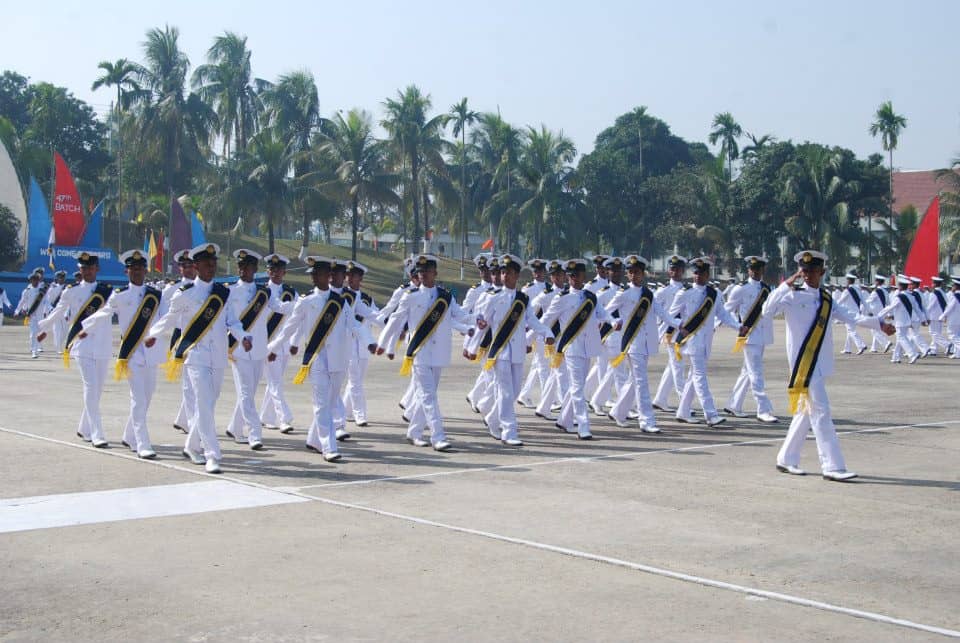
Any serious discussion of Bangladesh’s maritime human resources inevitably leads to Bangladesh Marine Academy at Juldia.
For generations, the Academy has produced deck officers and marine engineers who served aboard vessels worldwide. Many subsequently became masters, chief engineers, shipping executives, surveyors, port officials, entrepreneurs, educators, and maritime administrators.
Its contribution extends far beyond the number of cadets graduating from its classrooms. The Academy helped create Bangladesh’s professional maritime community.
That legacy deserves protection and renewal.
Bangladesh has expanded maritime education, and additional institutions can help meet future workforce requirements. Expansion, however, must never come at the expense of standards.
The original Bangladesh Marine Academy should remain a center of excellence and a benchmark against which the country measures maritime education.
Investment should not be judged merely by new buildings. Faculty development, modern simulators and laboratories, research, international accreditation, industry partnerships, and access to practical sea training better measure educational excellence.
The Academy also possesses another remarkable asset: its alumni.
Thousands of experienced Bangladeshi mariners live and work worldwide. Masters, chief engineers, surveyors, shipping executives, academics, entrepreneurs, and maritime specialists collectively possess decades of international experience.
Bangladesh should harness this resource systematically.
Alumni can provide lectures, mentoring, scholarships, research collaboration, international industry connections, and help securing cadet berths and employment opportunities. A structured partnership between the Academy, alumni, government, and industry could become one of the strongest pillars of Bangladesh’s maritime-development strategy.
Few developing maritime nations possess such an experienced global professional network. Bangladesh should use it.
DG Shipping: From Regulation to Excellence
The Department of Shipping sits at the center of this maritime ecosystem.
Its responsibilities may rarely attract widespread public attention, but they are essential to Bangladesh’s international maritime reputation. Ship registration, statutory certification, seafarer licensing, maritime safety, casualty investigation, flag-State responsibilities, and port-State control depend upon a professional and credible maritime administration.
Weak enforcement ultimately carries an economic cost.
A flag associated with inadequate safety standards attracts greater scrutiny. Certificates that lose international credibility reduce employment opportunities for seafarers. Inadequate inspections can contribute to casualties, pollution, and costly commercial disputes.
Conversely, a respected maritime administration creates confidence.
Bangladesh should therefore aim beyond minimum compliance toward regulatory excellence. Regulations should be transparent, certification credible, and examinations and surveys conducted to international standards. Digital systems should reduce bureaucracy while increasing accountability and transparency.
The relationship between regulator and industry must also be constructive. Effective maritime administrations maintain rigorous safety standards while understanding the commercial realities of shipping.
Government, seafarers and industry ultimately share the same objective: safe, efficient and internationally competitive maritime commerce.
Ports for a New Maritime Economy
Bangladesh’s economic growth is placing increasing pressure on its ports. Congestion, vessel turnaround times, customs procedures and inland transportation all influence the competitiveness of Bangladeshi exports.
Port modernization must therefore continue.
But modernization means more than constructing terminals or purchasing larger cranes. Leading international ports increasingly function as integrated logistics and information centers. Digital documentation, automated cargo handling, electronic customs procedures, real-time vessel scheduling and sophisticated supply-chain systems are becoming standard features of maritime commerce.
Bangladesh must move in the same direction.
Matarbari and other infrastructure projects offer an opportunity to incorporate modern systems from their inception rather than reproduce outdated practices on a larger scale.
Port expansion must also recognize environmental responsibilities. Dredging, coastal development, ship-generated waste, emissions, and marine pollution require careful management. Economic development and environmental protection should not be regarded as opposing objectives. Sustainable maritime development requires both.
Security and Prosperity
Bangladesh’s naval leadership’s participation in World Maritime Day underscores another reality: maritime commerce cannot flourish without security.
Commercial vessels, fishing fleets, offshore installations and ports all depend upon secure waters. Piracy, smuggling, illegal fishing, pollution and other maritime threats cross administrative boundaries.
Effective maritime-domain awareness therefore requires cooperation among the Navy, Coast Guard, Department of Shipping, ports and other government agencies.
Information sharing is essential. Bangladesh should continue developing systems that allow maritime authorities to exchange relevant information quickly and coordinate responses when necessary.
Security should facilitate, not unnecessarily obstruct, commerce. Bangladesh needs a maritime environment that is both secure and efficient.
From Celebration to Accountability
World Maritime Day traditionally includes speeches, seminars, awards, and ceremonial recognition. These traditions have value. Maritime professionals often work beyond public view, and recognizing their contributions strengthens the maritime community.
But Bangladesh could make the observance considerably more meaningful.
World Maritime Day could become an annual national maritime stocktaking exercise.
What maritime objectives did Bangladesh announce last year? Which were accomplished? How many Bangladeshi seafarers obtained international employment? How has port productivity changed? What progress has been made in implementing IMO conventions? How have maritime educational standards improved? What casualties occurred, and what lessons were learned?
Publishing these indicators annually would transform World Maritime Day from a primarily ceremonial occasion into an instrument of institutional accountability.
It would also provide continuity. Governments and officials change, but maritime development requires decades of planning.
The Sea as a National Opportunity
Bangladesh has historically looked toward its land and rivers. Increasingly, it must look toward the sea.
The Bay of Bengal should not be regarded simply as Bangladesh’s southern boundary. It is a gateway connecting the country with international commerce and the wider Indo-Pacific region.
The foundations already exist: a maritime tradition, experienced seafarers, established institutions, expanding ports, a large trading economy and an extensive international community of Bangladeshi maritime professionals.
The challenge is to connect these assets.
The Ministry of Shipping, the Department of Shipping, port authorities, the Bangladesh Navy, the Coast Guard, the Bangladesh Marine Academy, universities, shipowners, seafarers, professional organizations, and maritime alumni cannot operate as isolated islands. They are components of the same national maritime ecosystem.
World Maritime Day provides an ideal occasion to remind Bangladesh of that relationship.
“From Policy to Practice” should therefore become more than an annual slogan. Bangladesh can adopt it as a maritime philosophy.
Policies must become programs, and programs must produce measurable results. Maritime institutions must develop professional competence and continuity. Ports must become more efficient. Seafarers must receive internationally competitive education and training. International conventions must be implemented, not merely ratified.
Above all, institutions that have demonstrated their value over generations—particularly Bangladesh Marine Academy should be strengthened and allowed to serve as centers of maritime excellence.
Bangladesh’s future prosperity will depend substantially upon international trade, and international trade will continue to depend upon the sea.
World Maritime Day should therefore remind Bangladesh not merely to celebrate what it has accomplished, but to consider what kind of maritime nation it intends to become.
Ships, ports, and infrastructure matter greatly. But ultimately, maritime excellence will depend upon institutions, professionalism, and people. Bangladesh has spent decades building that human foundation. The task now is to strengthen it, connect it to the nation’s larger maritime strategy, and ensure that the Bangladesh Marine Academy once again occupies the place at its center that its history, contribution, and potential deserve.
Featured Post
 বিশ্ব সমুদ্র দিবস: মেরিন একাডেমিকে আবার সামুদ্রিক শিক্ষার প্রাণকেন্দ্রে ফেরাতে হবে বাংলাদেশকে
 গোলাম সোহরাওয়ার্দি বিশ্ব সমুদ্র দিবস ২০২৬ এবং সমন্বিত জাতীয় প্রশিক্ষণ কৌশলের প্রয়োজনীয়তা বিশ্ব সমুদ্র দিবসে আন্তর্জাতিক সামুদ্রিক সংস্থার (আইএমও) মহাসচিব আর্সেনিও ডমিঙ্গেজ খুব সহজ কিন্তু গভীর একটি বার্তা দিয়েছেন। আন্তর্জাতিক নিয়মকানুন সমুদ্র পরিবহন ব্যবস্থার উন্নতি তখনই করতে পারে, যখন দেশগুলো তা ঠিকমতো মেনে চলে। তিনি বলেন, “নাবিকদের কথাই সবার আগে […]
 World Maritime Day: Bangladesh Must Put Its Marine Academy Back at the Center of Maritime Education
 World Maritime Day: Bangladesh Must Put Its Marine Academy Back at the Center of Maritime Education by Ghulam Suhrawardi World Maritime Day 2026 and the case for a coherent national training strategy On World Maritime Day, International Maritime Organization Secretary-General Arsenio Dominguez delivered a deceptively simple message: international rules improve […]



JOB SITES
CONTENTS
LINKS
Happy New Year

Découvrez les avantages de MadCasino
Dans le monde des casinos en ligne, MadCasino se distingue par ses offres attrayantes et ses services de qualité. Que vous soyez un joueur débutant ou un parieur aguerri, vous trouverez ici une variété de jeux qui sauront satisfaire toutes vos envies. Les machines à sous, les jeux de table et les options de paris en direct sont tous disponibles pour vous offrir une expérience de jeu inégalée. De plus, le casino propose régulièrement des bonus qui permettent d'augmenter vos chances de gagner, vous offrant ainsi une excellente opportunité de maximiser vos gains.
En matière de sécurité, MadCasino est un nom de confiance. Il est entièrement licencié et régulé, ce qui garantit un environnement de jeu sûr et équitable. Les joueurs peuvent se concentrer sur leur expérience de jeu sans se soucier des problèmes de sécurité. Les transactions financières sont également sécurisées grâce à des technologies de pointe.
Les jeux proposés par MadCasino sont issus des développeurs les plus réputés de l'industrie, vous assurant des graphismes époustouflants et des mécaniques de jeu innovantes. Les joueurs peuvent également profiter d'une expérience de jeu en direct qui simule l'atmosphère d'un casino terrestre, tout en restant dans le confort de leur maison.
Enfin, la plateforme de MadCasino est optimisée pour les appareils mobiles, permettant aux joueurs de parier à tout moment et de n'importe où. Que vous soyez sur votre smartphone ou votre tablette, l'accès à vos jeux préférés n'a jamais été aussi simple. Ne manquez pas l'opportunité de découvrir ce casino exceptionnel.
Les offres de Cresus Casino
Cresus Casino est un autre acteur majeur dans le domaine des jeux en ligne, offrant des promotions généreuses et une vaste sélection de jeux. Les joueurs peuvent profiter d'une expérience de jeu enrichissante grâce aux nombreux bonus disponibles, qui sont conçus pour attirer tant les nouveaux utilisateurs que les joueurs réguliers. Ces avantages permettent non seulement de prolonger votre temps de jeu, mais aussi d'augmenter vos chances de gains conséquents.
Le casino se distingue également par sa ludothèque impressionnante, comprenant une sélection variée de machines à sous, de jeux de table et de jeux en direct. Les clients peuvent choisir parmi des titres populaires et appréciés, ainsi que des nouveautés qui enrichissent constamment l'offre. L'interface utilisateur est conviviale, rendant la navigation sur la plateforme fluide et agréable.
En termes de sécurité, Cresus Casino assure à ses joueurs un environnement de jeu fiable. La plateforme utilise des protocoles de sécurité avancés pour protéger les données personnelles et financières des utilisateurs. Cela permet aux joueurs de se sentir en sécurité tout en jouant à leurs jeux préférés.
Avec un service client réactif et professionnel, Cresus Casino s'assure que toutes vos questions et préoccupations sont traitées rapidement. Que ce soit pour des questions concernant les bonus, les retraits ou les jeux, vous bénéficierez d'une assistance rapide et efficace.
Explorez Nine Casino et ses avantages
Dans l'univers des casinos en ligne, Nine Casino a su se faire une place de choix grâce à son approche innovante et à ses nombreux avantages pour les joueurs. Les utilisateurs peuvent s'attendre à une expérience de jeu enrichissante, avec des bonus attractifs qui sont régulièrement mis à jour. Ces offres sont une excellente façon de découvrir de nouveaux jeux tout en maximisant votre potentiel de gain.
La plateforme de Nine Casino est riche en options de jeux, allant des machines à sous aux jeux de table, en passant par le live casino. Chaque jeu est conçu pour offrir une expérience immersive grâce à des graphismes de haute qualité et des fonctionnalités innovantes. Les parieurs peuvent profiter de sessions de jeu captivantes, comme s'ils étaient dans un véritable casino.
La sécurité est une priorité pour Nine Casino, qui utilise des technologies de cryptage avancées pour protéger les informations de ses joueurs. Cela garantit un environnement de jeu sûr et fiable, permettant aux utilisateurs de se concentrer sur ce qu'ils aiment le plus : jouer.
Enfin, le service clientèle fourni par Nine Casino est exceptionnel, avec des agents disponibles pour répondre à toutes vos questions et résoudre vos problèmes. Vous pourrez ainsi jouer en toute tranquillité, sachant que votre satisfaction est au cœur de leurs préoccupations.
Profitez de l'expérience Lucky31
Lucky31 est un casino en ligne qui se distingue par son approche orientée vers le joueur, offrant une multitude d'options de jeux et des bonus généreux. Que vous soyez amateur de machines à sous ou passionné de jeux de table, vous trouverez une large sélection pour satisfaire toutes vos envies de jeu. Les promotions fréquentes permettent aux joueurs de prolonger leur expérience tout en augmentant leurs chances de gains.
La convivialité de la plateforme de Lucky31 est l'un de ses plus grands atouts. Les joueurs peuvent naviguer facilement entre les différents jeux, et l'interface est conçue pour être intuitive, quel que soit le niveau d'expérience de l'utilisateur. De plus, le casino est entièrement optimisé pour les appareils mobiles, ce qui permet de parier où que vous soyez.
En matière de sécurité, Lucky31 prend les préoccupations des joueurs très au sérieux. Le casino est agréé et régulé, garantissant un environnement de jeu équitable et sécurisé. Les joueurs peuvent ainsi se concentrer sur leur expérience de jeu sans se soucier des risques liés à la sécurité.
Pour ceux qui recherchent un support client efficace, Lucky31 offre un service réactif et professionnel. Que ce soit pour des questions sur les bonus, les jeux ou les paiements, vous aurez accès à une assistance de qualité, vous garantissant une expérience de jeu fluide et agréable.