search the site


Vasco da Gama’s Voyage: The Untold Story Behind the First Sea Route to India
Vasco da Gama’s Voyage: The Untold Story Behind the First Sea Route to India
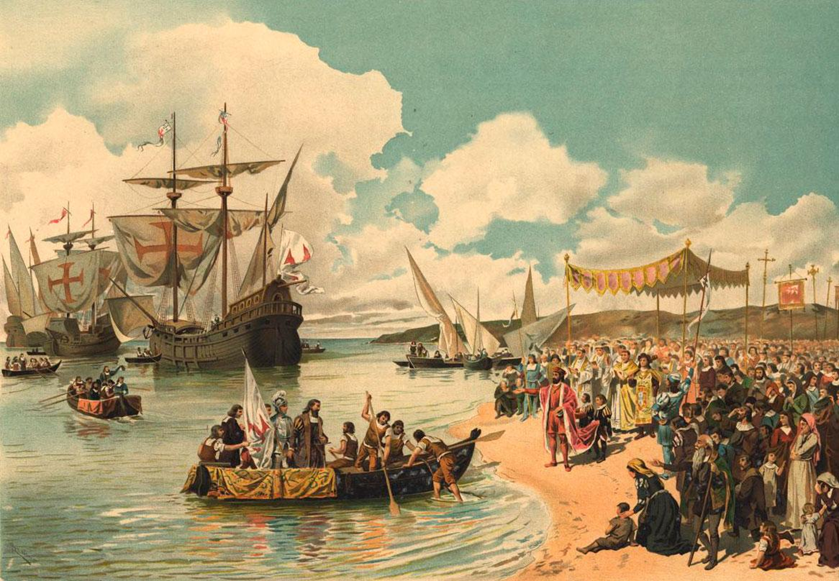
Departure from Lisbon: Vasco da Gama’s four-vessel fleet departed Lisbon on July 8, 1497, carrying approximately 170 men
by Ghulam Suhrawardi
On July 8, 1497, four Portuguese vessels sailed from Lisbon under the command of Vasco da Gama. Carrying approximately 170 men, the expedition sought a direct maritime route from Europe to the markets of India by rounding the southern tip of Africa. When the surviving ships returned more than two years later, they had completed one of history’s most consequential voyages. Yet the familiar story of a heroic European “discovery” conceals a more complicated account of endurance, borrowed knowledge, commercial miscalculation and cultural misunderstanding.
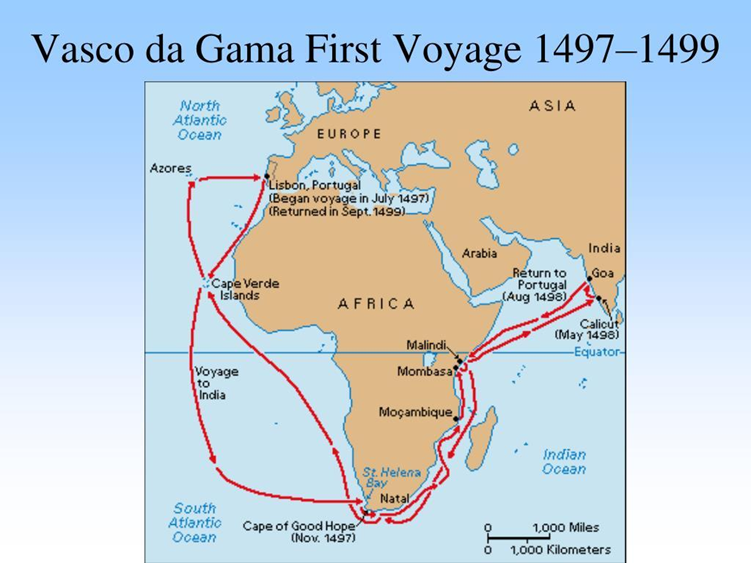
The First Voyage to India, 1497–1499: Map tracing da Gama’s outward and return journeys around the Cape of Good Hope
Da Gama did not venture into a completely unknown world. Portuguese navigators had spent decades exploring Africa’s Atlantic coastline, while Bartolomeu Dias had already rounded the Cape of Good Hope in 1488. What remained uncertain was whether a Portuguese fleet could continue from the Cape, navigate the western Indian Ocean and reach India before disease, hunger or shipwreck destroyed it.
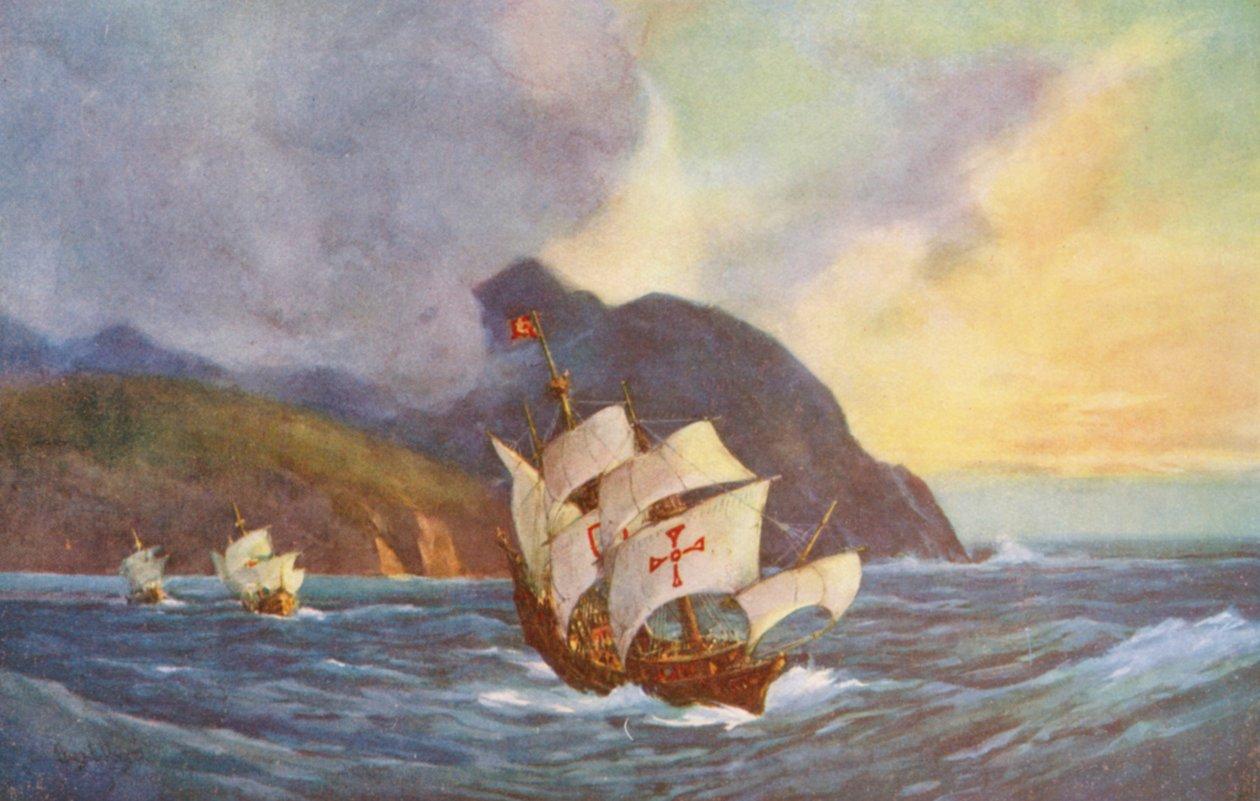
Rounding the Cape of Good Hope: The expedition endured dangerous seas as it navigated around southern Africa and entered the Indian Ocean
Instead of hugging the coast of Africa, da Gama’s fleet ventured far out into the South Atlantic. Later explorers would call this navigational technique the Portuguese volta do mar, or “turn of the sea.” Though counterintuitive, sailing far west before turning east let ships use favorable winds and ocean currents while avoiding the headwinds and opposing currents off the Gulf of Guinea. The risk paid off handsomely. Setting out from the Cape Verde area, da Gama’s fleet saw no land for almost three months. They had no charts or engines, no radio or reliable way to know their longitude. They navigated by the sun and stars, dead reckoning, hard-won experience, and tools like the astrolabe. Food spoiled. Water turned putrid. Existential dread of sailing through an apparently infinite sea challenged the crew’s fortitude.
Land was finally sighted on the southern African coast in November 1497. At Mossel Bay, then known to the Portuguese as São Brás, the expedition dismantled and burned its supply vessel after transferring its remaining provisions. The ship had been intended only for the first part of the journey, and reducing the fleet conserved the manpower needed to operate the surviving vessels.
The fleet rounded the Cape of Good Hope and proceeded along Africa’s eastern coast. Here the Portuguese entered a maritime world whose sophistication they had badly underestimated. Ports such as Mozambique, Mombasa and Malindi were connected to commercial networks extending across the Red Sea, the Persian Gulf, India and Southeast Asia. African, Arab, Persian, Gujarati and other merchants had exchanged gold, ivory, textiles, spices and ceramics across these waters for centuries.
Portugal came seeking Asia’s wealth, but its representatives initially had little that impressed the merchants and rulers they met. The Portuguese brought cloth, hats, coral, sugar, oil and other relatively modest articles as diplomatic gifts. In the affluent trading centers of the Indian Ocean, such offerings appeared inadequate. The visitors carried cannon and royal ambition, but they lacked a proper understanding of the commercial standards governing the region.
Its critical aid arrived at Malindi, on the coast of modern Kenya. Its king lent da Gama a navigator who knew the Arabian Sea and its monsoon cycle. The navigator’s name is debated. While later writers called him the famous Arab navigator Ahmad ibn Majid, most historians today dismiss that identification. The remaining records suggest he might have been Gujarati, perhaps Muslim, but his name and origins cannot be confirmed.
Whoever he was, his contribution was indispensable. Using knowledge developed through generations of Indian Ocean navigation, he guided the Portuguese fleet across the Arabian Sea with the favorable monsoon. The crossing from Malindi to the Indian coast took only about three weeks. On May 20, 1498, the ships reached the vicinity of Calicut, present-day Kozhikode, on India’s Malabar Coast.
The arrival was a remarkable navigational accomplishment, but it was not the “discovery” of an isolated land. The Portuguese had entered one of the world’s oldest and most active maritime trading systems. Calicut received vessels from Arabia, East Africa, Persia, and other parts of Asia. Its merchants were accustomed to long-distance commerce, sophisticated credit arrangements and valuable cargoes. To them, the Portuguese were unfamiliar newcomers rather than masters of a new route.
Misinterpretations of local culture added to the economic problems. The Portuguese had hoped to encounter Christian allies against Muslim rivals. Framing India in this way, members of the expedition claim they confused Hindu idols and temples with strange forms of Christianity. Their accounts demonstrate fascination and deep misunderstanding. They perceived what they believed should be there more than what actually was.
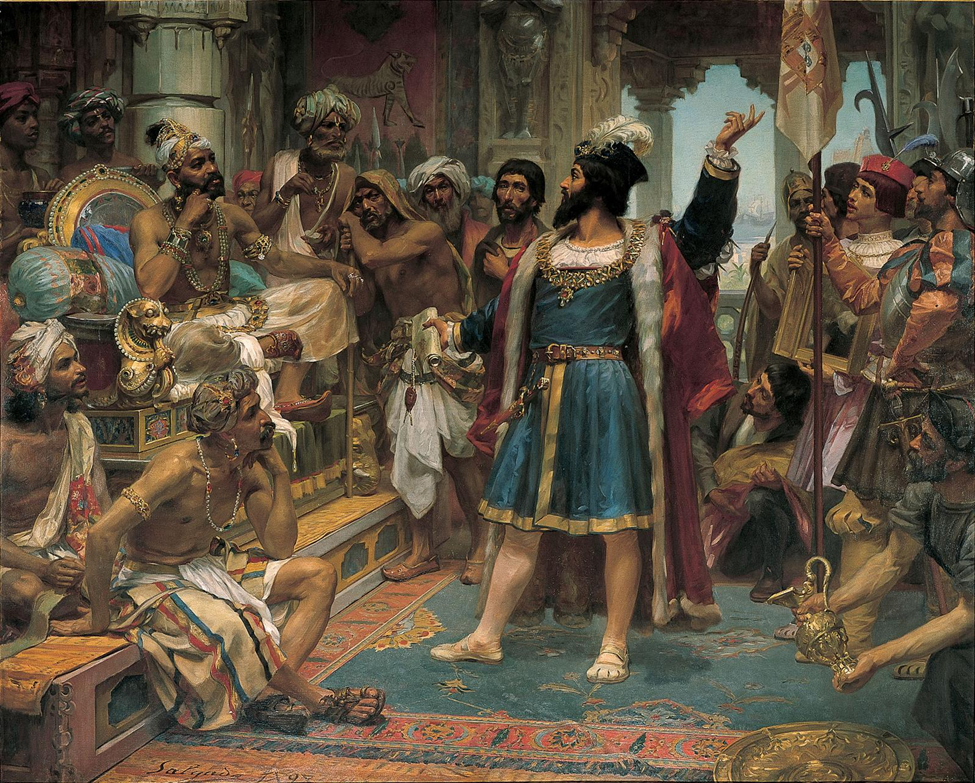
The Portuguese Arrive in Calicut: Da Gama met the Zamorin of Calicut in 1498, but inadequate gifts and cultural misunderstandings complicated negotiations
Da Gama met with the ruler of Calicut, often called the Zamorin, but failed to broker any enduring trade pact. Portugal’s gifts seemed paltry, and well-established Muslim traders mistrusted competitors who blatantly tried to enter the spice trade. Relations broke down over issues of taxes, goods, and hostages. The fleet left carrying little trade goods, and no diplomatic victory Portugal had hoped for.
The return voyage exposed another costly failure of knowledge. Da Gama left India before the favorable monsoon had properly developed. The outward Arabian Sea crossing had taken only a few weeks; the return took more than three months. Scurvy spread through the crews, causing swollen gums, weakness and death. Fresh food obtained along the African coast helped some men recover, but Europeans did not yet understand the connection between citrus fruit, vitamin C and the prevention of the disease.
By the time the expedition reached Malindi again, so many sailors had died that the São Rafael could no longer be adequately crewed and had to be abandoned and burned. Only the São Gabriel and the smaller Berrio returned to Portugal. Estimates vary, but perhaps only about one-third of the original company survived. Da Gama’s brother Paulo also died during the homeward journey.
For all its human toll and diplomatic failings, the expedition confirmed that regular sea voyaging between Portugal and India was feasible. The wealth of spices returned to Lisbon affirmed the route’s economic promise. New fleets followed. They traveled with larger fleets, better-prepared cargoes, and greater military firepower. Exploration gave way to armed efforts to dominate ports and sea lanes.
The voyage succeeded not just because of Vasco da Gama, however. Two lesser-known individuals also deserve credit. One was the anonymous author of the expedition’s surviving journal, whose observations provide much of what we know today. The other was the unnamed Malindi pilot whose knowledge of monsoon winds helped guide the fleet to India. Both played crucial roles that challenge the tale of a lone European conqueror.
Vasco da Gama’s accomplishment was significant. But it was by no means singular or benign. His journey reflected both Portuguese daring and navigational skill as well as African support and Indian Ocean knowledge. It created a new path to Europe rather than discovering a new ocean for those already sailing upon it. And it began the transformation of world trade that would yield opportunity and empire for some, but also violence and colonial oppression for many.
In this way, perhaps the biggest lesson we can learn about the voyage from the sea is not that da Gama sailed to India. It is that one oceanic world bumped up forcefully against another, relying on expertise it did not have while interrupting a commercial system it did not comprehend.
Featured Post
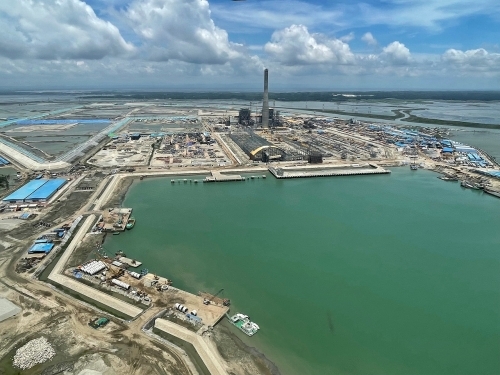 বড় জাহাজ মেরামতে মাতারবাড়ীতে ১ বিলিয়ন ডলারের প্রকল্প
 মাতারবাড়ীতে প্রায় ১ বিলিয়ন মার্কিন ডলার ব্যয়ে পরিবেশবান্ধব ডকইয়ার্ড ও জাহাজ নির্মাণ কেন্দ্র স্থাপনের উদ্যোগে নীতিগত অনুমোদন দিয়েছে নৌপরিবহন মন্ত্রণালয়। এখন প্রকল্পটির কারিগরি ও আর্থিক মূল্যায়নের জন্য প্রস্তাবটি সরকারি-বেসরকারি অংশীদারত্ব (পিপিপি) কর্তৃপক্ষের কাছে পাঠানো হয়েছে। সম্পূর্ণ বেসরকারি অর্থায়নে সরকারি জমির মালিকানা অক্ষুণ্ন রেখে প্রকল্পটি বাস্তবায়নের পরিকল্পনা রয়েছে। বন্দর কর্তৃপক্ষ জানায়, […]
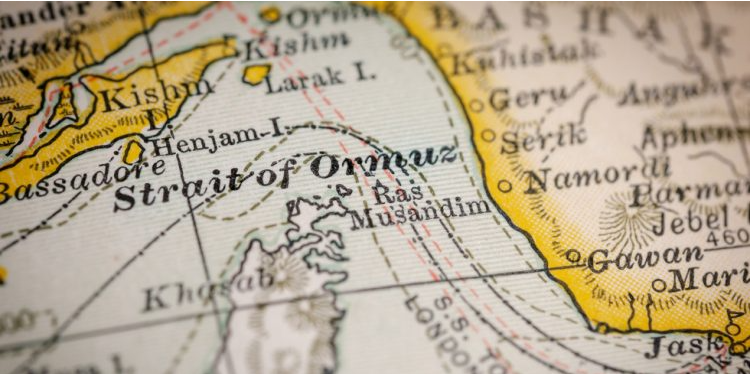 Industry on alert over scam messages offering ships “safe passage” on Hormuz
 Credit: Shutterstock Fraudulent messages offering safe passage through the Strait of Hormuz in exchange for cryptocurrency have been circulated to shipping companies with vessels stranded west of the waterway, according to MARISKS. In an alert issued on 20 April, MARISKS cautioned that unknown actors posing as Iranian authorities had contacted […]



JOB SITES
CONTENTS
LINKS
Happy New Year

Découvrez les avantages de MadCasino
Dans le monde des casinos en ligne, MadCasino se distingue par ses offres attrayantes et ses services de qualité. Que vous soyez un joueur débutant ou un parieur aguerri, vous trouverez ici une variété de jeux qui sauront satisfaire toutes vos envies. Les machines à sous, les jeux de table et les options de paris en direct sont tous disponibles pour vous offrir une expérience de jeu inégalée. De plus, le casino propose régulièrement des bonus qui permettent d'augmenter vos chances de gagner, vous offrant ainsi une excellente opportunité de maximiser vos gains.
En matière de sécurité, MadCasino est un nom de confiance. Il est entièrement licencié et régulé, ce qui garantit un environnement de jeu sûr et équitable. Les joueurs peuvent se concentrer sur leur expérience de jeu sans se soucier des problèmes de sécurité. Les transactions financières sont également sécurisées grâce à des technologies de pointe.
Les jeux proposés par MadCasino sont issus des développeurs les plus réputés de l'industrie, vous assurant des graphismes époustouflants et des mécaniques de jeu innovantes. Les joueurs peuvent également profiter d'une expérience de jeu en direct qui simule l'atmosphère d'un casino terrestre, tout en restant dans le confort de leur maison.
Enfin, la plateforme de MadCasino est optimisée pour les appareils mobiles, permettant aux joueurs de parier à tout moment et de n'importe où. Que vous soyez sur votre smartphone ou votre tablette, l'accès à vos jeux préférés n'a jamais été aussi simple. Ne manquez pas l'opportunité de découvrir ce casino exceptionnel.
Les offres de Cresus Casino
Cresus Casino est un autre acteur majeur dans le domaine des jeux en ligne, offrant des promotions généreuses et une vaste sélection de jeux. Les joueurs peuvent profiter d'une expérience de jeu enrichissante grâce aux nombreux bonus disponibles, qui sont conçus pour attirer tant les nouveaux utilisateurs que les joueurs réguliers. Ces avantages permettent non seulement de prolonger votre temps de jeu, mais aussi d'augmenter vos chances de gains conséquents.
Le casino se distingue également par sa ludothèque impressionnante, comprenant une sélection variée de machines à sous, de jeux de table et de jeux en direct. Les clients peuvent choisir parmi des titres populaires et appréciés, ainsi que des nouveautés qui enrichissent constamment l'offre. L'interface utilisateur est conviviale, rendant la navigation sur la plateforme fluide et agréable.
En termes de sécurité, Cresus Casino assure à ses joueurs un environnement de jeu fiable. La plateforme utilise des protocoles de sécurité avancés pour protéger les données personnelles et financières des utilisateurs. Cela permet aux joueurs de se sentir en sécurité tout en jouant à leurs jeux préférés.
Avec un service client réactif et professionnel, Cresus Casino s'assure que toutes vos questions et préoccupations sont traitées rapidement. Que ce soit pour des questions concernant les bonus, les retraits ou les jeux, vous bénéficierez d'une assistance rapide et efficace.
Explorez Nine Casino et ses avantages
Dans l'univers des casinos en ligne, Nine Casino a su se faire une place de choix grâce à son approche innovante et à ses nombreux avantages pour les joueurs. Les utilisateurs peuvent s'attendre à une expérience de jeu enrichissante, avec des bonus attractifs qui sont régulièrement mis à jour. Ces offres sont une excellente façon de découvrir de nouveaux jeux tout en maximisant votre potentiel de gain.
La plateforme de Nine Casino est riche en options de jeux, allant des machines à sous aux jeux de table, en passant par le live casino. Chaque jeu est conçu pour offrir une expérience immersive grâce à des graphismes de haute qualité et des fonctionnalités innovantes. Les parieurs peuvent profiter de sessions de jeu captivantes, comme s'ils étaient dans un véritable casino.
La sécurité est une priorité pour Nine Casino, qui utilise des technologies de cryptage avancées pour protéger les informations de ses joueurs. Cela garantit un environnement de jeu sûr et fiable, permettant aux utilisateurs de se concentrer sur ce qu'ils aiment le plus : jouer.
Enfin, le service clientèle fourni par Nine Casino est exceptionnel, avec des agents disponibles pour répondre à toutes vos questions et résoudre vos problèmes. Vous pourrez ainsi jouer en toute tranquillité, sachant que votre satisfaction est au cœur de leurs préoccupations.
Profitez de l'expérience Lucky31
Lucky31 est un casino en ligne qui se distingue par son approche orientée vers le joueur, offrant une multitude d'options de jeux et des bonus généreux. Que vous soyez amateur de machines à sous ou passionné de jeux de table, vous trouverez une large sélection pour satisfaire toutes vos envies de jeu. Les promotions fréquentes permettent aux joueurs de prolonger leur expérience tout en augmentant leurs chances de gains.
La convivialité de la plateforme de Lucky31 est l'un de ses plus grands atouts. Les joueurs peuvent naviguer facilement entre les différents jeux, et l'interface est conçue pour être intuitive, quel que soit le niveau d'expérience de l'utilisateur. De plus, le casino est entièrement optimisé pour les appareils mobiles, ce qui permet de parier où que vous soyez.
En matière de sécurité, Lucky31 prend les préoccupations des joueurs très au sérieux. Le casino est agréé et régulé, garantissant un environnement de jeu équitable et sécurisé. Les joueurs peuvent ainsi se concentrer sur leur expérience de jeu sans se soucier des risques liés à la sécurité.
Pour ceux qui recherchent un support client efficace, Lucky31 offre un service réactif et professionnel. Que ce soit pour des questions sur les bonus, les jeux ou les paiements, vous aurez accès à une assistance de qualité, vous garantissant une expérience de jeu fluide et agréable.