search the site


Analysis: The rules of global shipping are starting to fragment
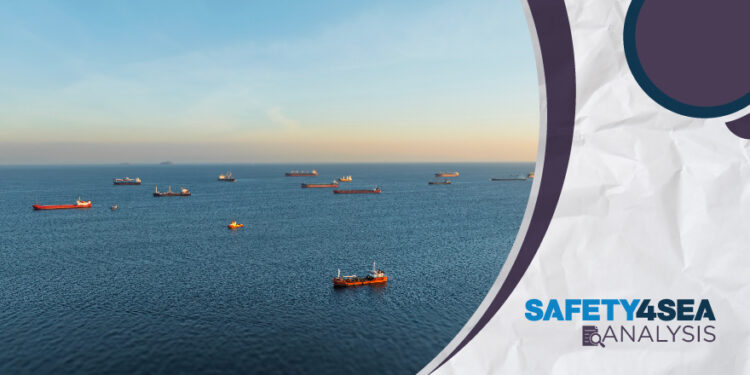
On 8 September 2026, the Consultative Shipping Group (CSG) issued a public statement under the title “In defence of free shipping”, calling on maritime nations to uphold freedom of navigation, internationally agreed rules and a level playing field for global shipping.
For more than six decades, the Consultative Shipping Group has largely operated away from public attention, coordinating the maritime policies of 18 major shipping nations around open markets, fair competition and unrestricted access to international shipping.
Its decision to issue a rare public statement defending free shipping therefore deserves attention beyond the words of the statement itself.
It is a signal that some of the world’s most important maritime nations increasingly see geopolitical fragmentation, unilateral measures and inconsistent enforcement as structural challenges to the global shipping system.
At first sight, many of its principles will appear familiar to the maritime industry. Freedom of navigation, the central role of the International Maritime Organization (IMO), consistent implementation of international rules and non-discriminatory access to markets have been foundations of international shipping policy for decades.
What makes the intervention noteworthy is therefore not simply what the CSG says, but who is saying it and why it has chosen to say it publicly now.
The CSG is not a shipping association or commercial lobby. It is an informal cooperation between the maritime authorities of 18 countries: Belgium, Canada, Denmark, Finland, France, Germany, Greece, Italy, Japan, the Republic of Korea, the Netherlands, Norway, Poland, Portugal, Singapore, Spain, Sweden and the United Kingdom. The European Commission participates as an observer.
Collectively, these countries include some of the world’s most important shipowning and maritime economies. Greece is the world’s largest shipowning nation by controlled deadweight capacity, while Japan, Singapore, South Korea, Germany, the United Kingdom and Norway are also among the world’s major beneficial ownership centres.
Against that background, the decision of a group that has traditionally worked through consultation and government-to-government dialogue to make an exceptional public intervention should not be dismissed as another maritime press release.
More than 60 years of quiet maritime diplomacy
The Consultative Shipping Group dates back to the 1960s and was established as a forum through which like-minded shipping nations could discuss and coordinate maritime policy.
Its institutional structure remains deliberately light. It is not a treaty organisation, regulator or supranational authority.
Instead, maritime administrations cooperate around a set of principles that have remained remarkably consistent:
- open and unhindered access to international shipping markets; free and fair competition;
- a global level playing field;
- opposition to discriminatory or protectionist shipping measures; and
- internationally coordinated rather than unilateral approaches to maritime policy.
The group monitors and responds to discriminatory, restrictive and unilateral measures affecting international shipping. It meets annually, with meetings taking place in Washington, DC, in even-numbered years and rotating among member countries in odd-numbered years.
Its affiliated Belmont Shipping Club provides a platform for CSG maritime attachés in Washington to maintain dialogue with US authorities and maritime stakeholders.
Denmark has held the chairmanship and secretariat since taking over from the United Kingdom in 2007. In February 2026, CSG Chair and Danish Maritime Authority Director General Brian Adrian Wessel met the US Department of State, MARAD, US Coast Guard, Federal Maritime Commission and Office of the US Trade Representative.
Among the issues discussed were US maritime initiatives, including proposed port fees on foreign vessels. The CSG’s position was that unilateral national measures in a highly integrated global industry risk fragmentation and distortion of competition.
That context is important. The September statement did not emerge from nowhere. At its 2025 annual meeting, the CSG had already highlighted geopolitical change, protectionism and regionalisation, and called for the group to become a clearer voice for open and fair shipping.
The September 2026 statement represents a significant escalation of that message into the public domain.
Why the countries behind the statement matter
The CSG states that its members represent around 20% of world tonnage. But that statistic alone understates their significance because it relates to registered tonnage rather than the considerably larger fleets beneficially owned or controlled from several CSG countries.
Using UNCTAD’s latest fully comparable beneficial-ownership dataset for propelled seagoing vessels of 1,000 GT and above, the ten largest CSG shipowning nations by controlled deadweight capacity are:

The numbers put the political significance of the CSG into perspective.
Greece alone controls 16.4% of global deadweight capacity. Greece, Japan and Singapore together account for approximately 32.6% of world controlled DWT.
Adding South Korea, Germany, the United Kingdom, Norway and Denmark takes the combined share of these eight CSG members to approximately 46% of global controlled deadweight capacity.
This does not mean that the CSG itself “controls” 46% of world shipping: beneficial ownership is private and the governments concerned do not direct those fleets.
It does demonstrate, however, the exceptional concentration of maritime economic interests represented by the countries sitting around the CSG table. That makes their collective concern difficult to ignore.
From disruption to structural change
The strongest part of the CSG statement is its diagnosis of what has happened to global shipping since the beginning of this decade.
COVID-19 disrupted supply chains. Russia’s invasion of Ukraine fundamentally altered energy and commodity flows. Drought constrained capacity through the Panama Canal. Conflict in the Middle East disrupted established routes and placed critical maritime chokepoints under renewed geopolitical pressure.
At the same time, sanctions, counter-sanctions, regional policies and unilateral trade measures have added new layers of complexity to international shipping.
The CSG’s conclusion is significant: “These are not episodic shocks; they are signals of a structural shift in the operating environment of global trade.”
It then makes an equally important observation: “Shipping routes are increasingly instruments of leverage and risk.”
This distinction matters.
Shipping has historically managed individual geopolitical disruptions remarkably well. A war closes a route, vessels divert. A canal becomes constrained, capacity adjusts. A market disappears, trade flows reorganise.
What the CSG is now arguing is different. It sees the accumulation of these events as evidence that fragmentation itself is becoming a feature of the operating environment rather than a temporary deviation from it. For shipowners and operators, that changes the nature of risk. Route availability, sanctions exposure, market access, insurance, regulatory treatment and even the ability to call at particular ports increasingly have geopolitical as well as operational dimensions.
The emergence of two shipping systems
The statement also explicitly addresses the growth of vessels operating to circumvent sanctions and refers to the IMO’s definition of the so-called shadow fleet.
According to the CSG, hundreds of vessels are increasingly operating outside conventional insurance, safety and transparency frameworks. Its concern extends beyond sanctions enforcement. The group argues that the development is creating parallel systems within international shipping.
Its formulation is unusually direct: “The result is a two-tier system, one governed by rules, the other by opacity, ultimately weakening both.”
This may prove to be one of the most consequential elements of the statement.
A global regulatory system depends not merely on the existence of rules but on a sufficiently high proportion of participants accepting those rules and on governments enforcing them consistently.
If significant fleets can operate under materially different standards of transparency, insurance, environmental compliance, sanctions exposure and enforcement, the problem eventually extends beyond those vessels themselves. It creates different operating economics and different risk structures within what is supposed to be one global shipping market.
The CSG therefore sees the issue not simply as a sanctions problem but as a level-playing-field problem. The answer is not necessarily more regulation
Perhaps the most important policy message in the statement is what the CSG does not advocate. It does not call simply for another layer of maritime regulation.
Instead, it argues that the foundations already exist through UNCLOS, the IMO framework and established international maritime rules. The challenge is increasingly alignment, implementation and enforcement.
The CSG explicitly states that the response is “not necessarily more rules” or a patchwork of unilateral measures, but better alignment of the rules already in place.
This is consistent with the group’s historical philosophy.
Global shipping depends on ships moving between jurisdictions. A vessel may be beneficially owned in Greece, financed elsewhere, registered under another flag, classed by an international classification society, insured in London or Scandinavia, crewed multinationally and trade between dozens of jurisdictions during a single year.
The commercial model therefore depends heavily on regulatory interoperability.
A proliferation of unilateral national requirements, conflicting sanctions regimes, discriminatory port access rules or materially different enforcement practices increases transaction costs and uncertainty even where every individual measure may have a defensible national rationale.
The CSG is effectively arguing that fragmented regulation eventually produces fragmented shipping markets.
Five principles behind the CSG position
Viewed across both its historical mandate and the September statement, five principles define the CSG’s position.
- Freedom of navigation is the first. International shipping must retain predictable access to sea lanes and internationally recognised rights of passage.
- Open and non-discriminatory market access is the second. Shipping should not be subjected to protectionist or discriminatory restrictions based on nationality or commercial origin.
- Free and fair competition is the third. Competition should take place on efficiency, quality and innovation rather than regulatory avoidance or preferential national treatment.
- A global level playing field is the fourth. Comparable international standards must be implemented and enforced consistently if compliant operators are not to be commercially disadvantaged.
- And multilateral rules and cooperation form the fifth. For a fundamentally international industry, the CSG favours global frameworks – particularly UNCLOS and IMO – over an expanding patchwork of unilateral or regional interventions.
None of these principles is new. What is new is the perceived need to defend them publicly.
The call to action
The CSG’s call is directed beyond its own 18 members. It asks all maritime nations to actively support the principles governing international shipping, beginning with freedom of navigation and extending to the legal and regulatory frameworks maintained through multilateral institutions including the IMO.
More specifically, two actions stand out.
First, existing international rules should be applied consistently across jurisdictions, supported by greater transparency and information exchange between authorities. The CSG argues that uneven enforcement distorts markets and weakens confidence in shipping.
Second, governments must provide continued political support for common international standards. The CSG explicitly rejects the idea that international cooperation necessarily diminishes sovereignty; instead, it argues that cooperation has become necessary to preserve effective sovereignty and resilience in an interconnected trading system.
This is an important distinction. The statement is not primarily demanding that shipowners change behaviour. It is calling upon governments and maritime administrations to prevent the regulatory architecture surrounding shipping from fragmenting further.
Why the timing matters
The CSG’s intervention should also be viewed against its recent trajectory.
At the September 2025 annual meeting, its members discussed the green transition, maritime workforce and shipping policy against a background of geopolitical change.
They stressed rules-based international trade, free market access and the need to resist protectionism and regionalisation.
By February 2026, the CSG chair was in Washington discussing fair competition, resilient supply chains and the risks arising from unilateral national maritime measures with senior US authorities. Seven months later, the group has taken its concerns into the public domain.
Reports describing this as the CSG’s first public statement in more than 60 years therefore give the intervention additional significance.
A group created specifically to facilitate consultation between maritime governments normally has little reason to communicate through public statements. Its value lies precisely in quiet policy coordination.
When such an organisation decides that its concerns need to be articulated publicly, the communication itself becomes part of the message.
What this means for shipping
The CSG statement should not be interpreted as evidence that the global maritime system has already ceased to function.
Most international shipping continues to operate under established international conventions, commercial structures and regulatory frameworks.
Nor does the statement provide a detailed new policy programme. Its significance is more fundamental. It identifies fragmentation as an emerging strategic risk to shipping.
For decades, the industry’s underlying assumption has been that, whatever political differences existed between states, international shipping would continue to operate within a broadly universal framework: common conventions, recognised navigation rights, predictable access to markets and sufficiently consistent rules to allow ships to trade globally.
That assumption can no longer be treated as automatic.
The risk is not necessarily the disappearance of globalisation or global shipping. Shipping has repeatedly demonstrated its capacity to adapt.
The more plausible risk is a gradual movement towards a more fragmented maritime system, with different trading blocs, sanctions environments, regulatory expectations, insurance structures, security risks and access conditions existing alongside each other.
Such a system can still move cargo. But it does so with higher complexity, greater uncertainty, increased compliance burden and ultimately higher cost. And this is perhaps the central message behind the CSG intervention.
The individual disruptions of recent years – COVID-19, Ukraine, Panama, the Red Sea, Hormuz, sanctions, protectionist measures and the emergence of shadow fleets – should no longer be analysed entirely in isolation.
Taken together, they may represent something larger: a change in the environment in which international shipping operates.
The CSG’s response is essentially to argue that the answer should not be retreat into competing national systems, but renewed commitment to the architecture that made genuinely global shipping possible in the first place: freedom of navigation, open markets, fair competition, consistent enforcement and internationally agreed rules.
For an organisation established more than six decades ago around precisely those principles, deciding that they now require an explicit public defence is itself noteworthy.
The final sentence of the statement captures the stakes: “When shipping supply chains fragment, the global economy fragments with it.”
Whether governments respond to that warning – and whether the CSG’s unusual public intervention becomes the beginning of a more active collective maritime policy voice – may now be as important as the statement itself.
source : safety4sea
Featured Post
 বড় জাহাজ মেরামতে মাতারবাড়ীতে ১ বিলিয়ন ডলারের প্রকল্প
 মাতারবাড়ীতে প্রায় ১ বিলিয়ন মার্কিন ডলার ব্যয়ে পরিবেশবান্ধব ডকইয়ার্ড ও জাহাজ নির্মাণ কেন্দ্র স্থাপনের উদ্যোগে নীতিগত অনুমোদন দিয়েছে নৌপরিবহন মন্ত্রণালয়। এখন প্রকল্পটির কারিগরি ও আর্থিক মূল্যায়নের জন্য প্রস্তাবটি সরকারি-বেসরকারি অংশীদারত্ব (পিপিপি) কর্তৃপক্ষের কাছে পাঠানো হয়েছে। সম্পূর্ণ বেসরকারি অর্থায়নে সরকারি জমির মালিকানা অক্ষুণ্ন রেখে প্রকল্পটি বাস্তবায়নের পরিকল্পনা রয়েছে। বন্দর কর্তৃপক্ষ জানায়, […]
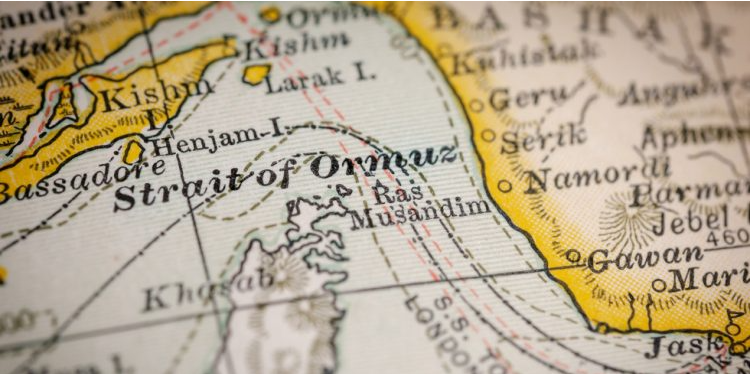 Industry on alert over scam messages offering ships “safe passage” on Hormuz
 Credit: Shutterstock Fraudulent messages offering safe passage through the Strait of Hormuz in exchange for cryptocurrency have been circulated to shipping companies with vessels stranded west of the waterway, according to MARISKS. In an alert issued on 20 April, MARISKS cautioned that unknown actors posing as Iranian authorities had contacted […]



JOB SITES
CONTENTS
LINKS
Happy New Year

Découvrez les avantages de MadCasino
Dans le monde des casinos en ligne, MadCasino se distingue par ses offres attrayantes et ses services de qualité. Que vous soyez un joueur débutant ou un parieur aguerri, vous trouverez ici une variété de jeux qui sauront satisfaire toutes vos envies. Les machines à sous, les jeux de table et les options de paris en direct sont tous disponibles pour vous offrir une expérience de jeu inégalée. De plus, le casino propose régulièrement des bonus qui permettent d'augmenter vos chances de gagner, vous offrant ainsi une excellente opportunité de maximiser vos gains.
En matière de sécurité, MadCasino est un nom de confiance. Il est entièrement licencié et régulé, ce qui garantit un environnement de jeu sûr et équitable. Les joueurs peuvent se concentrer sur leur expérience de jeu sans se soucier des problèmes de sécurité. Les transactions financières sont également sécurisées grâce à des technologies de pointe.
Les jeux proposés par MadCasino sont issus des développeurs les plus réputés de l'industrie, vous assurant des graphismes époustouflants et des mécaniques de jeu innovantes. Les joueurs peuvent également profiter d'une expérience de jeu en direct qui simule l'atmosphère d'un casino terrestre, tout en restant dans le confort de leur maison.
Enfin, la plateforme de MadCasino est optimisée pour les appareils mobiles, permettant aux joueurs de parier à tout moment et de n'importe où. Que vous soyez sur votre smartphone ou votre tablette, l'accès à vos jeux préférés n'a jamais été aussi simple. Ne manquez pas l'opportunité de découvrir ce casino exceptionnel.
Les offres de Cresus Casino
Cresus Casino est un autre acteur majeur dans le domaine des jeux en ligne, offrant des promotions généreuses et une vaste sélection de jeux. Les joueurs peuvent profiter d'une expérience de jeu enrichissante grâce aux nombreux bonus disponibles, qui sont conçus pour attirer tant les nouveaux utilisateurs que les joueurs réguliers. Ces avantages permettent non seulement de prolonger votre temps de jeu, mais aussi d'augmenter vos chances de gains conséquents.
Le casino se distingue également par sa ludothèque impressionnante, comprenant une sélection variée de machines à sous, de jeux de table et de jeux en direct. Les clients peuvent choisir parmi des titres populaires et appréciés, ainsi que des nouveautés qui enrichissent constamment l'offre. L'interface utilisateur est conviviale, rendant la navigation sur la plateforme fluide et agréable.
En termes de sécurité, Cresus Casino assure à ses joueurs un environnement de jeu fiable. La plateforme utilise des protocoles de sécurité avancés pour protéger les données personnelles et financières des utilisateurs. Cela permet aux joueurs de se sentir en sécurité tout en jouant à leurs jeux préférés.
Avec un service client réactif et professionnel, Cresus Casino s'assure que toutes vos questions et préoccupations sont traitées rapidement. Que ce soit pour des questions concernant les bonus, les retraits ou les jeux, vous bénéficierez d'une assistance rapide et efficace.
Explorez Nine Casino et ses avantages
Dans l'univers des casinos en ligne, Nine Casino a su se faire une place de choix grâce à son approche innovante et à ses nombreux avantages pour les joueurs. Les utilisateurs peuvent s'attendre à une expérience de jeu enrichissante, avec des bonus attractifs qui sont régulièrement mis à jour. Ces offres sont une excellente façon de découvrir de nouveaux jeux tout en maximisant votre potentiel de gain.
La plateforme de Nine Casino est riche en options de jeux, allant des machines à sous aux jeux de table, en passant par le live casino. Chaque jeu est conçu pour offrir une expérience immersive grâce à des graphismes de haute qualité et des fonctionnalités innovantes. Les parieurs peuvent profiter de sessions de jeu captivantes, comme s'ils étaient dans un véritable casino.
La sécurité est une priorité pour Nine Casino, qui utilise des technologies de cryptage avancées pour protéger les informations de ses joueurs. Cela garantit un environnement de jeu sûr et fiable, permettant aux utilisateurs de se concentrer sur ce qu'ils aiment le plus : jouer.
Enfin, le service clientèle fourni par Nine Casino est exceptionnel, avec des agents disponibles pour répondre à toutes vos questions et résoudre vos problèmes. Vous pourrez ainsi jouer en toute tranquillité, sachant que votre satisfaction est au cœur de leurs préoccupations.
Profitez de l'expérience Lucky31
Lucky31 est un casino en ligne qui se distingue par son approche orientée vers le joueur, offrant une multitude d'options de jeux et des bonus généreux. Que vous soyez amateur de machines à sous ou passionné de jeux de table, vous trouverez une large sélection pour satisfaire toutes vos envies de jeu. Les promotions fréquentes permettent aux joueurs de prolonger leur expérience tout en augmentant leurs chances de gains.
La convivialité de la plateforme de Lucky31 est l'un de ses plus grands atouts. Les joueurs peuvent naviguer facilement entre les différents jeux, et l'interface est conçue pour être intuitive, quel que soit le niveau d'expérience de l'utilisateur. De plus, le casino est entièrement optimisé pour les appareils mobiles, ce qui permet de parier où que vous soyez.
En matière de sécurité, Lucky31 prend les préoccupations des joueurs très au sérieux. Le casino est agréé et régulé, garantissant un environnement de jeu équitable et sécurisé. Les joueurs peuvent ainsi se concentrer sur leur expérience de jeu sans se soucier des risques liés à la sécurité.
Pour ceux qui recherchent un support client efficace, Lucky31 offre un service réactif et professionnel. Que ce soit pour des questions sur les bonus, les jeux ou les paiements, vous aurez accès à une assistance de qualité, vous garantissant une expérience de jeu fluide et agréable.