search the site


AI and shipping over the next five years
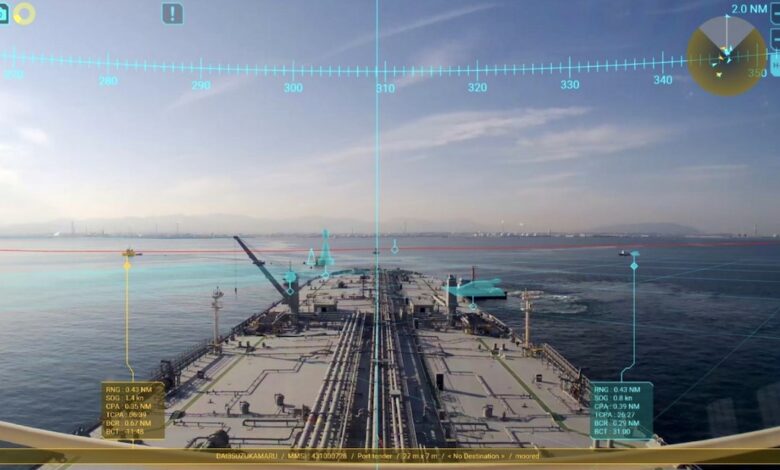
AI will only transform shipping once data, context, connectivity and fragmented workflows are finally brought together. The introduction to SplashTech’s brand new magazine.
If one answer dominates SplashTech’s survey of maritime technology leaders, it is artificial intelligence. The more revealing finding is how few respondents are willing to leave the answer there.
AI is expected to touch almost every part of shipping over the next five years: voyage planning, maintenance, procurement, cargo operations, compliance, safety, commercial decisions and the daily administration that consumes extraordinary amounts of time at sea and ashore.
Yet contributor after contributor adds the same qualification. Intelligence is only as good as the data, context, connectivity, architecture and maritime knowledge underneath it.
Matthew Talbot, co-CEO of Complexio, offers one of the clearest versions of that argument. His choice for the most transformative technology is the ability to read shipping’s unstructured coordination layer — email, chat, documents and attachments — and turn it into a governed model of how a company actually operates.
“The word that matters there is context,” Talbot tells SplashTech.
Any general-purpose model can summarise an email, he argues. The harder problem is understanding what that message means inside a particular shipping company: which vessel, cargo, counterparty, person and previous decision it connects to and how the work really flows.
Shipping’s operational record often sits in the inbox rather than the ERP. Until machines can read that history intelligently, applications above it work from only part of the picture.
Manish Singh of Maris Investments comes at the same problem from a different direction. Asked to identify the single most transformative digital technology, he declines to name a technology at all. His choice is “the platform of record that removes the silos we have in maritime workflow”.
“Until that happens, many new tools are adding complexity rather than capability,” Singh says.
Together, the answers point towards the larger contest taking shape. Shipping does not lack applications. It lacks the connective tissue allowing its applications, communications, data and people to behave as one operation.
AI, but with conditions
Gert-Jan Panken, general manager and vice-president at Inmarsat Maritime, expects AI to have the broadest impact, but says its value depends entirely on the quality of the inputs and digital foundations supporting it. AI needs reliable data and secure ship-shore integration before it can improve maintenance, voyage optimisation, safety, emissions performance and commercial efficiency. Without that foundation, it risks becoming another layer of complexity.
Nico Lehtinen, director of digital transformation at Elomatic, also nominates AI while stressing that shipping has only scratched the surface. The technology will gradually become a natural extension of engineering and operational management rather than something users visit as a separate application.
The winners are unlikely to be the companies with the most visible chatbot. They will be those that embed intelligence quietly into workflows where decisions are already being made.
Maayan Castel, vice-president of product at Agwa, describes the opportunity as “domain-specific AI that closes the loop between sensing, decision and action”.
“Maritime does not need more dashboards displaying data that someone must interpret,” she says.
Janani Yagnamurthy, senior vice-president for product and strategic growth at Marcura, focuses on another major opportunity: AI agents capable of institutionalising organisational knowledge. As experienced professionals retire, companies able to capture decades of commercial decisions, working practices and contract interpretation will possess an advantage that cannot easily be bought back later.
Talbot makes a similar point. Shipping still treats much operational knowledge as personal property: the superintendent who remembers why machinery was changed early, or the operator who knows which agent gets things done in a particular port. When that person leaves, the company often pays to learn the lesson again.
The common thread is not simply smarter software. It is shortening the distance between knowledge and action.
The plumbing comes first
Joy Basu, chief executive of Smart Ship Hub, provides perhaps the survey’s most deliberately unfashionable answer. If forced to choose the genuinely transformative technology, he picks the onboard data logger.
Shipping still relies heavily on AIS, noon reports and fragmented onboard systems. If high-frequency information from engines, boilers, flow meters, shaft-power meters, navigation equipment and cargo systems can be collected cheaply and reliably, the industry suddenly has the raw material required for AI, digital twins, automated reporting and predictive maintenance.
“An AI model that has never accounted for a fouled hull, a de-rated engine or a fabricated AIS position will give you confident nonsense,” Basu says.
Generic AI is advancing extraordinarily quickly, but ships are not generic environments. Sensors drift. Machinery degrades. Connectivity disappears. Hulls foul. Crews improvise. Weather changes. Commercial priorities conflict.
Talbot broadens the argument beyond telemetry. A sensor record may tell an operator that a pump ran hot. Combine that signal with the superintendent’s emails, previous attendance reports and what the crew actually did and a machine can begin to understand why.
Structured data and human context become more valuable together than either is separately.
David Evans, chief technology officer at Idwal, therefore argues that transformation starts with verified operational data and standardised reporting, with AI and analytics sitting above them. Adam Dennett, chief executive of SpecTec, similarly picks standardised, interoperable data as the foundation determining who actually benefits from artificial intelligence.
AI may finally provide the commercial reason for fixing digital problems shipping has tolerated for years.
Not everybody accepts that artificial intelligence itself deserves top billing.
Bjørn Kristian, director at NAVTOR, picks S-100, the next-generation maritime data framework bringing navigation products including electronic charts, bathymetry, water levels and surface currents under a common structure.
“S-100 introduces richer, dynamic and interoperable navigation layers,” Kristian says, with the potential to improve situational awareness, route monitoring and voyage planning.
His answer is useful precisely because it reinforces the broader survey result. Much of the next generation of maritime intelligence depends upon richer information becoming structured and interoperable before clever applications can make use of it.
Technology below the surface may ultimately determine what the headline technology can achieve.
From applications to an operating layer
This is where Singh’s platform-of-record argument becomes especially important.
Maritime technology has traditionally been bought department by department and problem by problem. Crewing gets one system, technical another, chartering another, procurement another and performance another. Humans then become the integration layer, moving information between products through spreadsheets, emails, rekeying and memory.
Singh believes that architecture is nearing the end of its useful life. His destination is a common operating record for the vessel and the people around it, allowing different functions to converge on the same underlying information.
“Segments are how vendors organise themselves,” he says. “Operators do not experience segments. They experience one workflow that crosses multiple platforms and applications.”
Talbot’s emphasis on correspondence explains why solving only the application layer is insufficient. Every downstream system needs to know what happened, who decided it and on what basis. Much of that evidence remains embedded in conversations and attachments rather than databases.
Christoffer Svard, chief commercial officer at Sea, expects AI agents increasingly to connect directly with other systems rather than forcing people continually to log into separate platforms. Software becomes part of a workflow ecosystem rather than a destination.
Kris Vedat, chief executive of SmartSea, reaches a comparable conclusion from the fleet side. He expects autonomous decision ecosystems to connect vessels, shore teams and maritime infrastructure. The breakthrough is not automating individual tasks but allowing fleets to behave as connected operational networks.
Human judgement stays in the loop
For all the enthusiasm around agents and automation, relatively few respondents envisage the next five years as a march towards people-free shipping.
Mikko Kuosa, chief executive of NAPA, argues that AI should propose while humans decide. Garry Noonan, director of innovation at Ardmore Shipping, likewise stresses that technology delivers its greatest value when it enhances human decision-making rather than replaces it.
Talbot raises another threshold: can the output be defended afterwards?
A decision may be challenged months later by an owner, charterer, surveyor, insurer or tribunal. Accuracy alone is insufficient. The system needs to preserve where information came from, which version was used and the reasoning chain behind the recommendation.
That may prove one of the distinctions between maritime AI products that graduate from demonstrations and those that do not.
Five years from now, AI will almost certainly be embedded far more deeply in shipping. But SplashTech’s survey suggests the bigger transformation may be what the AI boom forces the industry to fix around it: data quality, context, interoperability, connectivity, identity, institutional knowledge and workflow.
The breakthrough will not come when every ship gets an AI assistant. It will come when the ship, shore office and technology stack finally start working from the same operational reality — and can show how they got there.
source : splash247
Featured Post
 জাহাজ নির্মাণ শিল্প: হাতছাড়া হচ্ছে অপার সম্ভাবনা
 গোলাম সোহরাওয়ার্দি প্রকাশ : ২৭ অক্টোবর ২০২৬, ০৮: ০৪আপডেট : ২৭ অক্টোবর ২০২৬, ০৯: ২৪ সারা বিশ্ব এখন জাহাজ নির্মাণের এক বিশাল জোয়ার দেখছে। চীন, দক্ষিণ কোরিয়া ও জাপানের মতো দেশগুলো এ খাত থেকে বিপুল মুনাফা কামিয়ে নিচ্ছে। নতুন বাণিজ্যিক পথ তৈরি, জাহাজের […]
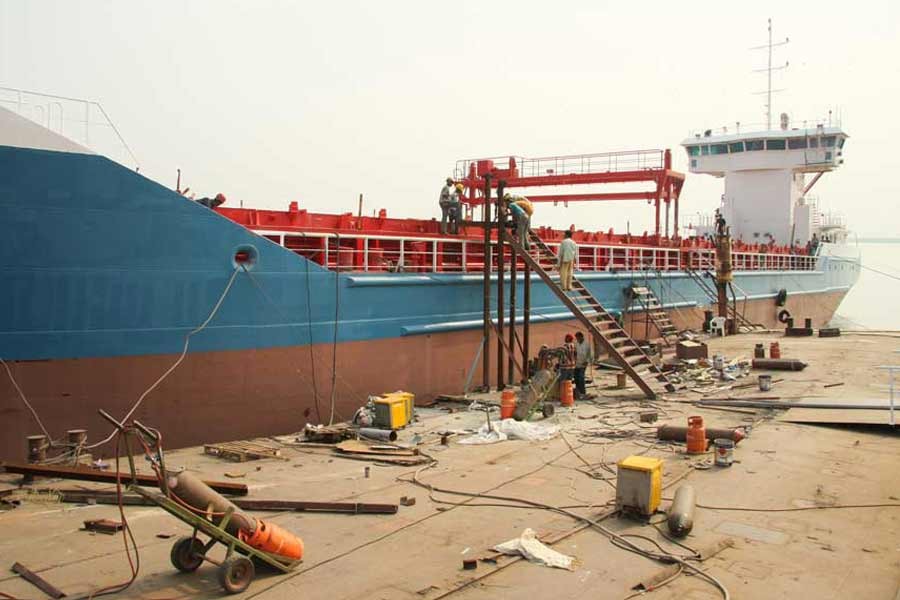 Worldwide Shipbuilding Boom and Bangladesh’s Lost Opportunity: How Financial Mismanagement, Loan Defaults, and Weak Governance Crippled a Promising Industry
An investigative analysis by Ghulam Suhrawardi Today, the world is witnessing one of the largest shipbuilding booms in history. Many countries are profiting from it. China, South Korea, and Japan have benefited from increased demand for new vessels due to fleet renewal, changing trade routes, environmental regulations, and strong financial […]



JOB SITES
CONTENTS
LINKS
Happy New Year

Découvrez les avantages de MadCasino
Dans le monde des casinos en ligne, MadCasino se distingue par ses offres attrayantes et ses services de qualité. Que vous soyez un joueur débutant ou un parieur aguerri, vous trouverez ici une variété de jeux qui sauront satisfaire toutes vos envies. Les machines à sous, les jeux de table et les options de paris en direct sont tous disponibles pour vous offrir une expérience de jeu inégalée. De plus, le casino propose régulièrement des bonus qui permettent d'augmenter vos chances de gagner, vous offrant ainsi une excellente opportunité de maximiser vos gains.
En matière de sécurité, MadCasino est un nom de confiance. Il est entièrement licencié et régulé, ce qui garantit un environnement de jeu sûr et équitable. Les joueurs peuvent se concentrer sur leur expérience de jeu sans se soucier des problèmes de sécurité. Les transactions financières sont également sécurisées grâce à des technologies de pointe.
Les jeux proposés par MadCasino sont issus des développeurs les plus réputés de l'industrie, vous assurant des graphismes époustouflants et des mécaniques de jeu innovantes. Les joueurs peuvent également profiter d'une expérience de jeu en direct qui simule l'atmosphère d'un casino terrestre, tout en restant dans le confort de leur maison.
Enfin, la plateforme de MadCasino est optimisée pour les appareils mobiles, permettant aux joueurs de parier à tout moment et de n'importe où. Que vous soyez sur votre smartphone ou votre tablette, l'accès à vos jeux préférés n'a jamais été aussi simple. Ne manquez pas l'opportunité de découvrir ce casino exceptionnel.
Les offres de Cresus Casino
Cresus Casino est un autre acteur majeur dans le domaine des jeux en ligne, offrant des promotions généreuses et une vaste sélection de jeux. Les joueurs peuvent profiter d'une expérience de jeu enrichissante grâce aux nombreux bonus disponibles, qui sont conçus pour attirer tant les nouveaux utilisateurs que les joueurs réguliers. Ces avantages permettent non seulement de prolonger votre temps de jeu, mais aussi d'augmenter vos chances de gains conséquents.
Le casino se distingue également par sa ludothèque impressionnante, comprenant une sélection variée de machines à sous, de jeux de table et de jeux en direct. Les clients peuvent choisir parmi des titres populaires et appréciés, ainsi que des nouveautés qui enrichissent constamment l'offre. L'interface utilisateur est conviviale, rendant la navigation sur la plateforme fluide et agréable.
En termes de sécurité, Cresus Casino assure à ses joueurs un environnement de jeu fiable. La plateforme utilise des protocoles de sécurité avancés pour protéger les données personnelles et financières des utilisateurs. Cela permet aux joueurs de se sentir en sécurité tout en jouant à leurs jeux préférés.
Avec un service client réactif et professionnel, Cresus Casino s'assure que toutes vos questions et préoccupations sont traitées rapidement. Que ce soit pour des questions concernant les bonus, les retraits ou les jeux, vous bénéficierez d'une assistance rapide et efficace.
Explorez Nine Casino et ses avantages
Dans l'univers des casinos en ligne, Nine Casino a su se faire une place de choix grâce à son approche innovante et à ses nombreux avantages pour les joueurs. Les utilisateurs peuvent s'attendre à une expérience de jeu enrichissante, avec des bonus attractifs qui sont régulièrement mis à jour. Ces offres sont une excellente façon de découvrir de nouveaux jeux tout en maximisant votre potentiel de gain.
La plateforme de Nine Casino est riche en options de jeux, allant des machines à sous aux jeux de table, en passant par le live casino. Chaque jeu est conçu pour offrir une expérience immersive grâce à des graphismes de haute qualité et des fonctionnalités innovantes. Les parieurs peuvent profiter de sessions de jeu captivantes, comme s'ils étaient dans un véritable casino.
La sécurité est une priorité pour Nine Casino, qui utilise des technologies de cryptage avancées pour protéger les informations de ses joueurs. Cela garantit un environnement de jeu sûr et fiable, permettant aux utilisateurs de se concentrer sur ce qu'ils aiment le plus : jouer.
Enfin, le service clientèle fourni par Nine Casino est exceptionnel, avec des agents disponibles pour répondre à toutes vos questions et résoudre vos problèmes. Vous pourrez ainsi jouer en toute tranquillité, sachant que votre satisfaction est au cœur de leurs préoccupations.
Profitez de l'expérience Lucky31
Lucky31 est un casino en ligne qui se distingue par son approche orientée vers le joueur, offrant une multitude d'options de jeux et des bonus généreux. Que vous soyez amateur de machines à sous ou passionné de jeux de table, vous trouverez une large sélection pour satisfaire toutes vos envies de jeu. Les promotions fréquentes permettent aux joueurs de prolonger leur expérience tout en augmentant leurs chances de gains.
La convivialité de la plateforme de Lucky31 est l'un de ses plus grands atouts. Les joueurs peuvent naviguer facilement entre les différents jeux, et l'interface est conçue pour être intuitive, quel que soit le niveau d'expérience de l'utilisateur. De plus, le casino est entièrement optimisé pour les appareils mobiles, ce qui permet de parier où que vous soyez.
En matière de sécurité, Lucky31 prend les préoccupations des joueurs très au sérieux. Le casino est agréé et régulé, garantissant un environnement de jeu équitable et sécurisé. Les joueurs peuvent ainsi se concentrer sur leur expérience de jeu sans se soucier des risques liés à la sécurité.
Pour ceux qui recherchent un support client efficace, Lucky31 offre un service réactif et professionnel. Que ce soit pour des questions sur les bonus, les jeux ou les paiements, vous aurez accès à une assistance de qualité, vous garantissant une expérience de jeu fluide et agréable.