search the site


IMO III 12: Key outcomes

The 12th session of IMO’s Sub-Committee on Implementation of IMO Instruments (III 12) took place 20 – 24 July, progressing amendments to port State control procedures, survey guidelines and ship transfer provisions.
The Sub-Committee on Implementation of IMO Instruments (III) brings together flag, port and coastal States to consider implementation issues, including the analysis of consolidated audit summary reports from the mandatory IMO Member state Audit Scheme. Following the conclusion on the Sub-Committee, Lloyd’s Register (LR) has provided the following overview of some of the significant outcomes from III 12:
Key outcomes
- The draft amendments to the 2025 Procedures for Port State Control (A.1206(34)) were progressed, including new guidance for PSCOs on machinery and maintenance inspections and revised PSCO qualification requirements, with the 2027 edition of the PSC Procedures planned to enter into effect on 1 January 2028.
- The draft amendments to the Survey Guidelines under the Harmonized System of Survey and Certification (HSSC) 2025 (A.1207(34)) were progressed, including updates to reflect new IMO requirements, upcoming pilot transfer arrangement provisions, and the introduction of a coding system for remote surveys, with the 2027 edition of the HSSC Procedures planned to enter into effect on 1 January 2028.
- The draft amendments to MSC/Circ.1140 – MEPC/Circ.424 on Transfer of ships between States were finalized, introducing a notification mechanism for ships deregistered without a new flag State. These are expected to be approved by MSC 112 and MEPC 85 in late 2026.
1. Draft amendments to the “Procedures for Port State Control, 2025”
The Procedures for Port State Control, 2025 A.1206(34), while not mandatory, are widely implemented and referenced by regional Port State Control (PSC) regimes (e.g. Paris MoU, Tokyo MoU) and are regarded as the global benchmark for PSC inspections. The Procedures are typically revised every two years to reflect amendments to IMO instruments and evolving inspection practices.
The following proposals for the 2027 revision of the PSC Procedures were considered and progressed as follows:
- A new appendix providing harmonized guidance for Port State Control Officers (PSCOs) on the inspection of ship machinery and maintenance systems.
It is recognized that machinery-space inspections and the assessment of maintenance arrangements can be technically challenging, and that the current PSC Procedures lack detailed guidance in this area. Dedicated guidance to support more consistent and effective inspections has been developed.
- Amendments to section 1.9 of the PSC Procedures concerning PSCO qualifications.
It was discussed that requiring a PSCO to be qualified as a flag State surveyor may unnecessarily be restrictive. However, it was emphasized that the issue was not whether PSCOs should be competent, as the need for competent PSCOs worldwide was undisputed, but rather the appropriate minimum entry requirements and training pathways for officers entering the PSC system.
- Draft appendix 21 covering list of instruments relevant to PSC Procedures.
The list includes but is not limited to MEPC.400(83) Amendments to the 2021 Guidelines on the operational carbon intensity reduction factors relative to reference lines (CII reduction factors guidelines, G3), A.1204(34) Code on Alerts and Indicators, 2025 etc.
However, due to time constraints, the work could not be completed during the session and will continue intersessionally, with finalization currently expected at III 13 (July 2027). Once finalized the revised PSC Procedures are expected to be implemented from 1 January 2028.
2. Survey Guidelines under the Harmonized System of Survey and Certification (HSSC)
a. Draft amendments to 2025 HSSC Survey Guidelines (A.1207(34))
The Survey Guidelines under the Harmonized System of Survey and Certification (HSSC) are regularly reviewed and updated to accommodate new regulatory requirements. While these guidelines are not made mandatory by the IMO, the guidelines are mandatory for all European Union Recognized Organizations (most IACS members) under EU Regulation 391/2009.
The development of the 2027 edition of the HSSC Survey Guidelines has been initiated with work expected on:
- Draft amendments arising from mandatory instruments that have entered into force, or are expected to enter into force, by 31 December 2027, including the Hong Kong Convention, together with any amendments adopted under the SOLAS four-year cycle with entry into force dates between 2028 and 2029;
- Draft amendments related to the new SOLAS regulation V/23 on Pilot Transfer Arrangements and the associated Performance Standards; and
- A Draft Coding System for Remote Surveys, to be incorporated into the HSSC Guidelines to indicate the remote survey eligibility of individual survey items.
The revision of the Survey Guidelines will continue intersessionally, and is expected to be finalized at III 13, and adopted at Assembly 35 (December 2027), with an anticipated implementation date of 1 January 2028.
b. Method for developing and assigning a coding system to update the Survey Guidelines under the HSSC
As part of its work on enabling remote surveys under the HSSC Survey Guidelines, there was broad agreement on the overall framework for identifying whether HSSC survey items are eligible for remote surveys, including:
- Adding a new “Remote survey eligible” column to the Survey Guidelines under the HSSC.
- Using a three-code system:
- Y = Eligible for remote survey.
- N = Not eligible.
- C = Conditionally eligible, subject to specified criteria.
- Converting the existing Guidelines into a tabular format with standard headings:
- Code
- Survey Item
- Survey Requirements
- Eligibility for Remote Survey (Y/C/N)
- Applying the coding based on normal operating circumstances, while recognizing that Administrations may authorize remote surveys on a case-by-case basis in exceptional situations.
However, due to the complexity of the task and time constraints, the coding system was not finalized. The work is expected to continue intersessionally, with finalization expected at III 13 (July 2027).
3. Amendments to MSC/Circ.1140 – MEPC/Circ.424 on Transfer of ships between States
Concerns were raised about ships that are deregistered by a flag state for non-compliance with statutory requirements before securing registration with a new flag State. To address this gap, draft amendments to MSC/Circ.1140 – MEPC/Circ.424 were developed which introduce a notification mechanism under which flag States would inform the IMO when a ship is deregistered without a new registration. The objective is to improve information sharing through the IMO and enhance Member States’ awareness of ships that may temporarily operate without a flag.
The draft amendments will be submitted to MSC 112 and MEPC 85 for approval (November–December 2026), where they may also consider whether related legal issues should be referred to the IMO Legal Committee.
Further, the potential safety, environmental protection and seafarer welfare risks associated with stateless or abandoned ships were noted, as well as broader legal issues concerning the responsibilities of former flag States and the jurisdiction of port States. This was referred to the Legal Committee for further consideration.
Additional outcomes
As presented by LR, other significant advancements made during the session include:
1. Marine Casualty Investigation
Several documents were considered including the report of the intersessional correspondence group on the Analysis of Marine Safety Investigation Reports. Consequently the sub-committee:
- approved a III.3 circular with 70 case studies and lessons learned from marine casualties. Each case study provides an outline of what and why the casualty happened, and identifies key safety issues. Practical lessons learnt aimed at ship operators, managers, owners, officers, and crew are provided;
- approved the draft III.3 circular on the Analysis of incidents involving ruptured high-pressure cylinders for dissemination to the maritime industry. The analysis found corrosion as the primary cause of cylinder failures, followed by overpressure and other contributing factors such as recurring deficiencies in inspections, record-keeping, and the management of ageing or overdue cylinders.
- agreed to the draft new output proposal for fire standards for cargo handling spaces of specialized self-unloading bulk carriers, which will be submitted to MSC 112 (December 2026) for consideration. Previously it had been acknowledged that cargo handling spaces on self-unloading bulk carriers pose a high fire risk, primarily due to inadequate fire safety standards and regulations, especially around fire detection/extinguishing systems near conveyor belts; and
- agreed to the draft new output proposal amending the LSA Code for addressing risks involved with wearing inflatable lifejackets, with a view to consideration by MSC 112 (December 2026). Previously the safety concerns associated with wearing inflatable lifejackets had been acknowledged, particularly the risks of entrapment in water underneath the upturned hull and the need for users to know how to safely deflate and remove the lifejacket in emergency situations.
Additionally, the Bulk Carrier Casualty Report for 2016-2025 was considered, noting that cargo liquefaction remains the greatest contributor to loss of life, while grounding remains the greatest cause of ship losses.
2. Review of the Casualty Investigation Code and the associated implementation Guidelines
The IMO has initiated a review of the Code of the International Standards and Recommended Practices for a Safety Investigation into a Marine Casualty or Marine Incident (MSC.255(84)) and the associated Guidelines to assist investigators in the implementation of the Casualty Investigation Code (A.1075(28)), with a target completion year of 2028. The review was driven by concerns regarding the quality, consistency and timeliness of marine casualty investigations and reports.
To address the issues, the draft amendments to MSC.255(84) and A.1075(28) have been developed. However, due to time constraints, the work could not be completed during the session and will continue intersessionally, with finalisation currently expected at III 13 (July 2027).
3. Review of the list of certificates and documents required to be carried on board ships
As part of the periodic review and update of the IMO circular FAL.2/Circ.133–MEPC.1/Circ.902–MSC.1/Circ.1646–LEG.2/Circ.4, List of Certificates and Documents Required to be Carried on Board Ships, 2022, a revised list was agreed to reflect recent regulatory developments and new certification requirements. It was agreed to include the Guidelines on carriage and use of electronic nautical publications (ENP) system (MSC.1/Circ.1705) under the nautical charts and publications, and the MASS Safety Certificate under other certificates and documents which are not mandatory, based on resolution MSC.595(111).
The revised circular is expected to be submitted to MEPC 85, MSC 112, LEG 114 and FAL 51 for approval (expected by August 2027).
4. Comprehensive revision of the Guidelines on the implementation of the ISM Code by Administrations and companies
Following a study which concluded that the ISM Code itself remains broadly fit for purpose, but that its implementation could be improved, the IMO had previously agreed to undertake a comprehensive revision of the ISM implementation guidelines (resolution A.1188(33) for Administrations and MSC-MEPC.7/Circ.8 for Companies).
Proposals were considered to modernize the implementation guidelines, focusing on digitalization, remote audits, oversight arrangements, and evolving company structures, with the aim of ensuring effective and consistent safety management across the shipping industry.
However, due to time constraints, the work could not be completed during the session and will continue intersessionally, with finalization currently expected at III 13 (July 2027).
source : safety4sea
Featured Post
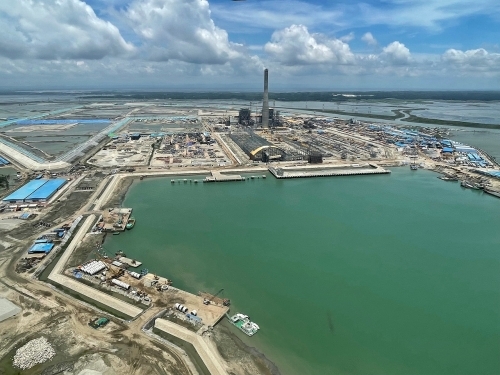 বড় জাহাজ মেরামতে মাতারবাড়ীতে ১ বিলিয়ন ডলারের প্রকল্প
 মাতারবাড়ীতে প্রায় ১ বিলিয়ন মার্কিন ডলার ব্যয়ে পরিবেশবান্ধব ডকইয়ার্ড ও জাহাজ নির্মাণ কেন্দ্র স্থাপনের উদ্যোগে নীতিগত অনুমোদন দিয়েছে নৌপরিবহন মন্ত্রণালয়। এখন প্রকল্পটির কারিগরি ও আর্থিক মূল্যায়নের জন্য প্রস্তাবটি সরকারি-বেসরকারি অংশীদারত্ব (পিপিপি) কর্তৃপক্ষের কাছে পাঠানো হয়েছে। সম্পূর্ণ বেসরকারি অর্থায়নে সরকারি জমির মালিকানা অক্ষুণ্ন রেখে প্রকল্পটি বাস্তবায়নের পরিকল্পনা রয়েছে। বন্দর কর্তৃপক্ষ জানায়, […]
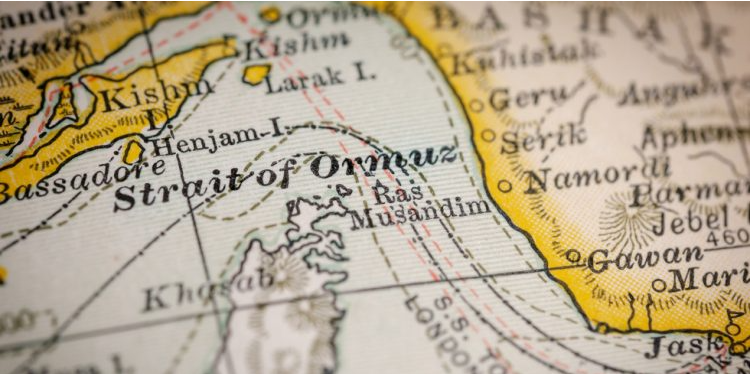 Industry on alert over scam messages offering ships “safe passage” on Hormuz
 Credit: Shutterstock Fraudulent messages offering safe passage through the Strait of Hormuz in exchange for cryptocurrency have been circulated to shipping companies with vessels stranded west of the waterway, according to MARISKS. In an alert issued on 20 April, MARISKS cautioned that unknown actors posing as Iranian authorities had contacted […]



JOB SITES
CONTENTS
LINKS
Happy New Year

Découvrez les avantages de MadCasino
Dans le monde des casinos en ligne, MadCasino se distingue par ses offres attrayantes et ses services de qualité. Que vous soyez un joueur débutant ou un parieur aguerri, vous trouverez ici une variété de jeux qui sauront satisfaire toutes vos envies. Les machines à sous, les jeux de table et les options de paris en direct sont tous disponibles pour vous offrir une expérience de jeu inégalée. De plus, le casino propose régulièrement des bonus qui permettent d'augmenter vos chances de gagner, vous offrant ainsi une excellente opportunité de maximiser vos gains.
En matière de sécurité, MadCasino est un nom de confiance. Il est entièrement licencié et régulé, ce qui garantit un environnement de jeu sûr et équitable. Les joueurs peuvent se concentrer sur leur expérience de jeu sans se soucier des problèmes de sécurité. Les transactions financières sont également sécurisées grâce à des technologies de pointe.
Les jeux proposés par MadCasino sont issus des développeurs les plus réputés de l'industrie, vous assurant des graphismes époustouflants et des mécaniques de jeu innovantes. Les joueurs peuvent également profiter d'une expérience de jeu en direct qui simule l'atmosphère d'un casino terrestre, tout en restant dans le confort de leur maison.
Enfin, la plateforme de MadCasino est optimisée pour les appareils mobiles, permettant aux joueurs de parier à tout moment et de n'importe où. Que vous soyez sur votre smartphone ou votre tablette, l'accès à vos jeux préférés n'a jamais été aussi simple. Ne manquez pas l'opportunité de découvrir ce casino exceptionnel.
Les offres de Cresus Casino
Cresus Casino est un autre acteur majeur dans le domaine des jeux en ligne, offrant des promotions généreuses et une vaste sélection de jeux. Les joueurs peuvent profiter d'une expérience de jeu enrichissante grâce aux nombreux bonus disponibles, qui sont conçus pour attirer tant les nouveaux utilisateurs que les joueurs réguliers. Ces avantages permettent non seulement de prolonger votre temps de jeu, mais aussi d'augmenter vos chances de gains conséquents.
Le casino se distingue également par sa ludothèque impressionnante, comprenant une sélection variée de machines à sous, de jeux de table et de jeux en direct. Les clients peuvent choisir parmi des titres populaires et appréciés, ainsi que des nouveautés qui enrichissent constamment l'offre. L'interface utilisateur est conviviale, rendant la navigation sur la plateforme fluide et agréable.
En termes de sécurité, Cresus Casino assure à ses joueurs un environnement de jeu fiable. La plateforme utilise des protocoles de sécurité avancés pour protéger les données personnelles et financières des utilisateurs. Cela permet aux joueurs de se sentir en sécurité tout en jouant à leurs jeux préférés.
Avec un service client réactif et professionnel, Cresus Casino s'assure que toutes vos questions et préoccupations sont traitées rapidement. Que ce soit pour des questions concernant les bonus, les retraits ou les jeux, vous bénéficierez d'une assistance rapide et efficace.
Explorez Nine Casino et ses avantages
Dans l'univers des casinos en ligne, Nine Casino a su se faire une place de choix grâce à son approche innovante et à ses nombreux avantages pour les joueurs. Les utilisateurs peuvent s'attendre à une expérience de jeu enrichissante, avec des bonus attractifs qui sont régulièrement mis à jour. Ces offres sont une excellente façon de découvrir de nouveaux jeux tout en maximisant votre potentiel de gain.
La plateforme de Nine Casino est riche en options de jeux, allant des machines à sous aux jeux de table, en passant par le live casino. Chaque jeu est conçu pour offrir une expérience immersive grâce à des graphismes de haute qualité et des fonctionnalités innovantes. Les parieurs peuvent profiter de sessions de jeu captivantes, comme s'ils étaient dans un véritable casino.
La sécurité est une priorité pour Nine Casino, qui utilise des technologies de cryptage avancées pour protéger les informations de ses joueurs. Cela garantit un environnement de jeu sûr et fiable, permettant aux utilisateurs de se concentrer sur ce qu'ils aiment le plus : jouer.
Enfin, le service clientèle fourni par Nine Casino est exceptionnel, avec des agents disponibles pour répondre à toutes vos questions et résoudre vos problèmes. Vous pourrez ainsi jouer en toute tranquillité, sachant que votre satisfaction est au cœur de leurs préoccupations.
Profitez de l'expérience Lucky31
Lucky31 est un casino en ligne qui se distingue par son approche orientée vers le joueur, offrant une multitude d'options de jeux et des bonus généreux. Que vous soyez amateur de machines à sous ou passionné de jeux de table, vous trouverez une large sélection pour satisfaire toutes vos envies de jeu. Les promotions fréquentes permettent aux joueurs de prolonger leur expérience tout en augmentant leurs chances de gains.
La convivialité de la plateforme de Lucky31 est l'un de ses plus grands atouts. Les joueurs peuvent naviguer facilement entre les différents jeux, et l'interface est conçue pour être intuitive, quel que soit le niveau d'expérience de l'utilisateur. De plus, le casino est entièrement optimisé pour les appareils mobiles, ce qui permet de parier où que vous soyez.
En matière de sécurité, Lucky31 prend les préoccupations des joueurs très au sérieux. Le casino est agréé et régulé, garantissant un environnement de jeu équitable et sécurisé. Les joueurs peuvent ainsi se concentrer sur leur expérience de jeu sans se soucier des risques liés à la sécurité.
Pour ceux qui recherchent un support client efficace, Lucky31 offre un service réactif et professionnel. Que ce soit pour des questions sur les bonus, les jeux ou les paiements, vous aurez accès à une assistance de qualité, vous garantissant une expérience de jeu fluide et agréable.