search the site


Why fire safety training at sea must go further
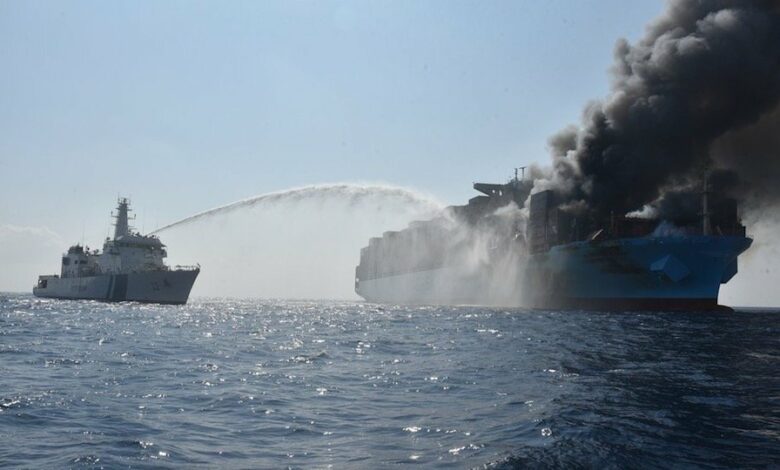
In an industry where crews operate hundreds of miles from shore, often with limited external support, safety cannot be built on minimum standards alone. Nowhere is this more evident than in fire safety.
The maritime sector has long relied on global training frameworks to ensure seafarers are prepared to deal with emergencies. Yet when a fire breaks out at sea, compliance with the minimum training requirement is not what determines the outcome. What matters is how prepared the crew truly is in the moment, how well they can react under pressure, how confidently they can assess the situation, and how effectively they can work together to contain the threat.
We have seen recent reports of fires breaking out onboard sparking discussion on how effective standards of training really are. The industry must recognise a simple truth: minimum standards are a starting point, not the finish line. The global benchmark for maritime training remains the STCW Convention. It provides a strong foundation in both basic and advanced firefighting and has played a vital role in raising safety awareness across the global fleet.
However, certification alone does not ensure real-world competence. On many vessels, drills are carried out regularly in line with STCW requirements, company procedures and flag-state regulations. But the effectiveness of these drills can vary significantly depending on the vessel, the company’s safety culture, and the experience of the crew.
Crews benefit most from scenario-based, practical training that reflects real engine room conditions and forces them to make decisions under pressure. Regular refresher courses ashore, combined with modern simulation tools, can significantly strengthen preparedness beyond the minimum STCW requirements.
When seafarers are expected to respond to emergencies in some of the most demanding environments in the world, training must go beyond basic certification. Shipboard fires are not unpredictable events. The most common causes have been identified for decades, particularly in machinery spaces.
Fuel or lubricating oil leaks onto hot surfaces remain the leading cause of engine room fires, often linked to deficiencies in insulation, maintenance and housekeeping identified during Port State Control inspections. Fires frequently originate from pressurised oil systems, including pipes, filters and pumps, while overheating equipment and electrical faults further increase the risk. As the maritime industry evolves, so too do the risks it faces. The increasing presence of lithium-ion batteries onboard vessels, whether in energy storage systems or cargo such as electric vehicles, has introduced new fire challenges that behave very differently from traditional fuel-based fires.
Lithium-ion battery fires can reignite, release toxic gases and require different cooling and isolation strategies. Preparing crews to deal with these incidents requires three key elements: awareness, procedures and equipment.
Regulation has played a central role in improving fire safety standards at sea. Requirements under the SOLAS Convention have significantly strengthened fire detection, suppression and structural protection measures onboard ships.
However, the rapid introduction of alternative fuels, battery systems and evolving cargo types means regulatory frameworks must continue to adapt.
Greater emphasis on risk-based regulations, updated guidance for emerging technologies and clearer expectations around specialised training will help ensure crews remain protected. Consistent enforcement of maintenance standards and safety management systems across the global fleet is equally important in reducing machinery-space fire risks.
Across the maritime industry, awareness of fire risks is increasing. At OneLearn Global, we continue to see strong attendance in our fire-related training programmes. This reflects a broader shift within the industry. Ship operators recognise that evolving technologies, new cargo types and changing operational demands require seafarers to continuously update their knowledge and skills.
Training providers also have a responsibility to keep pace by developing programmes that address emerging hazards and provide practical, accessible learning opportunities for crews worldwide.
Seafarers operate at the heart of global trade, often in remote and challenging conditions. They are expected to manage complex systems, respond to emergencies and protect both life and cargo in environments where external assistance may be hours away. In such circumstances, relying solely on minimum training standards is not enough.
The maritime industry must aim for a consistent, high-quality level of fire safety training across the global fleet – one that prioritises realistic preparation, continuous learning and the adoption of modern training technologies.
Because when a fire breaks out at sea, preparation is everything. And the safety of seafarers should never be compromised.
source : splash247
Featured Post
 বিশ্ব সমুদ্র দিবস: মেরিন একাডেমিকে আবার সামুদ্রিক শিক্ষার প্রাণকেন্দ্রে ফেরাতে হবে বাংলাদেশকে
 গোলাম সোহরাওয়ার্দি বিশ্ব সমুদ্র দিবস ২০২৬ এবং সমন্বিত জাতীয় প্রশিক্ষণ কৌশলের প্রয়োজনীয়তা বিশ্ব সমুদ্র দিবসে আন্তর্জাতিক সামুদ্রিক সংস্থার (আইএমও) মহাসচিব আর্সেনিও ডমিঙ্গেজ খুব সহজ কিন্তু গভীর একটি বার্তা দিয়েছেন। আন্তর্জাতিক নিয়মকানুন সমুদ্র পরিবহন ব্যবস্থার উন্নতি তখনই করতে পারে, যখন দেশগুলো তা ঠিকমতো মেনে চলে। তিনি বলেন, “নাবিকদের কথাই সবার আগে […]
 World Maritime Day: Bangladesh Must Put Its Marine Academy Back at the Center of Maritime Education
 World Maritime Day: Bangladesh Must Put Its Marine Academy Back at the Center of Maritime Education by Ghulam Suhrawardi World Maritime Day 2026 and the case for a coherent national training strategy On World Maritime Day, International Maritime Organization Secretary-General Arsenio Dominguez delivered a deceptively simple message: international rules improve […]



JOB SITES
CONTENTS
LINKS
Happy New Year

Découvrez les avantages de MadCasino
Dans le monde des casinos en ligne, MadCasino se distingue par ses offres attrayantes et ses services de qualité. Que vous soyez un joueur débutant ou un parieur aguerri, vous trouverez ici une variété de jeux qui sauront satisfaire toutes vos envies. Les machines à sous, les jeux de table et les options de paris en direct sont tous disponibles pour vous offrir une expérience de jeu inégalée. De plus, le casino propose régulièrement des bonus qui permettent d'augmenter vos chances de gagner, vous offrant ainsi une excellente opportunité de maximiser vos gains.
En matière de sécurité, MadCasino est un nom de confiance. Il est entièrement licencié et régulé, ce qui garantit un environnement de jeu sûr et équitable. Les joueurs peuvent se concentrer sur leur expérience de jeu sans se soucier des problèmes de sécurité. Les transactions financières sont également sécurisées grâce à des technologies de pointe.
Les jeux proposés par MadCasino sont issus des développeurs les plus réputés de l'industrie, vous assurant des graphismes époustouflants et des mécaniques de jeu innovantes. Les joueurs peuvent également profiter d'une expérience de jeu en direct qui simule l'atmosphère d'un casino terrestre, tout en restant dans le confort de leur maison.
Enfin, la plateforme de MadCasino est optimisée pour les appareils mobiles, permettant aux joueurs de parier à tout moment et de n'importe où. Que vous soyez sur votre smartphone ou votre tablette, l'accès à vos jeux préférés n'a jamais été aussi simple. Ne manquez pas l'opportunité de découvrir ce casino exceptionnel.
Les offres de Cresus Casino
Cresus Casino est un autre acteur majeur dans le domaine des jeux en ligne, offrant des promotions généreuses et une vaste sélection de jeux. Les joueurs peuvent profiter d'une expérience de jeu enrichissante grâce aux nombreux bonus disponibles, qui sont conçus pour attirer tant les nouveaux utilisateurs que les joueurs réguliers. Ces avantages permettent non seulement de prolonger votre temps de jeu, mais aussi d'augmenter vos chances de gains conséquents.
Le casino se distingue également par sa ludothèque impressionnante, comprenant une sélection variée de machines à sous, de jeux de table et de jeux en direct. Les clients peuvent choisir parmi des titres populaires et appréciés, ainsi que des nouveautés qui enrichissent constamment l'offre. L'interface utilisateur est conviviale, rendant la navigation sur la plateforme fluide et agréable.
En termes de sécurité, Cresus Casino assure à ses joueurs un environnement de jeu fiable. La plateforme utilise des protocoles de sécurité avancés pour protéger les données personnelles et financières des utilisateurs. Cela permet aux joueurs de se sentir en sécurité tout en jouant à leurs jeux préférés.
Avec un service client réactif et professionnel, Cresus Casino s'assure que toutes vos questions et préoccupations sont traitées rapidement. Que ce soit pour des questions concernant les bonus, les retraits ou les jeux, vous bénéficierez d'une assistance rapide et efficace.
Explorez Nine Casino et ses avantages
Dans l'univers des casinos en ligne, Nine Casino a su se faire une place de choix grâce à son approche innovante et à ses nombreux avantages pour les joueurs. Les utilisateurs peuvent s'attendre à une expérience de jeu enrichissante, avec des bonus attractifs qui sont régulièrement mis à jour. Ces offres sont une excellente façon de découvrir de nouveaux jeux tout en maximisant votre potentiel de gain.
La plateforme de Nine Casino est riche en options de jeux, allant des machines à sous aux jeux de table, en passant par le live casino. Chaque jeu est conçu pour offrir une expérience immersive grâce à des graphismes de haute qualité et des fonctionnalités innovantes. Les parieurs peuvent profiter de sessions de jeu captivantes, comme s'ils étaient dans un véritable casino.
La sécurité est une priorité pour Nine Casino, qui utilise des technologies de cryptage avancées pour protéger les informations de ses joueurs. Cela garantit un environnement de jeu sûr et fiable, permettant aux utilisateurs de se concentrer sur ce qu'ils aiment le plus : jouer.
Enfin, le service clientèle fourni par Nine Casino est exceptionnel, avec des agents disponibles pour répondre à toutes vos questions et résoudre vos problèmes. Vous pourrez ainsi jouer en toute tranquillité, sachant que votre satisfaction est au cœur de leurs préoccupations.
Profitez de l'expérience Lucky31
Lucky31 est un casino en ligne qui se distingue par son approche orientée vers le joueur, offrant une multitude d'options de jeux et des bonus généreux. Que vous soyez amateur de machines à sous ou passionné de jeux de table, vous trouverez une large sélection pour satisfaire toutes vos envies de jeu. Les promotions fréquentes permettent aux joueurs de prolonger leur expérience tout en augmentant leurs chances de gains.
La convivialité de la plateforme de Lucky31 est l'un de ses plus grands atouts. Les joueurs peuvent naviguer facilement entre les différents jeux, et l'interface est conçue pour être intuitive, quel que soit le niveau d'expérience de l'utilisateur. De plus, le casino est entièrement optimisé pour les appareils mobiles, ce qui permet de parier où que vous soyez.
En matière de sécurité, Lucky31 prend les préoccupations des joueurs très au sérieux. Le casino est agréé et régulé, garantissant un environnement de jeu équitable et sécurisé. Les joueurs peuvent ainsi se concentrer sur leur expérience de jeu sans se soucier des risques liés à la sécurité.
Pour ceux qui recherchent un support client efficace, Lucky31 offre un service réactif et professionnel. Que ce soit pour des questions sur les bonus, les jeux ou les paiements, vous aurez accès à une assistance de qualité, vous garantissant une expérience de jeu fluide et agréable.