search the site


Windward: Iran is gradually increasing transits daily
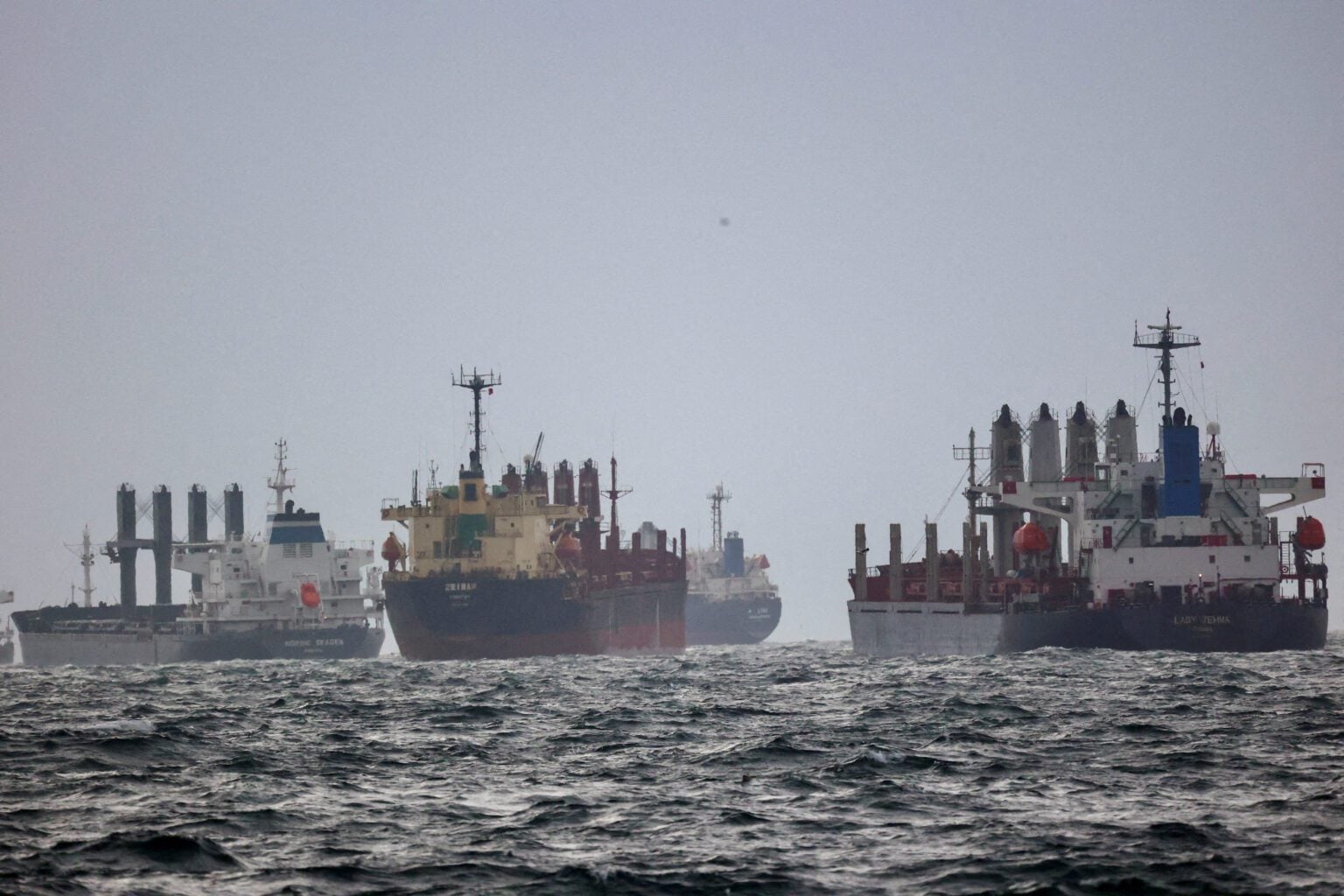
According to Windward, 36% of Hormuz transits seen March 31 were on US-sanctioned vessels, while 27% were Greece-owned bulk carriers shipping agricultural commodities to or from the Islamic Republic, highlighting how the selective blockade of the Strait of Hormuz is benefiting Iran.
Strait of Hormuz transit and selective denial
Transit through the Strait of Hormuz remained active on March 31, but access continues to be tightly filtered. 1 tanker, four cargo (2 containerships, 2 general cargo vessels) inbound transits while 1 tanker, 5 cargo (1 containership, 1 general cargo, 3 bulk carrier) exited the Gulf, according to AIS signals.
While daily volumes are 93% down on average levels, tracking shows that Iran is gradually increasing transits daily since imposing its selective blockade on the Strait around March 15 by rerouting ships via Larak Island.
At a glance
- Iran is consolidating its control of the permission-based route through the Strait of Hormuz that allows vessels to transit via Larak Island. The route, a selective blockade, has been operational since March 15. On March 31, 11 AIS-transmitting vessels crossed the Strait, while additional movements likely occurred under partial or fully dark conditions.
- Six AIS-transmitting vessels exited the Gulf, while five AIS-transmitting vessels entered, bringing the total number of confirmed crossings to 11 on March 31.
- A tanker was struck off Ras Laffan, Qatar, by two Iranian missiles, the second attack in as many days, and the 24th reported event since the war began.
- Iran is set to deliver its first oil to India in seven years, taking advantage of a US waiver issued to Iranian cargoes on the water two weeks ago.

West of Hormuz oil exports drop 76% in March
March oil loadings at ports West of Hormuz declined 76% in March compared with February. Exports of crude and condensate, clean petroleum products and dirty petroleum products loaded on tankers totalled 5.28m bpd in March, compared with 22.2m bpd the prior month. .
Crude and condensate loadings reached 4.3m bpd in March, compared with 16.6m bpd in February. Clean petroleum products were at 880,000 bpd compared with 4.95m bpd in the prior month.
Of the 142.5m barrels tracked being loaded, 128m barrels remain in transit or floating storage indicating the severity of the closure which has prevented tankers leaving Hormuz to deliver cargoes.

Qatar energy-chartered tanker hit by missile
Panama-flagged 47,917 dwt tanker AQUA 1 (IMO 9573660) was struck by two Iranian cruise missiles about 17 nautical miles north of Ras Laffan, Qatar on April 1. The vessel sustained port-side hull damage above the waterline. All 21 crew members were evacuated safely with no injuries reported. No environmental impact or oil spill was noted.
Qatar’s armed forces detected three Iranian cruise missile launches with two intercepted, and one striking AQUA 1. The vessel was on charter to Qatar Energy.
One missile caused a fire which has since been extinguished. The other remains unexploded within the vessel’s engine room and is being investigated by the relevant authorities, according to the UK Maritime Trade Operations Centre.
The UKMTO has logged 24 maritime incidents since February 28 across the Middle East Gulf, Strait of Hormuz, and Gulf of Oman including 16 confirmed attacks, and eight suspicious events. The AQUA 1 attack followed the March 31 drone strike on Kuwaiti VLCC AL SALMI at Dubai Anchorage.
The vessel’s last confirmed port call was Ras Laffan, Qatar between March 8-11.
India buys Iranian oil under US waiver
PING SHUN (IMO 9231901), an OFAC-sanctioned Aframax crude oil tanker flying the false flag of Eswatini is transporting ~600,000 barrels of Iranian crude from Kharg Island, Iran to Vadinar, India—the first Iranian oil delivery to India since May 2019.
Both tanker & operator (Nycity Shipmanagement Co Ltd, China) are designated under OFAC Executive Order 13902 (Iran sanctions) on February 25, 2025.
The expected receivers are either Indian Oil Corp., Bharat Petroleum Corp., or Nayara Energy Ltd.
India-Iran trade was previously at 518,000 bpd (11.5% of India’s crude imports) in 2018
The voyage was enabled by U.S. General License U (issued March 20, 2026), authorizing delivery of Iranian crude loaded before the March 20 cutoff.
GL U does not override vessel-specific sanctions—nor does it delist the sanctioned vessel or authorize transactions with the sanctioned operator. This creates significant legal complexity for Indian refiners (IOC, BPCL, Nayara Energy) receiving the cargo at Vadinar port.
Iran war reshapes Russia oil shipments
Analysis of tankers calling at Russia (excluding Kazakh and CPC grades) from March 1-25 showed 67% of crude was shipped on tankers sanctioned by the US, EU or UK.
“Other or unsanctioned dark fleet tankers” comprised 21% of crude shipped and Greece-owned ships 12%, one of the lowest levels ever.
Globally assessed crude, diesel prices and fuel oil prices exceeded G7 Oil Price Cap early in March. Many of the world’s largest export refineries are in Saudi Arabia, Kuwait, and UAE, with the shortage in middle distillates hiking global prices.
Complicating enforcement for the EU and UK was the U.S. decision to issue a sanctions waiver of all Russian cargoes on the water as of March 12. EU and UK marine service providers cannot benefit from the US sanctions waiver, which diverges from their existing sanctions regime which remains unchanged.

Outlook
The Strait of Hormuz remains effectively closed for a fifth week, as Iran entrenches a selective, permission-based transit regime rather than pursuing full closure. Limited increases in crossings suggest a calibrated strategy to maintain market leverage while allowing controlled flows. At the same time, policy distortions, including US waivers, are reshaping trade flows and benefiting sanctioned and dark fleet operators.
source : safety4sea
Featured Post
 বড় জাহাজ মেরামতে মাতারবাড়ীতে ১ বিলিয়ন ডলারের প্রকল্প
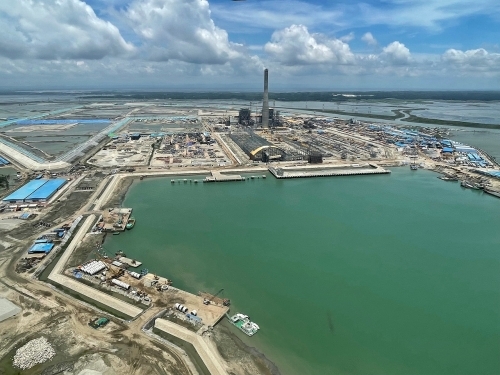
 মাতারবাড়ীতে প্রায় ১ বিলিয়ন মার্কিন ডলার ব্যয়ে পরিবেশবান্ধব ডকইয়ার্ড ও জাহাজ নির্মাণ কেন্দ্র স্থাপনের উদ্যোগে নীতিগত অনুমোদন দিয়েছে নৌপরিবহন মন্ত্রণালয়। এখন প্রকল্পটির কারিগরি ও আর্থিক মূল্যায়নের জন্য প্রস্তাবটি সরকারি-বেসরকারি অংশীদারত্ব (পিপিপি) কর্তৃপক্ষের কাছে পাঠানো হয়েছে। সম্পূর্ণ বেসরকারি অর্থায়নে সরকারি জমির মালিকানা অক্ষুণ্ন রেখে প্রকল্পটি বাস্তবায়নের পরিকল্পনা রয়েছে। বন্দর কর্তৃপক্ষ জানায়, […]
 Industry on alert over scam messages offering ships “safe passage” on Hormuz
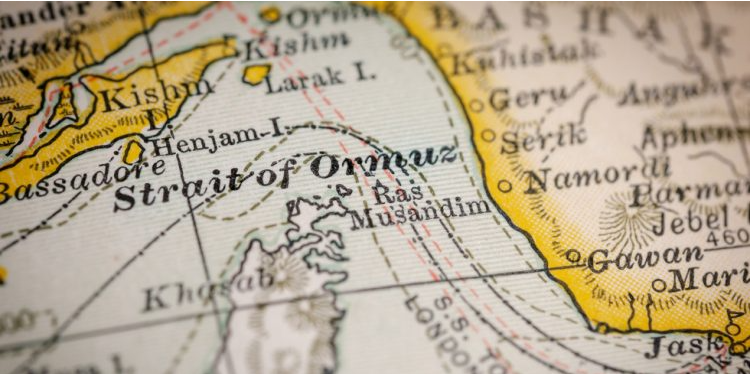
 Credit: Shutterstock Fraudulent messages offering safe passage through the Strait of Hormuz in exchange for cryptocurrency have been circulated to shipping companies with vessels stranded west of the waterway, according to MARISKS. In an alert issued on 20 April, MARISKS cautioned that unknown actors posing as Iranian authorities had contacted […]



JOB SITES
CONTENTS
LINKS
Happy New Year

Découvrez les avantages de MadCasino
Dans le monde des casinos en ligne, MadCasino se distingue par ses offres attrayantes et ses services de qualité. Que vous soyez un joueur débutant ou un parieur aguerri, vous trouverez ici une variété de jeux qui sauront satisfaire toutes vos envies. Les machines à sous, les jeux de table et les options de paris en direct sont tous disponibles pour vous offrir une expérience de jeu inégalée. De plus, le casino propose régulièrement des bonus qui permettent d'augmenter vos chances de gagner, vous offrant ainsi une excellente opportunité de maximiser vos gains.
En matière de sécurité, MadCasino est un nom de confiance. Il est entièrement licencié et régulé, ce qui garantit un environnement de jeu sûr et équitable. Les joueurs peuvent se concentrer sur leur expérience de jeu sans se soucier des problèmes de sécurité. Les transactions financières sont également sécurisées grâce à des technologies de pointe.
Les jeux proposés par MadCasino sont issus des développeurs les plus réputés de l'industrie, vous assurant des graphismes époustouflants et des mécaniques de jeu innovantes. Les joueurs peuvent également profiter d'une expérience de jeu en direct qui simule l'atmosphère d'un casino terrestre, tout en restant dans le confort de leur maison.
Enfin, la plateforme de MadCasino est optimisée pour les appareils mobiles, permettant aux joueurs de parier à tout moment et de n'importe où. Que vous soyez sur votre smartphone ou votre tablette, l'accès à vos jeux préférés n'a jamais été aussi simple. Ne manquez pas l'opportunité de découvrir ce casino exceptionnel.
Les offres de Cresus Casino
Cresus Casino est un autre acteur majeur dans le domaine des jeux en ligne, offrant des promotions généreuses et une vaste sélection de jeux. Les joueurs peuvent profiter d'une expérience de jeu enrichissante grâce aux nombreux bonus disponibles, qui sont conçus pour attirer tant les nouveaux utilisateurs que les joueurs réguliers. Ces avantages permettent non seulement de prolonger votre temps de jeu, mais aussi d'augmenter vos chances de gains conséquents.
Le casino se distingue également par sa ludothèque impressionnante, comprenant une sélection variée de machines à sous, de jeux de table et de jeux en direct. Les clients peuvent choisir parmi des titres populaires et appréciés, ainsi que des nouveautés qui enrichissent constamment l'offre. L'interface utilisateur est conviviale, rendant la navigation sur la plateforme fluide et agréable.
En termes de sécurité, Cresus Casino assure à ses joueurs un environnement de jeu fiable. La plateforme utilise des protocoles de sécurité avancés pour protéger les données personnelles et financières des utilisateurs. Cela permet aux joueurs de se sentir en sécurité tout en jouant à leurs jeux préférés.
Avec un service client réactif et professionnel, Cresus Casino s'assure que toutes vos questions et préoccupations sont traitées rapidement. Que ce soit pour des questions concernant les bonus, les retraits ou les jeux, vous bénéficierez d'une assistance rapide et efficace.
Explorez Nine Casino et ses avantages
Dans l'univers des casinos en ligne, Nine Casino a su se faire une place de choix grâce à son approche innovante et à ses nombreux avantages pour les joueurs. Les utilisateurs peuvent s'attendre à une expérience de jeu enrichissante, avec des bonus attractifs qui sont régulièrement mis à jour. Ces offres sont une excellente façon de découvrir de nouveaux jeux tout en maximisant votre potentiel de gain.
La plateforme de Nine Casino est riche en options de jeux, allant des machines à sous aux jeux de table, en passant par le live casino. Chaque jeu est conçu pour offrir une expérience immersive grâce à des graphismes de haute qualité et des fonctionnalités innovantes. Les parieurs peuvent profiter de sessions de jeu captivantes, comme s'ils étaient dans un véritable casino.
La sécurité est une priorité pour Nine Casino, qui utilise des technologies de cryptage avancées pour protéger les informations de ses joueurs. Cela garantit un environnement de jeu sûr et fiable, permettant aux utilisateurs de se concentrer sur ce qu'ils aiment le plus : jouer.
Enfin, le service clientèle fourni par Nine Casino est exceptionnel, avec des agents disponibles pour répondre à toutes vos questions et résoudre vos problèmes. Vous pourrez ainsi jouer en toute tranquillité, sachant que votre satisfaction est au cœur de leurs préoccupations.
Profitez de l'expérience Lucky31
Lucky31 est un casino en ligne qui se distingue par son approche orientée vers le joueur, offrant une multitude d'options de jeux et des bonus généreux. Que vous soyez amateur de machines à sous ou passionné de jeux de table, vous trouverez une large sélection pour satisfaire toutes vos envies de jeu. Les promotions fréquentes permettent aux joueurs de prolonger leur expérience tout en augmentant leurs chances de gains.
La convivialité de la plateforme de Lucky31 est l'un de ses plus grands atouts. Les joueurs peuvent naviguer facilement entre les différents jeux, et l'interface est conçue pour être intuitive, quel que soit le niveau d'expérience de l'utilisateur. De plus, le casino est entièrement optimisé pour les appareils mobiles, ce qui permet de parier où que vous soyez.
En matière de sécurité, Lucky31 prend les préoccupations des joueurs très au sérieux. Le casino est agréé et régulé, garantissant un environnement de jeu équitable et sécurisé. Les joueurs peuvent ainsi se concentrer sur leur expérience de jeu sans se soucier des risques liés à la sécurité.
Pour ceux qui recherchent un support client efficace, Lucky31 offre un service réactif et professionnel. Que ce soit pour des questions sur les bonus, les jeux ou les paiements, vous aurez accès à une assistance de qualité, vous garantissant une expérience de jeu fluide et agréable.