
search the site


Why the ship recycling debate needs a reality check
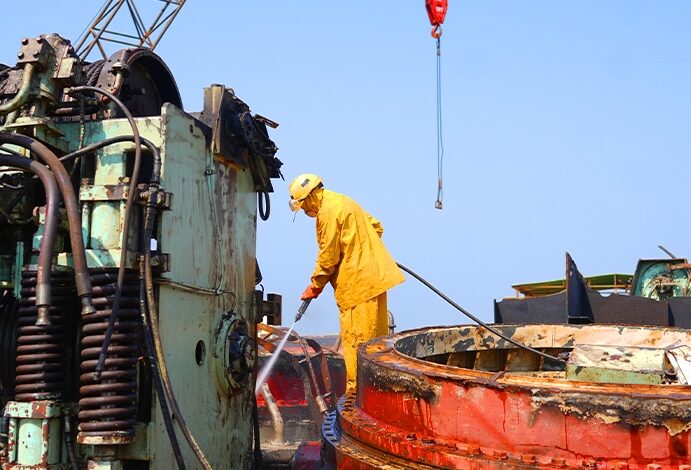
The ship recycling debate is entering a critical phase. With a major wave of vessels approaching end of life, the question is no longer whether standards should improve. They must. The real question is whether the industry is aligned on where scalable, compliant capacity already exists. BIMCO estimates that around 15,000 vessels will require recycling by 2032, underlining the scale of the challenge.
The industry is heading into a major recycling cycle, with thousands of vessels approaching end of life. The issue is not standards versus no standards. It is whether the industry recognises compliant capacity where it already operates, or continues to frame the debate in ways that overlook operational realities.
With the Hong Kong Convention now in force, ship recycling has for the first time a global regulatory framework designed specifically for the sector. This should have brought clarity. Instead, parts of the debate continue to suggest that compliant South Asian yards remain outside the modern system, while alternative models are positioned as the default benchmark.
This position is becoming harder to reconcile with current realities.
Today, the largest concentration of globally compliant ship recycling capacity operates in India. Many yards are certified by leading classification societies and subject to repeated external audits. The issue is no longer whether compliance can be demonstrated. It is whether it is being consistently acknowledged.
The coming recycling wave will require capacity that already exists and is operational. The assumption that alternative non-beaching capacity can be built in time underestimates the complexity involved. Ship recycling infrastructure depends on land, downstream steel demand, logistics integration, labour ecosystems and years of operational development. This is not capacity that appears on demand.
Shipping understands this. Infrastructure is built over decades.
Nor is ship recycling unique in following the logic of industrial geography. Industries develop where supply chains, labour, downstream demand and processing ecosystems exist. EV batteries are concentrated in China, garments in Bangladesh and semiconductors in Taiwan. Ship recycling follows the same logic. To treat ship recycling as an exception is to misunderstand how global industry actually functions.
Calls to bypass existing ecosystems in favour of not yet scaled alternatives should therefore be treated with caution. The ships approaching end of life will not wait for theoretical capacity to materialise.
There is also a critical dimension often missing from the beaching versus non-beaching narrative. The full lifecycle of the steel.
Recycling outcomes cannot be judged solely by where a vessel is cut. They must be assessed across the full lifecycle of the steel, including processing, transport and end use. In India, a substantial proportion of recovered ship steel is directly rerolled and reused, avoiding energy intensive remelting. This has significant implications for carbon performance and circularity.
By contrast, some alternative models introduce additional transport and processing steps that are rarely accounted for transparently. Vessels recycled at ASRY in Bahrain under the Elegant Exit model see a large share of their steel scrap exported to Indian rerolling mills. The downstream pathway is therefore not avoided. It is extended by an additional transport leg before reaching the same end-use ecosystem.
This raises a fundamental question. Can such pathways be presented as inherently greener without full lifecycle emissions disclosure?
Without comprehensive lifecycle accounting, simplified claims of environmental superiority risk becoming selective narratives rather than evidence based conclusions.
The same applies to perceptions of yard conditions. Much of the criticism of South Asian recycling still relies on outdated assumptions. The reality in many compliant yards today includes impermeable flooring, mechanised handling, structured waste management systems, trained workforces and audited procedures. These are the result of sustained investment and regulatory oversight.
None of this suggests that the sector has reached its endpoint. Continuous improvement remains essential. But serious debate should begin with current realities, not historical assumptions.
This is not a neutral debate. Different business models have different economic incentives. Some benefit from displacing large, price competitive recycling ecosystems. That does not invalidate their arguments, but it does mean they should be understood in context.
For shipowners, end of life decisions are commercial and fiduciary. If they are expected to accept materially lower returns in the name of sustainability, the alternatives offered must demonstrate clear, measurable advantages at scale.
That case has yet to be demonstrated consistently at scale.
The industry does need higher standards, stronger enforcement and continued investment in safety and environmental performance. But it also needs clarity about where capacity exists, how steel economics function and what can realistically scale in time.
The real test is not which narrative is most compelling. It is which model can deliver compliance, capacity, carbon credibility and commercial viability at scale. The risk is not that standards fail to rise. It is that the industry misjudges where these elements already intersect, and loses time it cannot afford.
On that test, compliant South Asian yards are not the problem. They are an essential part of the solution.
The sooner this is recognised, the better prepared the industry will be for the recycling wave already on the horizon.
source : splash247
Featured Post
 বিশ্ব সমুদ্র দিবস: মেরিন একাডেমিকে আবার সামুদ্রিক শিক্ষার প্রাণকেন্দ্রে ফেরাতে হবে বাংলাদেশকে
 গোলাম সোহরাওয়ার্দি বিশ্ব সমুদ্র দিবস ২০২৬ এবং সমন্বিত জাতীয় প্রশিক্ষণ কৌশলের প্রয়োজনীয়তা বিশ্ব সমুদ্র দিবসে আন্তর্জাতিক সামুদ্রিক সংস্থার (আইএমও) মহাসচিব আর্সেনিও ডমিঙ্গেজ খুব সহজ কিন্তু গভীর একটি বার্তা দিয়েছেন। আন্তর্জাতিক নিয়মকানুন সমুদ্র পরিবহন ব্যবস্থার উন্নতি তখনই করতে পারে, যখন দেশগুলো তা ঠিকমতো মেনে চলে। তিনি বলেন, “নাবিকদের কথাই সবার আগে […]
 World Maritime Day: Bangladesh Must Put Its Marine Academy Back at the Center of Maritime Education
 World Maritime Day: Bangladesh Must Put Its Marine Academy Back at the Center of Maritime Education by Ghulam Suhrawardi World Maritime Day 2026 and the case for a coherent national training strategy On World Maritime Day, International Maritime Organization Secretary-General Arsenio Dominguez delivered a deceptively simple message: international rules improve […]



JOB SITES
CONTENTS
LINKS
Happy New Year

Découvrez les avantages de MadCasino
Dans le monde des casinos en ligne, MadCasino se distingue par ses offres attrayantes et ses services de qualité. Que vous soyez un joueur débutant ou un parieur aguerri, vous trouverez ici une variété de jeux qui sauront satisfaire toutes vos envies. Les machines à sous, les jeux de table et les options de paris en direct sont tous disponibles pour vous offrir une expérience de jeu inégalée. De plus, le casino propose régulièrement des bonus qui permettent d'augmenter vos chances de gagner, vous offrant ainsi une excellente opportunité de maximiser vos gains.
En matière de sécurité, MadCasino est un nom de confiance. Il est entièrement licencié et régulé, ce qui garantit un environnement de jeu sûr et équitable. Les joueurs peuvent se concentrer sur leur expérience de jeu sans se soucier des problèmes de sécurité. Les transactions financières sont également sécurisées grâce à des technologies de pointe.
Les jeux proposés par MadCasino sont issus des développeurs les plus réputés de l'industrie, vous assurant des graphismes époustouflants et des mécaniques de jeu innovantes. Les joueurs peuvent également profiter d'une expérience de jeu en direct qui simule l'atmosphère d'un casino terrestre, tout en restant dans le confort de leur maison.
Enfin, la plateforme de MadCasino est optimisée pour les appareils mobiles, permettant aux joueurs de parier à tout moment et de n'importe où. Que vous soyez sur votre smartphone ou votre tablette, l'accès à vos jeux préférés n'a jamais été aussi simple. Ne manquez pas l'opportunité de découvrir ce casino exceptionnel.
Les offres de Cresus Casino
Cresus Casino est un autre acteur majeur dans le domaine des jeux en ligne, offrant des promotions généreuses et une vaste sélection de jeux. Les joueurs peuvent profiter d'une expérience de jeu enrichissante grâce aux nombreux bonus disponibles, qui sont conçus pour attirer tant les nouveaux utilisateurs que les joueurs réguliers. Ces avantages permettent non seulement de prolonger votre temps de jeu, mais aussi d'augmenter vos chances de gains conséquents.
Le casino se distingue également par sa ludothèque impressionnante, comprenant une sélection variée de machines à sous, de jeux de table et de jeux en direct. Les clients peuvent choisir parmi des titres populaires et appréciés, ainsi que des nouveautés qui enrichissent constamment l'offre. L'interface utilisateur est conviviale, rendant la navigation sur la plateforme fluide et agréable.
En termes de sécurité, Cresus Casino assure à ses joueurs un environnement de jeu fiable. La plateforme utilise des protocoles de sécurité avancés pour protéger les données personnelles et financières des utilisateurs. Cela permet aux joueurs de se sentir en sécurité tout en jouant à leurs jeux préférés.
Avec un service client réactif et professionnel, Cresus Casino s'assure que toutes vos questions et préoccupations sont traitées rapidement. Que ce soit pour des questions concernant les bonus, les retraits ou les jeux, vous bénéficierez d'une assistance rapide et efficace.
Explorez Nine Casino et ses avantages
Dans l'univers des casinos en ligne, Nine Casino a su se faire une place de choix grâce à son approche innovante et à ses nombreux avantages pour les joueurs. Les utilisateurs peuvent s'attendre à une expérience de jeu enrichissante, avec des bonus attractifs qui sont régulièrement mis à jour. Ces offres sont une excellente façon de découvrir de nouveaux jeux tout en maximisant votre potentiel de gain.
La plateforme de Nine Casino est riche en options de jeux, allant des machines à sous aux jeux de table, en passant par le live casino. Chaque jeu est conçu pour offrir une expérience immersive grâce à des graphismes de haute qualité et des fonctionnalités innovantes. Les parieurs peuvent profiter de sessions de jeu captivantes, comme s'ils étaient dans un véritable casino.
La sécurité est une priorité pour Nine Casino, qui utilise des technologies de cryptage avancées pour protéger les informations de ses joueurs. Cela garantit un environnement de jeu sûr et fiable, permettant aux utilisateurs de se concentrer sur ce qu'ils aiment le plus : jouer.
Enfin, le service clientèle fourni par Nine Casino est exceptionnel, avec des agents disponibles pour répondre à toutes vos questions et résoudre vos problèmes. Vous pourrez ainsi jouer en toute tranquillité, sachant que votre satisfaction est au cœur de leurs préoccupations.
Profitez de l'expérience Lucky31
Lucky31 est un casino en ligne qui se distingue par son approche orientée vers le joueur, offrant une multitude d'options de jeux et des bonus généreux. Que vous soyez amateur de machines à sous ou passionné de jeux de table, vous trouverez une large sélection pour satisfaire toutes vos envies de jeu. Les promotions fréquentes permettent aux joueurs de prolonger leur expérience tout en augmentant leurs chances de gains.
La convivialité de la plateforme de Lucky31 est l'un de ses plus grands atouts. Les joueurs peuvent naviguer facilement entre les différents jeux, et l'interface est conçue pour être intuitive, quel que soit le niveau d'expérience de l'utilisateur. De plus, le casino est entièrement optimisé pour les appareils mobiles, ce qui permet de parier où que vous soyez.
En matière de sécurité, Lucky31 prend les préoccupations des joueurs très au sérieux. Le casino est agréé et régulé, garantissant un environnement de jeu équitable et sécurisé. Les joueurs peuvent ainsi se concentrer sur leur expérience de jeu sans se soucier des risques liés à la sécurité.
Pour ceux qui recherchent un support client efficace, Lucky31 offre un service réactif et professionnel. Que ce soit pour des questions sur les bonus, les jeux ou les paiements, vous aurez accès à une assistance de qualité, vous garantissant une expérience de jeu fluide et agréable.