search the site


The Ownership Question: Why Maritime Professionals Can Now Own the Ships They Operate
The Ownership Question: Why Maritime Professionals Can Now Own the Ships They
Operate
By Captain Vikas Pandey, Founder and CEO, Shipfinex
I spent more than two decades at sea before moving ashore to build businesses in the maritime
industry. In all that time, one structural reality never changed:
The people who know ships best have no realistic path to owning them.
That is not an observation born of resentment. It is simply how the capital structure of shipping
has always worked. Banks lend to institutions with fleet-level balance sheets and decades of
relationships in Hamburg, Oslo, or Tokyo. The master who has navigated the same route for
fifteen years, the chief engineer who has kept ageing machinery running through conditions no
equipment manual fully anticipates, the ship manager coordinating crew, compliance, and
commercial obligations across a dozen vessels simultaneously, none of them fit the credit
profile that traditional ship finance requires.
This is changing. Not because the industry has decided to be generous, but because the
regulatory and technological infrastructure now exists to make fractional vessel ownership both
legally sound and institutionally credible. I want to be precise about what that actually means in
practice.
The Seafarer’s Financial Reality
Consider the career arc of a typical senior officer in international shipping. They begin as a
cadet in their early twenties, progress through junior officer ranks, reach chief officer or chief
engineer in their mid-thirties, and make master or chief engineer by their early forties. That is a
career built on technical depth, physical commitment, and a level of responsibility that few
shore-based roles demand. The master of a VLCC is legally responsible for a $100 million
asset, its cargo, its crew, and its environmental compliance, twenty-four hours a day at sea.
What does that career accumulate financially? A salary. A good one in many cases. But a salary
only. No equity. No residual stake in the asset. No share of the freight market upside when rates
run. When a master retires, they walk away from decades of operational expertise with no
ownership position in the industry they built.
Compare this to any other profession that demands equivalent expertise and responsibility. A
surgeon builds a practice. A lawyer makes partner. A senior engineer at a technology company
accumulates stock options that compound over a career. In every comparable profession,
expertise converts eventually into ownership. In shipping, it does not.
This structural exclusion has consequences beyond individual financial outcomes. The BIMCO
and ICS Seafarer Workforce Report projects a global officer shortfall approaching 90,000 by
2026, with retention identified as a primary driver. Experienced officers leave seafaring careers
not because they stop finding the work meaningful, but because shore-based roles offer
something the sea cannot: a stake in the outcome.
The Finance Architecture That Has Always Excluded Professionals
Petrofin Research’s end-2024 analysis places total global ship finance at approximately $625
billion, against a world fleet valued by Clarksons at $2 trillion. European banks hold 52% of the
top 40 lenders’ portfolio. Japanese banks hold 22%. No individual maritime professional
appears anywhere in this picture.
Conventional ship finance cross-collateralizes at the fleet level. A single charter default can
trigger cross-default provisions across an entire portfolio. Banks lend against fleet-level
guarantees, not individual asset performance. For someone seeking to enter ship ownership
without an existing fleet behind them, the entry point simply does not exist.
Basel IV has tightened this further. Mandatory for all Eurozone banks from 1 January 2025, the
framework increases capital requirements for specialised asset-backed lending, the category
under which shipping sits. European banks are expected to concentrate lending on larger,
established companies with the strongest credit ratings. A first-generation maritime professional
does not fit this profile.
The capital vacuum left by retreating European banks has been filled primarily by Chinese state-
backed institutions. Between 2010 and 2018, their new business volume totalled an estimated
$127 billion, while Germany’s cumulative portfolio shrank from $154 billion to $38 billion over
the same period. This substitution has not created new pathways for maritime professionals. It
has simply changed which institutions hold the ownership.
Why the Timing of This Conversation Matters
Two things have changed simultaneously that make this conversation relevant now rather than
theoretical.
The first is the scale of capital the industry needs to raise. Analysis by University Maritime
Advisory Services and the Energy Transitions Commission, published by the Global Maritime
Forum, estimates cumulative investment of $0.8 to 1.2 trillion between 2030 and 2050 to
achieve a 50% reduction in shipping’s greenhouse gas emissions. The IMO’s Net-Zero
Framework, approved at MEPC 83 in April 2025 with entry into force expected in 2027, makes
these targets binding. The existing global ship finance base is approximately $625 billion. The
pool of capital contributors must expand, and the regulatory infrastructure now exists to expand
it responsibly.
The second is that regulated fractional vessel ownership has moved from concept to
enforceable structure. Dubai’s Virtual Assets Regulatory Authority, established under Law No. 4
of 2022, requires platforms in this space to maintain capital adequacy standards, investor
protection protocols, anti-money laundering compliance, and ongoing disclosure obligations.
The EU’s Markets in Crypto-Assets Regulation, effective from 2024, provides equivalent
harmonised oversight across member states. These are operational regulatory regimes under
which platforms are licensed, supervised, and held to account.
How Fractional Vessel Ownership Actually Works
The structure begins with a Ship Owning Special Purpose Vehicle, a legally incorporated entity
that holds sole title to a single vessel. The SO-SPV is the contractual counterparty for all
ownership rights. It owns nothing else and is responsible for nothing beyond that vessel’s
obligations. Asset isolation at the legal entity level is the foundational protection for every
participant in the structure.
Maritime Asset Tokens are blockchain-based instruments that represent fractional economic
and ownership interests in that SO-SPV. Each MAT corresponds to a defined co-ownership unit
within the SPV. When an investor purchases MATs, the transaction executes as follows. The
investor pays in USDC, a fully collateralised stablecoin pegged to the US Dollar. The settlement
is simultaneous: USDC moves from the investor’s self-custodial wallet directly to the SO-SPV’s
wallet, and the corresponding MATs are issued to the investor’s wallet via smart contract.
Shipfinex FZCO, operating as the licensed broker-dealer, facilitates and records the transaction.
It does not hold, manage, or control investor funds or tokens at any point.
The self-custody model is structurally significant. The investor’s wallet is controlled exclusively
by them. Shipfinex has no access to it and no custody over its contents. An investor’s tokens
and funds cannot be affected by operational difficulties at the platform level.
The architecture also includes a maritime lien registered against the physical vessel in favour of
a Security Trustee acting for MAT holders. A maritime lien attaches directly to the ship, not to
any corporate entity above it. It means the vessel cannot be sold, transferred, or refinanced
without the lien being addressed. Enforcement rights, including the right to arrest the vessel in
virtually any admiralty jurisdiction, sit with the Security Trustee. This is one of the oldest security
mechanisms in commercial law, applied directly to the digital ownership structure.
What Professionals Should Weigh Honestly
Ships are capital-intensive, operationally demanding assets. Charter markets are cyclical, and
downturns can persist for years. Energy transition creates genuine stranding risk for
conventional tonnage as IMO standards tighten through 2030 and beyond.
What maritime professionals bring to these decisions that institutional investors cannot replicate
is operational knowledge that no financial model fully captures. A chief engineer who has
managed a specific vessel class in a specific trade knows its real economics from direct
experience. That informational advantage is precisely what this structure makes actionable for
the first time. It does not eliminate risk. It positions maritime professionals to evaluate risk more
accurately than any analyst working from a spreadsheet ashore.
A Structural Shift in Maritime Finance
The shipping industry has always been built by people who committed careers to it. The
financial infrastructure that captures the returns from that work has, until now, been structurally
inaccessible to those same people regardless of expertise, experience, or contribution.
Regulated vessel tokenisation removes the institutional barrier. It does not remove the risk, the
complexity, or the need for careful individual judgment. It is one new layer in a capital stack that
has always evolved.
For the first time, the question of whether maritime professionals can own the ships they
operate has a legally governed, institutionally credible, and regulatorily supervised answer. It
deserves to be asked carefully, and on its merits.
Author Biodata
Captain Vikas Pandey is the Founder and Chief Executive Officer of Shipfinex, a maritime asset
tokenisation platform operating under VARA In-Principle Approval (IPA/26/01/002), based in
Dubai. A Master Mariner with over two decades of experience in international shipping, he has
held command and senior operational roles across multiple vessel types and trade routes
before transitioning to maritime entrepreneurship. Shipfinex holds VARA In-Principle Approval
and EU VASP registration, and operates at the frontier of regulated fractional vessel ownership.
Disclosure: Captain Vikas Pandey is the Founder and CEO of Shipfinex. He has a direct
commercial interest in the adoption of maritime asset tokenisation frameworks discussed in this
article.
Risk Disclaimer: This article is for informational and educational purposes only and does not
constitute investment advice, an offer to sell or distribute Maritime Asset Tokens (MATs), digital
tokens, or any other financial product. Maritime asset participation involves substantial risks
including potential total loss of capital, asset illiquidity, operational complexity, and regulatory
uncertainty. Past performance of any asset class is not indicative of future results. Readers
should consult qualified financial, legal, and maritime advisors before making any investment
decisions. Shipfinex holds VARA In-Principle Approval (IPA/26/01/002) and is not yet a fully
licensed operational entity. The IPA does not constitute regulatory endorsement of any specific
asset, ship, or offering.
Featured Post
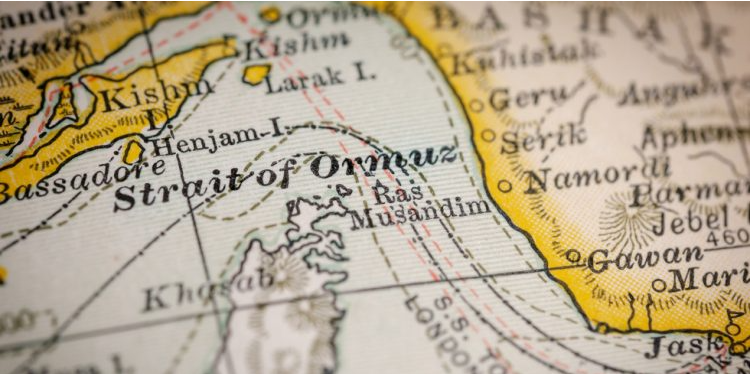 Industry on alert over scam messages offering ships “safe passage” on Hormuz
 Credit: Shutterstock Fraudulent messages offering safe passage through the Strait of Hormuz in exchange for cryptocurrency have been circulated to shipping companies with vessels stranded west of the waterway, according to MARISKS. In an alert issued on 20 April, MARISKS cautioned that unknown actors posing as Iranian authorities had contacted […]
 The ‘Cadet Gridlock’ in Bangladesh’s Maritime Sector: A Sorrowful Story of Wasted Potential
 The ‘Cadet Gridlock’ in Bangladesh’s Maritime Sector: A Sorrowful Story of Wasted Potential By Minar Rashid 21E On 15 November, the BMCS Gala Night 2025 was held at Singapore’s Orchid Country Club. With the vibrant participation of hundreds of Bangladeshi mariners and their families, the event became a remarkable reunion […]



JOB SITES
CONTENTS
LINKS
Happy New Year

Découvrez les avantages de MadCasino
Dans le monde des casinos en ligne, MadCasino se distingue par ses offres attrayantes et ses services de qualité. Que vous soyez un joueur débutant ou un parieur aguerri, vous trouverez ici une variété de jeux qui sauront satisfaire toutes vos envies. Les machines à sous, les jeux de table et les options de paris en direct sont tous disponibles pour vous offrir une expérience de jeu inégalée. De plus, le casino propose régulièrement des bonus qui permettent d'augmenter vos chances de gagner, vous offrant ainsi une excellente opportunité de maximiser vos gains.
En matière de sécurité, MadCasino est un nom de confiance. Il est entièrement licencié et régulé, ce qui garantit un environnement de jeu sûr et équitable. Les joueurs peuvent se concentrer sur leur expérience de jeu sans se soucier des problèmes de sécurité. Les transactions financières sont également sécurisées grâce à des technologies de pointe.
Les jeux proposés par MadCasino sont issus des développeurs les plus réputés de l'industrie, vous assurant des graphismes époustouflants et des mécaniques de jeu innovantes. Les joueurs peuvent également profiter d'une expérience de jeu en direct qui simule l'atmosphère d'un casino terrestre, tout en restant dans le confort de leur maison.
Enfin, la plateforme de MadCasino est optimisée pour les appareils mobiles, permettant aux joueurs de parier à tout moment et de n'importe où. Que vous soyez sur votre smartphone ou votre tablette, l'accès à vos jeux préférés n'a jamais été aussi simple. Ne manquez pas l'opportunité de découvrir ce casino exceptionnel.
Les offres de Cresus Casino
Cresus Casino est un autre acteur majeur dans le domaine des jeux en ligne, offrant des promotions généreuses et une vaste sélection de jeux. Les joueurs peuvent profiter d'une expérience de jeu enrichissante grâce aux nombreux bonus disponibles, qui sont conçus pour attirer tant les nouveaux utilisateurs que les joueurs réguliers. Ces avantages permettent non seulement de prolonger votre temps de jeu, mais aussi d'augmenter vos chances de gains conséquents.
Le casino se distingue également par sa ludothèque impressionnante, comprenant une sélection variée de machines à sous, de jeux de table et de jeux en direct. Les clients peuvent choisir parmi des titres populaires et appréciés, ainsi que des nouveautés qui enrichissent constamment l'offre. L'interface utilisateur est conviviale, rendant la navigation sur la plateforme fluide et agréable.
En termes de sécurité, Cresus Casino assure à ses joueurs un environnement de jeu fiable. La plateforme utilise des protocoles de sécurité avancés pour protéger les données personnelles et financières des utilisateurs. Cela permet aux joueurs de se sentir en sécurité tout en jouant à leurs jeux préférés.
Avec un service client réactif et professionnel, Cresus Casino s'assure que toutes vos questions et préoccupations sont traitées rapidement. Que ce soit pour des questions concernant les bonus, les retraits ou les jeux, vous bénéficierez d'une assistance rapide et efficace.
Explorez Nine Casino et ses avantages
Dans l'univers des casinos en ligne, Nine Casino a su se faire une place de choix grâce à son approche innovante et à ses nombreux avantages pour les joueurs. Les utilisateurs peuvent s'attendre à une expérience de jeu enrichissante, avec des bonus attractifs qui sont régulièrement mis à jour. Ces offres sont une excellente façon de découvrir de nouveaux jeux tout en maximisant votre potentiel de gain.
La plateforme de Nine Casino est riche en options de jeux, allant des machines à sous aux jeux de table, en passant par le live casino. Chaque jeu est conçu pour offrir une expérience immersive grâce à des graphismes de haute qualité et des fonctionnalités innovantes. Les parieurs peuvent profiter de sessions de jeu captivantes, comme s'ils étaient dans un véritable casino.
La sécurité est une priorité pour Nine Casino, qui utilise des technologies de cryptage avancées pour protéger les informations de ses joueurs. Cela garantit un environnement de jeu sûr et fiable, permettant aux utilisateurs de se concentrer sur ce qu'ils aiment le plus : jouer.
Enfin, le service clientèle fourni par Nine Casino est exceptionnel, avec des agents disponibles pour répondre à toutes vos questions et résoudre vos problèmes. Vous pourrez ainsi jouer en toute tranquillité, sachant que votre satisfaction est au cœur de leurs préoccupations.
Profitez de l'expérience Lucky31
Lucky31 est un casino en ligne qui se distingue par son approche orientée vers le joueur, offrant une multitude d'options de jeux et des bonus généreux. Que vous soyez amateur de machines à sous ou passionné de jeux de table, vous trouverez une large sélection pour satisfaire toutes vos envies de jeu. Les promotions fréquentes permettent aux joueurs de prolonger leur expérience tout en augmentant leurs chances de gains.
La convivialité de la plateforme de Lucky31 est l'un de ses plus grands atouts. Les joueurs peuvent naviguer facilement entre les différents jeux, et l'interface est conçue pour être intuitive, quel que soit le niveau d'expérience de l'utilisateur. De plus, le casino est entièrement optimisé pour les appareils mobiles, ce qui permet de parier où que vous soyez.
En matière de sécurité, Lucky31 prend les préoccupations des joueurs très au sérieux. Le casino est agréé et régulé, garantissant un environnement de jeu équitable et sécurisé. Les joueurs peuvent ainsi se concentrer sur leur expérience de jeu sans se soucier des risques liés à la sécurité.
Pour ceux qui recherchent un support client efficace, Lucky31 offre un service réactif et professionnel. Que ce soit pour des questions sur les bonus, les jeux ou les paiements, vous aurez accès à une assistance de qualité, vous garantissant une expérience de jeu fluide et agréable.