search the site


Smart Green Shipping: Wind must be recognised as ‘fuel’ pathway at IMO

In an exclusive interview, Diane Gilpin, Founder and CEO of Smart Green Shipping (SGS), challenges the way wind propulsion is currently classified in maritime regulation. She argues that describing it as “energy efficiency” is misleading, as wind directly propels a vessel and should instead be recognised as a form of propulsive energy.
She calls for wind to be formally recognised by the IMO as a fuel pathway, which would help correct inconsistencies in how wind propulsion is treated compared with fossil fuels and emerging alternative energy sources in the calculation of the attained GFI. Gilpin also questions the industry’s focus on “decarbonisation” as a framing of shipping’s challenge. She argues that ESG frameworks are less important than a broader shift in mindset towards sustainable business practice, including fuel security, energy independence, operational flexibility, and effective training.
SAFETY4SEA: Smart Green Shipping has announced that the performance of the FastRig system has now been validated under ITTC protocols. What makes this milestone particularly significant for the wind propulsion sector?
Diane Gilpin: For the first time the market can have real confidence in performance predictions from wind propulsion. This is essential to de-risk the adoption of this clean, abundant, free energy which improves competitiveness, commercial resilience, and reduces emissions. Since the inception of SGS in 2014 we’ve enjoyed deep engagement from across the shipping ecosystem, and we’re committed to building trust in the power of wind. Developing a scientific performance prediction process was the only way to do that. A digital twin whose performance is corroborated in the real-world through sea trials is how we achieved it. We adopted ITTC Wind Propulsion Protocols because, unlike validations from commercial organisations, they are developed by independent, international scientists with expertise in climate, ship science and wind performance. They focus on the integration of advanced ship modelling and comprehensive weather and voyage simulations. The aim is to adopt a common terminology across all stakeholders and deliver reliable and actionable insights for decision-makers. That’s what wind propulsion needs to build market confidence.
S4S: How was the FastRig performance validation actually conducted in practice, from modelling through to sea trials?
D.G.: Conducting ITTC sea-trials is a time-consuming, detailed process, which is difficult – maybe impossible – to execute on a commercial vessel. So, we chartered our own research ship. We began developing our performance prediction tool, FastRoute, in 2018 and have been refining, it with support from shipowners, cargo owners, European Space Agency and University of Southampton, ever since. We used FastRoute to model our chartered ship’s expected performance with and without FastRigs installed. Ahead of sea trials we equipped our ship with multiple precision measurement devices that looked not just at the FastRigs performance but how they interact with propellor, rudder, side force to measure the whole ship impacts on overall fuel save. Detailed data was collected on multiple 15 minute runs with the wing ‘on’ and ‘off’. Dedicated on-board data scientists systematically collected data throughout every run so we didn’t distract the crew from sailing the ship. We collected perhaps the most comprehensive data set on wind propulsion to date. The scientists then analysed those data and found a high correlation between what we predicted FastRig would deliver and actual performance. This level of accuracy gives us finance-grade performance prediction tools so adoption of FastRigs is de-risked. The Report laying out the research programme and the results is publicly available.
S4S: Historically, wind propulsion in commercial shipping has faced skepticism due to uncertainty around predicted fuel savings. How does this new validation change the conversation with shipowners and charterers?
D.G.: Scepticism has been around inability to accurately predict the power contribution from wind, and this has been exacerbated by some providers over-promising performance. We’ve addressed that barrier. As we experience huge uncertainty around fuel prices wind propulsion is of increasing interest to the industry. Being able to accurately predicting the fuel savings from wind propulsion improves operational certainty. What we have demonstrated is that science can predict contribution from wind much greater accuracy than we can predict commodity markets – which are always subject to, sometimes wildly unpredictable, human behaviour. Because wind power is freely available is not traded on commodity markets, having confidence in how much fuel it will save enables future-buying of fuels – be they fossil, or eventually alternatives – with greater certainty. Wind energy is a no regrets solution – it reduces cost, limits exposure to volatile fuel prices, enables risk mitigation, builds resilience. The current cost and availability uncertainties around fossil fuels is giving us all a flavour of the economics of finite alternative fuels. It’s a warning of what a fuel-scarce future looks like.
S4S: From a financing perspective, do you believe this validation could unlock new funding mechanisms for wind propulsion projects?
D.G.: Absolutely. Confidence in the baseline performance gives our project partners – owners, charterers, insurance, financiers the opportunity to develop new lease-financed, risk-managed wind-as-a-service business models.
S4S: Which types of vessels or trades do you believe are best suited for the early adoption of wind-assist propulsion technologies?
D.G.: The best ship types are those with available deck space – tankers and bulkers. The best trades were considered to be routes where the apportioning of cost and savings between owners and charterers could be easily modelled. Now our ability to deliver greater performance certainty allows us to model a wider range of routes through creation of a baseline value for wind power. That, coupled with the volatility in fuel prices, means we’re seeing increasing interest from a wide range of owners and operators simply because of the commercial resilience that wind propulsion offers. To further de-risk uptake SGS will develop FastReport – a full techno-economic analysis in collaboration with shipowners. We’ve developed a scenario planner, off the back of the performance prediction tools, that enables our partners to assess the long term viability of FastRigs on a range of trades, fuel price points, speeds, and combinations of energy saving devices and estimating off-hire costs. All that builds the full business case for proper assessment before commitment. That we can install and remove FastRigs without drydock – because they are extremely lightweight – creates commercial flexibility. We believe full transparency builds long term confidence.
S4S: The maritime sector faces significant challenges in achieving decarbonization targets. From your perspective, what are the biggest hurdles, and how can the industry overcome them?
D.G.: Personally I think decarbonisation is a bad framing for shipping’s problem. Any good business should be seeking sustainability – not in just in the environmental sense but by looking at all of its risks and mitigating against them. Sustainable businesses make money, and a lot of it, if they properly manage commercial exposure. Reducing dependency of fossil fuels builds resilience. It’s about good business, not ESG, not just reducing one Greenhouse Gas. On a detailed policy matter it’s very important that wind is recognised as ‘fuel’ pathway at IMO. It is probably one of the lowest cost abatement solutions for shipping. There is an inconsistency in the way that wind energy sources versus fossil and new alternative fuel energy sources are treated in the calculation of the attained GFI. Wind propulsion is designated as ‘energy efficiency’. It is evidently not – direct use of wind can move a ship through water so clearly it is a propulsive energy.
S4S: How can the maritime industry foster the right culture and mindset to become truly ESG-fit?
D.G.: I don’t believe in ESG per se; I believe in sustainable business. Shipping is really well placed to flourish. As a sector it’s smart, adaptable and ambitious. The mindset shift is to embrace sustainability, where it means being aware of and able to respond to all risks – environmental, human resources, financial, war, pandemic etc – that means to being future-proofed through fuel-security, energy independence and with flexible operations and good training. Wind, is a primary renewable energy abundantly, freely and exclusively available to any ship equipped to harness it. You can travel faster with the same fuel use, or at the same speed as competitors – but at lower cost. As assets become more resilient, you can offer a more cost and time effective service – improve competitiveness. Certainty is priceless in an uncertain world.
S4S: What role does the human element play in shipping’s decarbonization journey, and what opportunities and challenges does it present in terms of safety, training, and onboard operations?
D.G.: From the very outset of SGS we’ve been lucky enough to benefit from vital inputs from seafarers. Early on we spent time with crews on board their ships and got lots of excellent operational advice. They said: stow the wings to get them out of the way for safety, for port operations, for optimum efficiency. Wind devices that don’t stow create drag and reduce overall performance – so that’s excellent input! As we’ve developed the FastRigs, first on land, then at sea we’ve engaged with seafarers, ship captains, navigators; we sought their input on handling, improving autonomy, building confidence in the technology. In sea trials the crew were brilliant. They got stuck-in during the dock-side installation (and removal at end of trials) process; they suggested improved ways to measure performance, fed back real world, human intelligence on how they felt the ship handled. They were particularly taken by how they could feel the wind power kick in. It’s always surprising to hear how crew feel the ships’ stability is improved too. We love working with the people who will actually make FastRigs a success on a day to day basis.
S4S: Looking 10–15 years ahead, how significant a role do you believe wind propulsion will play in the future of global shipping?
D.G.: The rate at which primary renewable energy technology advances once it meets the hugely valuable inputs from the commercial world is astonishing. Take wind energy on land. I worked for a company pioneering wind onshore in the 1990s and everyone was sceptical. A trustworthy performance prediction tool was developed which built market confidence. Early market 300kw turbines were superseded by 15MW offshore turbines in a couple of decades. Now we have machine learning built into our wind propulsion technology we can expect the rate of innovation transformation to accelerate.
S4S: If you could change one thing in the shipping industry today, what would it be, and why?
D.G.: Whilst I’ve not been massively complimentary about ESG the thing that would make shipping future-proof, would improve outcomes for shipowners, charterers, consumers and the planet (on which we all depend for life, so an important stakeholder) would be a global, cohesive emissions reduction policy delivered by the IMO. Not because it is ‘green’ but because energy transition improves energy security and de-risks 21st century business regardless of what the political rhetoric maybe. I’d include in that global emissions reduction policy an economic stimulus mechanism to accelerate adoption of primary renewable energy. I’d weight these dependent on the marginal cost of abatement – that is the technology that reduces emissions fastest at lowest cost. Wind and solar for domestic grids in EU were incentivized at the early stages to help developers and first movers overcome first-of-kind costs. If you compare FastRigs abatement cost today with offshore wind power – which benefited from decades of fiscal stimulus – end-to-end wind propulsion solutions like ours are the most cost-effective means of reducing emissions.
Featured Post
 Industry on alert over scam messages offering ships “safe passage” on Hormuz
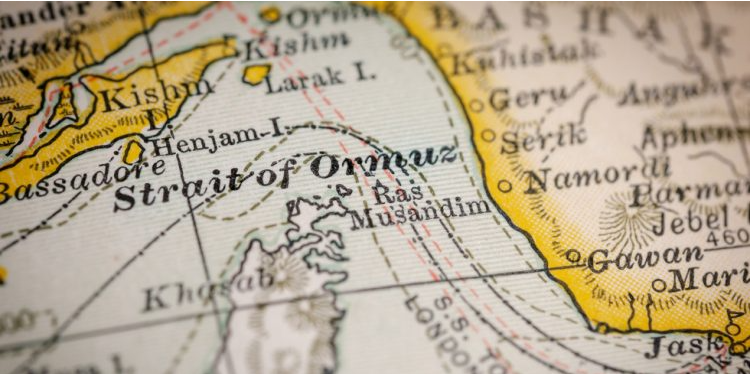
 Credit: Shutterstock Fraudulent messages offering safe passage through the Strait of Hormuz in exchange for cryptocurrency have been circulated to shipping companies with vessels stranded west of the waterway, according to MARISKS. In an alert issued on 20 April, MARISKS cautioned that unknown actors posing as Iranian authorities had contacted […]
 The ‘Cadet Gridlock’ in Bangladesh’s Maritime Sector: A Sorrowful Story of Wasted Potential
 The ‘Cadet Gridlock’ in Bangladesh’s Maritime Sector: A Sorrowful Story of Wasted Potential By Minar Rashid 21E On 15 November, the BMCS Gala Night 2025 was held at Singapore’s Orchid Country Club. With the vibrant participation of hundreds of Bangladeshi mariners and their families, the event became a remarkable reunion […]



JOB SITES
CONTENTS
LINKS
Happy New Year

Découvrez les avantages de MadCasino
Dans le monde des casinos en ligne, MadCasino se distingue par ses offres attrayantes et ses services de qualité. Que vous soyez un joueur débutant ou un parieur aguerri, vous trouverez ici une variété de jeux qui sauront satisfaire toutes vos envies. Les machines à sous, les jeux de table et les options de paris en direct sont tous disponibles pour vous offrir une expérience de jeu inégalée. De plus, le casino propose régulièrement des bonus qui permettent d'augmenter vos chances de gagner, vous offrant ainsi une excellente opportunité de maximiser vos gains.
En matière de sécurité, MadCasino est un nom de confiance. Il est entièrement licencié et régulé, ce qui garantit un environnement de jeu sûr et équitable. Les joueurs peuvent se concentrer sur leur expérience de jeu sans se soucier des problèmes de sécurité. Les transactions financières sont également sécurisées grâce à des technologies de pointe.
Les jeux proposés par MadCasino sont issus des développeurs les plus réputés de l'industrie, vous assurant des graphismes époustouflants et des mécaniques de jeu innovantes. Les joueurs peuvent également profiter d'une expérience de jeu en direct qui simule l'atmosphère d'un casino terrestre, tout en restant dans le confort de leur maison.
Enfin, la plateforme de MadCasino est optimisée pour les appareils mobiles, permettant aux joueurs de parier à tout moment et de n'importe où. Que vous soyez sur votre smartphone ou votre tablette, l'accès à vos jeux préférés n'a jamais été aussi simple. Ne manquez pas l'opportunité de découvrir ce casino exceptionnel.
Les offres de Cresus Casino
Cresus Casino est un autre acteur majeur dans le domaine des jeux en ligne, offrant des promotions généreuses et une vaste sélection de jeux. Les joueurs peuvent profiter d'une expérience de jeu enrichissante grâce aux nombreux bonus disponibles, qui sont conçus pour attirer tant les nouveaux utilisateurs que les joueurs réguliers. Ces avantages permettent non seulement de prolonger votre temps de jeu, mais aussi d'augmenter vos chances de gains conséquents.
Le casino se distingue également par sa ludothèque impressionnante, comprenant une sélection variée de machines à sous, de jeux de table et de jeux en direct. Les clients peuvent choisir parmi des titres populaires et appréciés, ainsi que des nouveautés qui enrichissent constamment l'offre. L'interface utilisateur est conviviale, rendant la navigation sur la plateforme fluide et agréable.
En termes de sécurité, Cresus Casino assure à ses joueurs un environnement de jeu fiable. La plateforme utilise des protocoles de sécurité avancés pour protéger les données personnelles et financières des utilisateurs. Cela permet aux joueurs de se sentir en sécurité tout en jouant à leurs jeux préférés.
Avec un service client réactif et professionnel, Cresus Casino s'assure que toutes vos questions et préoccupations sont traitées rapidement. Que ce soit pour des questions concernant les bonus, les retraits ou les jeux, vous bénéficierez d'une assistance rapide et efficace.
Explorez Nine Casino et ses avantages
Dans l'univers des casinos en ligne, Nine Casino a su se faire une place de choix grâce à son approche innovante et à ses nombreux avantages pour les joueurs. Les utilisateurs peuvent s'attendre à une expérience de jeu enrichissante, avec des bonus attractifs qui sont régulièrement mis à jour. Ces offres sont une excellente façon de découvrir de nouveaux jeux tout en maximisant votre potentiel de gain.
La plateforme de Nine Casino est riche en options de jeux, allant des machines à sous aux jeux de table, en passant par le live casino. Chaque jeu est conçu pour offrir une expérience immersive grâce à des graphismes de haute qualité et des fonctionnalités innovantes. Les parieurs peuvent profiter de sessions de jeu captivantes, comme s'ils étaient dans un véritable casino.
La sécurité est une priorité pour Nine Casino, qui utilise des technologies de cryptage avancées pour protéger les informations de ses joueurs. Cela garantit un environnement de jeu sûr et fiable, permettant aux utilisateurs de se concentrer sur ce qu'ils aiment le plus : jouer.
Enfin, le service clientèle fourni par Nine Casino est exceptionnel, avec des agents disponibles pour répondre à toutes vos questions et résoudre vos problèmes. Vous pourrez ainsi jouer en toute tranquillité, sachant que votre satisfaction est au cœur de leurs préoccupations.
Profitez de l'expérience Lucky31
Lucky31 est un casino en ligne qui se distingue par son approche orientée vers le joueur, offrant une multitude d'options de jeux et des bonus généreux. Que vous soyez amateur de machines à sous ou passionné de jeux de table, vous trouverez une large sélection pour satisfaire toutes vos envies de jeu. Les promotions fréquentes permettent aux joueurs de prolonger leur expérience tout en augmentant leurs chances de gains.
La convivialité de la plateforme de Lucky31 est l'un de ses plus grands atouts. Les joueurs peuvent naviguer facilement entre les différents jeux, et l'interface est conçue pour être intuitive, quel que soit le niveau d'expérience de l'utilisateur. De plus, le casino est entièrement optimisé pour les appareils mobiles, ce qui permet de parier où que vous soyez.
En matière de sécurité, Lucky31 prend les préoccupations des joueurs très au sérieux. Le casino est agréé et régulé, garantissant un environnement de jeu équitable et sécurisé. Les joueurs peuvent ainsi se concentrer sur leur expérience de jeu sans se soucier des risques liés à la sécurité.
Pour ceux qui recherchent un support client efficace, Lucky31 offre un service réactif et professionnel. Que ce soit pour des questions sur les bonus, les jeux ou les paiements, vous aurez accès à une assistance de qualité, vous garantissant une expérience de jeu fluide et agréable.