search the site


IMO lays groundwork for GHG reduction mechanism talks

The 21st session of the Intersessional Working Group on Reduction of Greenhouse Gas (GHG) Emissions from Ships (ISWG-GHG 21) is set to open at the International Maritime Organization (IMO), marking the start of a week of anticipated discussions on cutting emissions from global shipping.
The meeting, scheduled to run from 20 to 24 April, is expected to bring together Member States and international organizations to consider a wide range of proposals aimed at supporting the IMO’s Net-Zero Framework. According to the Secretariat, the Group is set to review 42 submissions received ahead of the session.
Key agenda items
- Development and revision of guidelines for the IMO net-zero framework
- Further development of the life cycle GHG assessment (LCA) framework
- Finalization of the fifth IMO GHG study terms of reference
- Consideration of the report to MEPC 84
Focus on fuel intensity and net-zero framework
Delegates are expected discuss the development and revision of guidelines intended to support the consistent implementation of emissions reduction measures. Among the key topics set for discussion are the calculation of GHG fuel intensity (GFI), sustainable fuel certification schemes, and incentives for zero or near-zero emission technologies.
Further work on lifecycle assessment framework
The Working Group is also set to further consider the development of the IMO’s life cycle assessment (LCA) framework. Discussions are expected to explore methodologies for assessing emissions across fuel lifecycles, including both well-to-tank and tank-to-wake emissions, as well as broader sustainability aspects and data quality requirements.
Preparation for future IMO study
In addition, delegates are expected to work toward finalizing draft terms of reference for the Fifth IMO GHG Study, which is set to play a role in shaping future policy decisions.
The session is planned to take place primarily in person, with hybrid capabilities available to support participation. With a substantial agenda ahead, delegates are expected to keep interventions brief to help ensure progress throughout the week.
Outcomes from the meeting are set to inform deliberations at the upcoming session of the Marine Environment Protection Committee (MEPC 84).
Industry calls for progress ahead of MEPC 84
In advance of the critical MEPC 84 meeting at the International Maritime Organization, a joint industry statement has been issued on behalf of major shipping bodies including BIMCO, Cruise Lines International Association (CLIA), International Chamber of Shipping (ICS), INTERCARGO, INTERFERRY, INTERTANKO and World Shipping Council (WSC), representing the global commercial fleet.
Following the postponement in October 2025 of the adoption of new IMO greenhouse gas regulations, the industry is set to stress the importance of Member States agreeing on a clear path forward.
Call for global regulatory alignment
The statement is expected to underline the IMO’s role in delivering global regulations for maritime safety, security and environmental protection, while reaffirming industry support for the Organization as the central global regulator.
Shipping stakeholders are also set to highlight their continued commitment to the ambitions of the 2023 IMO strategy on reduction of GHG emissions from ships, noting significant investments already made in alternative fuels and innovative technologies.
The industry is expected to call for practical, globally consistent solutions, cautioning against overlapping regional or national measures that could lead to multiple penalties for the same emissions.
Emphasis on technical groundwork and neutrality
Ongoing technical work, including fuel lifecycle assessment and certification schemes, is expected to be emphasized as essential for providing the foundation needed before adopting new measures.
A data-driven, fuel- and technology-neutral approach is set to be highlighted as critical, taking into account fuel availability, safety considerations and the specific needs of maritime decarbonization.
Broad range of fuels and technologies highlighted
The industry is also set to advocate for recognition of a wide range of transitional and alternative solutions, including LNG, LPG, sustainable biofuel blends, e-fuels, biomethanol, biomethane, sustainable bioethanol and ammonia, alongside technologies such as wind propulsion, battery storage, shore power, nuclear energy and onboard carbon capture.
The US submission
The United States has submitted a document raising concerns about how its current life-cycle greenhouse gas (GHG) assessment framework evaluates land-use change risks for crop-based marine biofuels. The submission argues that the 2024 guidelines rely too heavily on project-level assessments, which only examine environmental impacts within the boundaries of individual biofuel production sites, and therefore fail to properly capture broader indirect land-use change (ILUC) effects that occur outside those areas.
According to the United States, this approach can lead to misleading classifications in which biofuels produced in high-deforestation regions are labeled as low-risk, while those from lower-risk regions may be treated as higher-risk. The document stresses that scientific evidence shows land-use change impacts are highly variable by region and often driven by market effects that extend well beyond individual projects, including increased land prices and incentives for forest conversion.
The submission warns that current rules may unintentionally encourage sourcing from areas near carbon-rich forests, increasing the risk of deforestation and associated emissions. It highlights examples from other international frameworks, such as aviation biofuel standards, to illustrate what it sees as similar shortcomings in project-based risk assessment.
In response, the United States is proposing that the IMO adopt a region-based approach to ILUC risk assessment. This would evaluate land-use change based on broader geographic patterns around biofuel production rather than limiting analysis to project boundaries, with the goal of better identifying high-risk areas and reducing the likelihood of tropical deforestation linked to marine biofuel demand.
Call for certainty and enforceable rules
Finally, the statement is expected to stress the need for clear and enforceable global rules to provide regulatory certainty and send strong signals to energy producers, while ensuring a level playing field across the sector.
Noting that decarbonization of the maritime sector is a multi-stakeholder endeavour which cannot be achieved by shipowners alone, the industry stands by the IMO and is committed to providing meaningful and constructive input to assist IMO Member States in developing fit-for-purpose regulations to deliver the strategic vision of the Organization.
Featured Post
 Industry on alert over scam messages offering ships “safe passage” on Hormuz
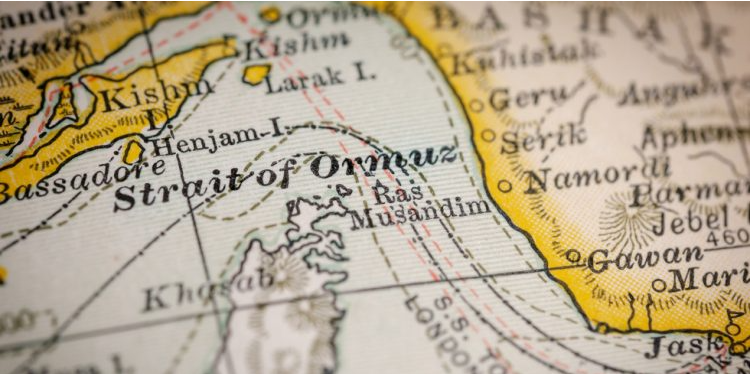
 Credit: Shutterstock Fraudulent messages offering safe passage through the Strait of Hormuz in exchange for cryptocurrency have been circulated to shipping companies with vessels stranded west of the waterway, according to MARISKS. In an alert issued on 20 April, MARISKS cautioned that unknown actors posing as Iranian authorities had contacted […]
 The ‘Cadet Gridlock’ in Bangladesh’s Maritime Sector: A Sorrowful Story of Wasted Potential
 The ‘Cadet Gridlock’ in Bangladesh’s Maritime Sector: A Sorrowful Story of Wasted Potential By Minar Rashid 21E On 15 November, the BMCS Gala Night 2025 was held at Singapore’s Orchid Country Club. With the vibrant participation of hundreds of Bangladeshi mariners and their families, the event became a remarkable reunion […]



JOB SITES
CONTENTS
LINKS
Happy New Year
