search the site


Academic Challenges of BMA Cadets Without a Four-Year Bachelor’s Degree
Academic Challenges of BMA Cadets Without a Four-
Year Bachelor’s Degree
by Mohammad Abu Solaiman Chowdhury
Academic drawbacks of the Bangladesh Marine Academy (BMA) cadets (Chattogram) in pursuing
university education or professional jobs (especially in the USA) due to the
absence of a four-year academic bachelor’s degree.
The maritime profession demands discipline, technical competence, and years of structured
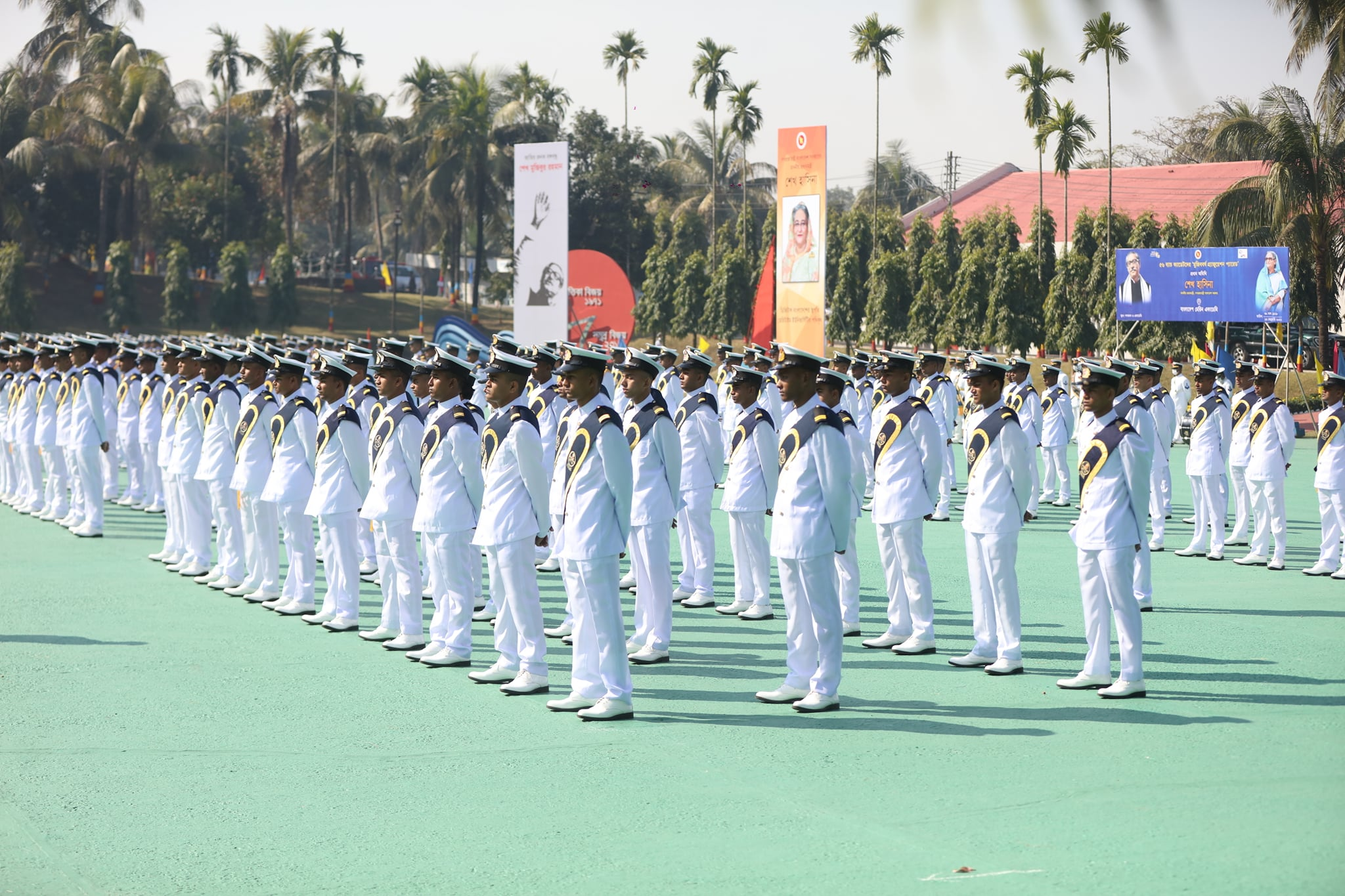
training. Cadets graduating from the Bangladesh Marine Academy (BMA) follow a
rigorous pathway that combines academic study, practical workshop training, and substantial
sea-going experience. By the time they qualify for their first professional Certificate of
Competency (CoC), they have invested more than four years in education and hands-on work
experience.
Despite this significant commitment, many BMA cadets encounter a persistent academic
barrier when they attempt to continue their education at universities around the world. The
core issue is straightforward: although their total training period exceeds four years, they
often do not receive a formal four-year academic bachelor’s degree from an accredited
university. This gap creates real limitations for career progression, professional recognition,
and access to higher education. Fortunately, after the establishment of Bangladesh Maritime
University (BMU), perhaps the BMA ex-cadets of the 48th batch and onward are receiving
BMU-accredited course certificates across diverse pathways, enabling them to choose future
study and career paths. However, the ex-cadets from the 1st to the 47th batch are still facing
the same issues in having their professional achievements accredited or acknowledged by any
University, locally or globally.
On this occasion, I would like to express my gratitude towards Capt. M. Mostafa Kamal and
Capt. M. A. Abu Sayed, who conducted a timely and rigorous research and established the
fact to exhibit the recognition of STCW CoC Class 1 qualifications as Equivalent to an
Academic Master’s Degree. I can’t agree more with this article and its proposals.
The Structure of the BMA Training Program
The training framework for nautical and engineering cadets is aligned with the international
Standards of Training, Certification and Watchkeeping for Seafarers (STCW)
requirements. It is delivered in three progressive phases designed to build competence
through both classroom learning and practical experience.
Phase I: Pre-Sea Academic Training (Two Years)
Cadets begin with two years of structured academic study and foundational technical training
at the academy. At the end of this phase:
Title: “Academic Challenges of BMA Cadets Without a Four-
Year Bachelor’s Degree”
[Mohammad Abu Solaiman Chowdhury (28E, USA), ME (Class 1), MBA (UTAS)]
SOLAIMAN (28E), 28 APRIL 2026 2
- Nautical cadets receive a B.Sc. (Pass) in Maritime Science [from 27th batch
onwards] - Engineering cadets receive a B.Sc. (Pass) in Marine Engineering [from 27th batch
onwards] - These degrees are typically awarded by Chittagong University [27th batch] and by
the National University | Bangladesh [28th batch onwards]
While this qualification confirms completion of initial academic training, it represents only aA
two-year academic program rather than a full four-year bachelor’s degree.
Phase II: Sea-Time Training (Professional Work Experience)
Following pre-sea education, cadets join ships as trainees to complete mandatory sea-time.
This period is essential for developing operational competence, professional judgment, and
practical familiarity with shipboard systems and procedures.
Sea-time is not merely employment. It is a structured training requirement recognized
internationally and supervised under maritime regulations. During this phase, cadets gain
progressive responsibility and real-world exposure that cannot be replicated in a classroom
environment.
Phase III: Advanced Training and Competency Preparation
After completing required sea-time, engineering cadets return to the academy for
approximately one year of additional study and workshop training. Deck cadets typically
continue accumulating sea-time while preparing for professional examinations.
Successful completion of all requirements allows candidates to sit for their first professional
certification:
- Class-3 Certificate of Competency (CoC) for Deck Officers
- Class-4 Certificate of Competency (CoC) for Marine Engineering Officers
At this stage, most candidates have completed more than four years of combined academic
study, technical training, and professional work experience.
The Core Academic Challenge
Title: “Academic Challenges of BMA Cadets Without a Four-
Year Bachelor’s Degree”
[Mohammad Abu Solaiman Chowdhury (28E, USA), ME (Class 1), MBA (UTAS)]
SOLAIMAN (28E), 28 APRIL 2026 3
Although the training pathway clearly exceeds four years in duration, the academic credential
awarded to many cadets remains limited to the initial two-year B.Sc. (Pass) degree issued
after Phase I.
No additional academic degree is typically granted upon completion of Phase II and Phase
III, even though these phases involve structured learning, assessment, and competency
development.
This situation creates a mismatch between:
- Actual duration of study & training: More than four years
- Formal academic recognition: Two-year degree
From an academic and administrative standpoint, universities evaluate credentials primarily
based on documented credit hours and degree duration. Most international institutions
require: - A four-year bachelor’s degree
- A minimum of 120 academic credits
Without these documents and transcripts, the applicants often fail to meet admission
requirements for graduate programs or advanced academic studies.
A Practical Example of the Problem
Consider the case of an engineering cadet who followed the standard BMA pathway:
- He completed the Phase I course in BMA and received a B.Sc. (Pass) in Marine
Engineering issued by the National University. - He completed Phase II and Phase III as required.
- He successfully obtained the Class-4 Certificate of Competency (Marine
Engineering Officer).
By this point, the cadet had invested more than four years in training and professional
development.
However, when he attempted to pursue further education at an international university, his
academic credentials were evaluated solely based on the two-year B.Sc. (pass) degree issued
by the National University of Bangladesh after Phase I, which is not assessed as an
undergraduate program for a Marine Engineering degree by any global university.
Title: “Academic Challenges of BMA Cadets Without a Four-
Year Bachelor’s Degree”
[Mohammad Abu Solaiman Chowdhury (28E, USA), ME (Class 1), MBA (UTAS)]
SOLAIMAN (28E), 28 APRIL 2026 4
Because this qualification did not meet the standard definition of a four-year bachelor’s
degree, his application for higher education was not accepted.
This outcome is not unusual. Many institutions apply consistent academic standards, and
most engineering programs worldwide are structured as four-year degrees with defined credit
requirements.
Comparison with Graduates Holding Four-Year
Bachelor’s Degrees
Cadets who complete maritime education programs that include a recognized four-year
academic degree are generally in a stronger position. Their credentials provide:
- Direct eligibility for postgraduate education
- Greater flexibility for career transition
- Recognition across international academic systems
- Enhanced professional mobility
The difference lies not in competence or experience, but in formal academic documentation.
As a reference, the Indian Maritime University accredits Class-4 (4th Engineer) and Class 2
(Deck) Certificate holders as Bachelor of Marine Engineering and Bachelor of Maritime
Studies, respectively. Similarly, the same university accredits Class 1 (Chief Engineer) and
Class -1 (Master Mariner) COC holders as equivalent to an academic Master’s degree in the
respective discipline.
Why This Matters for the Maritime Profession
Modern maritime careers increasingly intersect with fields such as logistics, maritime law,
port management, and international trade. Many officers eventually move into shore-based
roles, management positions, or specialized technical fields.
Advancement in these areas often requires further education, including:
- Master’s degrees
- Professional certifications
- Academic research programs
- Management or engineering specialization
Title: “Academic Challenges of BMA Cadets Without a Four-
Year Bachelor’s Degree”
[Mohammad Abu Solaiman Chowdhury (28E, USA), ME (Class 1), MBA (UTAS)]
SOLAIMAN (28E), 28 APRIL 2026 5
Without a recognized four-year bachelor’s degree, otherwise qualified professionals may find
their career options unnecessarily restricted.
Proposed Solutions for Consideration by Relevant Authorities
Addressing this issue does not require restructuring the entire training system. Instead, it calls
for aligning academic recognition with the actual scope and duration of training already
completed by cadets.
Proposal: Award a Four-Year Bachelor’s Degree Upon CoC Eligibility
When cadets become eligible for their first professional Certificate of Competency:
- Deck cadets could be awarded a Bachelor of Maritime Science
- Engineering cadets could be awarded a Bachelor of Marine Engineering
This degree should be issued by an accredited university, such as: - National University of Bangladesh
- Bangladesh Maritime University
The degree would formally recognize the full training pathway, including academic study,
workshop training, and supervised sea-time.
The following points can be considered by the relevant Universities.
To Integrate Additional Academic Subjects to Meet Credit Requirements
To ensure compliance with international academic standards, universities could incorporate a
small number of complementary subjects into the curriculum, either project-based distance
learning or undertake the courses during their Phase III studies. These courses would
strengthen both academic and professional development while helping programs reach the
standard credit threshold.
Examples include: - Professional Communication
- Technical Report Writing
- Basics of Maritime Law
- Port Management
- Chartering and Shipping Practice
Title: “Academic Challenges of BMA Cadets Without a Four-
Year Bachelor’s Degree”
[Mohammad Abu Solaiman Chowdhury (28E, USA), ME (Class 1), MBA (UTAS)]
SOLAIMAN (28E), 28 APRIL 2026 6
- International Trade and Logistics
- Procurement and Inventory Management,
- Supply Chain Management
- Maritime Environmental Management
- ISO, ISM, MLC codes,
- Cyber Security Management,
- Basic of Maritime Insurance – P&I, H&M
- Maritime Finance
- Emerging issues in Maritime Trade
- Maritime Business Development
These subjects are directly relevant to maritime operations and marine engineering and would
add measurable academic value without disrupting existing training structures.
The Ultimate Objective
The goal is simple and practical.
Cadets who complete more than four years of structured education, training, and professional
experience should receive formal academic recognition that accurately reflects their effort
and competence.
An internationally recognized four-year bachelor’s degree with at least 120 academic credits
would:
- Remove barriers to higher education
- Improve global mobility for maritime professionals
- Strengthen the reputation of maritime training institutions
- Align academic certification with real-world training standards
Most importantly, it would ensure that dedicated cadets are not disadvantaged by
administrative technicalities after investing years in demanding professional preparation.
Closing Perspective
The maritime industry depends on highly trained professionals who operate complex vessels
in challenging environments. The training pathway for BMA cadets already meets rigorous
international standards in terms of skill and experience.
What remains is a matter of academic recognition.
Title: “Academic Challenges of BMA Cadets Without a Four-
Year Bachelor’s Degree”
[Mohammad Abu Solaiman Chowdhury (28E, USA), ME (Class 1), MBA (UTAS)]
SOLAIMAN (28E), 28 APRIL 2026 7
Providing a structured pathway to a four-year bachelor’s degree would not change the
training itself. It would simply ensure that the qualifications awarded accurately represent the
depth, duration, and value of the education these cadets have already completed, which
The author is from the 28th batch of Engineering, Bangladesh Marine Academy, Chattogram. He holds a ME (Class 1), MBA (UTAS)]. He lives in the United States.
Featured Post
 বিশ্ব সমুদ্র দিবস: মেরিন একাডেমিকে আবার সামুদ্রিক শিক্ষার প্রাণকেন্দ্রে ফেরাতে হবে বাংলাদেশকে
 গোলাম সোহরাওয়ার্দি বিশ্ব সমুদ্র দিবস ২০২৬ এবং সমন্বিত জাতীয় প্রশিক্ষণ কৌশলের প্রয়োজনীয়তা বিশ্ব সমুদ্র দিবসে আন্তর্জাতিক সামুদ্রিক সংস্থার (আইএমও) মহাসচিব আর্সেনিও ডমিঙ্গেজ খুব সহজ কিন্তু গভীর একটি বার্তা দিয়েছেন। আন্তর্জাতিক নিয়মকানুন সমুদ্র পরিবহন ব্যবস্থার উন্নতি তখনই করতে পারে, যখন দেশগুলো তা ঠিকমতো মেনে চলে। তিনি বলেন, “নাবিকদের কথাই সবার আগে […]
 World Maritime Day: Bangladesh Must Put Its Marine Academy Back at the Center of Maritime Education
 World Maritime Day: Bangladesh Must Put Its Marine Academy Back at the Center of Maritime Education by Ghulam Suhrawardi World Maritime Day 2026 and the case for a coherent national training strategy On World Maritime Day, International Maritime Organization Secretary-General Arsenio Dominguez delivered a deceptively simple message: international rules improve […]



JOB SITES
CONTENTS
LINKS
Happy New Year

Découvrez les avantages de MadCasino
Dans le monde des casinos en ligne, MadCasino se distingue par ses offres attrayantes et ses services de qualité. Que vous soyez un joueur débutant ou un parieur aguerri, vous trouverez ici une variété de jeux qui sauront satisfaire toutes vos envies. Les machines à sous, les jeux de table et les options de paris en direct sont tous disponibles pour vous offrir une expérience de jeu inégalée. De plus, le casino propose régulièrement des bonus qui permettent d'augmenter vos chances de gagner, vous offrant ainsi une excellente opportunité de maximiser vos gains.
En matière de sécurité, MadCasino est un nom de confiance. Il est entièrement licencié et régulé, ce qui garantit un environnement de jeu sûr et équitable. Les joueurs peuvent se concentrer sur leur expérience de jeu sans se soucier des problèmes de sécurité. Les transactions financières sont également sécurisées grâce à des technologies de pointe.
Les jeux proposés par MadCasino sont issus des développeurs les plus réputés de l'industrie, vous assurant des graphismes époustouflants et des mécaniques de jeu innovantes. Les joueurs peuvent également profiter d'une expérience de jeu en direct qui simule l'atmosphère d'un casino terrestre, tout en restant dans le confort de leur maison.
Enfin, la plateforme de MadCasino est optimisée pour les appareils mobiles, permettant aux joueurs de parier à tout moment et de n'importe où. Que vous soyez sur votre smartphone ou votre tablette, l'accès à vos jeux préférés n'a jamais été aussi simple. Ne manquez pas l'opportunité de découvrir ce casino exceptionnel.
Les offres de Cresus Casino
Cresus Casino est un autre acteur majeur dans le domaine des jeux en ligne, offrant des promotions généreuses et une vaste sélection de jeux. Les joueurs peuvent profiter d'une expérience de jeu enrichissante grâce aux nombreux bonus disponibles, qui sont conçus pour attirer tant les nouveaux utilisateurs que les joueurs réguliers. Ces avantages permettent non seulement de prolonger votre temps de jeu, mais aussi d'augmenter vos chances de gains conséquents.
Le casino se distingue également par sa ludothèque impressionnante, comprenant une sélection variée de machines à sous, de jeux de table et de jeux en direct. Les clients peuvent choisir parmi des titres populaires et appréciés, ainsi que des nouveautés qui enrichissent constamment l'offre. L'interface utilisateur est conviviale, rendant la navigation sur la plateforme fluide et agréable.
En termes de sécurité, Cresus Casino assure à ses joueurs un environnement de jeu fiable. La plateforme utilise des protocoles de sécurité avancés pour protéger les données personnelles et financières des utilisateurs. Cela permet aux joueurs de se sentir en sécurité tout en jouant à leurs jeux préférés.
Avec un service client réactif et professionnel, Cresus Casino s'assure que toutes vos questions et préoccupations sont traitées rapidement. Que ce soit pour des questions concernant les bonus, les retraits ou les jeux, vous bénéficierez d'une assistance rapide et efficace.
Explorez Nine Casino et ses avantages
Dans l'univers des casinos en ligne, Nine Casino a su se faire une place de choix grâce à son approche innovante et à ses nombreux avantages pour les joueurs. Les utilisateurs peuvent s'attendre à une expérience de jeu enrichissante, avec des bonus attractifs qui sont régulièrement mis à jour. Ces offres sont une excellente façon de découvrir de nouveaux jeux tout en maximisant votre potentiel de gain.
La plateforme de Nine Casino est riche en options de jeux, allant des machines à sous aux jeux de table, en passant par le live casino. Chaque jeu est conçu pour offrir une expérience immersive grâce à des graphismes de haute qualité et des fonctionnalités innovantes. Les parieurs peuvent profiter de sessions de jeu captivantes, comme s'ils étaient dans un véritable casino.
La sécurité est une priorité pour Nine Casino, qui utilise des technologies de cryptage avancées pour protéger les informations de ses joueurs. Cela garantit un environnement de jeu sûr et fiable, permettant aux utilisateurs de se concentrer sur ce qu'ils aiment le plus : jouer.
Enfin, le service clientèle fourni par Nine Casino est exceptionnel, avec des agents disponibles pour répondre à toutes vos questions et résoudre vos problèmes. Vous pourrez ainsi jouer en toute tranquillité, sachant que votre satisfaction est au cœur de leurs préoccupations.
Profitez de l'expérience Lucky31
Lucky31 est un casino en ligne qui se distingue par son approche orientée vers le joueur, offrant une multitude d'options de jeux et des bonus généreux. Que vous soyez amateur de machines à sous ou passionné de jeux de table, vous trouverez une large sélection pour satisfaire toutes vos envies de jeu. Les promotions fréquentes permettent aux joueurs de prolonger leur expérience tout en augmentant leurs chances de gains.
La convivialité de la plateforme de Lucky31 est l'un de ses plus grands atouts. Les joueurs peuvent naviguer facilement entre les différents jeux, et l'interface est conçue pour être intuitive, quel que soit le niveau d'expérience de l'utilisateur. De plus, le casino est entièrement optimisé pour les appareils mobiles, ce qui permet de parier où que vous soyez.
En matière de sécurité, Lucky31 prend les préoccupations des joueurs très au sérieux. Le casino est agréé et régulé, garantissant un environnement de jeu équitable et sécurisé. Les joueurs peuvent ainsi se concentrer sur leur expérience de jeu sans se soucier des risques liés à la sécurité.
Pour ceux qui recherchent un support client efficace, Lucky31 offre un service réactif et professionnel. Que ce soit pour des questions sur les bonus, les jeux ou les paiements, vous aurez accès à une assistance de qualité, vous garantissant une expérience de jeu fluide et agréable.