search the site


UK MAIB Investigation: Able seaman fatally crushed onboard RoRo
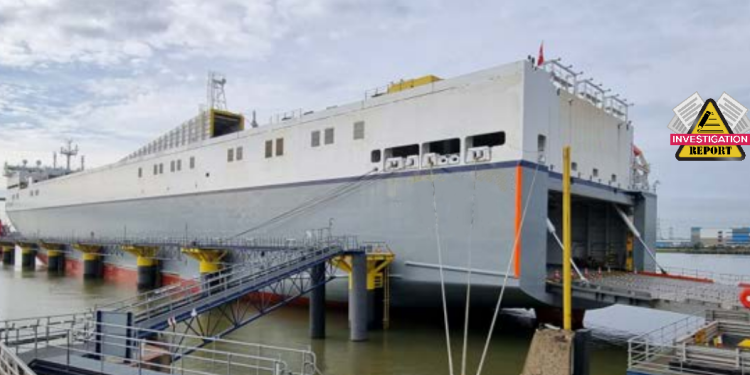
UK MAIB has issued an investigation report into an incident where an able seaman was fatally crushed between a reversing trailer and the vessel’s structure during vehicle deck loading operations on a Malta-registered roll-on/roll-off cargo vessel alongside at Purfleet, England.
The incident
At about 1711 on 13 July 2024, an able seaman was fatally injured on board a Malta registered roll-on/roll-off cargo vessel when he was crushed between the rear of a moving trailer and the vessel’s structure. The vessel was alongside at Purfleet, England, loading and discharging trailers using the terminal’s tugs under the direction of the ship’s crew.
One of the two able seamen who were working on the vehicle deck passed behind a trailer while it was being loaded, likely assuming that the tug driver had completed manoeuvring the trailer. Unaware of the able seamen’s position, the tug driver reversed the trailer again to realign it. The able seaman was crushed between the trailer and the vessel’s structure, causing fatal injuries.
The investigation found that the vessel management company’s new vehicle deck cargo operations safety procedure was not well understood by the vehicle deck crew and that they routinely entered the defined danger zone around manoeuvring vehicles and trailers.
The lack of understanding highlighted weaknesses in the training and implementation of the new procedure, and that the tug driver’s knowledge of danger zones and the requirement to stop when a crew member was out of sight did not align with their actual working practices.
The investigation also established that there was ineffective supervision on the vehicle deck. Although the terminal carried out audits of vehicle deck operations, the vessel’s management company had not provided effective assurance to confirm that the new safety procedure had been understood or fully implemented on board.
Since the accident, the terminal operator and the ship management company have taken several steps to improve vehicle deck safety, including the issuing of safety bulletins; trialling the use of blind spot cameras on tugs; reviewing the positioning of on board closed-circuit television cameras; developing training videos; and introducing new audit procedures.
Safety issues directly contributing to the accident that have been addressed or resulted in recommendations
- The able seaman was fatally injured when he passed behind a reversing trailer and was trapped and crushed against the vessel’s structure.
- The interaction between AB1 and the tug driver was based on assumptions instead of positive feedback, with the result that neither had a clear understanding of what the other was doing. This placed AB1 at risk from the manoeuvring trailer.
- The new cargo operations safety procedure provided a weak safeguard that did not articulate key safety messages and was not followed. Consequently, ABs regularly entered the danger zone behind moving trailers, placing them at risk.
- The safe execution of a trailer’s manoeuvre relied on AB1’s positioning because the tug driver moved the trailer after AB1 had moved out of sight. The terminal’s cargo handling manual did not explain the new vessel procedure or define the danger zone, which meant that the tug driver was potentially unable to recognise when AB1 was at risk.
- The two ABs on the garage deck were working independently of each other. Consequently, they were not monitoring each other’s safety and were unable to cross-check or stop trailer movements when unsafe actions occurred.
Other safety issues not directly contributing to the accident that have been addressed or resulted in recommendations
- Industry guidance that tug drivers should stop when they lost sight of the crew member did not reflect the operational reality that it was not always possible to keep the marshalling crew member visible. This probably contributed to the procedure not being followed, placing vehicle deck crew at risk.
- The new vessel procedure’s training programme was ineffective and failed to ensure the ABs understood the procedures. This meant that the crew were unsure what to do, placing them at risk.
- The use of a whistle as a stop signal is ineffective when more than one trailer is manoeuvring on the same deck. There is a risk of miscommunication when crew members are marshalling more than one trailer simultaneously.
- The ineffective supervision and control of vehicle deck operations on the garage deck resulted in a lost opportunity to reinforce the new vessel procedure’s safety elements or identify and prevent unsafe practices.
- The ship management company did not provide effective assurance to confirm the latest procedures were effective or had been safely implemented on board, which meant a missed opportunity to review and enhance operational safety on the vehicle decks.
- Industry guidance on ro-ro vehicle deck operations relied heavily on the misconception that drivers depend on marshallers to safely position their trailers and will stop their vehicle if they lose sight of their marshaller. Further, in the absence of positive feedback mechanisms, safety is contingent on crew making assumptions about when a trailer has stopped moving and is safe to approach. Consequently, operators continue to develop ineffective procedures and the risk to personnel working on vehicle decks persists.
Actions taken by the Marine Accident Investigation Branch
The Marine Accident Investigation Branch, in its Clipper Pennant investigation report, made a recommendation to the UK Chamber of Shipping and Port Skills and Safety Limited to:
2024/148 Develop a jointly agreed and consolidated industry Code of Practice for vehicle deck safety on roll-on/roll-off vessels by consulting with the Maritime and Coastguard Agency, Health and Safety Executive, Interferry, and ro-ro ferry operators, considering existing best practice guidance and the lessons learned from this accident and other previous similar accidents. The guidelines should cover, inter alia:
- The role, responsibilities and positioning of banksman while marshalling on vehicle decks in or near the path of a moving vehicle
- The dynamic nature of vehicle deck loading operation that reflects the moving danger zone around a semi-trailer
- Identification and risk mitigation of vehicle stowage spaces with limited or obstructed areas for escape
- Suitable control measures to reduce the risk to people working in close proximity to moving vehicles, including the development of cargo handling procedures and safe systems of work
- Safe access arrangements for crew during and after cargo operations
- An agreed industry standard for signalling and communication on vehicle decks
- The use of technology to improve safety on deck
Actions taken by other organisations
The terminal operator has:
- Following a successful blind spot camera trial, fitted all tugmasters in use at its UK terminals with blind spot cameras
- Maintained ongoing audits of the positioning of the marshalling crew during vehicle deck manoeuvres
- Issued a fleet information bulletin about crew positioning
- Provided crew with the opportunity to see the view from a tug to understand the limitations of visibility
The ship management company has:
- Issued a fleetwide safety bulletin and completed a focus area campaign on the implementation of cargo operation safety procedures
- Developed and distributed training videos about personnel safety on ro-ro vessel cargo decks
- Updated job descriptions to emphasise the responsibility of the master and officers in ensuring compliance with cargo operation safety procedures
- Reviewed the RCOM Section 4.7 – Safety during (un)loading operations
- Started a programme of unannounced cargo safety audits
- Introduced the requirement for vessel masters to perform an unannounced cargo safety audit when instructed by the office
- Issued translated copies of some of its procedures, including Filipino, Russian, and Ukrainian versions of the RCOM Section 4.7
- Started a review of the near miss reporting system
- Started a review of on board CCTV installations in conjunction with the terminal operator
Recommendations
The Marine Accident Investigation Branch’s previously issued recommendation 2024/148 is superseded, and the following amended recommendation is issued in its place:
The UK Chamber of Shipping and Port Skills and Safety Limited are recommended to:
2026/130 Develop an industry Code of Practice for vehicle deck safety on roll-on/roll-off vessels by consulting with the Maritime and Coastguard Agency, Health and Safety Executive, Interferry, and roll-on/roll-off ferry operators. The guidelines should cover, among others:
- effective separation of personnel and moving vehicles
- the role, responsibilities, positioning and supervision of crew members and shoreside personnel working on vehicle decks
- the dynamic nature of vehicle deck operations that reflects the moving danger zone around vehicles
- the need for positive feedback to assure crew that a trailer is stopped and is safe to approach
- identification and risk mitigation of vehicle stowage spaces with limited or obstructed areas for escape
- harmonisation of ship and shoreside cargo handling procedures, including signalling and communication on vehicle decks
- effective training of harmonised ship and shoreside cargo handling procedures
- the use of technology to improve safety on deck
- source : safety4sea
Featured Post
 বড় জাহাজ মেরামতে মাতারবাড়ীতে ১ বিলিয়ন ডলারের প্রকল্প
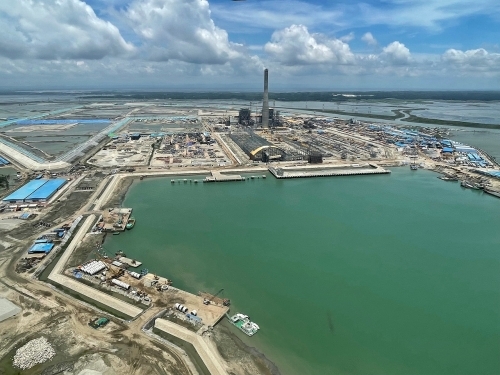
 মাতারবাড়ীতে প্রায় ১ বিলিয়ন মার্কিন ডলার ব্যয়ে পরিবেশবান্ধব ডকইয়ার্ড ও জাহাজ নির্মাণ কেন্দ্র স্থাপনের উদ্যোগে নীতিগত অনুমোদন দিয়েছে নৌপরিবহন মন্ত্রণালয়। এখন প্রকল্পটির কারিগরি ও আর্থিক মূল্যায়নের জন্য প্রস্তাবটি সরকারি-বেসরকারি অংশীদারত্ব (পিপিপি) কর্তৃপক্ষের কাছে পাঠানো হয়েছে। সম্পূর্ণ বেসরকারি অর্থায়নে সরকারি জমির মালিকানা অক্ষুণ্ন রেখে প্রকল্পটি বাস্তবায়নের পরিকল্পনা রয়েছে। বন্দর কর্তৃপক্ষ জানায়, […]
 Industry on alert over scam messages offering ships “safe passage” on Hormuz
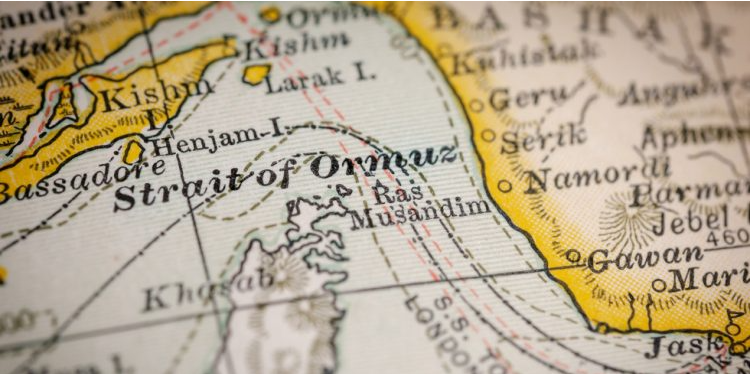
 Credit: Shutterstock Fraudulent messages offering safe passage through the Strait of Hormuz in exchange for cryptocurrency have been circulated to shipping companies with vessels stranded west of the waterway, according to MARISKS. In an alert issued on 20 April, MARISKS cautioned that unknown actors posing as Iranian authorities had contacted […]


JOB SITES
CONTENTS
LINKS
Happy New Year

Découvrez les avantages de MadCasino
Dans le monde des casinos en ligne, MadCasino se distingue par ses offres attrayantes et ses services de qualité. Que vous soyez un joueur débutant ou un parieur aguerri, vous trouverez ici une variété de jeux qui sauront satisfaire toutes vos envies. Les machines à sous, les jeux de table et les options de paris en direct sont tous disponibles pour vous offrir une expérience de jeu inégalée. De plus, le casino propose régulièrement des bonus qui permettent d'augmenter vos chances de gagner, vous offrant ainsi une excellente opportunité de maximiser vos gains.
En matière de sécurité, MadCasino est un nom de confiance. Il est entièrement licencié et régulé, ce qui garantit un environnement de jeu sûr et équitable. Les joueurs peuvent se concentrer sur leur expérience de jeu sans se soucier des problèmes de sécurité. Les transactions financières sont également sécurisées grâce à des technologies de pointe.
Les jeux proposés par MadCasino sont issus des développeurs les plus réputés de l'industrie, vous assurant des graphismes époustouflants et des mécaniques de jeu innovantes. Les joueurs peuvent également profiter d'une expérience de jeu en direct qui simule l'atmosphère d'un casino terrestre, tout en restant dans le confort de leur maison.
Enfin, la plateforme de MadCasino est optimisée pour les appareils mobiles, permettant aux joueurs de parier à tout moment et de n'importe où. Que vous soyez sur votre smartphone ou votre tablette, l'accès à vos jeux préférés n'a jamais été aussi simple. Ne manquez pas l'opportunité de découvrir ce casino exceptionnel.
Les offres de Cresus Casino
Cresus Casino est un autre acteur majeur dans le domaine des jeux en ligne, offrant des promotions généreuses et une vaste sélection de jeux. Les joueurs peuvent profiter d'une expérience de jeu enrichissante grâce aux nombreux bonus disponibles, qui sont conçus pour attirer tant les nouveaux utilisateurs que les joueurs réguliers. Ces avantages permettent non seulement de prolonger votre temps de jeu, mais aussi d'augmenter vos chances de gains conséquents.
Le casino se distingue également par sa ludothèque impressionnante, comprenant une sélection variée de machines à sous, de jeux de table et de jeux en direct. Les clients peuvent choisir parmi des titres populaires et appréciés, ainsi que des nouveautés qui enrichissent constamment l'offre. L'interface utilisateur est conviviale, rendant la navigation sur la plateforme fluide et agréable.
En termes de sécurité, Cresus Casino assure à ses joueurs un environnement de jeu fiable. La plateforme utilise des protocoles de sécurité avancés pour protéger les données personnelles et financières des utilisateurs. Cela permet aux joueurs de se sentir en sécurité tout en jouant à leurs jeux préférés.
Avec un service client réactif et professionnel, Cresus Casino s'assure que toutes vos questions et préoccupations sont traitées rapidement. Que ce soit pour des questions concernant les bonus, les retraits ou les jeux, vous bénéficierez d'une assistance rapide et efficace.
Explorez Nine Casino et ses avantages
Dans l'univers des casinos en ligne, Nine Casino a su se faire une place de choix grâce à son approche innovante et à ses nombreux avantages pour les joueurs. Les utilisateurs peuvent s'attendre à une expérience de jeu enrichissante, avec des bonus attractifs qui sont régulièrement mis à jour. Ces offres sont une excellente façon de découvrir de nouveaux jeux tout en maximisant votre potentiel de gain.
La plateforme de Nine Casino est riche en options de jeux, allant des machines à sous aux jeux de table, en passant par le live casino. Chaque jeu est conçu pour offrir une expérience immersive grâce à des graphismes de haute qualité et des fonctionnalités innovantes. Les parieurs peuvent profiter de sessions de jeu captivantes, comme s'ils étaient dans un véritable casino.
La sécurité est une priorité pour Nine Casino, qui utilise des technologies de cryptage avancées pour protéger les informations de ses joueurs. Cela garantit un environnement de jeu sûr et fiable, permettant aux utilisateurs de se concentrer sur ce qu'ils aiment le plus : jouer.
Enfin, le service clientèle fourni par Nine Casino est exceptionnel, avec des agents disponibles pour répondre à toutes vos questions et résoudre vos problèmes. Vous pourrez ainsi jouer en toute tranquillité, sachant que votre satisfaction est au cœur de leurs préoccupations.
Profitez de l'expérience Lucky31
Lucky31 est un casino en ligne qui se distingue par son approche orientée vers le joueur, offrant une multitude d'options de jeux et des bonus généreux. Que vous soyez amateur de machines à sous ou passionné de jeux de table, vous trouverez une large sélection pour satisfaire toutes vos envies de jeu. Les promotions fréquentes permettent aux joueurs de prolonger leur expérience tout en augmentant leurs chances de gains.
La convivialité de la plateforme de Lucky31 est l'un de ses plus grands atouts. Les joueurs peuvent naviguer facilement entre les différents jeux, et l'interface est conçue pour être intuitive, quel que soit le niveau d'expérience de l'utilisateur. De plus, le casino est entièrement optimisé pour les appareils mobiles, ce qui permet de parier où que vous soyez.
En matière de sécurité, Lucky31 prend les préoccupations des joueurs très au sérieux. Le casino est agréé et régulé, garantissant un environnement de jeu équitable et sécurisé. Les joueurs peuvent ainsi se concentrer sur leur expérience de jeu sans se soucier des risques liés à la sécurité.
Pour ceux qui recherchent un support client efficace, Lucky31 offre un service réactif et professionnel. Que ce soit pour des questions sur les bonus, les jeux ou les paiements, vous aurez accès à une assistance de qualité, vous garantissant une expérience de jeu fluide et agréable.