search the site


MLC twenty years on: Establishing key worker rights at sea

The International Labour Organization (ILO) and the International Maritime Organization (IMO) are marking the 20th anniversary of the adoption of the Maritime Labour Convention, 2006 (MLC, 2006), a landmark treaty that has reshaped working and living conditions for seafarers.
Adopted on 23 February 2006 by the International Maritime Labour Conference through an unprecedented tripartite consensus, the MLC Convention brought together governments, shipowners, and seafarers to establish a comprehensive global framework regulating working and living conditions in one of the world’s most international industries. This spirit of partnership has remained central to its enduring strength and continued relevance.
As of 31 December 2025, MLC, 2006 had been ratified by 111 States, representing over 96.6% of global shipping tonnage.
Key achievements under the MLC Convention
- The MLC consolidated and modernized around seventy maritime labor instruments into a single, comprehensive international framework.
- It established enforceable minimum standards for wages, hours of work and rest, medical care, accommodation, repatriation and welfare, creating a baseline for decent work at sea.
- Since its entry into force, the MLC has delivered tangible improvements in living and working conditions on board ships, strengthened compliance through flag and port state control, and provided a structured mechanism to address emerging challenges.
- Amendments adopted over the past decade enhanced financial security protections, supported seafarers in cases of abandonment and criminalisation, and reinforced safeguards in response to the Covid-19 pandemic and violence and harassment on board.
- At the same time, the Convention has helped level the playing field for responsible shipowners by reducing unfair competition based on substandard labor conditions.
Above all, I would like to speak directly to seafarers around the world. We see your contribution. We recognize your sacrifices. And we remain committed to your safety. Your well-being and your rights. Today and in the years ahead
… said IMO Secretary-General, Arsenio Dominguez, in his video message in view of the anniversary.
Meanwhile, ILO Sec Gen highlighted that many seafarers continue to be denied the right to shore leave and access to adequate medical care, while also falling victim to fraudulent recruitment practices, and that women remain significantly underrepresented in the maritime workforce. This anniversary, therefore, is not only a moment to celebrate the vital contributions of seafarers, but also a call to action to address the persistent challenges they face. Seafarers are the engines of the global shipping industry, which transports around 90% of world trade, and without seafarers, the world economy would come to a complete standstill.
We must therefore recognize them as key workers and ensure that. All measures are in place to protect the human. And liberate. Let’s celebrate this anniversary by honoring seafarers and making the protection of their rights and well-being and enforcement of the MLC central to all maritime discussions. I am confident. That I can count on your support to make this a reality.
… ILO Director-General Gilbert F. Houngbo concluded in his own video message.
Lessons from COVID-19 and geopolitical conflict
The COVID-19 pandemic underscored seafarers’ indispensable role as key workers, ensuring the uninterrupted flow of essential goods around the world. The crisis also highlighted the importance of fully implementing and enforcing the protections enshrined in the MLC, 2006.
In addition, ILO, ICS, and ITF issued a joint statement drawing attention to the fact that this anniversary takes place at a time of heightened geopolitical uncertainty, increasing strain on global supply chains.
In a context of geopolitical uncertainty and climate transition which significantly affect shipping and seafarers, we reemphasise our shared resolve to ensure that the MLC remains robust and is fully implemented
… said ILO, ICS, and ITF in a joint statement
Decisions taken outside the maritime sphere, including in areas such as border management, public health, finance and national security are having far reaching consequences for shipping but crucially for the seafarers who are at its heart.
Abandonment, criminalization and working rights of seafarers
In addition, the shipping industry continues to face abandonment and criminalization of seafarers, fatigue, unpaid wages and denial of shore leave.
#1 Abandonment
For instance, according to a report report from the IMO/ILO joint database of abandonment of seafarers, as of 31 December 2025, there were 1,556 abandonment incidents listed in the database since it was established in 2004, involving 22,808 seafarers. Of these incidents, 945 cases were resolved, 291 cases were disputed, and 136 cases were inactive. There were still 184 unresolved cases.
From 2004 to 2016, the number of reported cases of abandonment of seafarers remained relatively stable at a low level, generally ranging between single digits and the mid-twenties per year, with the notable exception of a sharp increase to 61 cases in 2009, largely associated with the global financial crisis.
However, as informed, a clear structural change occurred in 2017, when reported cases rose significantly to 68 cases, following the entry into force and strengthened implementation of the 2014 amendments to MLC, 2006, particularly those related to financial security and reporting obligations. After this peak, the number of cases declined to 47 in 2018 and further to 40 in 2019.
#2 Wages
Regarding wages and employment agreements, during the Concentrated Inspection Campaign (CIC) on Crew Wages and Employment Agreements, carried out by the Paris MoU, Tokyo MoU, and Black Sea MoU from 1 September to 30 November 2024, a total of 992 CIC-relevant deficiencies were identified across the participating MoUs, based on RISK4SEA data.
#3 Fatigue
A 2024 World Maritime University study titled “Quantifying an inconvenient truth: revisiting a culture of adjustment on work/rest hours” showed that seafarers work excessive hours, averaging 74.9 per week compared to the 43-hour global standard, causing widespread fatigue. Most receive no full day off, many exceed work/rest limits, and record adjustments are common to avoid inspections or company issues. Companies often fail to address violations, with 87.6% of seafarers reporting insufficient crewing as a major factor.
#4 Shore leave
In the 2025 SEAFiT Crew Survey, covering 1.7K ships and 22K seafarers worldwide, shore leave challenges were explored in a dedicated section, revealing very low satisfaction levels, below 50%. Tight operational schedules, long distances between terminals and city areas, and short port stays were identified as key factors preventing seafarers from enjoying meaningful shore leave.
Ongoing review and tripartite cooperation
The ILO reaffirmed its commitment to the effective implementation of the MLC, 2006 worldwide, with the full support of the IMO, in accordance with its mandate.
Furthermore, IMO and ILO called on all States and industry stakeholders to uphold its standards, strengthen compliance and work in partnership to guarantee seafarers’ rights and promote a fair, inclusive and sustainable future for global shipping.
On this anniversary, we urge countries across the world to recognise seafarers as key workers. Protecting and advancing the standards of the MLC is essential for the dignity and welfare of seafarers and for the resilience and stability of global trade
… ILO, ICS, and ITF highlighted in their statement.
Supporting seafarer rights through joint initiatives
IMO has worked in conjunction with ILO to develop and deliver key guidelines to support seafarer rights, including those on dealing with seafarer abandonment cases and on fair treatment of seafarers in the event of a maritime accident and following detentions in connection with alleged crimes.
The Joint ILO/IMO Tripartite Working Group (JTWG) to Identify and Address Seafarers’ Issues and the Human Element (JTWG) was established in 2022. Items on the group’s agenda have included tackling bullying and harassment in the maritime sector, including sexual assault and sexual harassment.
Where we stand
The 20th anniversary of the Maritime Labour Convention, 2006, is not only a moment to celebrate the vital contributions of seafarers but also a reminder of the challenges they continue to face. Ensuring fair wages, safe working conditions, access to shore leave, and equal opportunities remains essential for their well-being, dignity, and professional recognition.
Continued cooperation between governments, shipowners, and the maritime workforce, alongside full implementation and enforcement of the MLC, 2006, is key to safeguarding seafarers’ rights.
source : safety4sea
Featured Post
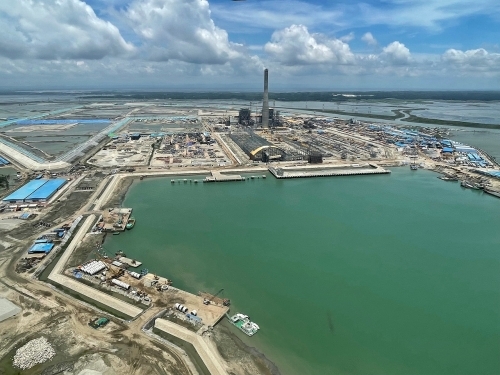 বড় জাহাজ মেরামতে মাতারবাড়ীতে ১ বিলিয়ন ডলারের প্রকল্প
 মাতারবাড়ীতে প্রায় ১ বিলিয়ন মার্কিন ডলার ব্যয়ে পরিবেশবান্ধব ডকইয়ার্ড ও জাহাজ নির্মাণ কেন্দ্র স্থাপনের উদ্যোগে নীতিগত অনুমোদন দিয়েছে নৌপরিবহন মন্ত্রণালয়। এখন প্রকল্পটির কারিগরি ও আর্থিক মূল্যায়নের জন্য প্রস্তাবটি সরকারি-বেসরকারি অংশীদারত্ব (পিপিপি) কর্তৃপক্ষের কাছে পাঠানো হয়েছে। সম্পূর্ণ বেসরকারি অর্থায়নে সরকারি জমির মালিকানা অক্ষুণ্ন রেখে প্রকল্পটি বাস্তবায়নের পরিকল্পনা রয়েছে। বন্দর কর্তৃপক্ষ জানায়, […]
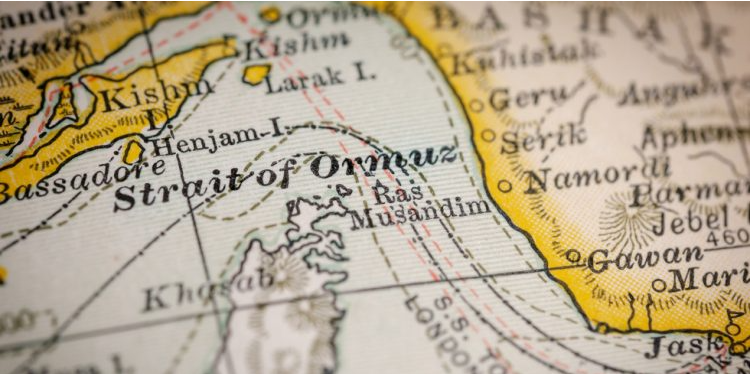 Industry on alert over scam messages offering ships “safe passage” on Hormuz
 Credit: Shutterstock Fraudulent messages offering safe passage through the Strait of Hormuz in exchange for cryptocurrency have been circulated to shipping companies with vessels stranded west of the waterway, according to MARISKS. In an alert issued on 20 April, MARISKS cautioned that unknown actors posing as Iranian authorities had contacted […]



JOB SITES
CONTENTS
LINKS
Happy New Year

Découvrez les avantages de MadCasino
Dans le monde des casinos en ligne, MadCasino se distingue par ses offres attrayantes et ses services de qualité. Que vous soyez un joueur débutant ou un parieur aguerri, vous trouverez ici une variété de jeux qui sauront satisfaire toutes vos envies. Les machines à sous, les jeux de table et les options de paris en direct sont tous disponibles pour vous offrir une expérience de jeu inégalée. De plus, le casino propose régulièrement des bonus qui permettent d'augmenter vos chances de gagner, vous offrant ainsi une excellente opportunité de maximiser vos gains.
En matière de sécurité, MadCasino est un nom de confiance. Il est entièrement licencié et régulé, ce qui garantit un environnement de jeu sûr et équitable. Les joueurs peuvent se concentrer sur leur expérience de jeu sans se soucier des problèmes de sécurité. Les transactions financières sont également sécurisées grâce à des technologies de pointe.
Les jeux proposés par MadCasino sont issus des développeurs les plus réputés de l'industrie, vous assurant des graphismes époustouflants et des mécaniques de jeu innovantes. Les joueurs peuvent également profiter d'une expérience de jeu en direct qui simule l'atmosphère d'un casino terrestre, tout en restant dans le confort de leur maison.
Enfin, la plateforme de MadCasino est optimisée pour les appareils mobiles, permettant aux joueurs de parier à tout moment et de n'importe où. Que vous soyez sur votre smartphone ou votre tablette, l'accès à vos jeux préférés n'a jamais été aussi simple. Ne manquez pas l'opportunité de découvrir ce casino exceptionnel.
Les offres de Cresus Casino
Cresus Casino est un autre acteur majeur dans le domaine des jeux en ligne, offrant des promotions généreuses et une vaste sélection de jeux. Les joueurs peuvent profiter d'une expérience de jeu enrichissante grâce aux nombreux bonus disponibles, qui sont conçus pour attirer tant les nouveaux utilisateurs que les joueurs réguliers. Ces avantages permettent non seulement de prolonger votre temps de jeu, mais aussi d'augmenter vos chances de gains conséquents.
Le casino se distingue également par sa ludothèque impressionnante, comprenant une sélection variée de machines à sous, de jeux de table et de jeux en direct. Les clients peuvent choisir parmi des titres populaires et appréciés, ainsi que des nouveautés qui enrichissent constamment l'offre. L'interface utilisateur est conviviale, rendant la navigation sur la plateforme fluide et agréable.
En termes de sécurité, Cresus Casino assure à ses joueurs un environnement de jeu fiable. La plateforme utilise des protocoles de sécurité avancés pour protéger les données personnelles et financières des utilisateurs. Cela permet aux joueurs de se sentir en sécurité tout en jouant à leurs jeux préférés.
Avec un service client réactif et professionnel, Cresus Casino s'assure que toutes vos questions et préoccupations sont traitées rapidement. Que ce soit pour des questions concernant les bonus, les retraits ou les jeux, vous bénéficierez d'une assistance rapide et efficace.
Explorez Nine Casino et ses avantages
Dans l'univers des casinos en ligne, Nine Casino a su se faire une place de choix grâce à son approche innovante et à ses nombreux avantages pour les joueurs. Les utilisateurs peuvent s'attendre à une expérience de jeu enrichissante, avec des bonus attractifs qui sont régulièrement mis à jour. Ces offres sont une excellente façon de découvrir de nouveaux jeux tout en maximisant votre potentiel de gain.
La plateforme de Nine Casino est riche en options de jeux, allant des machines à sous aux jeux de table, en passant par le live casino. Chaque jeu est conçu pour offrir une expérience immersive grâce à des graphismes de haute qualité et des fonctionnalités innovantes. Les parieurs peuvent profiter de sessions de jeu captivantes, comme s'ils étaient dans un véritable casino.
La sécurité est une priorité pour Nine Casino, qui utilise des technologies de cryptage avancées pour protéger les informations de ses joueurs. Cela garantit un environnement de jeu sûr et fiable, permettant aux utilisateurs de se concentrer sur ce qu'ils aiment le plus : jouer.
Enfin, le service clientèle fourni par Nine Casino est exceptionnel, avec des agents disponibles pour répondre à toutes vos questions et résoudre vos problèmes. Vous pourrez ainsi jouer en toute tranquillité, sachant que votre satisfaction est au cœur de leurs préoccupations.
Profitez de l'expérience Lucky31
Lucky31 est un casino en ligne qui se distingue par son approche orientée vers le joueur, offrant une multitude d'options de jeux et des bonus généreux. Que vous soyez amateur de machines à sous ou passionné de jeux de table, vous trouverez une large sélection pour satisfaire toutes vos envies de jeu. Les promotions fréquentes permettent aux joueurs de prolonger leur expérience tout en augmentant leurs chances de gains.
La convivialité de la plateforme de Lucky31 est l'un de ses plus grands atouts. Les joueurs peuvent naviguer facilement entre les différents jeux, et l'interface est conçue pour être intuitive, quel que soit le niveau d'expérience de l'utilisateur. De plus, le casino est entièrement optimisé pour les appareils mobiles, ce qui permet de parier où que vous soyez.
En matière de sécurité, Lucky31 prend les préoccupations des joueurs très au sérieux. Le casino est agréé et régulé, garantissant un environnement de jeu équitable et sécurisé. Les joueurs peuvent ainsi se concentrer sur leur expérience de jeu sans se soucier des risques liés à la sécurité.
Pour ceux qui recherchent un support client efficace, Lucky31 offre un service réactif et professionnel. Que ce soit pour des questions sur les bonus, les jeux ou les paiements, vous aurez accès à une assistance de qualité, vous garantissant une expérience de jeu fluide et agréable.