search the site


IMO Guidelines Are Quietly Weakening the Basel Convention

International law depends on a basic understanding that obligations accepted by states cannot be set aside by administrative preference. Treaties are binding because states have consented to be bound, and that consent cannot be diluted through voluntary guidance adopted by a different institution. Yet in the regulation of ship recycling, this principle is being tested in a way that should concern anyone who takes treaty law seriously.
The issue arises from the growing reliance on non-binding instruments adopted within the International Maritime Organization (IMO) to manage the overlap between the Basel Convention and the Hong Kong International Convention for the Safe and Environmentally Sound Recycling of Ships (HKC). While the objective of improving ship recycling standards is widely shared, the method being used risks weakening a binding environmental treaty through practice rather than law.
The Basel Convention governs the transboundary movement of hazardous waste. Its purpose is preventative. Hazardous waste should not be exported across borders without the prior informed consent of the states concerned, particularly where the receiving state may lack adequate capacity to manage the waste safely. End-of-life ships, which typically contain asbestos, PCBs, heavy metals, residual fuels, and contaminated coatings, fall within Basel’s scope once a decision has been taken to dispose of them. The HKC, adopted in 2009 and in force since June 2025, addresses a different problem. It establishes technical and operational standards for ship recycling, including inventories of hazardous materials (IHM), certification of ships, and authorization of recycling facilities. It was developed in response to the absence of a coherent ship-specific framework and reflects years of negotiation within the maritime community.
Legally speaking, there is nothing inherently inconsistent between these two treaties. A state can comply with Basel’s controls on hazardous-waste movements while also applying HKC’s standards for safe and environmentally sound recycling. The difficulty arises because, in practice, many shipping administrations and industry actors view Basel procedures as ill-suited to the realities of shipping and recycling markets. Basel is seen as slow, rigid, and potentially disruptive. HKC is seen as tailored and workable.
This practical tension has driven the IMO to act. Over the past decade, the IMO’s Marine Environment Protection Committee (MEPC) has adopted a comprehensive set of guidelines to support implementation of the HKC. These include guidelines on ship recycling plans (MEPC.196(62)), safe and environmentally sound recycling (MEPC.210(63)), authorization of ship recycling facilities (MEPC.211(63)), survey and certification of ships (MEPC.222(64)), inspection of ships (MEPC.223(64)), and the development of inventories of hazardous materials (MEPC.379(80)). Each of these instruments is expressly non-mandatory. Their role is technical assistance, not lawmaking. The legal controversy has intensified with the recent approval of the Provisional Guidance on the Implementation of the Hong Kong and Basel Conventions with respect to the Transboundary Movement of Ships Intended for Recycling, issued as circular HKSRC.2/Circ.1 and approved by MEPC 82. These circular addresses the interface between the HKC and Basel Convention and seeks to reduce uncertainty for states and industry. The circular acknowledges that both conventions may apply to ships intended for recycling and invites states that are parties to both treaties to notify the Basel Convention Secretariat that they apply the HKC’s requirements to such ships. It suggests that where arrangements are in place to ensure environmentally sound management of hazardous waste arising from ship recycling, the HKC framework may be relied upon in managing transboundary movements of ships for recycling.
Although framed as coordination, this guidance has been widely interpreted as endorsing the application of the HKC in place of Basel procedures. In practice, some administrations have treated compliance with HKC standards as sufficient, without applying Basel’s prior informed consent (PIC) requirements. This interpretation is not required by the text of either treaty. It flows from the practical authority that IMO guidance carries.
That is where the legal problem lies. The IMO does not administer the Basel Convention. It has no mandate to interpret Basel obligations, grant exemptions, or create transitional arrangements that affect Basel parties. Circulars and guidelines adopted by MEPC are soft law. They have no binding force and cannot lawfully modify binding treaty commitments undertaken under a separate legal regime.
The distinction between binding law and voluntary guidance is not a formality. It is the foundation of treaty discipline. If soft law can be used to suspend or bypass hard law, then the hierarchy of sources collapses. Some have suggested that the Vienna Convention on the Law of Treaties (VCLT) provides a legal basis for prioritizing the HKC because it is later in time. This argument misunderstands the Vienna Convention. Its rules on treaty conflict apply only where two treaties govern the same subject matter and are legally incompatible. Basel and HKC do not meet that test. One regulates hazardous-waste movements. The other regulates ship recycling standards. A state can comply with both without contradiction i.e. they are not mutually exclusive. Operational inconvenience alone, however significant, does not constitute legal incompatibility
What exists is an operational issue, not a legal conflict. Faced with resistance to Basel enforcement and pressure from shipping interests for clarity, the IMO chose a pragmatic path. It issued guidance designed to facilitate early and effective implementation of the HKC and to reassure states that reliance on HKC procedures would be viewed as internationally acceptable. This approach avoided reopening Basel negotiations and offered industry a predictable framework.
From a governance perspective, the choice is understandable. From a legal perspective, it is troubling. International organizations wield influence not only through binding instruments, but through norms. IMO guidance is routinely treated by administrations as authoritative, even when it is formally voluntary. Over time, repeated reliance on guidance reshapes expectations and practice. What begins as “encouragement” becomes de facto rule.
This dynamic places states in a precarious position. Authorizing the export of an end-of-life ship for recycling without applying Basel prior informed consent procedures may place a Basel Party in breach of both its international obligations and its implementing domestic law. The fact that the authorization relies on an IMO circular does not cure that breach. Courts do not apply guidance. They apply law.
Domestic courts are therefore a critical, if underused, check in this system. In many jurisdictions, the Basel Convention has been incorporated into national law. Administrative decisions that rely on non-binding guidance to override treaty-based requirements are vulnerable to judicial review. A court can lawfully conclude that HKSRC.2/Circ.1 has no effect on the obligation to apply Basel controls.
This is not an attack on the HKC. Nor is it an argument against improving ship recycling standards. It is an argument about method and authority. Legal change must occur through legal means. If Basel is no longer fit for purpose in relation to ships, that judgment must be made by Basel parties through amendment or authoritative interpretation. It cannot be made indirectly through guidance issued under another convention.
Permitting this kind of quiet substitution creates a dangerous precedent in international law. It signals that binding environmental obligations can be softened through practice if they prove inconvenient. It rewards regulatory avoidance and disadvantages states and actors that attempt to comply strictly with the law.
The integrity of international law depends on clarity about sources and hierarchy. Treaties bind because states agreed that they would. Guidelines guide because they are meant to assist, not replace, legal obligations. When that distinction is blurred, law becomes negotiable and obligation becomes optional.
The IMO’s ship-recycling guidance was intended to promote safer practices and regulatory coherence. Those aims are legitimate. But legitimacy of purpose does not confer legal authority. Where guidance promotes outcomes that conflict with binding law, it must be rejected and set aside.
The solution is not difficult to state, even if it is politically challenging to implement. Basel parties should decide, openly and formally, how ship recycling should be treated under Basel. Until they do, Basel obligations continue to apply. Hong Kong standards must and should operate alongside them.
source : maritime-executive
Featured Post
 বড় জাহাজ মেরামতে মাতারবাড়ীতে ১ বিলিয়ন ডলারের প্রকল্প
 মাতারবাড়ীতে প্রায় ১ বিলিয়ন মার্কিন ডলার ব্যয়ে পরিবেশবান্ধব ডকইয়ার্ড ও জাহাজ নির্মাণ কেন্দ্র স্থাপনের উদ্যোগে নীতিগত অনুমোদন দিয়েছে নৌপরিবহন মন্ত্রণালয়। এখন প্রকল্পটির কারিগরি ও আর্থিক মূল্যায়নের জন্য প্রস্তাবটি সরকারি-বেসরকারি অংশীদারত্ব (পিপিপি) কর্তৃপক্ষের কাছে পাঠানো হয়েছে। সম্পূর্ণ বেসরকারি অর্থায়নে সরকারি জমির মালিকানা অক্ষুণ্ন রেখে প্রকল্পটি বাস্তবায়নের পরিকল্পনা রয়েছে। বন্দর কর্তৃপক্ষ জানায়, […]
 Industry on alert over scam messages offering ships “safe passage” on Hormuz
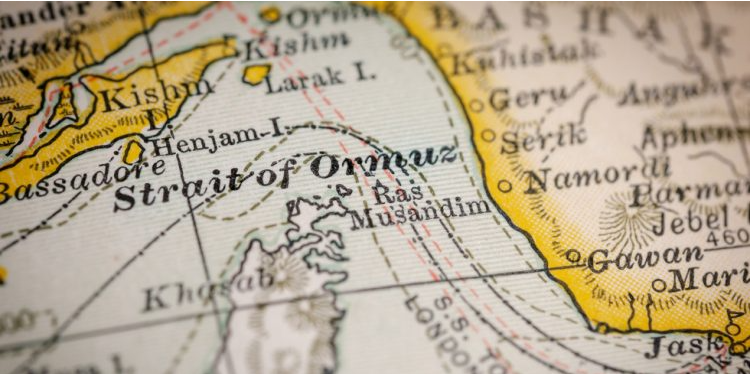
 Credit: Shutterstock Fraudulent messages offering safe passage through the Strait of Hormuz in exchange for cryptocurrency have been circulated to shipping companies with vessels stranded west of the waterway, according to MARISKS. In an alert issued on 20 April, MARISKS cautioned that unknown actors posing as Iranian authorities had contacted […]



JOB SITES
CONTENTS
LINKS
Happy New Year

Découvrez les avantages de MadCasino
Dans le monde des casinos en ligne, MadCasino se distingue par ses offres attrayantes et ses services de qualité. Que vous soyez un joueur débutant ou un parieur aguerri, vous trouverez ici une variété de jeux qui sauront satisfaire toutes vos envies. Les machines à sous, les jeux de table et les options de paris en direct sont tous disponibles pour vous offrir une expérience de jeu inégalée. De plus, le casino propose régulièrement des bonus qui permettent d'augmenter vos chances de gagner, vous offrant ainsi une excellente opportunité de maximiser vos gains.
En matière de sécurité, MadCasino est un nom de confiance. Il est entièrement licencié et régulé, ce qui garantit un environnement de jeu sûr et équitable. Les joueurs peuvent se concentrer sur leur expérience de jeu sans se soucier des problèmes de sécurité. Les transactions financières sont également sécurisées grâce à des technologies de pointe.
Les jeux proposés par MadCasino sont issus des développeurs les plus réputés de l'industrie, vous assurant des graphismes époustouflants et des mécaniques de jeu innovantes. Les joueurs peuvent également profiter d'une expérience de jeu en direct qui simule l'atmosphère d'un casino terrestre, tout en restant dans le confort de leur maison.
Enfin, la plateforme de MadCasino est optimisée pour les appareils mobiles, permettant aux joueurs de parier à tout moment et de n'importe où. Que vous soyez sur votre smartphone ou votre tablette, l'accès à vos jeux préférés n'a jamais été aussi simple. Ne manquez pas l'opportunité de découvrir ce casino exceptionnel.
Les offres de Cresus Casino
Cresus Casino est un autre acteur majeur dans le domaine des jeux en ligne, offrant des promotions généreuses et une vaste sélection de jeux. Les joueurs peuvent profiter d'une expérience de jeu enrichissante grâce aux nombreux bonus disponibles, qui sont conçus pour attirer tant les nouveaux utilisateurs que les joueurs réguliers. Ces avantages permettent non seulement de prolonger votre temps de jeu, mais aussi d'augmenter vos chances de gains conséquents.
Le casino se distingue également par sa ludothèque impressionnante, comprenant une sélection variée de machines à sous, de jeux de table et de jeux en direct. Les clients peuvent choisir parmi des titres populaires et appréciés, ainsi que des nouveautés qui enrichissent constamment l'offre. L'interface utilisateur est conviviale, rendant la navigation sur la plateforme fluide et agréable.
En termes de sécurité, Cresus Casino assure à ses joueurs un environnement de jeu fiable. La plateforme utilise des protocoles de sécurité avancés pour protéger les données personnelles et financières des utilisateurs. Cela permet aux joueurs de se sentir en sécurité tout en jouant à leurs jeux préférés.
Avec un service client réactif et professionnel, Cresus Casino s'assure que toutes vos questions et préoccupations sont traitées rapidement. Que ce soit pour des questions concernant les bonus, les retraits ou les jeux, vous bénéficierez d'une assistance rapide et efficace.
Explorez Nine Casino et ses avantages
Dans l'univers des casinos en ligne, Nine Casino a su se faire une place de choix grâce à son approche innovante et à ses nombreux avantages pour les joueurs. Les utilisateurs peuvent s'attendre à une expérience de jeu enrichissante, avec des bonus attractifs qui sont régulièrement mis à jour. Ces offres sont une excellente façon de découvrir de nouveaux jeux tout en maximisant votre potentiel de gain.
La plateforme de Nine Casino est riche en options de jeux, allant des machines à sous aux jeux de table, en passant par le live casino. Chaque jeu est conçu pour offrir une expérience immersive grâce à des graphismes de haute qualité et des fonctionnalités innovantes. Les parieurs peuvent profiter de sessions de jeu captivantes, comme s'ils étaient dans un véritable casino.
La sécurité est une priorité pour Nine Casino, qui utilise des technologies de cryptage avancées pour protéger les informations de ses joueurs. Cela garantit un environnement de jeu sûr et fiable, permettant aux utilisateurs de se concentrer sur ce qu'ils aiment le plus : jouer.
Enfin, le service clientèle fourni par Nine Casino est exceptionnel, avec des agents disponibles pour répondre à toutes vos questions et résoudre vos problèmes. Vous pourrez ainsi jouer en toute tranquillité, sachant que votre satisfaction est au cœur de leurs préoccupations.
Profitez de l'expérience Lucky31
Lucky31 est un casino en ligne qui se distingue par son approche orientée vers le joueur, offrant une multitude d'options de jeux et des bonus généreux. Que vous soyez amateur de machines à sous ou passionné de jeux de table, vous trouverez une large sélection pour satisfaire toutes vos envies de jeu. Les promotions fréquentes permettent aux joueurs de prolonger leur expérience tout en augmentant leurs chances de gains.
La convivialité de la plateforme de Lucky31 est l'un de ses plus grands atouts. Les joueurs peuvent naviguer facilement entre les différents jeux, et l'interface est conçue pour être intuitive, quel que soit le niveau d'expérience de l'utilisateur. De plus, le casino est entièrement optimisé pour les appareils mobiles, ce qui permet de parier où que vous soyez.
En matière de sécurité, Lucky31 prend les préoccupations des joueurs très au sérieux. Le casino est agréé et régulé, garantissant un environnement de jeu équitable et sécurisé. Les joueurs peuvent ainsi se concentrer sur leur expérience de jeu sans se soucier des risques liés à la sécurité.
Pour ceux qui recherchent un support client efficace, Lucky31 offre un service réactif et professionnel. Que ce soit pour des questions sur les bonus, les jeux ou les paiements, vous aurez accès à une assistance de qualité, vous garantissant une expérience de jeu fluide et agréable.