search the site


Beyond the checklist: Preventing enclosed space fatalities at sea
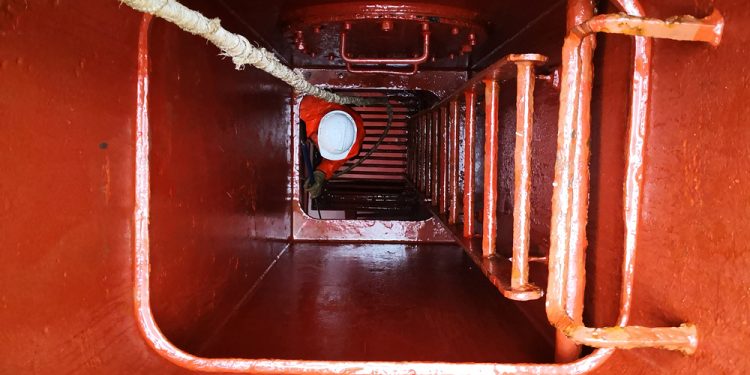
Capt. Akshat Arora, Regional Loss Prevention Director (Singapore), UK P&I Club, explains why enclosed space fatalities at sea remain stubbornly high and what a truly human-centric approach to safety could change.
Despite decades of awareness campaigns, regulatory updates, and repeated industry commitments, seafarers and shore workers continue to lose their lives in enclosed spaces on board ships, often in circumstances that were entirely preventable. The persistence of these incidents forces us to confront a hard truth: the measures currently implemented are insufficient. To break the cycle of fatalities, the industry needs a change of mindset, move beyond the checklists and procedures, and embed a genuinely human-centric approach to safety.
What do the numbers tell us?
From a P&I Club perspective, enclosed space related fatalities remain one of the leading causes of loss of life at sea. According to The International Group of P&I Clubs (IG), 83 deaths occurred in enclosed spaces during the five-year period between the 2015 and 2019 policy years.
The data collated by InterManager paints a similarly troubling picture. While the annual number of recorded enclosed space accidents has remained largely unchanged, the casualty rates have worsened. In both 2022 and 2023, 14 enclosed space incidents were recorded, yet casualties rose sharply from 18 in 2022 to 34 in 2023. Alarmingly, senior officers – individuals regarded as the most experienced and well trained on board – constitute a significant proportion of those affected.
Analysis of vessel types and accident locations shows that bulk carriers account for the highest proportions of incidents (≈41%), followed by tankers (≈23%). The most common sites for fatalities are cargo holds or hold access areas (≈51%), with cargo oil tanks also presenting a significant risk (≈18%).
Multiple-fatality accidents remain common. There were a number of cases, where rescuers instinctively rushed to aid a collapsed colleague, only to become victims themselves.
Further insight is provided in a submission by the International Bulk Terminals Association (IBTA) to the IMO (CCC 11/15/3). Between 2000 and 2024, at least 1,010 crew and shore workers lost their lives in enclosed spaces on ships of all types. Of these, 700 (69%) were crew members and 310 (31%) were shore personnel. This equates to an average of 40 deaths every year, a sobering reminder of a problem that refuses to fade.
Industry Responses
It is commonly noted that the standards of training and drills vary on every ship. While some companies may choose to invest in advanced training and education tools, many do not. To address this gap, the International Chamber of Shipping (ICS) has proposed amendments to the STCW Convention and Code (HTW 12/6/2) to enhance mandatory training for entering, working in, and rescuing from enclosed spaces. If adopted, this will represent a valuable step towards addressing issues repeatedly highlighted through inspections and accident investigations.
In parallel, the industry is also progressing on several enclosed space related safety enhancements. Classification Societies are actively discussing improved tank designs, including better structural layouts, improved ventilation standards and minimising maintenance items to reduce the need for human entry. Trials with drones and remote inspection technologies are also advancing, offering safer alternatives for routine tank inspections.
At the same time, organisations such as The Oil Companies International Marine Forum (OCIMF), International Parcel Tanker Association (IPTA) and International Association of Independent Tanker Owners (Intertanko) are exploring the feasibility of replacing traditional wall-wash testing on tankers with wash-water analysis, an approach that could significantly reduce enclosed space entries while maintaining cargo quality assurance.
Additionally, to deepen understanding of persistent failings, InterManager, in collaboration with The Nautical Institute and IMarEST, has launched a survey seeking first-hand feedback from those working at sea. The aim is to delve deeper into what’s going wrong and understand better what solutions are needed. The survey can be accessed here.
As part of the wider industry effort to enhance safety at sea, the UK P&I Club supports the maritime consortium ‘Together in Safety’, that has published a set of 10 ‘Golden Safety Rules’, designed as straightforward, easy-to-follow practices to help prevent the most frequent fatal incident types across shipping. The Golden Safety Rule No. 2 provides practical steps to follow before entering inside an enclosed space.
Regulatory Updates
The IMO’s first recommendations for entering enclosed spaces (Resolution A.864(20)) entered into force in 1997. These were later revised via Resolution A.1050(27) in 2011.
Subsequent regulatory developments include:
- SOLAS Reg. III/19.3.6 (1 January 2015): Mandated enclosed-space entry and rescue drills every two months.
- SOLAS Reg. XI-1/7 (1 July 2016): Required portable atmosphere-testing instruments capable of measuring oxygen, flammable gases/vapours, hydrogen sulphide, and carbon monoxide.
However, despite regulation, fatalities have continued. In July 2024, following two incidents involving the deaths of stevedores during coal discharge operations at Indian ports, the Indian Directorate General of Shipping issued DGS Circular 23/2024, reinforcing safety recommendations to prevent similar incidents from happening.
Similarly, the China Maritime Safety Administration (MSA) launched a special campaign aimed at preventing enclosed space accidents onboard vessels visiting Chinese ports between 15 January and 14 October 2025. Among its findings was the unsatisfactory execution of drills, reinforcing long-standing concerns regarding training standards.
In June 2025, the IMO’s Maritime Safety Committee, at its 110th session (MSC-110), adopted Resolution MSC.581(110) (Revised Recommendations for Entering Enclosed Spaces Aboard Ship). This resolution replaces Resolution A.1050(27) and aims to address the persistent underlying issues: failure to systematically identify hazards, properly assess risks, and implement appropriate entry procedures. It also explicitly recognises that effective organisational leadership, both ashore and onboard, is essential for empowering crew to make the right decisions and ensure safe operations.
Key developments include:
#1 Strengthened Ship–Shore Coordination
- A joint ship–shore risk assessment is required before any contractor, stevedore, or shore worker enters an enclosed space.
- A simple schematic plan must be posted at the gangway, highlighting which spaces are safe or unsafe to enter.
- Shore personnel must be briefed on any hazards specific to the ship.
These measures aim to bridge the gap between ship staff and visiting personnel, ensuring everyone shares the same understanding of the risks involved.
#2 New and Clarified Definitions
To improve hazard recognition and ensure consistent interpretation, several critical definitions have been added or refined:
- Enclosed Space: As before, a space with limited openings, inadequate ventilation, or not designed for continuous human occupancy—now emphasising wide-ranging examples such as holds, tanks, bilges, pump rooms, chain lockers, and engine crankcases.
- Connected Space: Newly defined. Any space linked by permanent or temporary means (including manual doors) to a source space. Must be treated as hazardous until proven safe by testing.
- Adjacent Space: More clearly defined as a space sharing a boundary with a hazardous space but without any openings. Still requires precautionary consideration in case of barrier failure.
- Trapped Hazardous Atmosphere: A new concept that addresses hazardous atmospheres that linger in connected spaces even after the source space is discharged or ventilated.
- Defined Roles (Responsible Person, Competent Person, Attendant): Enhanced clarity on accountability and training expectations for each role.
#3 Enclosed Space Register
One of the most consequential changes is the introduction of a ship-specific Enclosed Space Register, which must catalogue:
- Every enclosed space onboard,
- All connected and adjacent spaces,
- Associated hazards,
- Expected atmospheric changes based on cargo or tank contents,
- Required risk controls, equipment, ventilation expectations, and emergency arrangements.
This Register must be maintained both onboard and ashore and kept continuously updated—especially during voyages and cargo operations.
Strengthened Operational and Procedural Measures
#1 Risk Assessment & Gas Testing
- The competent person’s assessment must explicitly consider the potential for CO and CO₂, in addition to other toxic or asphyxiant gases.
- CO₂ safe threshold is now clearly stated as <0.5% by volume (5,000 ppm).
- Testing must be conducted after ventilation has stabilised.
- Testing for toxicity is required where relevant—flammability or oxygen levels alone are insufficient.
#2 Permit to Work
- Entry permits must not exceed eight hours and are voided if ventilation stops or conditions change.
- Additional permits (energy isolation, hot work, working aloft, etc.) may be required depending on tasks.
#3 Access Control & Signage
- Entry doors and hatches to enclosed spaces must always be secured against entry unless declared safe.
- Clear “Safe to Enter” / “Unsafe to Enter” signage and sealing arrangements are now required.
#4 Prohibition of Solo Entry
- For the first time, MSC.581(110) explicitly prohibits single-person entry into enclosed spaces.
#5 Time Pressure and Human Factors
- Companies must ensure adequate time is allocated for enclosed space operations, acknowledging that time pressure has been a recurring causal factor in past casualties.
#6 Training and Rescue Preparedness
- Crew must receive training in the operation, calibration, and maintenance of atmosphere testing equipment.
- Crew must be trained in rescue techniques, first aid, CPR, and use of recovery apparatus.
- Regular rescue drills are mandated under SOLAS, and MSC.581(110) emphasises reviewing and updating the enclosed space emergency response plan after each drill.
#7 Simultaneous Operations (SIMOPS)
- Where enclosed space entry coincides with other operations, companies must set clear criteria to manage the added risks.
Creating a human-centric approach to workplace safety
A checklist ticked isn’t a life saved. Real safety culture exists when crews are empowered to raise concerns and discuss solutions. Masters need to lead by example and embed safety as a day-to-day priority despite commercial pressures. Operators should also recognise that speed at the expense of safety undermines efficiency and creates more risk.
When safety becomes ingrained rather than imposed, when meeting requirements is not just procedure but instinct, and when every crew member looks out for the person working beside them, enclosed spaces become manageable risks rather than recurring incidents.
The technology to support safer working environments exists. The regulations exist. What’s often missing is the culture and commitment to apply them effectively.
Conclusion
After nearly three decades of structured safety frameworks, enclosed-space fatalities should be a relic of the past. Yet they remain stubbornly prevalent. Existing procedures, while necessary, have not been sufficient on their own.
A cultural shift is essential. The long-term objective must be to eliminate the need for human entry into enclosed spaces wherever possible. Although challenging, industry bodies are increasingly aligned on driving safer standards, supported by improved regulation, technology and operational practices.
Ultimately, every life lost is one too many. By working collectively, and by embracing a more human-centric approach to safety, we can ensure that every workplace becomes a safer place for those who serve at sea.
… Capt. Arora concludes.
Above article has been initially published on UK P&I Club’s website and is reproduced here with author’s kind permission.
The views presented are only those of the author and do not necessarily reflect those of SAFETY4SEA and are for information sharing and discussion purposes only.
source : safety4sea
Featured Post
 বড় জাহাজ মেরামতে মাতারবাড়ীতে ১ বিলিয়ন ডলারের প্রকল্প
 মাতারবাড়ীতে প্রায় ১ বিলিয়ন মার্কিন ডলার ব্যয়ে পরিবেশবান্ধব ডকইয়ার্ড ও জাহাজ নির্মাণ কেন্দ্র স্থাপনের উদ্যোগে নীতিগত অনুমোদন দিয়েছে নৌপরিবহন মন্ত্রণালয়। এখন প্রকল্পটির কারিগরি ও আর্থিক মূল্যায়নের জন্য প্রস্তাবটি সরকারি-বেসরকারি অংশীদারত্ব (পিপিপি) কর্তৃপক্ষের কাছে পাঠানো হয়েছে। সম্পূর্ণ বেসরকারি অর্থায়নে সরকারি জমির মালিকানা অক্ষুণ্ন রেখে প্রকল্পটি বাস্তবায়নের পরিকল্পনা রয়েছে। বন্দর কর্তৃপক্ষ জানায়, […]
 Industry on alert over scam messages offering ships “safe passage” on Hormuz
 Credit: Shutterstock Fraudulent messages offering safe passage through the Strait of Hormuz in exchange for cryptocurrency have been circulated to shipping companies with vessels stranded west of the waterway, according to MARISKS. In an alert issued on 20 April, MARISKS cautioned that unknown actors posing as Iranian authorities had contacted […]



JOB SITES
CONTENTS
LINKS
Happy New Year

Découvrez les avantages de MadCasino
Dans le monde des casinos en ligne, MadCasino se distingue par ses offres attrayantes et ses services de qualité. Que vous soyez un joueur débutant ou un parieur aguerri, vous trouverez ici une variété de jeux qui sauront satisfaire toutes vos envies. Les machines à sous, les jeux de table et les options de paris en direct sont tous disponibles pour vous offrir une expérience de jeu inégalée. De plus, le casino propose régulièrement des bonus qui permettent d'augmenter vos chances de gagner, vous offrant ainsi une excellente opportunité de maximiser vos gains.
En matière de sécurité, MadCasino est un nom de confiance. Il est entièrement licencié et régulé, ce qui garantit un environnement de jeu sûr et équitable. Les joueurs peuvent se concentrer sur leur expérience de jeu sans se soucier des problèmes de sécurité. Les transactions financières sont également sécurisées grâce à des technologies de pointe.
Les jeux proposés par MadCasino sont issus des développeurs les plus réputés de l'industrie, vous assurant des graphismes époustouflants et des mécaniques de jeu innovantes. Les joueurs peuvent également profiter d'une expérience de jeu en direct qui simule l'atmosphère d'un casino terrestre, tout en restant dans le confort de leur maison.
Enfin, la plateforme de MadCasino est optimisée pour les appareils mobiles, permettant aux joueurs de parier à tout moment et de n'importe où. Que vous soyez sur votre smartphone ou votre tablette, l'accès à vos jeux préférés n'a jamais été aussi simple. Ne manquez pas l'opportunité de découvrir ce casino exceptionnel.
Les offres de Cresus Casino
Cresus Casino est un autre acteur majeur dans le domaine des jeux en ligne, offrant des promotions généreuses et une vaste sélection de jeux. Les joueurs peuvent profiter d'une expérience de jeu enrichissante grâce aux nombreux bonus disponibles, qui sont conçus pour attirer tant les nouveaux utilisateurs que les joueurs réguliers. Ces avantages permettent non seulement de prolonger votre temps de jeu, mais aussi d'augmenter vos chances de gains conséquents.
Le casino se distingue également par sa ludothèque impressionnante, comprenant une sélection variée de machines à sous, de jeux de table et de jeux en direct. Les clients peuvent choisir parmi des titres populaires et appréciés, ainsi que des nouveautés qui enrichissent constamment l'offre. L'interface utilisateur est conviviale, rendant la navigation sur la plateforme fluide et agréable.
En termes de sécurité, Cresus Casino assure à ses joueurs un environnement de jeu fiable. La plateforme utilise des protocoles de sécurité avancés pour protéger les données personnelles et financières des utilisateurs. Cela permet aux joueurs de se sentir en sécurité tout en jouant à leurs jeux préférés.
Avec un service client réactif et professionnel, Cresus Casino s'assure que toutes vos questions et préoccupations sont traitées rapidement. Que ce soit pour des questions concernant les bonus, les retraits ou les jeux, vous bénéficierez d'une assistance rapide et efficace.
Explorez Nine Casino et ses avantages
Dans l'univers des casinos en ligne, Nine Casino a su se faire une place de choix grâce à son approche innovante et à ses nombreux avantages pour les joueurs. Les utilisateurs peuvent s'attendre à une expérience de jeu enrichissante, avec des bonus attractifs qui sont régulièrement mis à jour. Ces offres sont une excellente façon de découvrir de nouveaux jeux tout en maximisant votre potentiel de gain.
La plateforme de Nine Casino est riche en options de jeux, allant des machines à sous aux jeux de table, en passant par le live casino. Chaque jeu est conçu pour offrir une expérience immersive grâce à des graphismes de haute qualité et des fonctionnalités innovantes. Les parieurs peuvent profiter de sessions de jeu captivantes, comme s'ils étaient dans un véritable casino.
La sécurité est une priorité pour Nine Casino, qui utilise des technologies de cryptage avancées pour protéger les informations de ses joueurs. Cela garantit un environnement de jeu sûr et fiable, permettant aux utilisateurs de se concentrer sur ce qu'ils aiment le plus : jouer.
Enfin, le service clientèle fourni par Nine Casino est exceptionnel, avec des agents disponibles pour répondre à toutes vos questions et résoudre vos problèmes. Vous pourrez ainsi jouer en toute tranquillité, sachant que votre satisfaction est au cœur de leurs préoccupations.
Profitez de l'expérience Lucky31
Lucky31 est un casino en ligne qui se distingue par son approche orientée vers le joueur, offrant une multitude d'options de jeux et des bonus généreux. Que vous soyez amateur de machines à sous ou passionné de jeux de table, vous trouverez une large sélection pour satisfaire toutes vos envies de jeu. Les promotions fréquentes permettent aux joueurs de prolonger leur expérience tout en augmentant leurs chances de gains.
La convivialité de la plateforme de Lucky31 est l'un de ses plus grands atouts. Les joueurs peuvent naviguer facilement entre les différents jeux, et l'interface est conçue pour être intuitive, quel que soit le niveau d'expérience de l'utilisateur. De plus, le casino est entièrement optimisé pour les appareils mobiles, ce qui permet de parier où que vous soyez.
En matière de sécurité, Lucky31 prend les préoccupations des joueurs très au sérieux. Le casino est agréé et régulé, garantissant un environnement de jeu équitable et sécurisé. Les joueurs peuvent ainsi se concentrer sur leur expérience de jeu sans se soucier des risques liés à la sécurité.
Pour ceux qui recherchent un support client efficace, Lucky31 offre un service réactif et professionnel. Que ce soit pour des questions sur les bonus, les jeux ou les paiements, vous aurez accès à une assistance de qualité, vous garantissant une expérience de jeu fluide et agréable.