search the site


Year in Review: The Maritime Stories That Defined 2025
When historians chronicle 2025, they won’t remember it as the year shipping got more efficient or cleaner. They’ll remember it as the year the world’s oceans became a battlefield for national ambition, where every trade route doubled as a strategic asset and every voyage carried geopolitical weight.
From the Arctic to the Red Sea, from Venezuelan waters to the Black Sea, maritime operations ceased being merely commercial and became instruments of state power. The transformation was swift and irreversible. Here’s a look at the maritime stories that defined 2025.
Shipbuilding as Strategic Revival
On April 9, President Trump signed an executive order titled “Restoring America’s Maritime Dominance,” elevating ports, shipyards, and trade lanes to national-security priorities. The message was clear: maritime strength wasn’t optional—it was existential.
In December 2024, South Korea’s Hanwha acquired Philly Shipyard for $100 million, then shocked the industry with a $5 billion expansion plan to boost production from under two vessels annually to 20. By August, Hanwha had secured the largest U.S. commercial shipbuilding order in two decades—10 oil and chemical tankers on top of two LNG carriers, bringing the United States’ commercial orderbook to one of its highest level since the 1970s.
Aside from the commercial aspect, the administration accelerated delivery of Polar Security Cutters, framing icebreakers as strategic assets amid Arctic competition with Russia and China. By year’s end, the Washington awarded contracts for six Arctic Security Cutters to be built by Finland and US-based Bollinger, building on trilateral ICE PACT between the US, Canada and Finland.
After pivoting away from the Constellation-class frigates and changes to the Coast Guard’s Offshore Patrol Cutter program, Trump this month announced plans for a new “Trump-class” battleship, reviving a vessel type absent since the 1940s, with the lead ship USS Defiant (BBG-1) anchoring a planned “Golden Fleet” of 20 to 25 battleships. The Marine Corps’ Medium Landing Ship program selected a Damen design, with plans for 18 to 35 vessels aimed squarely at China.
In 2025, shipbuilding and maritime dominance had became about state power, not just commerce.
Trade War Rewires Global Shipping
Trump’s “Liberation Day” tariffs this Spring sparked massive front-loading as importers rushed cargo ahead of higher duties, briefly surging U.S. ports and tightening capacity. By mid-year, U.S. imports had cooled, especially from China, as cargo rerouted to Southeast Asia, India, and Latin America. Global shipping didn’t collapse—it rewired itself with longer supply chains and more volatility.
The White House pursued bilateral deals, like South Korea’s tariff relief tied to shipbuilding investments. By year’s end, the trade war hadn’t broken global shipping—but it had fundamentally restructured it. With the Supreme Court reviewing tariff legality, bigger questions and impacts loom in 2026.
The Port Fees That Weren’t
For a few tense weeks this Fall, Washington was poised to impose port-call penalties based not on cargo, but on a ship’s origin.
A USTR Section 301 probe into China’s maritime dominance introduced a new kind of trade-war threat: fees targeted at Chinese-built or Chinese-linked vessels calling at U.S. ports. China responded in kind, imposing fees of its own on U.S. ships.
However, Trump’s trade deal with China resulted in the shelving the reciprocal port fees, leaving a key component of his maritime dominance revival afloat. But the message lingered. The United States had shown it was willing to penalize ships and operators themselves.
In 2025, shipping learned that in a trade war, even the steel you sail on can become a political target.
Red Sea: The Detour Becomes the Route
By 2025, the Red Sea crisis had become “baked into the system”. In late 2023, Houthi attacks turned Bab el-Mandeb into a war zone, forcing most carriers to avoid the Suez route and making the Cape of Good Hope the default. Diversions added 10 to 14 days to Asia-Europe voyages, burning extra fuel and tightening capacity.
The back-to-back sinkings of the M/V Magic Seas and the M/V Eternity C in July—both Liberian-flagged, Greek-operated bulk carriers attacked with drones, missiles, and explosive boats—underscored the deadly reality. War-risk insurance premiums stayed elevated, and schedules relied on buffers, not precision.
By December, the Red Sea wasn’t safe or fully abandoned. That ambiguity defined the year, as the crisis became a permanent security exception.
Arctic Emerges as Working Trade Lane
In 2025, Russia and China didn’t just talk about the Arctic—they used it. Moscow pushed the Northern Sea Route hard, using ice-class LNG carriers and tankers to move sanctioned cargoes east even in winter. China dispatched five icebreaking research vessels to the region in August, the first time the country operated more than three icebreaking vessels in the Arctic simultaneously.
In September, China launched “Arctic Express,” a seasonal container service cutting transit times from 40-50 days via Suez to 18-20 days. By October, the Chinese Panamax containership Istanbul Bridge completed the 7,500-nautical-mile voyage from China to the UK via the Arctic Northern Sea Route in just 20 days—proving the concept of commercially viable Arctic trade.
By year’s end, the Arctic had already become “the shortcut”.
Offshore Wind: Blown Off Course
If shipbuilding was 2025’s revival story, offshore wind was “its mirror image”. In December, the Trump administration issued sweeping stop-work orders across multiple East Coast projects, citing national-security concerns tied to radar interference, grid vulnerability, and proximity to sensitive coastal infrastructure.
Billions stalled overnight. Ports that invested heavily to support turbine installation suddenly faced quiet marshalling yards, delayed vessel charters, and workforce uncertainty. The White House view was plain: offshore wind had become “a strategic liability,” and maritime capacity should be redirected toward “shipbuilding, naval construction, and energy exports” instead.
Globally, offshore wind projects fared better, but not by much. Inflation-driven cost overruns, persistently high interest rates, and stubborn supply-chain bottlenecks — from turbine manufacturing to scarce installation vessels — squeezed project economics and forced developers to rethink the pipeline.
Shadow Fleet: The Dark Mirror
Over 1,000 tankers linked to Russia, Iran, and Venezuela—operating through opaque ownership, flag-hopping, manipulated identities, and paper-only insurance—proliferated across major oil corridors. Many exceeded safe operating lives, held together by shell companies and flags of convenience as much as steel.
P&I clubs warned the threat was now systemic environmental exposure: a major spill from a shadow tanker with no owner, no cover, and no backstop. Coastal states prepared for taxpayers to foot cleanup bills.
By year’s end, the industry had reached a sobering conclusion: the shadow fleet was too large to police quietly, too dangerous to tolerate casually, and too entrenched to dismantle through sanctions alone. It had evolved into a parallel system of global trade — a dark mirror of legitimate shipping, operating beyond regulation, insurance, and accountability.
Western Sanctions Reshape the Global Fleet
Western sanctions were designed to isolate Russia, Iran, and their partners. In 2025, they did something bigger: they reshaped the architecture of global shipping. Led by the United States, the EU, and the UK, blacklist regimes expanded, banks retreated, insurers rewrote coverage standards, and ports grew increasingly risk-averse — turning compliance itself into a new chokepoint in world trade.
By year’s end, the global fleet had split in two: the legitimate fleet and the other sailing in the shadows—underinsured, flag-hopping, and one casualty away from becoming someone else’s problem. Sanctions didn’t just constrain trade—they rewired it.
As 2025 closed, one truth had crystallized across every ocean: the era of shipping as neutral commerce had ended. Maritime operations had become indistinguishable from national strategy, every vessel a potential pawn, every route a potential front line. The question heading into 2026 wasn’t whether this would continue—it was how far it would go.
Venezuela: Gray-Zone Warfare at Sea
Trump’s lethal strikes on alleged Venezuelan drug runners in the Caribbean sparked a diplomatic firestorm and blurred the line between sanctions enforcement and undeclared warfare. The administration escalated pressure with an all-out oil “blockade,” framing tanker interdictions and seizures as part of a broader effort to choke off revenue for Maduro’s “foreign terrorist organization.”
Venezuela denounced the actions as piracy, and its legislature moved to criminalize support for blockades. By year’s end, the Caribbean risk picture looked less like conventional law enforcement and more like a gray-zone campaign: “hard power wrapped in legal language”, with commercial shipping caught in the middle.
IMO’s Net Zero Framework Derailed
Through spring and summer, the Trump administration launched an unprecedented campaign against the IMO’s Net Zero Framework, branding it an unfair “global carbon tax” that would hurt U.S. consumers and companies. Before October’s London meeting, senior officials including Secretary of State Marco Rubio threatened tariffs, sanctions, visa restrictions, and other punitive measures against supporting nations.
It worked. The expected vote was postponed by a year. By year’s end, shipping still promised to decarbonize—it just couldn’t agree on how—or who pays.
Ukraine War: No Safe Harbor
In 2025, the Ukraine war’s maritime impact didn’t fade — it widened.
Russian strikes continued to batter Ukrainian ports, straining export capacity and forcing operators to constantly rework terminals, corridors, and routing plans. Commercial risk was no longer confined to the quayside; it seeped outward into the entire Black Sea operating environment.
At the same time, Ukraine kept pushing the fight seaward through asymmetric tactics, ensuring the maritime domain remained contested well beyond the front lines. An expanding campaign of Ukrainian sea-drone attacks — reaching tankers deep into the Black Sea and even the eastern Mediterranean — added a new layer of volatility just as war-risk insurance premiums surged.
Grain flows continued, but only through a fragile mix of diplomacy, risk management, and plain luck.
By year’s end, shipping companies weren’t asking when the Ukraine war would end. They were asking how far its maritime consequences would spread.
Panama Canal: Water Levels and Power Plays
Panama’s water crisis eased in 2025 — and instantly gave way to a different kind of pressure.
With rainfall recovering and draft limits gradually relaxed, the canal clawed back operational reliability after a bruising year of restrictions the year prior. But as capacity returned, Washington turned its attention from hydrology to who controls the choke point.
President Trump launched a high-profile campaign accusing China of wielding undue influence over canal-adjacent infrastructure, vowing to “retake” the waterway from Beijing’s orbit. That rhetoric collided with the planned sale of two major Panama Canal ports by CK Hutchison as part of a wider global ports divestment — a transaction that quickly became mired in political scrutiny and now appears stalled.
By December, vessels were transiting with fewer delays. Yet the canal’s future feels no less uncertain — a reminder that in 2025, Panama’s biggest constraint wasn’t just water levels. It was power.
Insurance Becomes the New Chokepoint
By mid-2025, insurance — not steel or fuel — was the most strategic input in shipping.
War-risk premiums hardened into permanent surcharges across the Red Sea, Black Sea, and Caribbean, while reinsurers quietly rewrote what routes were even financeable. Shadow fleet vessels sailed without meaningful cover, creating a two-tier system: ships that could be insured, and ships that simply took the risk.
In a world of sanctions, drones, and gray-zone warfare, the real question for shipowners wasn’t where they could sail. It was whether anyone would insure the voyage at all.
source : gcaptain
Featured Post
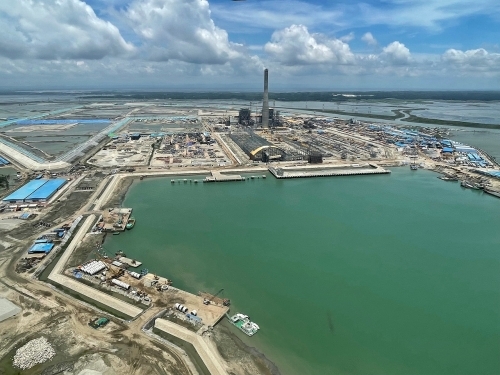 বড় জাহাজ মেরামতে মাতারবাড়ীতে ১ বিলিয়ন ডলারের প্রকল্প
 মাতারবাড়ীতে প্রায় ১ বিলিয়ন মার্কিন ডলার ব্যয়ে পরিবেশবান্ধব ডকইয়ার্ড ও জাহাজ নির্মাণ কেন্দ্র স্থাপনের উদ্যোগে নীতিগত অনুমোদন দিয়েছে নৌপরিবহন মন্ত্রণালয়। এখন প্রকল্পটির কারিগরি ও আর্থিক মূল্যায়নের জন্য প্রস্তাবটি সরকারি-বেসরকারি অংশীদারত্ব (পিপিপি) কর্তৃপক্ষের কাছে পাঠানো হয়েছে। সম্পূর্ণ বেসরকারি অর্থায়নে সরকারি জমির মালিকানা অক্ষুণ্ন রেখে প্রকল্পটি বাস্তবায়নের পরিকল্পনা রয়েছে। বন্দর কর্তৃপক্ষ জানায়, […]
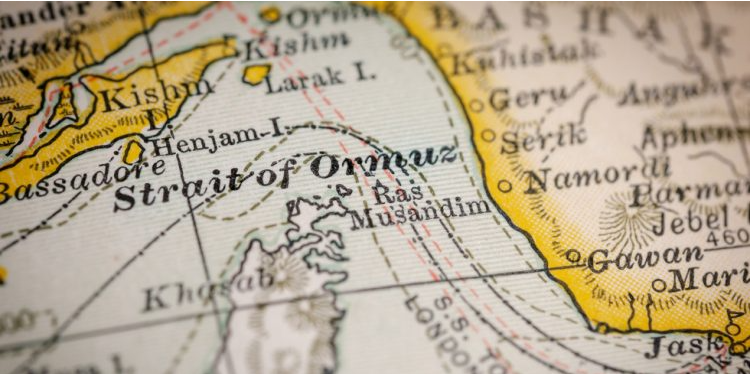 Industry on alert over scam messages offering ships “safe passage” on Hormuz
 Credit: Shutterstock Fraudulent messages offering safe passage through the Strait of Hormuz in exchange for cryptocurrency have been circulated to shipping companies with vessels stranded west of the waterway, according to MARISKS. In an alert issued on 20 April, MARISKS cautioned that unknown actors posing as Iranian authorities had contacted […]



JOB SITES
CONTENTS
LINKS
Happy New Year

Découvrez les avantages de MadCasino
Dans le monde des casinos en ligne, MadCasino se distingue par ses offres attrayantes et ses services de qualité. Que vous soyez un joueur débutant ou un parieur aguerri, vous trouverez ici une variété de jeux qui sauront satisfaire toutes vos envies. Les machines à sous, les jeux de table et les options de paris en direct sont tous disponibles pour vous offrir une expérience de jeu inégalée. De plus, le casino propose régulièrement des bonus qui permettent d'augmenter vos chances de gagner, vous offrant ainsi une excellente opportunité de maximiser vos gains.
En matière de sécurité, MadCasino est un nom de confiance. Il est entièrement licencié et régulé, ce qui garantit un environnement de jeu sûr et équitable. Les joueurs peuvent se concentrer sur leur expérience de jeu sans se soucier des problèmes de sécurité. Les transactions financières sont également sécurisées grâce à des technologies de pointe.
Les jeux proposés par MadCasino sont issus des développeurs les plus réputés de l'industrie, vous assurant des graphismes époustouflants et des mécaniques de jeu innovantes. Les joueurs peuvent également profiter d'une expérience de jeu en direct qui simule l'atmosphère d'un casino terrestre, tout en restant dans le confort de leur maison.
Enfin, la plateforme de MadCasino est optimisée pour les appareils mobiles, permettant aux joueurs de parier à tout moment et de n'importe où. Que vous soyez sur votre smartphone ou votre tablette, l'accès à vos jeux préférés n'a jamais été aussi simple. Ne manquez pas l'opportunité de découvrir ce casino exceptionnel.
Les offres de Cresus Casino
Cresus Casino est un autre acteur majeur dans le domaine des jeux en ligne, offrant des promotions généreuses et une vaste sélection de jeux. Les joueurs peuvent profiter d'une expérience de jeu enrichissante grâce aux nombreux bonus disponibles, qui sont conçus pour attirer tant les nouveaux utilisateurs que les joueurs réguliers. Ces avantages permettent non seulement de prolonger votre temps de jeu, mais aussi d'augmenter vos chances de gains conséquents.
Le casino se distingue également par sa ludothèque impressionnante, comprenant une sélection variée de machines à sous, de jeux de table et de jeux en direct. Les clients peuvent choisir parmi des titres populaires et appréciés, ainsi que des nouveautés qui enrichissent constamment l'offre. L'interface utilisateur est conviviale, rendant la navigation sur la plateforme fluide et agréable.
En termes de sécurité, Cresus Casino assure à ses joueurs un environnement de jeu fiable. La plateforme utilise des protocoles de sécurité avancés pour protéger les données personnelles et financières des utilisateurs. Cela permet aux joueurs de se sentir en sécurité tout en jouant à leurs jeux préférés.
Avec un service client réactif et professionnel, Cresus Casino s'assure que toutes vos questions et préoccupations sont traitées rapidement. Que ce soit pour des questions concernant les bonus, les retraits ou les jeux, vous bénéficierez d'une assistance rapide et efficace.
Explorez Nine Casino et ses avantages
Dans l'univers des casinos en ligne, Nine Casino a su se faire une place de choix grâce à son approche innovante et à ses nombreux avantages pour les joueurs. Les utilisateurs peuvent s'attendre à une expérience de jeu enrichissante, avec des bonus attractifs qui sont régulièrement mis à jour. Ces offres sont une excellente façon de découvrir de nouveaux jeux tout en maximisant votre potentiel de gain.
La plateforme de Nine Casino est riche en options de jeux, allant des machines à sous aux jeux de table, en passant par le live casino. Chaque jeu est conçu pour offrir une expérience immersive grâce à des graphismes de haute qualité et des fonctionnalités innovantes. Les parieurs peuvent profiter de sessions de jeu captivantes, comme s'ils étaient dans un véritable casino.
La sécurité est une priorité pour Nine Casino, qui utilise des technologies de cryptage avancées pour protéger les informations de ses joueurs. Cela garantit un environnement de jeu sûr et fiable, permettant aux utilisateurs de se concentrer sur ce qu'ils aiment le plus : jouer.
Enfin, le service clientèle fourni par Nine Casino est exceptionnel, avec des agents disponibles pour répondre à toutes vos questions et résoudre vos problèmes. Vous pourrez ainsi jouer en toute tranquillité, sachant que votre satisfaction est au cœur de leurs préoccupations.
Profitez de l'expérience Lucky31
Lucky31 est un casino en ligne qui se distingue par son approche orientée vers le joueur, offrant une multitude d'options de jeux et des bonus généreux. Que vous soyez amateur de machines à sous ou passionné de jeux de table, vous trouverez une large sélection pour satisfaire toutes vos envies de jeu. Les promotions fréquentes permettent aux joueurs de prolonger leur expérience tout en augmentant leurs chances de gains.
La convivialité de la plateforme de Lucky31 est l'un de ses plus grands atouts. Les joueurs peuvent naviguer facilement entre les différents jeux, et l'interface est conçue pour être intuitive, quel que soit le niveau d'expérience de l'utilisateur. De plus, le casino est entièrement optimisé pour les appareils mobiles, ce qui permet de parier où que vous soyez.
En matière de sécurité, Lucky31 prend les préoccupations des joueurs très au sérieux. Le casino est agréé et régulé, garantissant un environnement de jeu équitable et sécurisé. Les joueurs peuvent ainsi se concentrer sur leur expérience de jeu sans se soucier des risques liés à la sécurité.
Pour ceux qui recherchent un support client efficace, Lucky31 offre un service réactif et professionnel. Que ce soit pour des questions sur les bonus, les jeux ou les paiements, vous aurez accès à une assistance de qualité, vous garantissant une expérience de jeu fluide et agréable.