search the site


Ports, Politics, and Power: The Messy Reality of China’s Overseas Port Investments
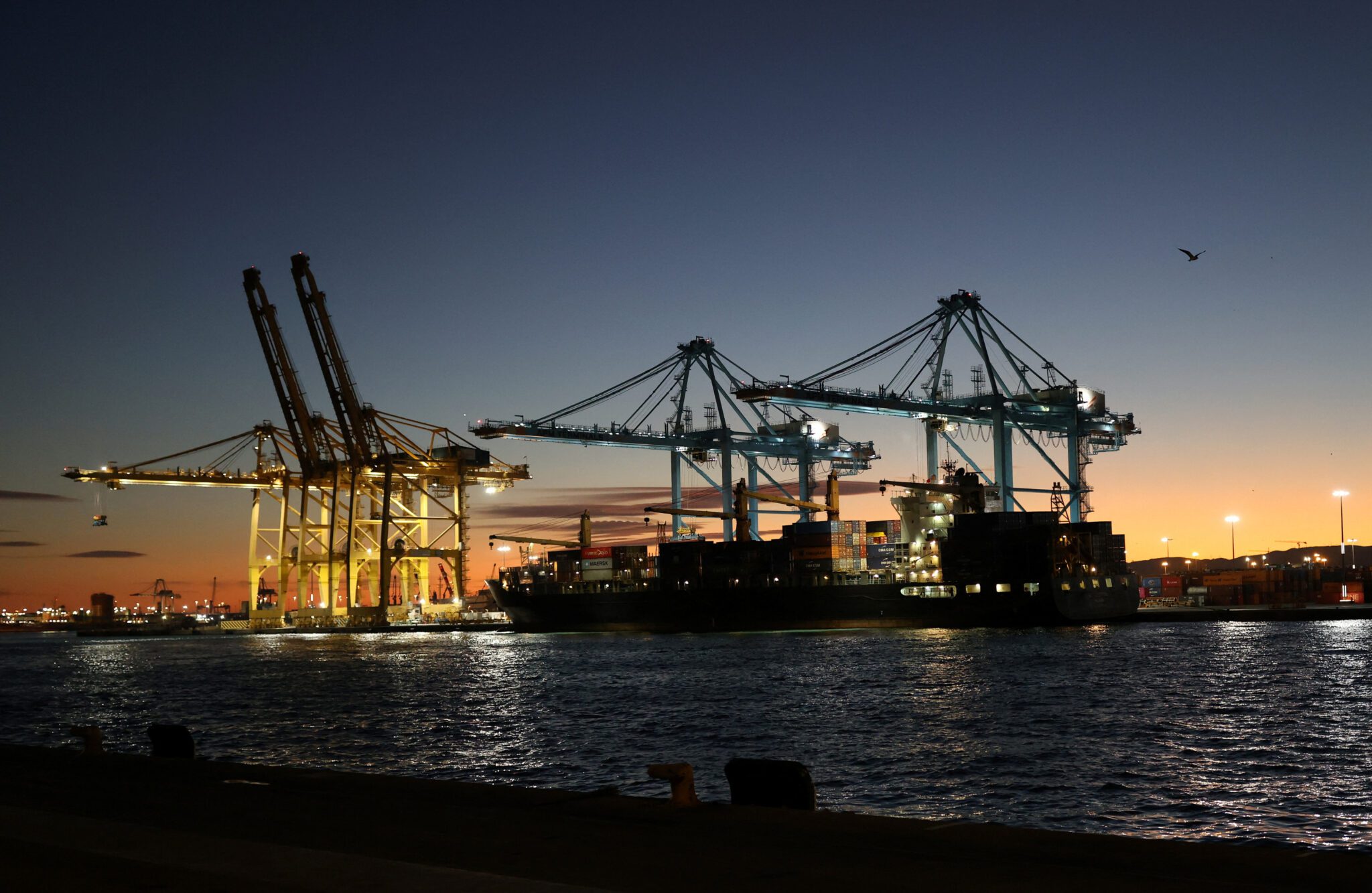
What if China’s global port empire isn’t the master plan Washington fears, but a patchwork of messy deals shaped as much by local politics as Beijing’s ambitions?
Chinese overseas port investments have drawn increasing global attention, leading to concerns about their strategic implications and the potential for Beijing to establish and expand its naval projection capabilities. Such fears feed into broader narratives of a Beijing-led coherent strategic push to leverage the Belt and Road Initiative to expand geopolitical influence across the globe. However, a singular focus on a coherent strategic push risks overlooking the complex and often fragmented implementation of these projects. While strategic goals may exist at the highest levels in Beijing, their realization is filtered through a complex process of bureaucratic competition, commercial logic, and the significant agency of host countries, leading to outcomes that are not always aligned with a central blueprint. For U.S. policymakers operating in an increasingly resource-constrained environment, understanding this complex dynamic is essential to assessing the challenges posed by Chinese investments and tailoring appropriate policy responses.
A Broken Belt and Road?
When Xi Jinping announced the Belt and Road Initiative in Kazakhstan and Indonesia in 2013, there were no official white papers or policies specifying its scale, scope, or implementing bodies. The “Vision Documents” released in 2015 and 2017 outlined priorities such as policy coordination, connectivity, trade, and cultural exchange, but key questions about strategy, policy formulation, and implementation persisted. Even so, research on Chinese governance revealed the initiative’s domestic logic: Chinese officials see underdevelopment and insecurity as mutually reinforcing, and the Belt and Road Initiative represents their latest effort to break this cycle by integrating frontiers, linking interior provinces to global markets, and securing demand for Chinese goods through expanded connectivity. As a result, provincial leaders became the architects of the economic corridors, ministries became embroiled in debates over portfolio management, and state-owned enterprises competed to expand their global footprint by leveraging policy banks under the banner of the Belt and Road Initiative.
This complexity has been overshadowed by debates that frame the Belt and Road Initiative through primarily grand strategic or geopolitical lenses, especially among U.S. policymakers and analysts. While these lenses may provide valuable insights, they risk overstating the degree to which the Belt and Road Initiative is directed top-down as well as the impact of its various projects, particularly sensitive ones like ports. For example, U.S. official concerns over Chinese port investments presume that strategic objectives translate into perfectly coordinated project selection. In reality, this is seldom the case. Indeed, this view underestimates the Belt and Road Initiative’s fragmented implementation, which is characterized by competing interests among various Chinese public and private actors. Consequently, even if top officials in Beijing have clear strategic goals for certain projects or economic sectors, their ability to dictate outcomes is constrained by internal competition, which often prioritizes the commercial performance of policy banks and state-owned enterprises above other factors. This dynamic suggests a process where strategy is pursued not through top-down decree, but through ad hoc, semi-directed experimentation driven by provincial leaders, ministries, and various state-owned and private enterprises. Furthermore, the dynamics of these processes can be compounded by participant countries exercising their agency.
In Sri Lanka, for example, China Merchant Group leveraged its successful expansion and operation of the Colombo International Container Terminal to edge its rival, China Harbor Engineering Company, out of operating Hambantota Port, creating an adjacent industrial park. This is despite the China Harbor Engineering Company having helped rebuild several facilities in the Port of Colombo in the aftermath of the 2004 tsunami, building Hambantota Port itself, and being the primary investor in the Port City Colombo Special Economic Zone. Importantly, throughout this competition, it was Sri Lanka’s leaders who courted Chinese investment, selected the location of the projects, and chose the implementing and operating company. National state-owned enterprises are not the only international competitors, as illustrated by Malaysia’s Kuantan Port and industrial park. In this case, Guangxi Beibu Gulf International Port Group, a provincial level state-owned enterprise, benefited from local authorities’ efforts to position Guangxi as a gateway to Southeast Asia. Provincial leaders, as key actors in the origins and implementation of the Belt and Road Initiative, established long-standing relations with partners in region, thus helping them position their preferred state-owned enterprise to win a contract that would otherwise go to a much larger player.
Commercial Interests and the Port-Park-City “Shekou Model”
Subnational and sector competition is largely driven by commercial interests, a point that is often downplayed in debates about these port investments given the relationship between state-owned enterprises and the Chinese Communist Party. Although state-owned enterprises are overseen directly by China’s state-owned Assets Supervision and Administration Commission of the State Council, these firms are “quasi-autonomous.” Similarly, while the heads of these state-owned enterprises may be members of the Chinese Communist Party, their performance is evaluated against economic targets. In other words, there is a commercial incentive mechanism built-in for running a Chinese state-owned enterprise or bank.
Ports are a logical commercial investment because they serve as nodes that integrate the multimodal economic corridors of the Belt and Road Initiative. This is especially important given that China is a large trading nation whose economy relies heavily on exports. As relative latecomers to international investment and finance, Chinese state-owned enterprises and banks have sought to replicate models that have succeeded domestically. The port-park-city “Shekou model” pioneered by China Merchant Group when Shenzhen was designated as a Special Economic Zone in 1980 is one example. The model calls for the integration of: (1) a port that serves as the gateway for international trade and logistics; (2) an industrial park that attracts industries to produce export goods; and (3) an urban residential area that provides supporting infrastructure and services.
This is a model that other state-owned enterprises have sought to emulate in their own port investments. From their perspective, this model not only allows them to financially benefit from the initial construction of these sites, but also from operating them. Additionally, it serves as a platform for cementing relations with host country firms through the establishment of joint ventures. Lastly, Chinese state-owned enterprises see the port-park-city model as a template that can complement host country development strategies. This was evident in China Merchant Group’s pitch to invest in Djibouti’s port and Special Economic Zone under the “Vision Djibouti 2025” development strategy to become the “Singapore of the Horn of Africa.”
Host Nations Push Back
Beyond the internal competition among Chinese actors, the agency of host countries is a crucial factor that filters and reshapes Beijing’s strategic ambitions. Just because state-owned enterprises have models or preferences on how they want to pursue and structure port investments does not mean that host nations are without negotiating power or oversight, or that they must sacrifice sovereignty to subordinate national security concerns to external economic forces. Indeed, states can — and frequently do — enact domestic laws on national security grounds that limit foreign ownership of real property and/or business stakes in specific economic sectors or geographic areas, as well as the types of activities permitted therein.
For example, the Philippines recently reformed its Public Service Act to limit foreign ownership in critical public utilities — expressly including seaports — to a maximum of 40 percent. Other national security-minded legal reforms included authorizing the Filipino president “to prohibit or suspend any foreign investments in public service[s],” subject to state agency review and recommendation.
International organizations have also recognized the need to protect against foreign investments posing perceived security risks. For example, in May 2025, the European Parliament approved new screening rules for certain foreign investments in the European Union, including investments in critical technologies and infrastructure. Under these rules, if the applicable screening authority determines that a proposed foreign investment would likely negatively affect “national security or public order,” the authority can either approve the investment (subject to restrictions and/or monitoring) or prohibit the foreign investment outright. The European Commission also has the authority to intervene in the screening processes where E.U. member states disagree about the potential risks presented. Risk factors considered include whether the potential foreign investor is a state-owned enterprise or a third-country controlled entity through “significant funding.”
Neither of these examples is about specifically restricting Chinese state-owned enterprise investments. That much of the public conversations around foreign ownership of seaports and other critical infrastructure have focused on China and Chinese state-owned enterprises belies the fact that concerns over foreign entanglements with domestic economic sectors vital to a state’s security interests are not limited to investors from one country or one region. Especially when it comes to civil-military critical infrastructure and utilities such as seaports, states can enact laws and regulations that protect their national security interests. How to balance those interests with wider economic development and foreign direct investment goals is a choice for the state, and some states are willing to take more risks than others in pursuit of such goals. This balancing act is evident in Vietnam, a country with significant economic linkages to China and a major recipient of Chinese foreign direct investment, which nonetheless places limitations on foreign ownership on national security grounds.
Beyond a state’s capacity to limit foreign investment, it also retains the sovereignty and authority to manage an investor’s activities in their territory, even in cases when a foreign entity has a controlling stake in key infrastructure such as a port. For example, Sri Lanka has denied Chinese military vessels entry into Hambantota several times despite China Merchant Group having an 85 percent controlling stake in the port. This is because while China Merchant Group may have a controlling stake to operate the port, the Sri Lanka Port Authority, a state body, retains legal ownership. Consequently, Sri Lanka can permit or deny entry to military vessels of any state to Hambantota, and include the port in its participation in the U.S. Coast Guard International Port Security Program, all while China Merchant Group runs its day-to-day operations.
Conclusion
Understanding Chinese overseas port investments requires moving beyond a simple dichotomy of either a grand military strategy or a disconnected series of commercial ventures. The reality is more complex: Beijing’s strategic objectives for the Belt and Road Initiative are pursued through a decentralized and competitive process involving quasi-autonomous state-owned enterprises and provincial actors. This fragmented implementation means that while concerns over dual-use facilities are valid, the outcomes are heavily shaped by intra-Chinese rivalries, commercial ambitions, and the sovereign decisions of host countries. A port’s capacity to host, replenish, or repair a Chinese naval vessel is not sufficient for Beijing to establish and expand naval projection capabilities, even if the port operators are its state-owned enterprises. As the Hambantota example illustrates, host countries can — and do — exercise their sovereign authority to enable or limit the types of operations that can occur at these sites.
For U.S. policymakers, the implications are twofold. First, host states should continue to strengthen domestic legal and regulatory frameworks to ensure that foreign investments in strategic infrastructure are compatible with national security priorities. Measures such as investment-screening mechanisms, ownership limits, and oversight over port operations can help strike a balance between economic development and sovereignty protection. Second, international partners should avoid framing Chinese port projects exclusively as security threats and instead support host nations in building institutional capacity, infrastructure governance, and transparent investment standards.
By adopting a more balanced approach that acknowledges both opportunities and risks, states can preserve agency while avoiding simplistic zero-sum narratives. Doing so will not only mitigate vulnerabilities but also allow port investments, Chinese or otherwise, to better align with national and regional development goals.
source : warontherocks
Featured Post
 জাহাজ নির্মাণ শিল্প: হাতছাড়া হচ্ছে অপার সম্ভাবনা
 গোলাম সোহরাওয়ার্দি প্রকাশ : ২৭ অক্টোবর ২০২৬, ০৮: ০৪আপডেট : ২৭ অক্টোবর ২০২৬, ০৯: ২৪ সারা বিশ্ব এখন জাহাজ নির্মাণের এক বিশাল জোয়ার দেখছে। চীন, দক্ষিণ কোরিয়া ও জাপানের মতো দেশগুলো এ খাত থেকে বিপুল মুনাফা কামিয়ে নিচ্ছে। নতুন বাণিজ্যিক পথ তৈরি, জাহাজের […]
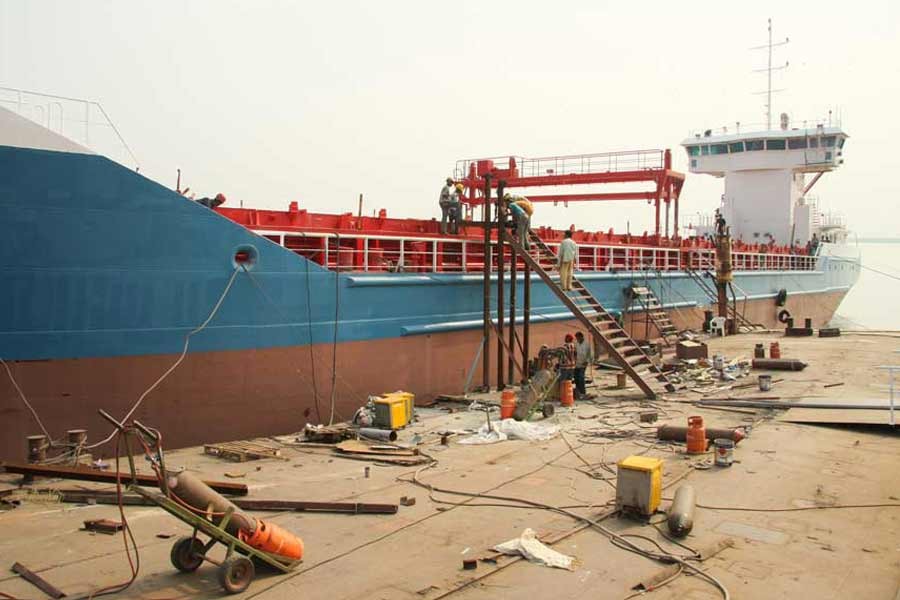 Worldwide Shipbuilding Boom and Bangladesh’s Lost Opportunity: How Financial Mismanagement, Loan Defaults, and Weak Governance Crippled a Promising Industry
An investigative analysis by Ghulam Suhrawardi Today, the world is witnessing one of the largest shipbuilding booms in history. Many countries are profiting from it. China, South Korea, and Japan have benefited from increased demand for new vessels due to fleet renewal, changing trade routes, environmental regulations, and strong financial […]



JOB SITES
CONTENTS
LINKS
Happy New Year

Découvrez les avantages de MadCasino
Dans le monde des casinos en ligne, MadCasino se distingue par ses offres attrayantes et ses services de qualité. Que vous soyez un joueur débutant ou un parieur aguerri, vous trouverez ici une variété de jeux qui sauront satisfaire toutes vos envies. Les machines à sous, les jeux de table et les options de paris en direct sont tous disponibles pour vous offrir une expérience de jeu inégalée. De plus, le casino propose régulièrement des bonus qui permettent d'augmenter vos chances de gagner, vous offrant ainsi une excellente opportunité de maximiser vos gains.
En matière de sécurité, MadCasino est un nom de confiance. Il est entièrement licencié et régulé, ce qui garantit un environnement de jeu sûr et équitable. Les joueurs peuvent se concentrer sur leur expérience de jeu sans se soucier des problèmes de sécurité. Les transactions financières sont également sécurisées grâce à des technologies de pointe.
Les jeux proposés par MadCasino sont issus des développeurs les plus réputés de l'industrie, vous assurant des graphismes époustouflants et des mécaniques de jeu innovantes. Les joueurs peuvent également profiter d'une expérience de jeu en direct qui simule l'atmosphère d'un casino terrestre, tout en restant dans le confort de leur maison.
Enfin, la plateforme de MadCasino est optimisée pour les appareils mobiles, permettant aux joueurs de parier à tout moment et de n'importe où. Que vous soyez sur votre smartphone ou votre tablette, l'accès à vos jeux préférés n'a jamais été aussi simple. Ne manquez pas l'opportunité de découvrir ce casino exceptionnel.
Les offres de Cresus Casino
Cresus Casino est un autre acteur majeur dans le domaine des jeux en ligne, offrant des promotions généreuses et une vaste sélection de jeux. Les joueurs peuvent profiter d'une expérience de jeu enrichissante grâce aux nombreux bonus disponibles, qui sont conçus pour attirer tant les nouveaux utilisateurs que les joueurs réguliers. Ces avantages permettent non seulement de prolonger votre temps de jeu, mais aussi d'augmenter vos chances de gains conséquents.
Le casino se distingue également par sa ludothèque impressionnante, comprenant une sélection variée de machines à sous, de jeux de table et de jeux en direct. Les clients peuvent choisir parmi des titres populaires et appréciés, ainsi que des nouveautés qui enrichissent constamment l'offre. L'interface utilisateur est conviviale, rendant la navigation sur la plateforme fluide et agréable.
En termes de sécurité, Cresus Casino assure à ses joueurs un environnement de jeu fiable. La plateforme utilise des protocoles de sécurité avancés pour protéger les données personnelles et financières des utilisateurs. Cela permet aux joueurs de se sentir en sécurité tout en jouant à leurs jeux préférés.
Avec un service client réactif et professionnel, Cresus Casino s'assure que toutes vos questions et préoccupations sont traitées rapidement. Que ce soit pour des questions concernant les bonus, les retraits ou les jeux, vous bénéficierez d'une assistance rapide et efficace.
Explorez Nine Casino et ses avantages
Dans l'univers des casinos en ligne, Nine Casino a su se faire une place de choix grâce à son approche innovante et à ses nombreux avantages pour les joueurs. Les utilisateurs peuvent s'attendre à une expérience de jeu enrichissante, avec des bonus attractifs qui sont régulièrement mis à jour. Ces offres sont une excellente façon de découvrir de nouveaux jeux tout en maximisant votre potentiel de gain.
La plateforme de Nine Casino est riche en options de jeux, allant des machines à sous aux jeux de table, en passant par le live casino. Chaque jeu est conçu pour offrir une expérience immersive grâce à des graphismes de haute qualité et des fonctionnalités innovantes. Les parieurs peuvent profiter de sessions de jeu captivantes, comme s'ils étaient dans un véritable casino.
La sécurité est une priorité pour Nine Casino, qui utilise des technologies de cryptage avancées pour protéger les informations de ses joueurs. Cela garantit un environnement de jeu sûr et fiable, permettant aux utilisateurs de se concentrer sur ce qu'ils aiment le plus : jouer.
Enfin, le service clientèle fourni par Nine Casino est exceptionnel, avec des agents disponibles pour répondre à toutes vos questions et résoudre vos problèmes. Vous pourrez ainsi jouer en toute tranquillité, sachant que votre satisfaction est au cœur de leurs préoccupations.
Profitez de l'expérience Lucky31
Lucky31 est un casino en ligne qui se distingue par son approche orientée vers le joueur, offrant une multitude d'options de jeux et des bonus généreux. Que vous soyez amateur de machines à sous ou passionné de jeux de table, vous trouverez une large sélection pour satisfaire toutes vos envies de jeu. Les promotions fréquentes permettent aux joueurs de prolonger leur expérience tout en augmentant leurs chances de gains.
La convivialité de la plateforme de Lucky31 est l'un de ses plus grands atouts. Les joueurs peuvent naviguer facilement entre les différents jeux, et l'interface est conçue pour être intuitive, quel que soit le niveau d'expérience de l'utilisateur. De plus, le casino est entièrement optimisé pour les appareils mobiles, ce qui permet de parier où que vous soyez.
En matière de sécurité, Lucky31 prend les préoccupations des joueurs très au sérieux. Le casino est agréé et régulé, garantissant un environnement de jeu équitable et sécurisé. Les joueurs peuvent ainsi se concentrer sur leur expérience de jeu sans se soucier des risques liés à la sécurité.
Pour ceux qui recherchent un support client efficace, Lucky31 offre un service réactif et professionnel. Que ce soit pour des questions sur les bonus, les jeux ou les paiements, vous aurez accès à une assistance de qualité, vous garantissant une expérience de jeu fluide et agréable.