search the site


Why Bangladesh needs a national maritime roadmap
Mohammad Raad Sarwar
There is something quietly dignified about the way a vessel enters port. Precision. Momentum. Timing. A ballet of steel and water.
It’s an apt metaphor for where Bangladesh stands now—on the edge of something far greater than what our coastal skyline presently reveals.
For a country crisscrossed by rivers, bracketed by the Bay of Bengal, and reliant on maritime trade for over 90 percent of its economic throughput, Bangladesh remains paradoxically ill-prepared for the future of the ocean economy. Our ports are congested. Our vessels are outdated. Our policies are often detached from operational realities. And our systems, if they can be called that, function in fragmented silos, operating closer to analogue than digital. It is time for the story to change.
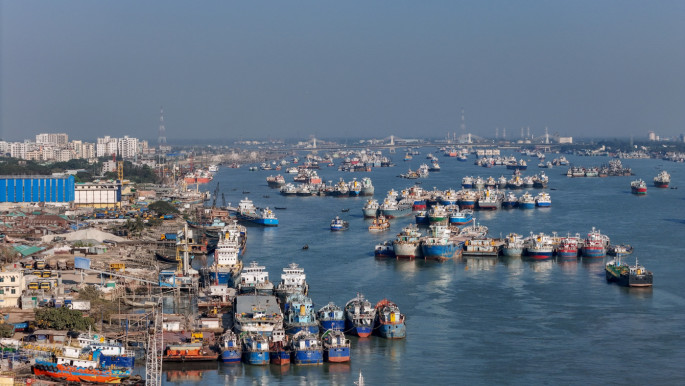
Bangladesh’s coastline spans more than 700 kilometres. Our inland waterways stretch over 24,000 kilometres, forming one of the largest navigable river networks in the world. Chittagong Port, despite chronic backlogs, remains among the busiest in South Asia. Mongla and Payra sit strategically near regional trade corridors and domestic industrial zones. Matarbari, with deep-sea capacity, will soon be able to berth mother vessels.
But geography, while a gift, is not a guarantee.
Without institutional will, policy coordination, and technological foresight, strategic location alone will not deliver the maritime future Bangladesh is capable of building.
This is why I am advocating for Bangladesh’s first National Maritime Roadmap—a data-driven, institutionally coordinated, multi-phase plan to transform the country from a passive trade corridor into a strategic maritime nation.
This roadmap is not a wishlist of terminals and tugs. It is a long-overdue blueprint to align the moving parts of our maritime economy, from ports and policy to people and platforms, under a single national vision.
It is built on eight strategic pillars, each informed by international benchmarks and real-world relevance.
A unified maritime authority
Fragmentation is our Achilles’ heel. Core mandates such as port operations, shipbuilding policy, and maritime education remain scattered across disconnected authorities, while trade bodies, labour unions, and industry associations operate in silos, seldom aligned under a common strategy. To unlock the sector’s full potential, we must consolidate these functions under a single, empowered entity that fosters coordination, transparency, and ease of doing maritime business. The establishment of the Bangladesh Maritime Commission—a one-stop authority for national nautical affairs, modelled after the Maritime and Port Authority of Singapore or the Norwegian Coastal Administration—would provide the institutional clarity and unified leadership needed to drive meaningful, long-term execution.
Infrastructure that speaks to the 21st century
We must move beyond viewing ports as isolated assets. The objective is not merely capacity expansion, but the development of a networked maritime ecosystem: one that integrates digitised ports, high-throughput shipyards, and inland terminals seamlessly connected to coastal feeder routes, all underpinned by enabling regulatory frameworks. Initiatives such as the proposed Laldia container terminal and Bay Terminal signal a positive step towards decentralising vessel berthing capacity. Yet, this ambition must extend further, encompassing smaller-scale and inland infrastructure projects within a unified national strategy. The Netherlands and the UAE have successfully built such integrated systems. Bangladesh must do the same with intention and urgency.
PPPs and maritime investment zones
Maritime growth is not the sole responsibility of the state. It is fundamentally a private-sector growth engine. To unlock its full potential, Bangladesh must attract and deploy international capital across shipyards, terminals, and logistics corridors through public-private partnerships, sovereign maritime bonds, and blended finance mechanisms. Global players such as Red Sea Gateway Terminal, Maersk, and DP World have committed and are in discussions to invest in Bangladesh’s maritime infrastructure, offering optimistic signals of foreign direct investment appetite. While the long-term success of these models remains to be seen, the upside—capital infusion, technology transfer, and operational efficiency—is undeniable. India’s Sagarmala programme stands as a compelling case study in maritime-led development.
Sovereign maritime capability through policy reform
Maritime sovereignty begins with ownership, and Bangladesh must take bold steps to increase its share of nationally owned vessels across cargo, offshore, and support segments. To achieve this, the government should implement a suite of targeted policies—including duty and VAT exemptions on vessel imports, access to low-interest financing, and guaranteed charter opportunities for domestically owned ships. Additionally, a Bangladesh Ship Finance Facility, capitalised through public-private partnerships, could provide long-term lending to emerging shipowners, enabling the growth of a truly diversified national fleet. Increasing the percentage of trade carried on Bangladeshi-flagged vessels not only enhances economic resilience but also keeps freight earnings and strategic control within our borders. As India and China have demonstrated, enabling domestic fleet expansion is both a commercial and geopolitical imperative.
Digitisation of the maritime chain
The global maritime economy no longer runs on paper and neither should ours. Bangladesh’s ports must be fully integrated through a Port Community System (PCS)—a unified digital platform encompassing berth planning, customs clearance, crew management, vessel tracking, and intermodal coordination. The transformative impact of real-time data exchange between terminal operators, customs authorities, and inland transport networks on local commerce is undeniable. At the heart of this shift lies the digitisation of legacy systems, which forms the backbone of any serious modernisation effort. Asian countries such as Singapore and South Korea are already deploying advanced artificial intelligence to optimise port operations through predictive analytics, while terminals in China operate on fully paperless, automated infrastructures.
Green shipping and environmental compliance
Regulations such as IMO 2020 are not abstract ideals; they are non-tariff trade barriers in disguise. As an illustration, without scrubbers, ballast water treatment systems, and compliant waste management infrastructure, Bangladeshi vessels will increasingly be denied access to regulated ports and markets. The impact of environmental non-compliance is already visible: our $3 billion ship recycling industry, which underpins critical domestic supply chains such as steel re-rolling and engineering, is facing mounting pressure to modernise or be marginalised. Countries such as Norway and Japan have embraced green compliance not as a burden, but as a pillar of national industrial policy.
Emergency maritime response and salvage
No country that moves the vast majority of its trade by water can afford to improvise disaster response. Bangladesh urgently needs a national maritime emergency response framework: anchored by strategically positioned depots, modern salvage equipment, and rapid-response teams based in Chittagong, Mongla, and Payra. The risks are not theoretical; we’ve seen the global consequences when a single vessel blocks a critical shipping lane. Our strategic posture must evolve from reactive to proactive. The US offers a compelling model through its National Response Framework, which coordinates oil spill containment, maritime firefighting, and search and rescue through structured inter-agency collaboration between public institutions such as the US Coast Guard and private responders such as Resolve Marine. Adapting this public-private model to Bangladesh’s context could dramatically enhance our preparedness and resilience in the face of maritime emergencies.
Our ports are congested. Our vessels are outdated. Our policies are often detached from operational realities. And our systems, if they can be called that, function in fragmented silos, operating closer to analogue than digital. It is time for the story to change.
Maritime education as economic strategy
The average age of marine engineers in Western economies is steadily rising. Bangladesh, with its youthful population, holds a clear demographic advantage—but only if we make the necessary investments in training, simulation, and certification. With the right infrastructure in place, we have a realistic opportunity to build a globally competitive maritime workforce. This means establishing new maritime colleges not only in major urban centres but across key coastal and riverine regions. High-quality training delivers long-term dividends: both for the individuals it empowers and for the country as a whole. A skilled maritime workforce working abroad sends back remittances that strengthen our foreign reserves, stabilise the economy, and reinforce our position in global labour markets. The Philippines and Indonesia have shown what’s possible. Bangladesh has every reason and every resource to go further.
This roadmap does not call for miracle budgets: it calls for institutional courage.
We have the rivers. The coastline. The people. The market access. What we lack is not capacity, but cohesion.
Bangladesh is not a landlocked country, yet without strategic vision, we risk operating like one. The moment is ripe for both local and foreign enterprises to rise, invest, and deliver the maritime capabilities this nation urgently needs. We stand on thousands of years of maritime legacy, shaped by trade, craftsmanship, and resilience. Now is the time to build upon it. Not in theory, but in action.
Mohammad Raad Sarwar is the director of Finance and Strategy at Prantik Group.
source : thedailystar
Featured Post
 বড় জাহাজ মেরামতে মাতারবাড়ীতে ১ বিলিয়ন ডলারের প্রকল্প
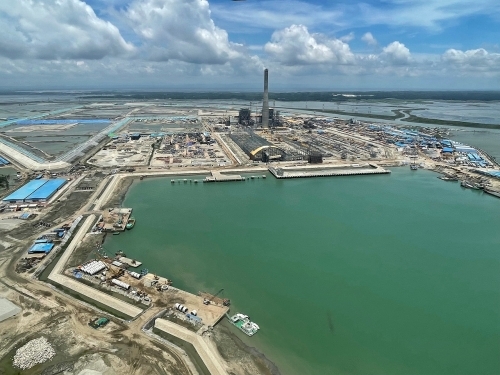
 মাতারবাড়ীতে প্রায় ১ বিলিয়ন মার্কিন ডলার ব্যয়ে পরিবেশবান্ধব ডকইয়ার্ড ও জাহাজ নির্মাণ কেন্দ্র স্থাপনের উদ্যোগে নীতিগত অনুমোদন দিয়েছে নৌপরিবহন মন্ত্রণালয়। এখন প্রকল্পটির কারিগরি ও আর্থিক মূল্যায়নের জন্য প্রস্তাবটি সরকারি-বেসরকারি অংশীদারত্ব (পিপিপি) কর্তৃপক্ষের কাছে পাঠানো হয়েছে। সম্পূর্ণ বেসরকারি অর্থায়নে সরকারি জমির মালিকানা অক্ষুণ্ন রেখে প্রকল্পটি বাস্তবায়নের পরিকল্পনা রয়েছে। বন্দর কর্তৃপক্ষ জানায়, […]
 Industry on alert over scam messages offering ships “safe passage” on Hormuz
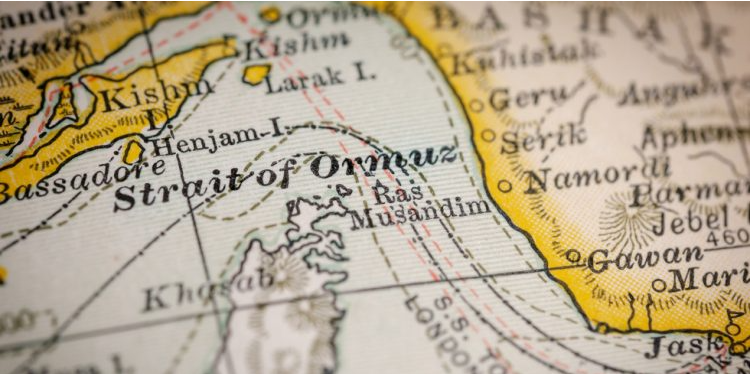
 Credit: Shutterstock Fraudulent messages offering safe passage through the Strait of Hormuz in exchange for cryptocurrency have been circulated to shipping companies with vessels stranded west of the waterway, according to MARISKS. In an alert issued on 20 April, MARISKS cautioned that unknown actors posing as Iranian authorities had contacted […]



JOB SITES
CONTENTS
LINKS
Happy New Year

Découvrez les avantages de MadCasino
Dans le monde des casinos en ligne, MadCasino se distingue par ses offres attrayantes et ses services de qualité. Que vous soyez un joueur débutant ou un parieur aguerri, vous trouverez ici une variété de jeux qui sauront satisfaire toutes vos envies. Les machines à sous, les jeux de table et les options de paris en direct sont tous disponibles pour vous offrir une expérience de jeu inégalée. De plus, le casino propose régulièrement des bonus qui permettent d'augmenter vos chances de gagner, vous offrant ainsi une excellente opportunité de maximiser vos gains.
En matière de sécurité, MadCasino est un nom de confiance. Il est entièrement licencié et régulé, ce qui garantit un environnement de jeu sûr et équitable. Les joueurs peuvent se concentrer sur leur expérience de jeu sans se soucier des problèmes de sécurité. Les transactions financières sont également sécurisées grâce à des technologies de pointe.
Les jeux proposés par MadCasino sont issus des développeurs les plus réputés de l'industrie, vous assurant des graphismes époustouflants et des mécaniques de jeu innovantes. Les joueurs peuvent également profiter d'une expérience de jeu en direct qui simule l'atmosphère d'un casino terrestre, tout en restant dans le confort de leur maison.
Enfin, la plateforme de MadCasino est optimisée pour les appareils mobiles, permettant aux joueurs de parier à tout moment et de n'importe où. Que vous soyez sur votre smartphone ou votre tablette, l'accès à vos jeux préférés n'a jamais été aussi simple. Ne manquez pas l'opportunité de découvrir ce casino exceptionnel.
Les offres de Cresus Casino
Cresus Casino est un autre acteur majeur dans le domaine des jeux en ligne, offrant des promotions généreuses et une vaste sélection de jeux. Les joueurs peuvent profiter d'une expérience de jeu enrichissante grâce aux nombreux bonus disponibles, qui sont conçus pour attirer tant les nouveaux utilisateurs que les joueurs réguliers. Ces avantages permettent non seulement de prolonger votre temps de jeu, mais aussi d'augmenter vos chances de gains conséquents.
Le casino se distingue également par sa ludothèque impressionnante, comprenant une sélection variée de machines à sous, de jeux de table et de jeux en direct. Les clients peuvent choisir parmi des titres populaires et appréciés, ainsi que des nouveautés qui enrichissent constamment l'offre. L'interface utilisateur est conviviale, rendant la navigation sur la plateforme fluide et agréable.
En termes de sécurité, Cresus Casino assure à ses joueurs un environnement de jeu fiable. La plateforme utilise des protocoles de sécurité avancés pour protéger les données personnelles et financières des utilisateurs. Cela permet aux joueurs de se sentir en sécurité tout en jouant à leurs jeux préférés.
Avec un service client réactif et professionnel, Cresus Casino s'assure que toutes vos questions et préoccupations sont traitées rapidement. Que ce soit pour des questions concernant les bonus, les retraits ou les jeux, vous bénéficierez d'une assistance rapide et efficace.
Explorez Nine Casino et ses avantages
Dans l'univers des casinos en ligne, Nine Casino a su se faire une place de choix grâce à son approche innovante et à ses nombreux avantages pour les joueurs. Les utilisateurs peuvent s'attendre à une expérience de jeu enrichissante, avec des bonus attractifs qui sont régulièrement mis à jour. Ces offres sont une excellente façon de découvrir de nouveaux jeux tout en maximisant votre potentiel de gain.
La plateforme de Nine Casino est riche en options de jeux, allant des machines à sous aux jeux de table, en passant par le live casino. Chaque jeu est conçu pour offrir une expérience immersive grâce à des graphismes de haute qualité et des fonctionnalités innovantes. Les parieurs peuvent profiter de sessions de jeu captivantes, comme s'ils étaient dans un véritable casino.
La sécurité est une priorité pour Nine Casino, qui utilise des technologies de cryptage avancées pour protéger les informations de ses joueurs. Cela garantit un environnement de jeu sûr et fiable, permettant aux utilisateurs de se concentrer sur ce qu'ils aiment le plus : jouer.
Enfin, le service clientèle fourni par Nine Casino est exceptionnel, avec des agents disponibles pour répondre à toutes vos questions et résoudre vos problèmes. Vous pourrez ainsi jouer en toute tranquillité, sachant que votre satisfaction est au cœur de leurs préoccupations.
Profitez de l'expérience Lucky31
Lucky31 est un casino en ligne qui se distingue par son approche orientée vers le joueur, offrant une multitude d'options de jeux et des bonus généreux. Que vous soyez amateur de machines à sous ou passionné de jeux de table, vous trouverez une large sélection pour satisfaire toutes vos envies de jeu. Les promotions fréquentes permettent aux joueurs de prolonger leur expérience tout en augmentant leurs chances de gains.
La convivialité de la plateforme de Lucky31 est l'un de ses plus grands atouts. Les joueurs peuvent naviguer facilement entre les différents jeux, et l'interface est conçue pour être intuitive, quel que soit le niveau d'expérience de l'utilisateur. De plus, le casino est entièrement optimisé pour les appareils mobiles, ce qui permet de parier où que vous soyez.
En matière de sécurité, Lucky31 prend les préoccupations des joueurs très au sérieux. Le casino est agréé et régulé, garantissant un environnement de jeu équitable et sécurisé. Les joueurs peuvent ainsi se concentrer sur leur expérience de jeu sans se soucier des risques liés à la sécurité.
Pour ceux qui recherchent un support client efficace, Lucky31 offre un service réactif et professionnel. Que ce soit pour des questions sur les bonus, les jeux ou les paiements, vous aurez accès à une assistance de qualité, vous garantissant une expérience de jeu fluide et agréable.