search the site


Fatalities in maritime industry show the urgent need for rank-and-file action
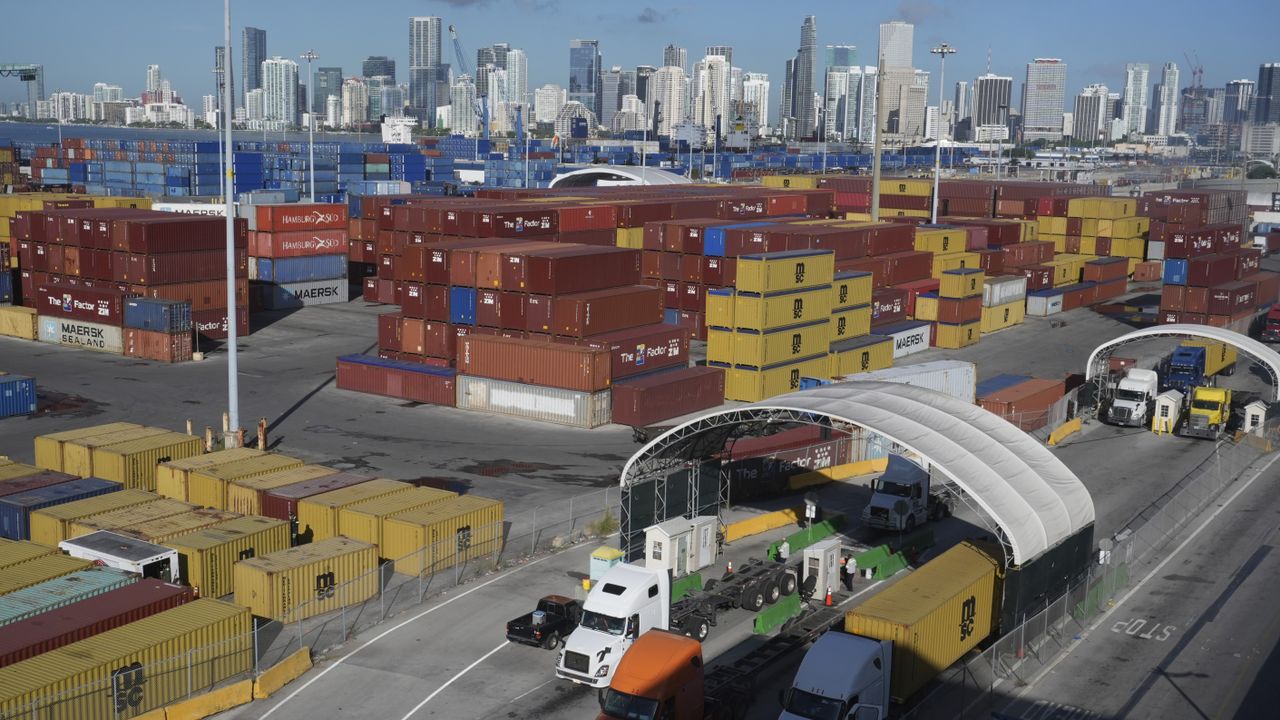
In the space of barely six weeks this summer, the maritime and port industries saw a grim series of fatal incidents worldwide. These tragedies are the predictable outcome of a system that subordinates human life to corporate profit, aided by government deregulation and the complicity of trade union bureaucracies.
On June 2, a crew member was killed aboard the Tidewater Polaris, a platform supply vessel servicing Equinor’s Empire Wind 1 offshore project near New York. Neither Tidewater nor Equinor released the victim’s name, age, nationality, or the circumstances of the death.
Just four days later, on June 6, a dockworker drowned in Macao after falling into the harbor. The incident was reported with minimal detail, made murkier still when a ship captain drowned in the same area about a week later.
On July 11, a construction worker was struck and killed by a falling beam near the Hong Kong-Zhuhai-Macau Bridge site. Another worker was injured. While not a dockside fatality, the case illustrates the growing overlap between traditional port operations and high-risk maritime-adjacent infrastructure projects. As ports expand and modernize, workers are increasingly exposed to hazards beyond cargo handling, requiring broader safety strategies that current frameworks fail to deliver.
These incidents are only the tip of the iceberg. The global port and shipping network, which moves over 80 percent of the world’s traded goods, operates through a vast system of ships, terminals, warehouses and logistics hubs. Its apparent resilience to geopolitical shocks conceals an unrelenting human toll, borne daily by seafarers, dockworkers, truck drivers, and construction crews.
There is no global, real-time database for maritime and port workplace deaths. Reporting requirements vary wildly between jurisdictions, and multinational shipping corporations exploit these gaps to avoid scrutiny.
In many cases, deaths are simply categorized as “medical events” or “incidents under investigation” and disappear from the public record. The concealment is integral to a business model built on speed, minimal staffing, and maximum throughput.
The human element and its exploitation
Fatalities in the sector are often blamed on what companies call the “human element”—fatigue, inadequate training, and procedural non-compliance. These terms obscure the underlying reality: workers are pushed beyond safe limits by economic pressures that prioritize profit over life. Long shifts, insufficient rest hours, and relentless “turnaround” schedules normalize corner-cutting. Training is truncated or skipped entirely to save time and labor costs.
A 2008 statement by the International Longshore and Warehouse Union (ILWU) admitted the essential point: the struggle for safety rules is fundamentally a struggle against these pressures. But in practice, even strong-sounding regulations are undermined by the economic dictatorship of the shipping and logistics giants with the collusion of the union bureaucracies.
Mechanical and operational failures remain a major cause of death. A recent DNV report identified machine damage or breakdown as the leading trigger for serious maritime incidents, often stemming from inadequate maintenance.
The push toward decarbonization introduces new hazards—alternative fuels such as ammonia and methanol bring toxic and explosive risks for which many crews have no training. The industry’s rush to “green” technology without parallel investment in safety measures is laying the groundwork for “next-generation” disasters.
The maritime environment itself compounds these dangers. Falls into water or from height are among the most persistent killers. International Labour Organization (ILO) figures from 2023 documented 91 “person overboard” incidents globally—almost certainly an undercount—demonstrating that such deaths remain endemic despite decades of awareness. The greatest risks fall on frontline crew and dockside laborers, who perform the most dangerous physical work and often have the least leverage to demand protections.
The deadly cargo
The June 2025 update of the International Cargo Handling Coordination Association’s (ICHCA) Severe Risks Dashboard confirms the systemic character of the problem. Since 2000, more than 500 dockworkers have been killed in the course of cargo handling worldwide. Four causes account for the overwhelming majority: crushing by cargo (27 percent), vehicle-pedestrian collisions (23 percent), falls (18 percent), and confined space incidents (14 percent).
Crushing deaths usually involve cargo falling, shifting, or overturning. The principle that no worker should stand beneath a suspended load is universally recognized—yet routinely ignored under the pressure to move goods faster. Vehicle collisions involve massive, often blind-spotted equipment such as straddle carriers, forklifts, and yard trucks moving perilously close to unprotected workers.
Falls—from gangways, cranes, or stacked containers—are frequent and deadly, made worse by inadequate rescue provisions. Confined space incidents occur when workers enter oxygen-depleted or toxic areas without proper equipment, often to “just quickly” perform a task.
More than three-quarters of all fatalities occur during active cargo operations, where the profit imperative is at its most intense. Deaths are nearly evenly divided between shipboard and shore-based sites.
Bulk carriers, general cargo ships, and roll-on/roll-off vessels are deadliest at sea; on land, quaysides, terminals, and warehouses claim the most lives. Containerized cargo—central to global trade—is the single most lethal cargo type for dockworkers.
Unions as enforcers of the corporate agenda
The hundreds of dockworker deaths are the result of a profit-driven regime in which the union bureaucracy is an integral part. On the U.S. coasts, the International Longshoremen’s Association (ILA) in the East and Gulf and the International Longshore and Warehouse Union (ILWU) in the West together cover more than 100,000 dockworkers.
ILA President Harold Daggett, who takes home over $1 million a year and who runs the union as his personal fiefdom with his son Dennis Daggett, personifies the degeneration of the unions into agencies of class collaboration. “America First” Trump supporters and militarists who backed the US airstrikes on Iran, the Daggetts and the ILA bureaucracy imposed a sellout contract after shutting down a three-day strike last year.
The new agreement, brokered by Trump, does not address workers’ number one issue, which is job losses to automation. After the contract was passed, the Daggetts issued a statement instructing members to work harder to keep their positions from being automated out of existence.
In the US dock contracts, safety standards can be bypassed under “practical difficulty or unnecessary hardship” exceptions, allowing corners to be cut under claims of “equivalent protection.”
Fatal accidents have occurred when illumination, barricading, or maintenance procedures were ignored for expediency. While contracts call for joint safety committees, these corporatist bodies do nothing except rubber stamp management decisions, leaving hazards unresolved.
Surveillance cameras, framed as safety tools, can pressure workers into unsafe speedup. Broad exceptions for new equipment or methods, without strict independent oversight, create systemic vulnerabilities that endanger both dockworkers and surrounding personnel.
Deregulation and bipartisan complicity
The destruction of workplace safety in the maritime sector parallels a wider assault on worker protections across industries in the United States and internationally. On July 1, U.S. Labor Secretary Lori Chavez-DeRemer (whose appointment was hailed by virtually the entire US union bureaucracy) announced the rollback of 63 worker protection measures, including an 8 percent cut to OSHA’s budget, the elimination of 223 staff, and a projected 10,000 fewer workplace inspections annually.
This bipartisan program of deregulation and pro-business policy leaves workers exposed to the most brutal consequences. The deaths of Stellantis autoworker Ronald Adams Sr., 19-year-old immigrant meatpacking worker Brayan Neftali Otoniel Canu Joj, seven killed in a fireworks warehouse explosion in Esparto, South Korean contractor Kim Jung Won at an LG Energy facility, and three killed in a Nebraska biofuel plant blast are all part of the same pattern: unsafe conditions, driven by the reckless pursuit of profit.
The Democrats no less than the Republicans bear responsibility. Under both parties, regulatory agencies have been gutted, oversight has been weakened, and unions have been integrated ever more tightly into corporate management.
The necessity of rank-and-file organization
The maritime industry’s deadliness is not a technical inevitability but the product of a social system. The dangers are well-known, the preventive measures exist, and the resources are available. What stands in the way is the subordination of every decision to the profit motive. Safety is a basic human right, which under capitalism is treated as expendable.
The answer cannot be found in appeals to corporate conscience, government regulation, or the existing trade union leaderships. It lies in the independent mobilization of maritime and port workers, in coordination with the wider working class, to demand and enforce the highest safety standards.
Workers internationally are beginning to form rank-and-file committees, independent of the unions and hostile to the corporate-state apparatus, as part of the International Workers Alliance of Rank-and-File Committees (IWA-RFC).
The fight for safety is inseparable from the fight against the capitalist system itself. These committees must take control over the immediate reporting and public disclosure of every workplace identified safety issue, death and serious injury; the establishment of a global, worker-controlled fatality register; comprehensive training for all new and existing hazards including green fuel handling; and the right to halt unsafe work without retaliation.
SOURCE : wsws
Featured Post
 বড় জাহাজ মেরামতে মাতারবাড়ীতে ১ বিলিয়ন ডলারের প্রকল্প
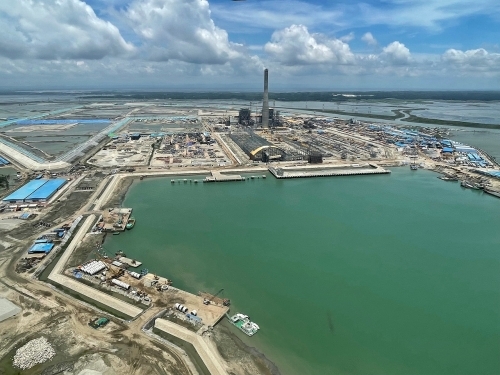
 মাতারবাড়ীতে প্রায় ১ বিলিয়ন মার্কিন ডলার ব্যয়ে পরিবেশবান্ধব ডকইয়ার্ড ও জাহাজ নির্মাণ কেন্দ্র স্থাপনের উদ্যোগে নীতিগত অনুমোদন দিয়েছে নৌপরিবহন মন্ত্রণালয়। এখন প্রকল্পটির কারিগরি ও আর্থিক মূল্যায়নের জন্য প্রস্তাবটি সরকারি-বেসরকারি অংশীদারত্ব (পিপিপি) কর্তৃপক্ষের কাছে পাঠানো হয়েছে। সম্পূর্ণ বেসরকারি অর্থায়নে সরকারি জমির মালিকানা অক্ষুণ্ন রেখে প্রকল্পটি বাস্তবায়নের পরিকল্পনা রয়েছে। বন্দর কর্তৃপক্ষ জানায়, […]
 Industry on alert over scam messages offering ships “safe passage” on Hormuz
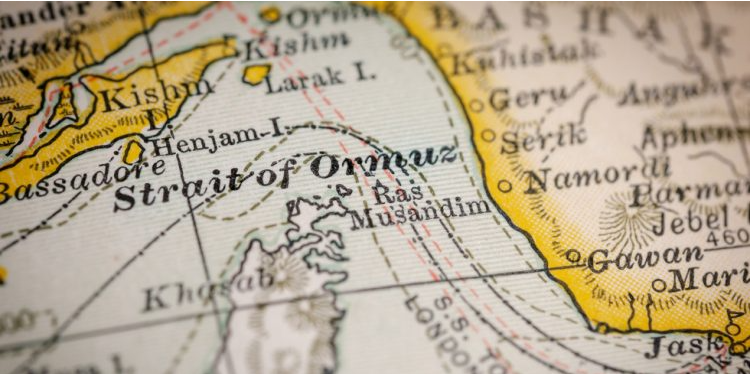
 Credit: Shutterstock Fraudulent messages offering safe passage through the Strait of Hormuz in exchange for cryptocurrency have been circulated to shipping companies with vessels stranded west of the waterway, according to MARISKS. In an alert issued on 20 April, MARISKS cautioned that unknown actors posing as Iranian authorities had contacted […]



JOB SITES
CONTENTS
LINKS
Happy New Year

Découvrez les avantages de MadCasino
Dans le monde des casinos en ligne, MadCasino se distingue par ses offres attrayantes et ses services de qualité. Que vous soyez un joueur débutant ou un parieur aguerri, vous trouverez ici une variété de jeux qui sauront satisfaire toutes vos envies. Les machines à sous, les jeux de table et les options de paris en direct sont tous disponibles pour vous offrir une expérience de jeu inégalée. De plus, le casino propose régulièrement des bonus qui permettent d'augmenter vos chances de gagner, vous offrant ainsi une excellente opportunité de maximiser vos gains.
En matière de sécurité, MadCasino est un nom de confiance. Il est entièrement licencié et régulé, ce qui garantit un environnement de jeu sûr et équitable. Les joueurs peuvent se concentrer sur leur expérience de jeu sans se soucier des problèmes de sécurité. Les transactions financières sont également sécurisées grâce à des technologies de pointe.
Les jeux proposés par MadCasino sont issus des développeurs les plus réputés de l'industrie, vous assurant des graphismes époustouflants et des mécaniques de jeu innovantes. Les joueurs peuvent également profiter d'une expérience de jeu en direct qui simule l'atmosphère d'un casino terrestre, tout en restant dans le confort de leur maison.
Enfin, la plateforme de MadCasino est optimisée pour les appareils mobiles, permettant aux joueurs de parier à tout moment et de n'importe où. Que vous soyez sur votre smartphone ou votre tablette, l'accès à vos jeux préférés n'a jamais été aussi simple. Ne manquez pas l'opportunité de découvrir ce casino exceptionnel.
Les offres de Cresus Casino
Cresus Casino est un autre acteur majeur dans le domaine des jeux en ligne, offrant des promotions généreuses et une vaste sélection de jeux. Les joueurs peuvent profiter d'une expérience de jeu enrichissante grâce aux nombreux bonus disponibles, qui sont conçus pour attirer tant les nouveaux utilisateurs que les joueurs réguliers. Ces avantages permettent non seulement de prolonger votre temps de jeu, mais aussi d'augmenter vos chances de gains conséquents.
Le casino se distingue également par sa ludothèque impressionnante, comprenant une sélection variée de machines à sous, de jeux de table et de jeux en direct. Les clients peuvent choisir parmi des titres populaires et appréciés, ainsi que des nouveautés qui enrichissent constamment l'offre. L'interface utilisateur est conviviale, rendant la navigation sur la plateforme fluide et agréable.
En termes de sécurité, Cresus Casino assure à ses joueurs un environnement de jeu fiable. La plateforme utilise des protocoles de sécurité avancés pour protéger les données personnelles et financières des utilisateurs. Cela permet aux joueurs de se sentir en sécurité tout en jouant à leurs jeux préférés.
Avec un service client réactif et professionnel, Cresus Casino s'assure que toutes vos questions et préoccupations sont traitées rapidement. Que ce soit pour des questions concernant les bonus, les retraits ou les jeux, vous bénéficierez d'une assistance rapide et efficace.
Explorez Nine Casino et ses avantages
Dans l'univers des casinos en ligne, Nine Casino a su se faire une place de choix grâce à son approche innovante et à ses nombreux avantages pour les joueurs. Les utilisateurs peuvent s'attendre à une expérience de jeu enrichissante, avec des bonus attractifs qui sont régulièrement mis à jour. Ces offres sont une excellente façon de découvrir de nouveaux jeux tout en maximisant votre potentiel de gain.
La plateforme de Nine Casino est riche en options de jeux, allant des machines à sous aux jeux de table, en passant par le live casino. Chaque jeu est conçu pour offrir une expérience immersive grâce à des graphismes de haute qualité et des fonctionnalités innovantes. Les parieurs peuvent profiter de sessions de jeu captivantes, comme s'ils étaient dans un véritable casino.
La sécurité est une priorité pour Nine Casino, qui utilise des technologies de cryptage avancées pour protéger les informations de ses joueurs. Cela garantit un environnement de jeu sûr et fiable, permettant aux utilisateurs de se concentrer sur ce qu'ils aiment le plus : jouer.
Enfin, le service clientèle fourni par Nine Casino est exceptionnel, avec des agents disponibles pour répondre à toutes vos questions et résoudre vos problèmes. Vous pourrez ainsi jouer en toute tranquillité, sachant que votre satisfaction est au cœur de leurs préoccupations.
Profitez de l'expérience Lucky31
Lucky31 est un casino en ligne qui se distingue par son approche orientée vers le joueur, offrant une multitude d'options de jeux et des bonus généreux. Que vous soyez amateur de machines à sous ou passionné de jeux de table, vous trouverez une large sélection pour satisfaire toutes vos envies de jeu. Les promotions fréquentes permettent aux joueurs de prolonger leur expérience tout en augmentant leurs chances de gains.
La convivialité de la plateforme de Lucky31 est l'un de ses plus grands atouts. Les joueurs peuvent naviguer facilement entre les différents jeux, et l'interface est conçue pour être intuitive, quel que soit le niveau d'expérience de l'utilisateur. De plus, le casino est entièrement optimisé pour les appareils mobiles, ce qui permet de parier où que vous soyez.
En matière de sécurité, Lucky31 prend les préoccupations des joueurs très au sérieux. Le casino est agréé et régulé, garantissant un environnement de jeu équitable et sécurisé. Les joueurs peuvent ainsi se concentrer sur leur expérience de jeu sans se soucier des risques liés à la sécurité.
Pour ceux qui recherchent un support client efficace, Lucky31 offre un service réactif et professionnel. Que ce soit pour des questions sur les bonus, les jeux ou les paiements, vous aurez accès à une assistance de qualité, vous garantissant une expérience de jeu fluide et agréable.