search the site


Improving passage plans: Why transitioning to HMP is important for safe navigation

by Capt. VS Parani
During the 2025 SAFETY4SEA Limassol Forum, Capt. VS Parani, Vice President – Marine at Tufton Asset Management, emphasized the need to enhance passage planning through better visualization and a shared understanding.
On 4 May 2017, the 363-metre-long, 11,400teu container ship CMA CGM Centaurus made heavy contact with the quay and two shore cranes while executing a turn under pilotage during its arrival at Jebel Ali, United Arab Emirates. The accident resulted in the collapse of a shore crane and ten injuries, including one serious injury, to shore personnel.
The UK Marine Accident Investigation Branch (MAIB) investigation established that CMA CGM Centaurus was going too fast (6.3 knots instead of 4 knots) for the intended manoeuvre when the pilot started the turn. The pilot was aware that the ship might have been travelling a little faster than he would have liked when he initiated the turn but was content that the ship would be able to complete it.
The pilot’s performance was focused on getting the ship as quickly as possible to the berth; this influenced his decision to turn the ship into the basin without ensuring that the manoeuvre was conducted at a sufficiently slow speed to enable its safe completion. Still, following the accident, the pilot expressed surprise on learning that the ship had been making 6.3 knots when he ordered the turn.
After the accident, manoeuvring trials were carried out at the shipping company’s bridge simulator training centre in the presence of the MAIB. A simulated reconstruction of the manoeuvre confirmed that the CMA CGM Centaurus could not complete the turn if the turn was commenced at 6.3 knots. Further simulations showed that a direct turn into the basin was achievable without tug assistance if the turn was started at a ship’s speed of up to 4 knots and the bow thruster on full power to port.
The ship’s bridge team were uncertain of the maximum speed required to complete the turn safely. The master did not ask the pilot when he boarded how he intended for the CMA CGM Centaurus to approach the berth.
There was no agreed plan for the intended manoeuvre, and therefore no shared mental model between the bridge team and the pilot. Consequently, the pilot was operating in isolation without the support of the bridge team, allowing the pilot’s decision-making to become a single system point of failure.

Both the master and chief officer on the bridge were over 55 years of age, with rank experience of over 10 years and experience on this size of ship. Both had completed ship handling and maritime resource management training courses. Despite their experience, neither officer felt able to determine with confidence that the ship was proceeding at too high a speed at the start of the turn to be able to complete the turn safely.
Consequently, the pilot’s decision to turn at a higher speed was not effectively challenged because the ship’s bridge team lacked the necessary knowledge and experience to be able to confidently intervene and correct the pilot’s action.
The MAIB recommended that pilots and ships’ bridge teams work together and implement the best practices of bridge resource management to ensure the safety of both ships and ports.
An industry problem
Despite two decades of safety accident investigations and recommendations, similar accidents continue to recur. A survey by the Australasian Marine Pilots Institute and the New Zealand Maritime Pilots Association indicated that visual piloting combined with local knowledge and the pilot’s intuition is considered sufficient by pilots. Evidence obtained from voyage data recorders and vessel traffic services recordings shows that little has changed over the years.
Common features in recent accident reports based on irrefutable evidence are:
1. Inadequate passage/pilotage/berthing plan (turns not planned).
2. The absence of a shared mental model leads to a lack of involvement of the bridge team.
3. Over-reliance on visual navigation, local knowledge, and pilot’s intuition.
4. It is extremely difficult to recognise a loss of situational awareness without a reference (pilotage plan).
Best practice: A Harbour Manoeuvring Plan
To address the issue of shared mental models/reference/pilotage plan, we introduced a best practice in our controlled fleets called the Harbour Manoeuvring Plan (HMP), which resulted in a drop of over 80% in groundings and allisions.
We first analysed the passage plans of the ships and compared them with what was being executed consistently when they arrived or departed ports. As with the CMA CGM Centaurus, we discovered that most ships did not plan the speeds for manoeuvring in the harbour, and the plan lacked critical detail.
The ship and the onshore marine team then prepared manoeuvring plans for each port, for each size of the ship in our fleet. The project lasted a year, during which the ship’s navigators were trained in the use of the plan.
The HMP is essentially the ‘passage plan’ that the ship’s navigators are required to prepare anyway under SOLAS Chapter-V and IMO Resolution A.893(21)-Guidelines for Voyage Planning, but with increased attention to detail. The HMP calculates realistic speeds, wheel-over point, and rate of turn for each leg of the manoeuvre in port, especially for turns, based on the ship’s manoeuvring characteristics such as turning radius and momentum.
The plan also takes into account local regulations such as the speed to avoid wake damage to other ships and shallow water effects. Inputs from other ships such as currents at the breakwater or near the berth, areas of heavy traffic, usual tug engagement points, and other functional (but not cluttered) navigation information are included in the plan. The HMP also contains photos and satellite views of ports to help the navigators develop a mental model of the port and the planned manoeuvre. The HMP is kept realistic and up to date with constant inputs from the ship.


Step-1: The HMP is prepared on the ECDIS; optionally, two colour copies are printed on A4 sheets for ease of discussion, first with the bridge team and then with the harbour pilot.
Step 2: The HMP becomes the primary objective of the Master-Pilot Information Exchange (MPX), with the Pilot Card used as a reference for any ship-specific information. The master would typically say, “Mr Pilot- here’s our plan for the manoeuvre. Please advise if you have any comments. Particularly, do you think the speed at the start of the turn here should be 3 knots?”
Any changes to the ship’s HMP due to prevailing weather conditions or change of berthing position are discussed with the pilot before commencing the manoeuvre. With this, a shared mental model is available to the bridge team.
The project was not without its challenges. It is a time-consuming process, and requires different levels of review and good ship-shore and fleet-wide information sharing. My argument has been that the plan is required by SOLAS anyway; we might as well do it effectively and not treat the ‘berth-to-berth’ passage plan as an exercise for third-party inspectors.
The HMP is not a novelty — several cruise ships use them; however, it is still not widely used by cargo ships. Port and pilotage services in Australia and New Zealand are a step ahead— they have a version of such plans on their website. They are also working on getting these plans sent to the ships before their arrival, so that the plan may be imported to the ship’s ECDIS. Such initiatives are already included in Bridge Resource Management Courses in Australia and New Zealand and some training centres in Europe.
HMP for port approaches
You will see in illustration below that the HMP is not only for the manoeuvre from the pilot point to the berth but also for arrival to the port. Markings include detailed manoeuvres that involve slowing down to enter the port, cautionary notes regarding anchorages and areas with a history of collisions to help the bridge team be aware of and prepare for the challenges. A similar plan is also prepared for departure from port.

The UK MAIB report on the grounding of the Maersk Kendal off Singapore in 2009 showed that speed was excessive and uncontrolled before the grounding. Both the master and the chief officer had lost situational awareness, which also meant that the chief officer did not alert the master of the imminent danger of grounding. The report also found that the manoeuvring plan lacked crucial detail which meant that none of the navigators on the bridge had a shared mental model for the manoeuvre into Singapore.
On other ships that I audit, I often see unrealistic speeds marked in the passage plan table or marked as ‘various speeds’. Even if the speeds for manoeuvring in the harbour are realistic, they are seldom transferred to the ECDIS. So how would the navigators have agreed on the speeds and critical points to watch out for?
Using the HMP to enable meaningful MPX and subsequent interventions
The HMP process does not stop at preparing the plans and the MPX.
Step-3 of using the HMP requires that the Officer of the Watch (OOW) assisting the master and the pilot is also assigned to ‘call out’ one cable (0.1 nautical mile) before each action point, or at the action point if the planned manoeuvre is not executed in time. This critical step addresses the mental disconnect, and any power distance issues that have been observed among OOWs on the bridge supporting the master and the pilot. Now equipped with an agreed plan, the OOW’s role in the bridge team is more proactive than reactive. The OOW has more confidence to intervene if the pilot or master delays initiating a turn or reducing the speed per the agreed plan.


When we first introduced the HMP, the ship’s navigators were apprehensive that the ‘call out’ might irritate the pilot (or even some ‘senior’ masters). Unfortunately, some harbour pilots do not engage well with the ship’s navigators, one of the reasons being that the previous forms of MPX did not provide for a meaningful exchange of information. When agreeing on the manoeuvre, the master and the OOW can also agree with the pilot if the ‘call out’ should be before the planned alteration of course or speed, or only in case of a deviation from the plan.
But this step is essential to engage the OOW in the bridge team and keep them situationally aware during the manoeuvre. When a large container ship is to turn in a congested harbour, a call-out “in one cable, we turn to port at a speed of 4 knots – we are currently at 6.3 knots” provides a timely and confident reminder when even a ten-second delay could lead to an incident.
An International Group of P&I Clubs (IG P&I) study found that an incident occurred every week on average for over ten years on a vessel navigating with a pilot on board, and 60% of these accidents are allisions. The average value per incident is approximately US$1.74 million. The IG P&I recommend developing an internationally standardised approach to the Master-Pilot Information Exchange that emphasises the visual presentation of the pilot’s plan for the pilotage during the MPX and discourages reliance upon a purely verbal exchange of information. The International Maritime Pilots Association (IMPA) is working actively on this feedback.
Meanwhile, and to supplement the pilots’ efforts, the ships’ use of Harbour Manoeuvring Plans will help increase situational awareness and bridge team integration during navigation in ports. A shared vision of the manoeuvre and working off the same plan with the pilot is essential to a well-executed port transit.
source: safety4sea
Featured Post
 জাহাজ নির্মাণ শিল্প: হাতছাড়া হচ্ছে অপার সম্ভাবনা
 গোলাম সোহরাওয়ার্দি প্রকাশ : ২৭ অক্টোবর ২০২৬, ০৮: ০৪আপডেট : ২৭ অক্টোবর ২০২৬, ০৯: ২৪ সারা বিশ্ব এখন জাহাজ নির্মাণের এক বিশাল জোয়ার দেখছে। চীন, দক্ষিণ কোরিয়া ও জাপানের মতো দেশগুলো এ খাত থেকে বিপুল মুনাফা কামিয়ে নিচ্ছে। নতুন বাণিজ্যিক পথ তৈরি, জাহাজের […]
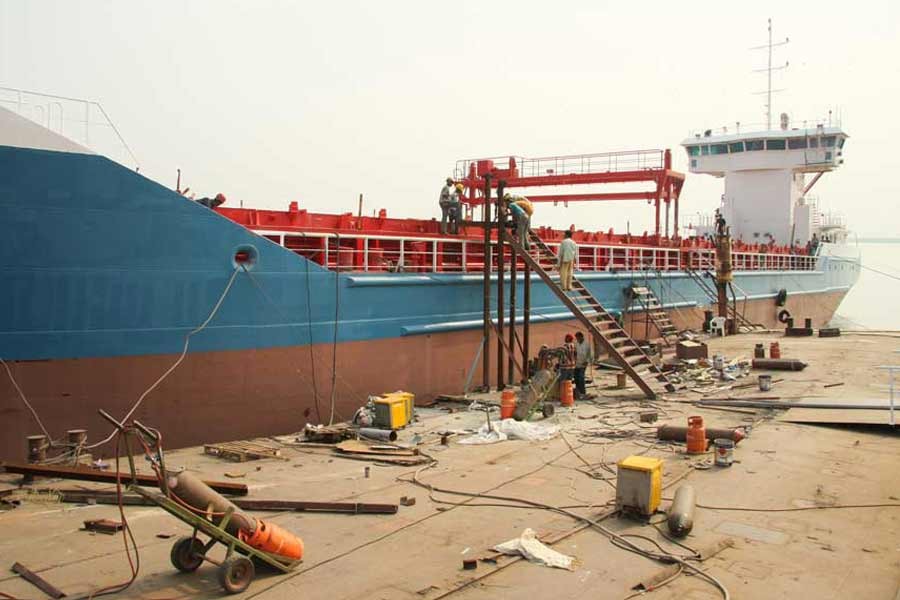 Worldwide Shipbuilding Boom and Bangladesh’s Lost Opportunity: How Financial Mismanagement, Loan Defaults, and Weak Governance Crippled a Promising Industry
An investigative analysis by Ghulam Suhrawardi Today, the world is witnessing one of the largest shipbuilding booms in history. Many countries are profiting from it. China, South Korea, and Japan have benefited from increased demand for new vessels due to fleet renewal, changing trade routes, environmental regulations, and strong financial […]


JOB SITES
CONTENTS
LINKS
Happy New Year

Découvrez les avantages de MadCasino
Dans le monde des casinos en ligne, MadCasino se distingue par ses offres attrayantes et ses services de qualité. Que vous soyez un joueur débutant ou un parieur aguerri, vous trouverez ici une variété de jeux qui sauront satisfaire toutes vos envies. Les machines à sous, les jeux de table et les options de paris en direct sont tous disponibles pour vous offrir une expérience de jeu inégalée. De plus, le casino propose régulièrement des bonus qui permettent d'augmenter vos chances de gagner, vous offrant ainsi une excellente opportunité de maximiser vos gains.
En matière de sécurité, MadCasino est un nom de confiance. Il est entièrement licencié et régulé, ce qui garantit un environnement de jeu sûr et équitable. Les joueurs peuvent se concentrer sur leur expérience de jeu sans se soucier des problèmes de sécurité. Les transactions financières sont également sécurisées grâce à des technologies de pointe.
Les jeux proposés par MadCasino sont issus des développeurs les plus réputés de l'industrie, vous assurant des graphismes époustouflants et des mécaniques de jeu innovantes. Les joueurs peuvent également profiter d'une expérience de jeu en direct qui simule l'atmosphère d'un casino terrestre, tout en restant dans le confort de leur maison.
Enfin, la plateforme de MadCasino est optimisée pour les appareils mobiles, permettant aux joueurs de parier à tout moment et de n'importe où. Que vous soyez sur votre smartphone ou votre tablette, l'accès à vos jeux préférés n'a jamais été aussi simple. Ne manquez pas l'opportunité de découvrir ce casino exceptionnel.
Les offres de Cresus Casino
Cresus Casino est un autre acteur majeur dans le domaine des jeux en ligne, offrant des promotions généreuses et une vaste sélection de jeux. Les joueurs peuvent profiter d'une expérience de jeu enrichissante grâce aux nombreux bonus disponibles, qui sont conçus pour attirer tant les nouveaux utilisateurs que les joueurs réguliers. Ces avantages permettent non seulement de prolonger votre temps de jeu, mais aussi d'augmenter vos chances de gains conséquents.
Le casino se distingue également par sa ludothèque impressionnante, comprenant une sélection variée de machines à sous, de jeux de table et de jeux en direct. Les clients peuvent choisir parmi des titres populaires et appréciés, ainsi que des nouveautés qui enrichissent constamment l'offre. L'interface utilisateur est conviviale, rendant la navigation sur la plateforme fluide et agréable.
En termes de sécurité, Cresus Casino assure à ses joueurs un environnement de jeu fiable. La plateforme utilise des protocoles de sécurité avancés pour protéger les données personnelles et financières des utilisateurs. Cela permet aux joueurs de se sentir en sécurité tout en jouant à leurs jeux préférés.
Avec un service client réactif et professionnel, Cresus Casino s'assure que toutes vos questions et préoccupations sont traitées rapidement. Que ce soit pour des questions concernant les bonus, les retraits ou les jeux, vous bénéficierez d'une assistance rapide et efficace.
Explorez Nine Casino et ses avantages
Dans l'univers des casinos en ligne, Nine Casino a su se faire une place de choix grâce à son approche innovante et à ses nombreux avantages pour les joueurs. Les utilisateurs peuvent s'attendre à une expérience de jeu enrichissante, avec des bonus attractifs qui sont régulièrement mis à jour. Ces offres sont une excellente façon de découvrir de nouveaux jeux tout en maximisant votre potentiel de gain.
La plateforme de Nine Casino est riche en options de jeux, allant des machines à sous aux jeux de table, en passant par le live casino. Chaque jeu est conçu pour offrir une expérience immersive grâce à des graphismes de haute qualité et des fonctionnalités innovantes. Les parieurs peuvent profiter de sessions de jeu captivantes, comme s'ils étaient dans un véritable casino.
La sécurité est une priorité pour Nine Casino, qui utilise des technologies de cryptage avancées pour protéger les informations de ses joueurs. Cela garantit un environnement de jeu sûr et fiable, permettant aux utilisateurs de se concentrer sur ce qu'ils aiment le plus : jouer.
Enfin, le service clientèle fourni par Nine Casino est exceptionnel, avec des agents disponibles pour répondre à toutes vos questions et résoudre vos problèmes. Vous pourrez ainsi jouer en toute tranquillité, sachant que votre satisfaction est au cœur de leurs préoccupations.
Profitez de l'expérience Lucky31
Lucky31 est un casino en ligne qui se distingue par son approche orientée vers le joueur, offrant une multitude d'options de jeux et des bonus généreux. Que vous soyez amateur de machines à sous ou passionné de jeux de table, vous trouverez une large sélection pour satisfaire toutes vos envies de jeu. Les promotions fréquentes permettent aux joueurs de prolonger leur expérience tout en augmentant leurs chances de gains.
La convivialité de la plateforme de Lucky31 est l'un de ses plus grands atouts. Les joueurs peuvent naviguer facilement entre les différents jeux, et l'interface est conçue pour être intuitive, quel que soit le niveau d'expérience de l'utilisateur. De plus, le casino est entièrement optimisé pour les appareils mobiles, ce qui permet de parier où que vous soyez.
En matière de sécurité, Lucky31 prend les préoccupations des joueurs très au sérieux. Le casino est agréé et régulé, garantissant un environnement de jeu équitable et sécurisé. Les joueurs peuvent ainsi se concentrer sur leur expérience de jeu sans se soucier des risques liés à la sécurité.
Pour ceux qui recherchent un support client efficace, Lucky31 offre un service réactif et professionnel. Que ce soit pour des questions sur les bonus, les jeux ou les paiements, vous aurez accès à une assistance de qualité, vous garantissant une expérience de jeu fluide et agréable.