
search the site


The Long, Strange Trip of the Titanic Victims Whose Remains Surfaced Hundreds of Miles Away, Weeks After the Ship Sank
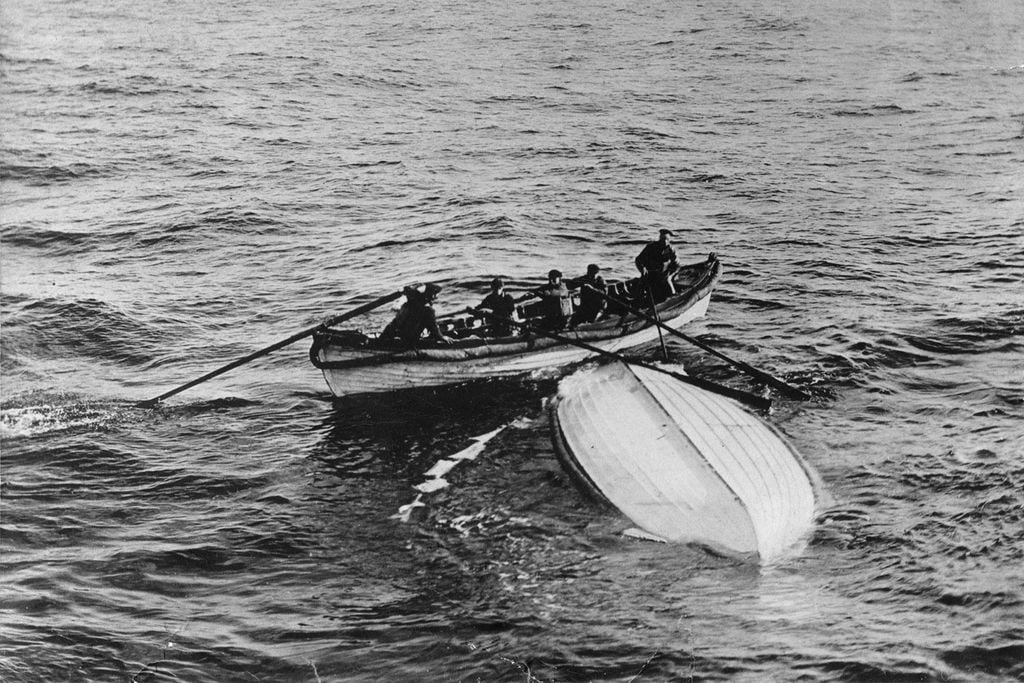
When the RMS Titanic sank on the night of April 14-15, 1912, some 1,500 men, women and children lost their lives. News accounts told of victims going “down with the ship” or coming to rest in a “watery grave.” However, hundreds of passengers and crew members had left the ship before it split apart, disappeared beneath the waves and settled at the bottom of the Atlantic Ocean, two and a half miles down. These individuals floated in the sea, buoyed by cork-filled life vests, until the freezing water sucked the heat from their bodies. Although the official cause of death was often listed as drowning, most victims are believed to have died from hypothermia and related causes. In the coming days and weeks, their corpses would be carried by the currents, spreading over a vast area. Some would not be found for a month or more. Others would never be found at all. Today, close to 1,200 Titanic victims overall remain unaccounted for.
The Carpathia, the steamship that raced to the site of the disaster, picked up just over 700 survivors from the Titanic’s too-few and too sparsely filled lifeboats. With his ship now loaded well beyond its normal capacity, the Carpathia’s captain didn’t concern himself with the bodies of the dead but instead set a course for New York City.
/https://tf-cmsv2-smithsonianmag-media.s3.amazonaws.com/filer_public/d7/d2/d7d2de39-bab3-49bd-94ed-6be3a133a152/2933px-19120417_some_who_were_saved_when_the_titanic_went_down_-_the_new_york_times.png)
Aboard the Carpathia and in later accounts, survivors told horrific tales of seeing fellow passengers struggling in the water around them. They recalled hearing moaning and cries for help that gradually subsided as, one by one, the victims succumbed to the cold. “In adults, hypothermia is not a rapid process, often taking 30 to 40 minutes of violent shaking, muscle contractions, confusion and eventually organ failure,” says Caitlin Doughty, a mortician and the author of such books asWill My Cat Eat My Eyeballs? And Other Questions About Dead Bodies. Doughty is currently working on a book about the Titanic’s dead, which is slated for release in 2026.
It fell to other ships to recover the remains. The Titanic’s owner, the White Star Line, chartered the Mackay-Bennett, a steamer normally used for repairing trans-Atlantic telegraph cables, to retrieve as many bodies as possible. Loaded with wood coffins and several tons of ice, it set off from Halifax, Nova Scotia, on April 17.
One Mackay-Bennett crewman described how the ship came upon a cluster of 100 corpses on the second day of the search. “Even when we came right on them, we could not believe it yet,” he told the St. Louis Post-Dispatch. “Then when we saw they were really human beings, we had to tell ourselves that they were dead, because for all the world they looked like a lot of swimmers asleep. … Some of the eyes were closed, but most of them were wide open, staring straight ahead.”
/https://tf-cmsv2-smithsonianmag-media.s3.amazonaws.com/filer_public/c3/50/c3505a56-a935-47b1-9dac-941144e9e350/1593px-body_of_rms_titanic_victim_aboard_rescue_vessel_cs_minia_april_or_may_1912.jpg)
The Mackay-Bennett returned to port on April 30 with 190 corpses, having buried another 116 at sea. Two other Halifax-based ships, the Minia and the Montmagny, also went searching for bodies and recovered 21 between them, three of which they buried at sea.
Newspapers reported that the family of John Jacob Astor IV, the wealthiest man on the Titanic and among the richest in the world at the time, planned to mount a separate expedition to find his body and was willing to spend a million dollars on the effort. That point became moot, however, when the Mackay-Bennett sent a wireless message on April 26 saying that Astor’s remains had been recovered and hauled on board. Among the items used to identify him was a monogrammed gold pocket watch, which sold for nearly $1.5 million at auction in April 2024.
Other ships passing through the area also reported seeing bodies but didn’t attempt to recover them. The German liner Bremen, which arrived in New York on April 24, came upon a field of wreckage, including deck chairs and wooden debris. “As the ship drew closer,” the New York Times reported, “it was discovered that the black objects bobbing up and down on the water and mixing with the wreckage were bodies of the victims.” Most were in life vests. At least one was lashed to a door, and two others to deck chairs. The captain estimated that his officers had seen about 100 bodies in total, adding that they hadn’t picked any up because they had no coffins on board and knew that the Mackay-Bennett would be coming for the corpses.
/https://tf-cmsv2-smithsonianmag-media.s3.amazonaws.com/filer_public/88/a6/88a6b198-1fe3-4c30-8502-f428aad3d945/body_of_rms_titanic_victim.jpg)
Nearly a month to the day of the sinking, on May 13, the Oceanic, a White Star liner making its regular westbound run from Southampton, England, to New York, came across a Titanic lifeboat some 200 miles from the wreck site. The boat, known as Collapsible A, had discharged its living passengers to the Carpathia on April 15 and been set adrift with what were believed to be three dead bodies. Sensational newspaper accounts later suggested the three men had starved to death in the boat after attempting to eat their life vests—a theory that was soon debunked.
Irish author Shane Leslie, a passenger on the Oceanic, recalled the discovery of the lifeboat, which was first spotted roughly two miles off the liner’s starboard bow. “What followed was ghastly,” he wrote years later. “Two sailors could be seen, their hair bleached by exposure to salt and sun, and a third figure wearing evening dress lying flat on the benches. All three were dead.”
The crew of the Oceanic collected the badly decomposed bodies, wrapped them in canvas and buried them at sea. Leslie’s wife, also a witness, reported that one of the sailors’ arms came off in the process. The Oceanic lifted the lifeboat onto its deck and brought it to New York.
/https://tf-cmsv2-smithsonianmag-media.s3.amazonaws.com/filer_public/43/a2/43a28213-a0be-4d08-8ba7-eb64268cc0c8/james-mcgrady-l.jpg)
On May 26, a seal-hunting boat, the Algerine, radioed that it had recovered the body of James McGrady, a Titanic saloon steward. The Algerine kept looking but didn’t find any additional bodies. It arrived in St. John’s, Newfoundland, with McGrady’s remains, on June 8.
Although McGrady’s body was the last to be returned to land, at least two other victims were eventually buried at sea. On or about June 6, the oil tanker Ottawa found the body of assistant steward William Thomas Kerley floating a reported 543 miles from the wreck site. On June 8, the cargo ship Ilford spotted another saloon steward, William Frederick Cheverton, bobbing in the North Atlantic. While his features were unrecognizable, the crew was able to identify him from papers and other items in his pockets.
In death as in life on the Titanic, class played a key role in how victims were laid to rest. A list on the Nova Scotia Archives website of the identifiable bodies picked up by various ships shows that 42 percent of third-class passengers’ bodies were buried at sea rather than brought back to land. For second-class passengers, the figure was just 22 percent, and for first-class passengers, it was a mere 6 percent. Among crew members, 30 percent were buried at sea.
The Mackay-Bennett’s captain offered an explanation of sorts at the time. “No prominent man was recommitted to the deep,” he was quoted as saying. “It seemed best to be sure to bring back to land the dead where the death might give rise to such questions as large insurance and inheritance and all the litigation.”
Speaking of the crew, he added, “The man who lives by the sea ought to be satisfied to be buried at sea. I think it is the best place. For my own part, I should be contented to be committed to the deep.”
/https://tf-cmsv2-smithsonianmag-media.s3.amazonaws.com/filer_public/c7/3d/c73d523b-4fa0-4558-a935-9dd32f5dddd9/1472px-hearses_lined_up_on_halifax_wharf_to_carry_rms_titanic_victims_to_funeral_parlours_hali.jpg)
On the ships’ arrival in Halifax, the bodies were transported by horse-drawn hearses to the ice shed of a local curling club, which served as a makeshift morgue. There, they were laid out to give relatives a chance to identify and claim them. The Nova Scotia Archives website lists 50 victims who were not identified at the time but were buried under markers that left room for their names, just in case. A handful of those victims—most famously the youngest, a 19-month-old boy buried as “an unknown child”—have been identified through DNA testing and other means in recent years.
Ultimately, a total of 59 bodies were shipped home for burial, while another 150 were buried in Halifax, spread among three cemeteries. McGrady, the last to arrive in Halifax, was also the last to be buried there, on June 12, nearly two months after the disaster.
The wreck of the Titanic wasn’t discovered until 1985, and in the years since, no trace of human remains has been found on or near it, most likely due to the sea’s inhospitality to flesh and bones. “It’s unlikely that any full body would remain intact, no matter how isolated and sealed-off the section of the wreck,” says author Doughty. “What’s more likely is that there are small pieces of bone and hair throughout the wreck site, not immediately obvious to the eye, or the submersible camera.”
Then there’s the question of what the crushing water pressure at that depth would have on any bodies that remained on the wreck of the Titanic. Modernist author Virginia Woolf speculated on the matter in an April 1912 letter to a friend, writing, “Do you know it’s a fact that ships don’t sink at that depth, but remain poised halfway down, and become perfectly flat, so that Mrs. Stead is now like a pancake, and her eyes like copper coins?” Woolf turned out to be wrong on a couple of counts: The Titanic sank all the way to the bottom of the Atlantic, as we now know, and no Mrs. Stead appears to have been on board.Doughty cites another likely effect of the water pressure. “In shallower drownings, the gas from the decomposition of the dead human causes the body to bloat and return to the surface,” she says. “But at this intense pressure, the gas buildup dissipates, meaning the dead stayed with the wreck”—except, of course, for the ones in their cork life vests, whose journeys would continue for days, sometimes weeks, after the Titanic’s own voyage had ended.
source: smithsonianmag
Featured Post
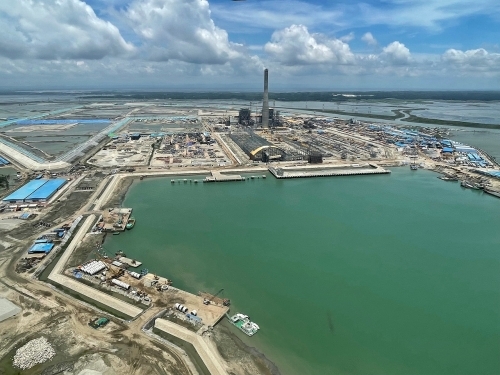 বড় জাহাজ মেরামতে মাতারবাড়ীতে ১ বিলিয়ন ডলারের প্রকল্প
 মাতারবাড়ীতে প্রায় ১ বিলিয়ন মার্কিন ডলার ব্যয়ে পরিবেশবান্ধব ডকইয়ার্ড ও জাহাজ নির্মাণ কেন্দ্র স্থাপনের উদ্যোগে নীতিগত অনুমোদন দিয়েছে নৌপরিবহন মন্ত্রণালয়। এখন প্রকল্পটির কারিগরি ও আর্থিক মূল্যায়নের জন্য প্রস্তাবটি সরকারি-বেসরকারি অংশীদারত্ব (পিপিপি) কর্তৃপক্ষের কাছে পাঠানো হয়েছে। সম্পূর্ণ বেসরকারি অর্থায়নে সরকারি জমির মালিকানা অক্ষুণ্ন রেখে প্রকল্পটি বাস্তবায়নের পরিকল্পনা রয়েছে। বন্দর কর্তৃপক্ষ জানায়, […]
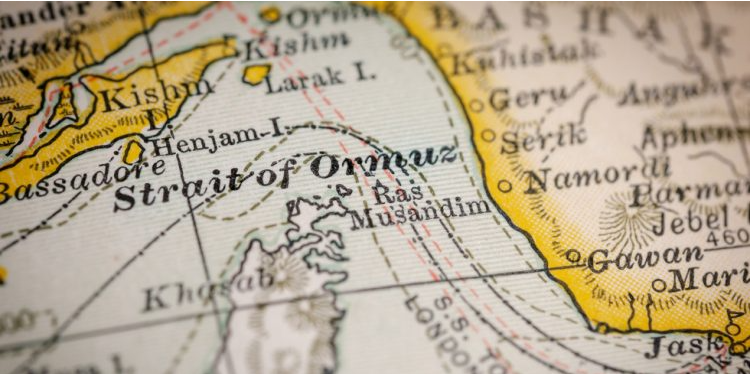 Industry on alert over scam messages offering ships “safe passage” on Hormuz
 Credit: Shutterstock Fraudulent messages offering safe passage through the Strait of Hormuz in exchange for cryptocurrency have been circulated to shipping companies with vessels stranded west of the waterway, according to MARISKS. In an alert issued on 20 April, MARISKS cautioned that unknown actors posing as Iranian authorities had contacted […]



JOB SITES
CONTENTS
LINKS
Happy New Year

Découvrez les avantages de MadCasino
Dans le monde des casinos en ligne, MadCasino se distingue par ses offres attrayantes et ses services de qualité. Que vous soyez un joueur débutant ou un parieur aguerri, vous trouverez ici une variété de jeux qui sauront satisfaire toutes vos envies. Les machines à sous, les jeux de table et les options de paris en direct sont tous disponibles pour vous offrir une expérience de jeu inégalée. De plus, le casino propose régulièrement des bonus qui permettent d'augmenter vos chances de gagner, vous offrant ainsi une excellente opportunité de maximiser vos gains.
En matière de sécurité, MadCasino est un nom de confiance. Il est entièrement licencié et régulé, ce qui garantit un environnement de jeu sûr et équitable. Les joueurs peuvent se concentrer sur leur expérience de jeu sans se soucier des problèmes de sécurité. Les transactions financières sont également sécurisées grâce à des technologies de pointe.
Les jeux proposés par MadCasino sont issus des développeurs les plus réputés de l'industrie, vous assurant des graphismes époustouflants et des mécaniques de jeu innovantes. Les joueurs peuvent également profiter d'une expérience de jeu en direct qui simule l'atmosphère d'un casino terrestre, tout en restant dans le confort de leur maison.
Enfin, la plateforme de MadCasino est optimisée pour les appareils mobiles, permettant aux joueurs de parier à tout moment et de n'importe où. Que vous soyez sur votre smartphone ou votre tablette, l'accès à vos jeux préférés n'a jamais été aussi simple. Ne manquez pas l'opportunité de découvrir ce casino exceptionnel.
Les offres de Cresus Casino
Cresus Casino est un autre acteur majeur dans le domaine des jeux en ligne, offrant des promotions généreuses et une vaste sélection de jeux. Les joueurs peuvent profiter d'une expérience de jeu enrichissante grâce aux nombreux bonus disponibles, qui sont conçus pour attirer tant les nouveaux utilisateurs que les joueurs réguliers. Ces avantages permettent non seulement de prolonger votre temps de jeu, mais aussi d'augmenter vos chances de gains conséquents.
Le casino se distingue également par sa ludothèque impressionnante, comprenant une sélection variée de machines à sous, de jeux de table et de jeux en direct. Les clients peuvent choisir parmi des titres populaires et appréciés, ainsi que des nouveautés qui enrichissent constamment l'offre. L'interface utilisateur est conviviale, rendant la navigation sur la plateforme fluide et agréable.
En termes de sécurité, Cresus Casino assure à ses joueurs un environnement de jeu fiable. La plateforme utilise des protocoles de sécurité avancés pour protéger les données personnelles et financières des utilisateurs. Cela permet aux joueurs de se sentir en sécurité tout en jouant à leurs jeux préférés.
Avec un service client réactif et professionnel, Cresus Casino s'assure que toutes vos questions et préoccupations sont traitées rapidement. Que ce soit pour des questions concernant les bonus, les retraits ou les jeux, vous bénéficierez d'une assistance rapide et efficace.
Explorez Nine Casino et ses avantages
Dans l'univers des casinos en ligne, Nine Casino a su se faire une place de choix grâce à son approche innovante et à ses nombreux avantages pour les joueurs. Les utilisateurs peuvent s'attendre à une expérience de jeu enrichissante, avec des bonus attractifs qui sont régulièrement mis à jour. Ces offres sont une excellente façon de découvrir de nouveaux jeux tout en maximisant votre potentiel de gain.
La plateforme de Nine Casino est riche en options de jeux, allant des machines à sous aux jeux de table, en passant par le live casino. Chaque jeu est conçu pour offrir une expérience immersive grâce à des graphismes de haute qualité et des fonctionnalités innovantes. Les parieurs peuvent profiter de sessions de jeu captivantes, comme s'ils étaient dans un véritable casino.
La sécurité est une priorité pour Nine Casino, qui utilise des technologies de cryptage avancées pour protéger les informations de ses joueurs. Cela garantit un environnement de jeu sûr et fiable, permettant aux utilisateurs de se concentrer sur ce qu'ils aiment le plus : jouer.
Enfin, le service clientèle fourni par Nine Casino est exceptionnel, avec des agents disponibles pour répondre à toutes vos questions et résoudre vos problèmes. Vous pourrez ainsi jouer en toute tranquillité, sachant que votre satisfaction est au cœur de leurs préoccupations.
Profitez de l'expérience Lucky31
Lucky31 est un casino en ligne qui se distingue par son approche orientée vers le joueur, offrant une multitude d'options de jeux et des bonus généreux. Que vous soyez amateur de machines à sous ou passionné de jeux de table, vous trouverez une large sélection pour satisfaire toutes vos envies de jeu. Les promotions fréquentes permettent aux joueurs de prolonger leur expérience tout en augmentant leurs chances de gains.
La convivialité de la plateforme de Lucky31 est l'un de ses plus grands atouts. Les joueurs peuvent naviguer facilement entre les différents jeux, et l'interface est conçue pour être intuitive, quel que soit le niveau d'expérience de l'utilisateur. De plus, le casino est entièrement optimisé pour les appareils mobiles, ce qui permet de parier où que vous soyez.
En matière de sécurité, Lucky31 prend les préoccupations des joueurs très au sérieux. Le casino est agréé et régulé, garantissant un environnement de jeu équitable et sécurisé. Les joueurs peuvent ainsi se concentrer sur leur expérience de jeu sans se soucier des risques liés à la sécurité.
Pour ceux qui recherchent un support client efficace, Lucky31 offre un service réactif et professionnel. Que ce soit pour des questions sur les bonus, les jeux ou les paiements, vous aurez accès à une assistance de qualité, vous garantissant une expérience de jeu fluide et agréable.