search the site


Shipping Industry May Create the Very First Global Carbon Levy
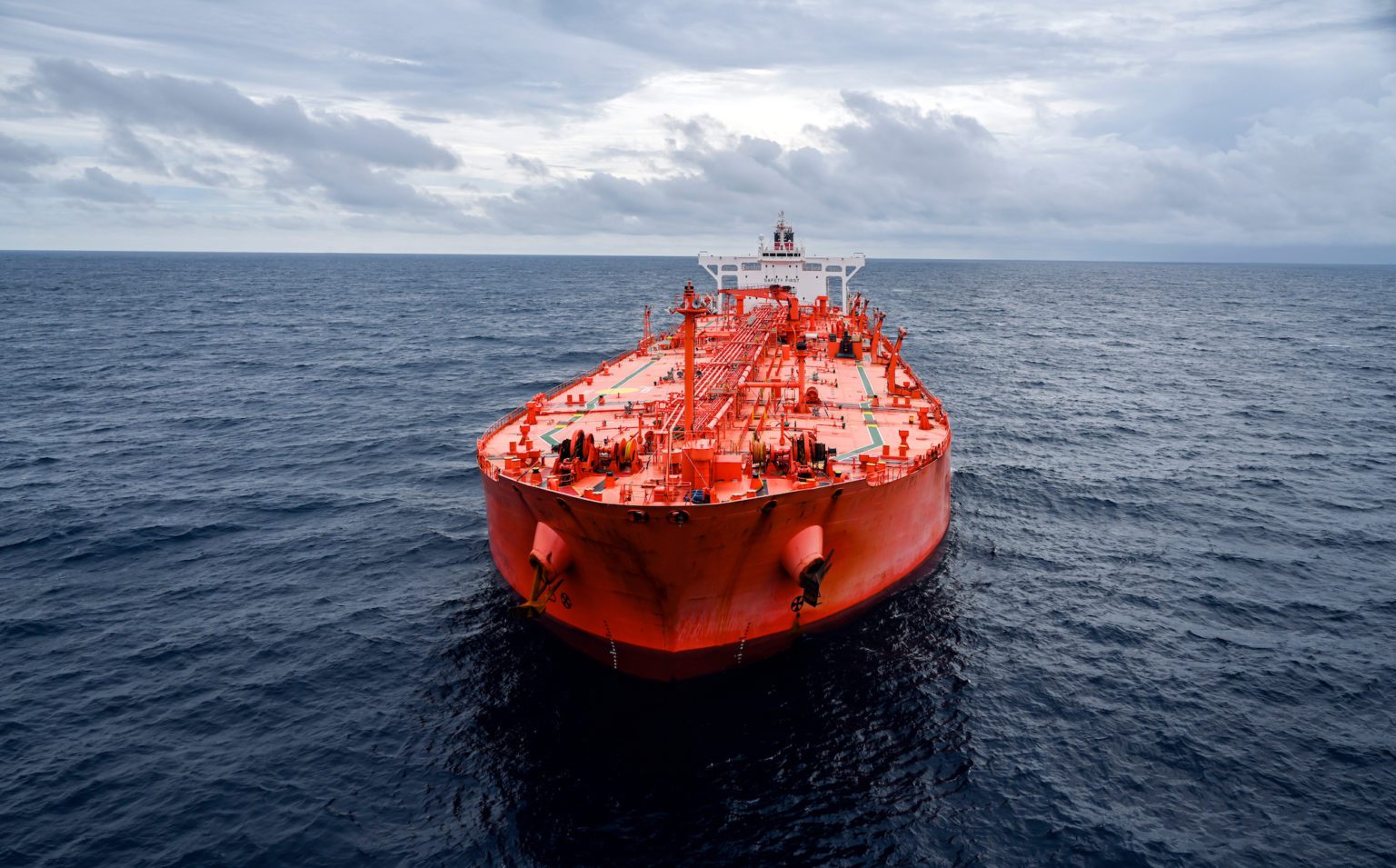
At a March meeting of the UN International Maritime Organisation (IMO) in London, a majority of member states expressed support for a levy on greenhouse gases emitted by the global shipping industry.
This fee – along with a fuel standard mandating that ships must increase the proportion of green energy they are using over time – could upgrade the backbone of global trade to zero-carbon technology. But first, it must make it safely through some challenging political waters at the UN agency.
In a statement issued by the civil society group Clean Shipping Coalition after the IMO meeting, Sandra Chiri of the Ocean Conservancy said: “The UN is on the edge of adopting the world’s first-ever global emissions price, but the policy will only be as successful as countries make it to be.
“The March talks at the IMO gave us hope that a clear majority of countries – the Caribbean, the Pacific, Africa, but also the EU and Canada – understand the huge opportunity of pricing shipping emissions for the industry’s clean transition and for making sure this transition benefits all developing countries. It’s regrettable that a small but persistent minority strives to water down this vital climate measure.”
The IMO runs on a consensus basis, but the chair has the power to overrule holdouts if a large majority of countries are on board with a given decision.
Why shipping is a big deal for the climate
According to the UN, shipping carries about 80% of global trade: from containerships full of consumer goods, to oil tankers carrying crude and gasoline, and bulk cargo ships carrying coal, iron ore and grains. Shifting this much stuff around requires a lot of energy.
Approximately 60,000 cargo ships are operating in international waters. Currently, they all burn fossil fuels, and most of that is heavy fuel oil (HFO), made from the dregs of the oil refining process. Shipping gulps up 5% of global oil demand and emits greenhouse gases (GHG) equivalent to more than a billion tonnes of CO2 every year. If this industry was a country, it would be among the top 10 global emitters.
Over the decades, some progress has been made on cleaning up the industry, via tougher standards for new ships, reduction of pollutant levels in fuel, and some monitoring of operations efficiency. For example, speed reduction is currently one of the main strategies, because it does not require new fuels or infrastructure.
But governments have recognised they need to go much further to reduce net greenhouse gas emissions down to nothing – which scientific consensus says is necessary to preserve a liveable climate system. Last July, IMO member states agreed a strategy to reduce shipping emissions by “20% (striving for 30%)” by 2030, and to reach zero emissions “by or around” 2050.
How to achieve these ambitious goals is the key question. At March’s IMO meeting, member states agreed the answer was “a new global fuel standard and a new global pricing mechanism for maritime GHG emissions”. Tougher efficiency rules are also on the cards.
The IMO is on track to settle these details in early 2025 and adopt them later that year. The rules would come into force in 2027 via an amendment to the International Convention for the Prevention of Pollution from Ships (MARPOL), which would dictate compliance across the world. Several nations have already established domestic or regional carbon markets, but a fuel levy on shipping would become the first pricing mechanism for GHG emissions that applies globally.
At present, however, though there is still much disagreement on the design of such a system and where to set the starting price.
What price is right?
Currently, it makes no economic sense for shipowners to switch to buying green fuels, such as hydrogen or ammonia produced using renewable energy. Fossil fuel for ships is much cheaper and, unlike green fuels, tax-free. Clean energy think-tank Rocky Mountain Institute (RMI) believes green-hydrogen-produced ammonia could cost USD 1,239 per tonne of fuel oil equivalent in 2030. That would be just under double the current equivalent fossil fuel price of approximately USD 700.
These figures would necessitate that a fossil fuel levy be set at USD 130-180 per tonne of emitted CO2 to close the price gap between green and polluting fuel. Meanwhile, the commodity trading giant Trafigura suggests USD 250-300 a tonne is needed.
The shipping industry itself, represented by the International Chamber of Shipping (ICS), is cagey on the exact price it wants. In 2022, its secretary-general Guy Platten said USD 50-100 “could well be viable”.
Nations are also far apart on this issue: ahead of the IMO’s meeting in March, a coalition of eight Pacific and Caribbean island states called for a starting price of USD 150, while in 2022, Japan proposed a starting price of USD 56 in 2025, to rise significantly every five years.
Carbon prices in other sectors vary hugely. According to World Bank data collated in 2023, one of the world’s highest existing CO2 levies is the fossil combustible fuels levy in Switzerland, set at CHF 120 (USD 131) in 2022.
Where should the money go?
The Getting to Zero Coalition is a club of climate-ambitious shipping companies. It estimates that decarbonising the sector will require an investment of between USD 70-90 billion per year from 2030 until 2050. Most of this would be needed to build green fuel production plants on land, with only 12% spent on upgrading ships.
Many ships being ordered or built today are already designed to be “dual-fuel” – capable of running on both fossil and green fuels. The latter is most often methanol, but sometimes green ammonia. (Ammonia still has sustainability issues surrounding reactive nitrogen emissions that need tackling, leading some industry players to advocate for green hydrogen instead.) Providing green fuel subsidies funded by a fossil fuel levy would help these dual-fuel ships to transition.
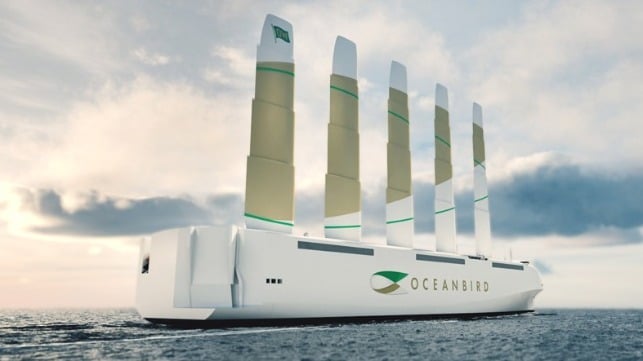
Concept vessels could make use of retractable sails to substantially lower the CO2 emissions of container shipping within the next decade (Image: Wallenius Marine / CC BY-SA 4.0)
Revenue from this levy could also retrofit tens of thousands of suitable vessels with wind-propulsion technologies. This could reduce CO2 emissions faster in the short-term, and achieve a greater emissions reduction per dollar of investment.
Brazil, China, Norway and UAE argue that instead of a universal levy on each tonne of emissions, only the most polluting ships ought to be penalized with a fee. Under their proposal for an International Maritime Sustainable Fuels and Fund mechanism, the baseline for a fuel’s GHG intensity would be set each year. Ships using a more carbon-intensive fuel mix would have to pay into this mechanism, while those using less carbon-intensive fuels would receive the money raised. This “flexible compliance” mechanism would also allow carbon credit trading between the most and least polluting ships, and “banking” of surplus credits to use the next year.
Environmental experts are concerned that building these “flexible compliance” options into the regulation would do little to incentivize the uptake of genuinely zero-emissions fuels. In the short-term at least, it could incentivize the use of biofuels and fossil-fuel derived hydrogen (which have questionable environmental credentials), rather than renewable energy-produced fuels.
Brazil and China’s proposal envisions raising only USD 1-2 billion per year in revenues, which would not in itself generate sufficient revenue to pay for shipping’s clean energy transition.
It is also less ambitious than much of the industry’s stance: the ICS is pushing for a per-tonne-of-emissions levy on all shipping, while the Getting to Zero Coalition wants levy revenue to be spent on zero-emission and near-zero fuels only.
Sharing the wealth beyond shipping
Some countries want to see the levy revenues spread beyond the shipping sector, to boost green fuel production, fund research and development, or even help countries improve their resilience to climate change.
Many Small Island Developing States (SIDS) and Least Developed Countries (LDCs) argue the billions raised by a shipping levy cannot be hoarded by the countries that currently dominate ship ownership and shipbuilding – it must be available to all. At COP28, for example, the Marshall Islands argued that “the polluter-pays principle… requires that the majority of any revenues generated from pricing [shipping] GHG emissions should be directed to addressing those climate impacts in developing countries, particularly SIDS and LDCs.”
China has objected to the use of shipping levy revenues for climate change-related finance beyond the sector. It argues this would absolve wealthy nations of their historic responsibilities to pay into the Paris Agreement’s Loss and Damage fund. Pacific Island states disagree, saying any climate finance raised from shipping must be entirely separate and additional to that fund.
What’s in it for business?
Concerns over the economic impacts of regulating shipping continue to be raised by China and other large, developing economies. A study by Brazil’s University of São Paulo found a carbon tax on shipping could reduce GDP in non-OECD developing countries by 0.13% versus a do-nothing baseline, with Africa and South America especially affected.
On the other hand, IMO regulation capable of reducing shipping emissions around 20-30% by 2030 is considered a big economic opportunity by some industry players. The largest independent oil tanker firm, Euronav, has announced plans to buy 120 zero-carbon vessels, powered by hydrogen and ammonia. Meanwhile, competition is intensifying between Chinese and Korean shipyards for contracts to build methanol-ready ships.
China’s push for low-carbon shipping
If the IMO now fails to adopt a levy, or sets a weak price, it will put such investments at risk. There are big decisions to make – and less than a year to make them – if shipping is to stay on course to meet its Paris Agreement-aligned goals.
source : maritime-executive
Featured Post
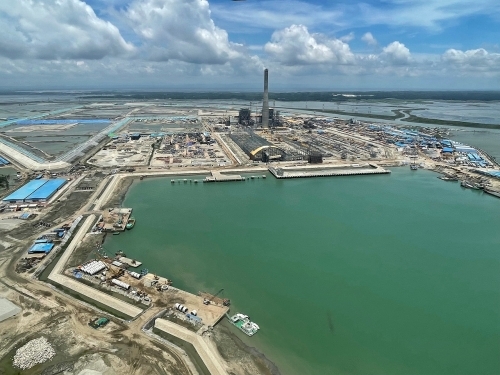 বড় জাহাজ মেরামতে মাতারবাড়ীতে ১ বিলিয়ন ডলারের প্রকল্প
 মাতারবাড়ীতে প্রায় ১ বিলিয়ন মার্কিন ডলার ব্যয়ে পরিবেশবান্ধব ডকইয়ার্ড ও জাহাজ নির্মাণ কেন্দ্র স্থাপনের উদ্যোগে নীতিগত অনুমোদন দিয়েছে নৌপরিবহন মন্ত্রণালয়। এখন প্রকল্পটির কারিগরি ও আর্থিক মূল্যায়নের জন্য প্রস্তাবটি সরকারি-বেসরকারি অংশীদারত্ব (পিপিপি) কর্তৃপক্ষের কাছে পাঠানো হয়েছে। সম্পূর্ণ বেসরকারি অর্থায়নে সরকারি জমির মালিকানা অক্ষুণ্ন রেখে প্রকল্পটি বাস্তবায়নের পরিকল্পনা রয়েছে। বন্দর কর্তৃপক্ষ জানায়, […]
 Industry on alert over scam messages offering ships “safe passage” on Hormuz
 Credit: Shutterstock Fraudulent messages offering safe passage through the Strait of Hormuz in exchange for cryptocurrency have been circulated to shipping companies with vessels stranded west of the waterway, according to MARISKS. In an alert issued on 20 April, MARISKS cautioned that unknown actors posing as Iranian authorities had contacted […]



JOB SITES
CONTENTS
LINKS
Happy New Year

Découvrez les avantages de MadCasino
Dans le monde des casinos en ligne, MadCasino se distingue par ses offres attrayantes et ses services de qualité. Que vous soyez un joueur débutant ou un parieur aguerri, vous trouverez ici une variété de jeux qui sauront satisfaire toutes vos envies. Les machines à sous, les jeux de table et les options de paris en direct sont tous disponibles pour vous offrir une expérience de jeu inégalée. De plus, le casino propose régulièrement des bonus qui permettent d'augmenter vos chances de gagner, vous offrant ainsi une excellente opportunité de maximiser vos gains.
En matière de sécurité, MadCasino est un nom de confiance. Il est entièrement licencié et régulé, ce qui garantit un environnement de jeu sûr et équitable. Les joueurs peuvent se concentrer sur leur expérience de jeu sans se soucier des problèmes de sécurité. Les transactions financières sont également sécurisées grâce à des technologies de pointe.
Les jeux proposés par MadCasino sont issus des développeurs les plus réputés de l'industrie, vous assurant des graphismes époustouflants et des mécaniques de jeu innovantes. Les joueurs peuvent également profiter d'une expérience de jeu en direct qui simule l'atmosphère d'un casino terrestre, tout en restant dans le confort de leur maison.
Enfin, la plateforme de MadCasino est optimisée pour les appareils mobiles, permettant aux joueurs de parier à tout moment et de n'importe où. Que vous soyez sur votre smartphone ou votre tablette, l'accès à vos jeux préférés n'a jamais été aussi simple. Ne manquez pas l'opportunité de découvrir ce casino exceptionnel.
Les offres de Cresus Casino
Cresus Casino est un autre acteur majeur dans le domaine des jeux en ligne, offrant des promotions généreuses et une vaste sélection de jeux. Les joueurs peuvent profiter d'une expérience de jeu enrichissante grâce aux nombreux bonus disponibles, qui sont conçus pour attirer tant les nouveaux utilisateurs que les joueurs réguliers. Ces avantages permettent non seulement de prolonger votre temps de jeu, mais aussi d'augmenter vos chances de gains conséquents.
Le casino se distingue également par sa ludothèque impressionnante, comprenant une sélection variée de machines à sous, de jeux de table et de jeux en direct. Les clients peuvent choisir parmi des titres populaires et appréciés, ainsi que des nouveautés qui enrichissent constamment l'offre. L'interface utilisateur est conviviale, rendant la navigation sur la plateforme fluide et agréable.
En termes de sécurité, Cresus Casino assure à ses joueurs un environnement de jeu fiable. La plateforme utilise des protocoles de sécurité avancés pour protéger les données personnelles et financières des utilisateurs. Cela permet aux joueurs de se sentir en sécurité tout en jouant à leurs jeux préférés.
Avec un service client réactif et professionnel, Cresus Casino s'assure que toutes vos questions et préoccupations sont traitées rapidement. Que ce soit pour des questions concernant les bonus, les retraits ou les jeux, vous bénéficierez d'une assistance rapide et efficace.
Explorez Nine Casino et ses avantages
Dans l'univers des casinos en ligne, Nine Casino a su se faire une place de choix grâce à son approche innovante et à ses nombreux avantages pour les joueurs. Les utilisateurs peuvent s'attendre à une expérience de jeu enrichissante, avec des bonus attractifs qui sont régulièrement mis à jour. Ces offres sont une excellente façon de découvrir de nouveaux jeux tout en maximisant votre potentiel de gain.
La plateforme de Nine Casino est riche en options de jeux, allant des machines à sous aux jeux de table, en passant par le live casino. Chaque jeu est conçu pour offrir une expérience immersive grâce à des graphismes de haute qualité et des fonctionnalités innovantes. Les parieurs peuvent profiter de sessions de jeu captivantes, comme s'ils étaient dans un véritable casino.
La sécurité est une priorité pour Nine Casino, qui utilise des technologies de cryptage avancées pour protéger les informations de ses joueurs. Cela garantit un environnement de jeu sûr et fiable, permettant aux utilisateurs de se concentrer sur ce qu'ils aiment le plus : jouer.
Enfin, le service clientèle fourni par Nine Casino est exceptionnel, avec des agents disponibles pour répondre à toutes vos questions et résoudre vos problèmes. Vous pourrez ainsi jouer en toute tranquillité, sachant que votre satisfaction est au cœur de leurs préoccupations.
Profitez de l'expérience Lucky31
Lucky31 est un casino en ligne qui se distingue par son approche orientée vers le joueur, offrant une multitude d'options de jeux et des bonus généreux. Que vous soyez amateur de machines à sous ou passionné de jeux de table, vous trouverez une large sélection pour satisfaire toutes vos envies de jeu. Les promotions fréquentes permettent aux joueurs de prolonger leur expérience tout en augmentant leurs chances de gains.
La convivialité de la plateforme de Lucky31 est l'un de ses plus grands atouts. Les joueurs peuvent naviguer facilement entre les différents jeux, et l'interface est conçue pour être intuitive, quel que soit le niveau d'expérience de l'utilisateur. De plus, le casino est entièrement optimisé pour les appareils mobiles, ce qui permet de parier où que vous soyez.
En matière de sécurité, Lucky31 prend les préoccupations des joueurs très au sérieux. Le casino est agréé et régulé, garantissant un environnement de jeu équitable et sécurisé. Les joueurs peuvent ainsi se concentrer sur leur expérience de jeu sans se soucier des risques liés à la sécurité.
Pour ceux qui recherchent un support client efficace, Lucky31 offre un service réactif et professionnel. Que ce soit pour des questions sur les bonus, les jeux ou les paiements, vous aurez accès à une assistance de qualité, vous garantissant une expérience de jeu fluide et agréable.