search the site


IN-DEPTH: Baltimore Disaster Adds Urgency to Calls for US Maritime Policy Reform, Port Investment
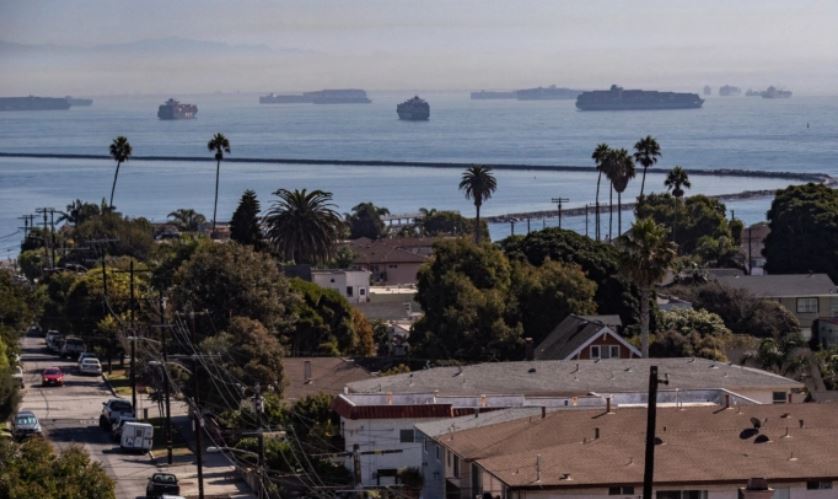
President Joe Biden, in an executive order this February, directed $20 billion in allocations from the 2021 Bipartisan Infrastructure Bill (BIL) into a five-year grant program dedicated to modernizing America’s 361 commercial ports.
The money is welcome but not nearly enough to overcome decades of neglect in comprehensive federal port investment and a half-century absence—some say abdication—by successive administrations and Congresses in sustaining a cohesive national maritime policy, a growing chorus of critics contend.
“If you talk to anyone in the ports, they are extremely excited about this. It’s more money than they’ve received in decades,” said Capt. John Konrad, founder and CEO gCaptain.com, a maritime commerce news and analysis site.
Story continues below advertisement
“But if you put it in context of a $1.2 trillion infrastructure” package approved under the 2021 BIL and 2022’s Inflation Reduction Act, “it’s less than 1 percent. In that context, it’s not a lot of money,” he told The Epoch Times.
With the nation’s ninth-busiest commercial port sitting idle since the Singapore-flagged 95,000-ton Dali knocked down Baltimore’s Francis Scott Key Bridge on March 26, there’s added intensity to years-long calls to upgrade ports to safely accommodate megaship container carriers. Only a handful of U.S. ports can, and improvements are needed to buttress supply chains that generate $5.4 trillion in annual domestic economic activity.
That renewed emphasis on federal port investment is certain to surface when the House Transportation & Infrastructure Committee’s Coast Guard & Maritime Transportation and Homeland Security subcommittees convene a joint field hearing at the Port of Miami on April 5.
“The problem is, if you look at how much money we spend in that infrastructure bill on maritime, it is a fraction” of what is needed, said Dr. Salvatore Mercogliano, a professor who analyzes maritime commerce at Campbell University in Buies Creek, North Carolina.
There’s even less federal policy dedicated to maritime commerce than federal money for ports, he told The Epoch Times.
“You actually had the Secretary of Transportation [Pete Buttigieg] at a press conference” on the Dali crash “come out and say, ‘You know, there’s really no one in charge’” of national maritime policy and that the U.S. Maritime Administration (MARAD) “‘doesn’t have the power the FAA does to control air, so there’s no central place that should be looking out for ports and maritime policy,’ which I think is an inherent flaw in the government’s oversight of shipping.”
As a result, he said, “There’s no cohesive national strategy. So you have ports competing with each other, costing taxpayers money so they can get the ships” that concentrate commerce in ports that can get bigger, while those that cannot become backwaters, leaving supply chains—and national security—vulnerable should a mishap, natural disaster, military attack, or terrorist act sink one ship or bring down one bridge to block one port’s sea lanes, ensnarling the flow of goods nationwide.

Global Issue, American Crisis
Before the Dali’s crash into the Key Bridge shut down an important U.S. port for what could be weeks, there were many glaring, blinking red warnings that global maritime supply chains are increasingly vulnerable to challenges, ranging from low-water conditions in the Panama Canal, 2020-21 pandemic disruptions, megaship groundings like the one in March 2021 that shut down the Suez Canal for weeks, and Houthi missile attacks on ships in the Red Sea.
Those global aggravations were amplified in the United States in November 2021 when the Port of Los Angeles—the nation’s largest seaport—was overwhelmed by container carriers in a weeks’ long backlog that accelerated inflation and disrupted commerce nationwide.
During a Jan. 30 hearing before the House Transportation & Infrastructure Committee’s Coast Guard & Maritime Transportation Subcommittee, Mediterranean Shipping Company Executive Vice President Bud Darr testified that “land-based congestion in U.S. ports and supporting logistics infrastructure” is a growing concern for international shipping companies.
Mr. Darr, a U.S. citizen, said the world was watching when the nation’s largest seaport’s “land-based logistics capacity could not efficiently process all the import cargo that was arriving” in Los Angeles.
Story continues below advertisement
“We are hopeful that Congress’s subsequent investments in U.S. port and land-side infrastructure will, at some point, provide additional capacity and resiliency to handle similar future supply-and-demand surges caused by geopolitical and other unanticipated major events,” he said.
“Unanticipated major events” would include a megaship knocking down a bridge and blocking sea lanes.
While much of the traffic normally routed through Baltimore—the East Coast’s biggest imported automobile entry port—can be accommodated without dramatic economic consequences, there are relatively few U.S. ports that can absorb a significant increase in volume.
Capt. Konrad has been among maritime commerce advocates lobbying for more federal focus on the nation’s ports and merchant shipping policies for years.
“It’s like all the seaports and river ports and waterways across the entire country get less than … a fraction of what [the Biden administration] is giving to electric buses,” he said.
Rather than the U.S. Department of Transportation (DOT) and Defense Department spending a combined $8 billion on electric buses, he suggested it be shifted to the Maritime Administration (MARAD) for port improvements and expansions.
The administration’s meager investment in ports and maritime commerce “makes no sense,” Capt. Konrad said, “especially considering that shipping [emits less] carbon emissions. So if they want to save the planet, that’s where you put the money. But they don’t.”

Story continues below advertisement
Long Sad Story
None of this, however, is new, Capt. Konrad said.
“It’s been a complete and utter failure by the Department of Transportation over decades,” he said, a slide that began in the 1960s that has accelerated since the early 2000s beginning with the Bush administration.
With the post-9/11 creation of the Department of Homeland Security (DHS), MARAT and other federal maritime commerce agencies have “suffered continuous budget cuts and sniping by the DHS leadership,” Capt. Konrad said.
“Meanwhile,” he continued, “what is left is a tiny shell of an agency called Maritime Administration [MARAD]. The DOD and FAA have over 40,000 employees. MARAD has 800, so they’re completely unable to accomplish anything and over at DHS, they [control] the Coast Guard budget and give them more things to do.”
The undermanning and underfunding of MARAD, which he calls the “U.S. government’s most secretive agency” led by “a ghost,” the Biden-appointed former U.S. Navy RAdm. Ann Phillips, is symbolic of a nation without a maritime policy or plan, and a federal agency adrift and non-responsive.
“How can you help [free-trade Washington-based think tank] CATO dismantle the Jones Act and undermine American shipping? How can you subvert crucial U.S. Navy shipbuilding subsidies? How can you obstruct $1.2 trillion of infrastructure bill funding from supporting ports and marine highways?” he asked in an October column. “How can you perpetuate the influx of Chinese goods arriving at U.S. ports on Chinese vessels? Simply refuse to answer the phone.”
MARAD “is broken and Secretary Pete doesn’t care,” Capt. Konrad told The Epoch Times, “so local residents end up having to put all this money into the ports. And then, they see ship traffic head to another port because the [locally-imposed] safety costs are too high” or its bridges are too low or its channels not deep enough to accommodate megaships.
The Dali’s bow pinioned under the fallen Key Bridge’s steel girders, clogging a vital sea lane likely for weeks, is a clarion call for policy reform and infrastructure refocus, Capt. Konrad and Mr. Mercogliano, among others, maintain.
It is reflective of “the deindustrialization of the broader American economy,” Applied Maritime Sciences President William Cahill, a career U.S. Coast Guard officer and helicopter pilot who served as National Security Council Strategic Planning Director in the Bush administration and Council of Economic Advisers’ Maritime Advisor in the Obama administration, wrote in a Feb. 12 column for The Boyd Institute, a “part think tank and part creative studio” that solicits “asymmetric solutions to global issues.”
“Due to the lack of a viable maritime sector, American supply chain absurdities abound and self-embargoes continue” to threaten the economy and national security, he said.
“Adding insult to injury,” Mr. Cahill said, “American ships routinely employ cheap Chinese state-owned shipyards for major overhauls and improvements, while their owners apply the savings towards lobbying to prevent competition on account of the Chinese ‘maritime threat.’”
Under these conditions, he said, “efforts to ‘level the playing field’ will remain elusive” until the federal government makes port infrastructure and rebuilding the nation’s merchant marine a priority.
source : theepochtimes.com
Featured Post
 জাহাজ নির্মাণ শিল্প: হাতছাড়া হচ্ছে অপার সম্ভাবনা
 গোলাম সোহরাওয়ার্দি প্রকাশ : ২৭ অক্টোবর ২০২৬, ০৮: ০৪আপডেট : ২৭ অক্টোবর ২০২৬, ০৯: ২৪ সারা বিশ্ব এখন জাহাজ নির্মাণের এক বিশাল জোয়ার দেখছে। চীন, দক্ষিণ কোরিয়া ও জাপানের মতো দেশগুলো এ খাত থেকে বিপুল মুনাফা কামিয়ে নিচ্ছে। নতুন বাণিজ্যিক পথ তৈরি, জাহাজের […]
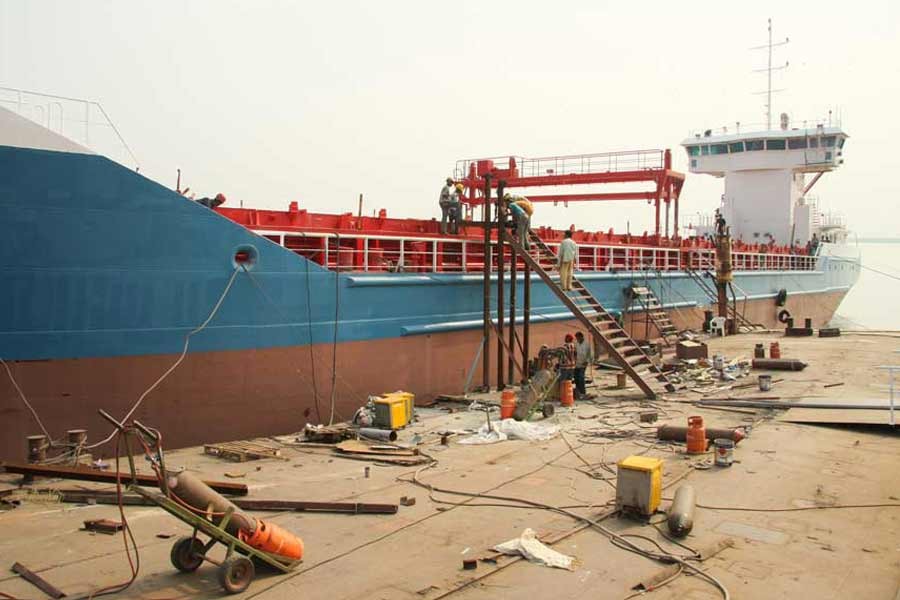 Worldwide Shipbuilding Boom and Bangladesh’s Lost Opportunity: How Financial Mismanagement, Loan Defaults, and Weak Governance Crippled a Promising Industry
An investigative analysis by Ghulam Suhrawardi Today, the world is witnessing one of the largest shipbuilding booms in history. Many countries are profiting from it. China, South Korea, and Japan have benefited from increased demand for new vessels due to fleet renewal, changing trade routes, environmental regulations, and strong financial […]



JOB SITES
CONTENTS
LINKS
Happy New Year

Découvrez les avantages de MadCasino
Dans le monde des casinos en ligne, MadCasino se distingue par ses offres attrayantes et ses services de qualité. Que vous soyez un joueur débutant ou un parieur aguerri, vous trouverez ici une variété de jeux qui sauront satisfaire toutes vos envies. Les machines à sous, les jeux de table et les options de paris en direct sont tous disponibles pour vous offrir une expérience de jeu inégalée. De plus, le casino propose régulièrement des bonus qui permettent d'augmenter vos chances de gagner, vous offrant ainsi une excellente opportunité de maximiser vos gains.
En matière de sécurité, MadCasino est un nom de confiance. Il est entièrement licencié et régulé, ce qui garantit un environnement de jeu sûr et équitable. Les joueurs peuvent se concentrer sur leur expérience de jeu sans se soucier des problèmes de sécurité. Les transactions financières sont également sécurisées grâce à des technologies de pointe.
Les jeux proposés par MadCasino sont issus des développeurs les plus réputés de l'industrie, vous assurant des graphismes époustouflants et des mécaniques de jeu innovantes. Les joueurs peuvent également profiter d'une expérience de jeu en direct qui simule l'atmosphère d'un casino terrestre, tout en restant dans le confort de leur maison.
Enfin, la plateforme de MadCasino est optimisée pour les appareils mobiles, permettant aux joueurs de parier à tout moment et de n'importe où. Que vous soyez sur votre smartphone ou votre tablette, l'accès à vos jeux préférés n'a jamais été aussi simple. Ne manquez pas l'opportunité de découvrir ce casino exceptionnel.
Les offres de Cresus Casino
Cresus Casino est un autre acteur majeur dans le domaine des jeux en ligne, offrant des promotions généreuses et une vaste sélection de jeux. Les joueurs peuvent profiter d'une expérience de jeu enrichissante grâce aux nombreux bonus disponibles, qui sont conçus pour attirer tant les nouveaux utilisateurs que les joueurs réguliers. Ces avantages permettent non seulement de prolonger votre temps de jeu, mais aussi d'augmenter vos chances de gains conséquents.
Le casino se distingue également par sa ludothèque impressionnante, comprenant une sélection variée de machines à sous, de jeux de table et de jeux en direct. Les clients peuvent choisir parmi des titres populaires et appréciés, ainsi que des nouveautés qui enrichissent constamment l'offre. L'interface utilisateur est conviviale, rendant la navigation sur la plateforme fluide et agréable.
En termes de sécurité, Cresus Casino assure à ses joueurs un environnement de jeu fiable. La plateforme utilise des protocoles de sécurité avancés pour protéger les données personnelles et financières des utilisateurs. Cela permet aux joueurs de se sentir en sécurité tout en jouant à leurs jeux préférés.
Avec un service client réactif et professionnel, Cresus Casino s'assure que toutes vos questions et préoccupations sont traitées rapidement. Que ce soit pour des questions concernant les bonus, les retraits ou les jeux, vous bénéficierez d'une assistance rapide et efficace.
Explorez Nine Casino et ses avantages
Dans l'univers des casinos en ligne, Nine Casino a su se faire une place de choix grâce à son approche innovante et à ses nombreux avantages pour les joueurs. Les utilisateurs peuvent s'attendre à une expérience de jeu enrichissante, avec des bonus attractifs qui sont régulièrement mis à jour. Ces offres sont une excellente façon de découvrir de nouveaux jeux tout en maximisant votre potentiel de gain.
La plateforme de Nine Casino est riche en options de jeux, allant des machines à sous aux jeux de table, en passant par le live casino. Chaque jeu est conçu pour offrir une expérience immersive grâce à des graphismes de haute qualité et des fonctionnalités innovantes. Les parieurs peuvent profiter de sessions de jeu captivantes, comme s'ils étaient dans un véritable casino.
La sécurité est une priorité pour Nine Casino, qui utilise des technologies de cryptage avancées pour protéger les informations de ses joueurs. Cela garantit un environnement de jeu sûr et fiable, permettant aux utilisateurs de se concentrer sur ce qu'ils aiment le plus : jouer.
Enfin, le service clientèle fourni par Nine Casino est exceptionnel, avec des agents disponibles pour répondre à toutes vos questions et résoudre vos problèmes. Vous pourrez ainsi jouer en toute tranquillité, sachant que votre satisfaction est au cœur de leurs préoccupations.
Profitez de l'expérience Lucky31
Lucky31 est un casino en ligne qui se distingue par son approche orientée vers le joueur, offrant une multitude d'options de jeux et des bonus généreux. Que vous soyez amateur de machines à sous ou passionné de jeux de table, vous trouverez une large sélection pour satisfaire toutes vos envies de jeu. Les promotions fréquentes permettent aux joueurs de prolonger leur expérience tout en augmentant leurs chances de gains.
La convivialité de la plateforme de Lucky31 est l'un de ses plus grands atouts. Les joueurs peuvent naviguer facilement entre les différents jeux, et l'interface est conçue pour être intuitive, quel que soit le niveau d'expérience de l'utilisateur. De plus, le casino est entièrement optimisé pour les appareils mobiles, ce qui permet de parier où que vous soyez.
En matière de sécurité, Lucky31 prend les préoccupations des joueurs très au sérieux. Le casino est agréé et régulé, garantissant un environnement de jeu équitable et sécurisé. Les joueurs peuvent ainsi se concentrer sur leur expérience de jeu sans se soucier des risques liés à la sécurité.
Pour ceux qui recherchent un support client efficace, Lucky31 offre un service réactif et professionnel. Que ce soit pour des questions sur les bonus, les jeux ou les paiements, vous aurez accès à une assistance de qualité, vous garantissant une expérience de jeu fluide et agréable.