search the site


IMO ponders new GHG policies, while shipping sector awaits low-carbon economic incentive

Global shipping regulators will soon have to decide whether and how to penalise the use of fossil fuel and whether and how to incentivise the use of greener fuel. Drewry provides a short analysis and comparison of policy discussions, including their possible shortfalls.
In July 2023, the International Maritime Organisation (IMO) set new decarbonisation targets and announced an aspiration that 5 to 10% of marine fuel would be low- or zero-greenhouse gas (GHG) by 2030.
At that time, Drewry and other industry stakeholders noted that the huge question of how to bridge the cost gap and level the playing field between conventional fossil fuel and new, more expensive greener fuel, has not yet been addressed by the IMO.
Green marine fuel currently costs 3 to 4 times conventional marine fossil fuel like Very Low Sulphur Fuel Oil, for the same energy. It is hard to ignore this huge economic disincentive.
The IMO is now expected to discuss in MEPC 81 in March “mid-term measure(s) including an economic element, namely a maritime GHG emissions pricing mechanism, for adoption by 2025 and entry into force by 2027.”
Technical and economic regulations ahead
All the proposals to be considered at MEPC 81 stress that they are guided by the 2023 IMO Strategy on reduction of GHG emissions from ships, and the trajectory to zero emissions set out in that Strategy.
The strategy and overall policy direction can be summarised as follows:
- The IMO’s Mid Term Strategy envisages a combination of “technical” and “economic” measures to achieve those goals.
- The “technical” GHG Fuel Standard measure, a marine fuel standard limiting marine fuel’s GHG emissions, to be ratcheted up over time, appears to have wide support at the IMO.
- “Economic” measures – penalties for using fossil fuel and rewards when avoiding emissions, are more controversial.
- It is worth noting that in concept the proposed basket of technical and economic regulations is no different from the EU’s combination of the Emission Trading System (ETS) mechanism (economic) and ‘FuelEU Maritime’ (technical).
- It is also accepted that economic measures are needed in addition to the GHG Fuel Standard to accelerate the reduction in GHG emission fuels, and to ensure a ‘critical mass’ is achieved in the production and use of low emission fuels.
Policy proposals
A number of papers for consideration at MEPC 81, from both governments and Non-Government Organisations, put forward a variety of economic measures, intended to apply in parallel with a Fuel Standard technical measure.
Drewry notes that:
- All proposals have as their objective providing a financial incentive for shipping lines to use low GHG fuels by balancing the cost of these fuels vs high GHG emission fuels.
- Several propose a ‘feebate’ system where there is a levy on the emission of GHG emission fuels, with funds being allocated to reward those using eligible low/zero GHG fuels, as well as providing funds to support projects designed to assist in the GHG reduction in the maritime sector.
- At least one proposal proposes a levy, without a counterbalancing reward.
- Some proposals are based on the principle of equalising costs between GHG/non-GHG fuels (see comparison table below), with a mechanism to determining the actual fee/reward later; others propose that cash values should be established for (say) a five year period, to give certainty to those investing in new fuels, with the ability to increase the cash fees/rewards later as needed.
With a variety of approaches proposed, it is hard to evaluate which would be the most successful at incentivising increasing uptake of low/zero carbon fuels, and no doubt this will be one of the main debates at MEPC 81.
- At one end of the scale, the World Shipping Council (WSC)’s ‘Green Balance Mechanism’ is one of the most rigorous proposals, as the feebate levels will be whatever is needed to equalise fuel costs.
- The other industry proposal from the International Chamber of Shipping (ICS) and others focuses more on setting an administratively straightforward feebate mechanism, which gives a degree of certainty to the shipping lines, but leaves governments at IMO to set the levels of fees/rebates.
- In contrast, a proposal from several island nations (including Marshall Islands, Solomon Islands) proposes a fixed fee of $150/t CO2-eq, with facility to review/increase the level. It is not specific as to how the money collected would be disbursed.
- A different proposal from a number of governments who have been opposed to a levy (Argentina et al) have nevertheless put forward an economic measure to supplement the fuel standard, based on a required carbon intensity per vessel, with penalties for those who do not achieve the required value, and ‘surplus units’ generated by those which over-comply. A different way of achieving the same goal?
Concerns about new regulations and impact assessment
One of the concerns expressed by some governments in previous debates has been the potential impact on trade of increasing the cost of shipping through fuel levies/taxes. IMO will be required to conduct an Economic Impact Assessment (EIA) on whatever measures it intends to take forward; an interim report on the potential impact of the cost of these measures will be discussed at MEPC 81.
Another concern is that the new regulations would have to address the cost gap between green fuel and fossil fuel to result in a rapid take-up of low/zero GHG fuel, a sufficient transition and sufficient investments. The timetable for transition is tight.
Governments are split between those who would have a high economic penalty to properly incentivise conversion, vs those who are more concerned about constraints on economic growth, and would only support a low penalty.
As a contribution to the inter-government discussions at the IMO, both the ICS and the WSC – representing the shipping sectors – have proposed pricing schemes that they believe would accelerate the decarbonisation of shipping and remove the cost penalty of greener shipping.
With the above variables, it is hard to predict whether IMO will succeed in adopting an economic measure which will be sufficient to drive the required levels of shift in fuel being consumed, but Drewry provides below a comparison.
Comparison of economic measures under consideration
The key comparators between the economic measures proposed are:
- Who gets the money? Are the measures ‘sticks and carrots’ (WSC and ICS) or just ‘sticks’ (states’ proposals where the money goes to governments or good causes, but not direct to the shipping companies)
- Is the quantum sufficient to be a proper incentive?
Under the ICS’s proposed scheme of a “Zero Emission Shipping Fund” mechanism, “contributions from ships per tonne of CO2e emitted will be used to reduce the significant cost gap between zero GHG fuels and conventional fuel oil, providing financial rewards (“feebates”) to ships for the GHG emissions prevented by use of these new marine fuels.” Click here for further information
Under the WCS’s proposed “Green Balance Mechanism” scheme, “fees are taken from fossil fuels and allocated to green fuels used, so that the average cost of fuel is equal.” Click here for further information
The ICS said that the proposed scheme would be managed by the IMO using its existing fuel oil data collection system.
The WSC proposal appears to require a central fund to manage the penalties and the rewards.

Would these economic schemes act as a proper incentive? How much will it cost?
The WSC proposal would, since they state as a principle that it should be full reimbursement of the cost differential of green fuel (though the devil will be in the detail).
The ICS proposal needs more careful consideration. While in principle they want the ‘good’ shipping lines to be paid, they leave the quantum to governments at IMO. The warning signal appears to be that the economic assessment has an upper carbon price of $100 a tonne. If that is a signal to governments, it is not ambitious.
Japan’s feebate pricing scheme also envisages a low penalty/contribution per tonne of CO2e – only about $20 per tonne.
Clearly, the shipping industry is looking after its own interest – asking that new fees or taxes are reinvested in the industry to promote decarbonisation.
But the ICS and WSC proposals also have the merit of ‘doubling up’ the economic incentives to use low or zero-GHG fuel, as they both penalise use of high GHG fuel as well as rewarding low GHG fuel.
Decarbonisation will be costly for shipowners and for the end-customers, charterers/shippers.
The ICS calculated that to reach the IMO target for just 5-10% of the energy used by shipping to come from zero/near-zero GHG sources by 2030, the cost of reducing the cost gap with conventional fuel oil and rewarding the accelerated uptake of alternative fuels would be between US$5 to U$10 billion per year.
Nobody knows to what extent technical progress and scale economies will reduce the future cost of green fuel, or what the most effective future green fuel will be, but shipowners are unlikely to be willing to sail “green” voluntarily (except for low-scale experiments) if a cost premium of 200% or 300% kills their profit margins.
Drewry’s ESG team will quantify the impact of future regulations on GHG prices in due course.
Our View
The IMO is likely to adopt a mix of measures, including a technical measure (limited GHG contents in marine fuel) and a pricing measure (with penalties and with or without incentives).
Spreading the extra cost of decarbonisation across the industry – particularly in the early years – through a combination of incentives and penalties should be considered by regulators.
Source: hellenicshippingnews
Featured Post
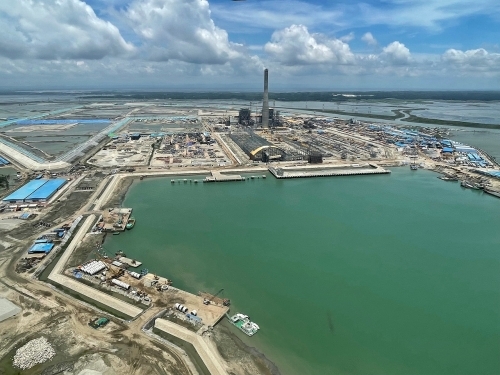 বড় জাহাজ মেরামতে মাতারবাড়ীতে ১ বিলিয়ন ডলারের প্রকল্প
 মাতারবাড়ীতে প্রায় ১ বিলিয়ন মার্কিন ডলার ব্যয়ে পরিবেশবান্ধব ডকইয়ার্ড ও জাহাজ নির্মাণ কেন্দ্র স্থাপনের উদ্যোগে নীতিগত অনুমোদন দিয়েছে নৌপরিবহন মন্ত্রণালয়। এখন প্রকল্পটির কারিগরি ও আর্থিক মূল্যায়নের জন্য প্রস্তাবটি সরকারি-বেসরকারি অংশীদারত্ব (পিপিপি) কর্তৃপক্ষের কাছে পাঠানো হয়েছে। সম্পূর্ণ বেসরকারি অর্থায়নে সরকারি জমির মালিকানা অক্ষুণ্ন রেখে প্রকল্পটি বাস্তবায়নের পরিকল্পনা রয়েছে। বন্দর কর্তৃপক্ষ জানায়, […]
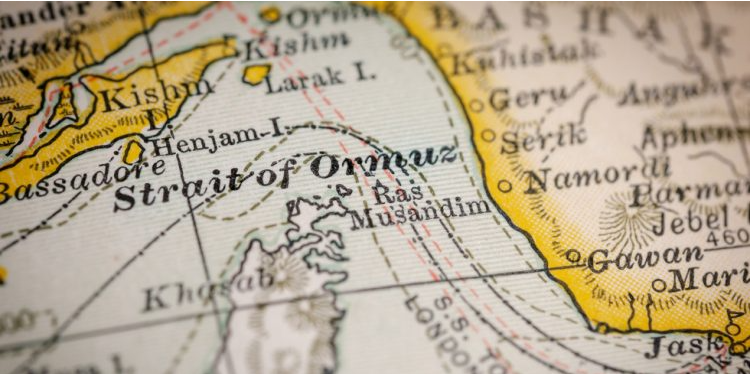 Industry on alert over scam messages offering ships “safe passage” on Hormuz
 Credit: Shutterstock Fraudulent messages offering safe passage through the Strait of Hormuz in exchange for cryptocurrency have been circulated to shipping companies with vessels stranded west of the waterway, according to MARISKS. In an alert issued on 20 April, MARISKS cautioned that unknown actors posing as Iranian authorities had contacted […]



JOB SITES
CONTENTS
LINKS
Happy New Year

Découvrez les avantages de MadCasino
Dans le monde des casinos en ligne, MadCasino se distingue par ses offres attrayantes et ses services de qualité. Que vous soyez un joueur débutant ou un parieur aguerri, vous trouverez ici une variété de jeux qui sauront satisfaire toutes vos envies. Les machines à sous, les jeux de table et les options de paris en direct sont tous disponibles pour vous offrir une expérience de jeu inégalée. De plus, le casino propose régulièrement des bonus qui permettent d'augmenter vos chances de gagner, vous offrant ainsi une excellente opportunité de maximiser vos gains.
En matière de sécurité, MadCasino est un nom de confiance. Il est entièrement licencié et régulé, ce qui garantit un environnement de jeu sûr et équitable. Les joueurs peuvent se concentrer sur leur expérience de jeu sans se soucier des problèmes de sécurité. Les transactions financières sont également sécurisées grâce à des technologies de pointe.
Les jeux proposés par MadCasino sont issus des développeurs les plus réputés de l'industrie, vous assurant des graphismes époustouflants et des mécaniques de jeu innovantes. Les joueurs peuvent également profiter d'une expérience de jeu en direct qui simule l'atmosphère d'un casino terrestre, tout en restant dans le confort de leur maison.
Enfin, la plateforme de MadCasino est optimisée pour les appareils mobiles, permettant aux joueurs de parier à tout moment et de n'importe où. Que vous soyez sur votre smartphone ou votre tablette, l'accès à vos jeux préférés n'a jamais été aussi simple. Ne manquez pas l'opportunité de découvrir ce casino exceptionnel.
Les offres de Cresus Casino
Cresus Casino est un autre acteur majeur dans le domaine des jeux en ligne, offrant des promotions généreuses et une vaste sélection de jeux. Les joueurs peuvent profiter d'une expérience de jeu enrichissante grâce aux nombreux bonus disponibles, qui sont conçus pour attirer tant les nouveaux utilisateurs que les joueurs réguliers. Ces avantages permettent non seulement de prolonger votre temps de jeu, mais aussi d'augmenter vos chances de gains conséquents.
Le casino se distingue également par sa ludothèque impressionnante, comprenant une sélection variée de machines à sous, de jeux de table et de jeux en direct. Les clients peuvent choisir parmi des titres populaires et appréciés, ainsi que des nouveautés qui enrichissent constamment l'offre. L'interface utilisateur est conviviale, rendant la navigation sur la plateforme fluide et agréable.
En termes de sécurité, Cresus Casino assure à ses joueurs un environnement de jeu fiable. La plateforme utilise des protocoles de sécurité avancés pour protéger les données personnelles et financières des utilisateurs. Cela permet aux joueurs de se sentir en sécurité tout en jouant à leurs jeux préférés.
Avec un service client réactif et professionnel, Cresus Casino s'assure que toutes vos questions et préoccupations sont traitées rapidement. Que ce soit pour des questions concernant les bonus, les retraits ou les jeux, vous bénéficierez d'une assistance rapide et efficace.
Explorez Nine Casino et ses avantages
Dans l'univers des casinos en ligne, Nine Casino a su se faire une place de choix grâce à son approche innovante et à ses nombreux avantages pour les joueurs. Les utilisateurs peuvent s'attendre à une expérience de jeu enrichissante, avec des bonus attractifs qui sont régulièrement mis à jour. Ces offres sont une excellente façon de découvrir de nouveaux jeux tout en maximisant votre potentiel de gain.
La plateforme de Nine Casino est riche en options de jeux, allant des machines à sous aux jeux de table, en passant par le live casino. Chaque jeu est conçu pour offrir une expérience immersive grâce à des graphismes de haute qualité et des fonctionnalités innovantes. Les parieurs peuvent profiter de sessions de jeu captivantes, comme s'ils étaient dans un véritable casino.
La sécurité est une priorité pour Nine Casino, qui utilise des technologies de cryptage avancées pour protéger les informations de ses joueurs. Cela garantit un environnement de jeu sûr et fiable, permettant aux utilisateurs de se concentrer sur ce qu'ils aiment le plus : jouer.
Enfin, le service clientèle fourni par Nine Casino est exceptionnel, avec des agents disponibles pour répondre à toutes vos questions et résoudre vos problèmes. Vous pourrez ainsi jouer en toute tranquillité, sachant que votre satisfaction est au cœur de leurs préoccupations.
Profitez de l'expérience Lucky31
Lucky31 est un casino en ligne qui se distingue par son approche orientée vers le joueur, offrant une multitude d'options de jeux et des bonus généreux. Que vous soyez amateur de machines à sous ou passionné de jeux de table, vous trouverez une large sélection pour satisfaire toutes vos envies de jeu. Les promotions fréquentes permettent aux joueurs de prolonger leur expérience tout en augmentant leurs chances de gains.
La convivialité de la plateforme de Lucky31 est l'un de ses plus grands atouts. Les joueurs peuvent naviguer facilement entre les différents jeux, et l'interface est conçue pour être intuitive, quel que soit le niveau d'expérience de l'utilisateur. De plus, le casino est entièrement optimisé pour les appareils mobiles, ce qui permet de parier où que vous soyez.
En matière de sécurité, Lucky31 prend les préoccupations des joueurs très au sérieux. Le casino est agréé et régulé, garantissant un environnement de jeu équitable et sécurisé. Les joueurs peuvent ainsi se concentrer sur leur expérience de jeu sans se soucier des risques liés à la sécurité.
Pour ceux qui recherchent un support client efficace, Lucky31 offre un service réactif et professionnel. Que ce soit pour des questions sur les bonus, les jeux ou les paiements, vous aurez accès à une assistance de qualité, vous garantissant une expérience de jeu fluide et agréable.