search the site


ASEAN Solidarity Exercise and Regional Maritime Cooperation
ASEAN Solidarity Exercise and Regional Maritime Cooperation
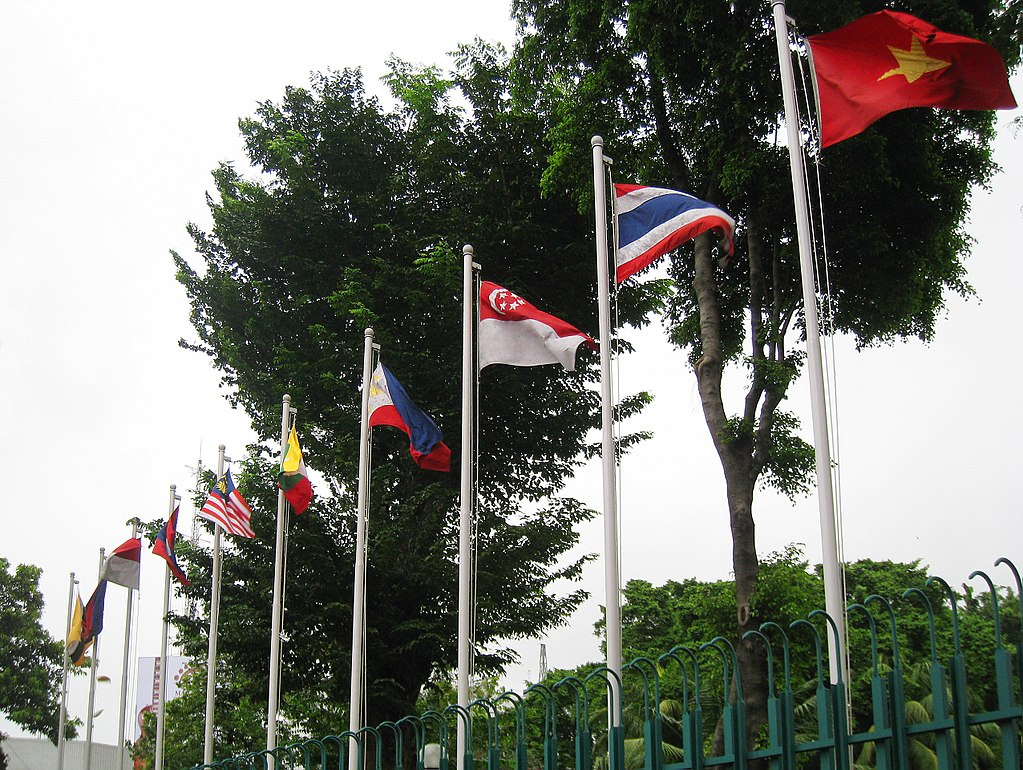
By John Bradford 2 November 2023
S. Rajaratnam School of International Studies, NTU Singapore
SYNOPSIS
Most commentary of the recently concluded maritime-based ASEAN Solidarity Exercise has evaluated it as making minor progress towards strengthening security cooperation within ASEAN. A closer look shows that this rare assembly of maritime assets from ASEAN member states could have achieved a higher level of coordination and collaboration for regional good if it had not been for the competitive dynamics of geopolitics.
COMMENTARY
Despite the word “solidarity” being in its name, last month’s ASEAN Solidarity Exercise (ASEX23) marks an inflection point towards decreasing prospects for maritime security cooperation in Southeast Asia. Without any doubt, we can see that progress that was fairly rapid earlier in the century has slowed considerably, and things might be even worse if not for some deft diplomatic moves.
ASEX23 may mark a new phase where existing cooperative activities begin to unravel. The source of the change hinges on the challenges associated with maintaining positive relations with external powers. Whereas those powers once saw common benefit in improving the security of Southeast Asia’s sea lanes, today’s geopolitical environment means that they weigh every change against their relative power and influence over the respective ASEAN member states.
From the general perspective, ASEX23 could be counted alongside the ASEAN Maritime Outlook (AMO) as an achievement marking the maritime dimensions of Indonesia’s leadership during its ASEAN chairmanship (in calendar year 2023). After all, this event was billed as the first-ever ASEAN joint military exercise. However, one does not have to dig far below the surface to see a missed opportunity from the drama connected with the exercise planning, the details of its eventual execution, and the history of what happened previously.
Southeast Asia has been Expanding its Maritime Security Cooperation
In 2005, I published an article in the Naval War College Review titled, “The Growing Prospects for Maritime Security Cooperation in Southeast Asia”. It discussed how Southeast Asian states were expanding their maritime security cooperation as they were becoming more open to sharing sensitive information, growing less absolute in the guardianship of their respective sovereign rights, benefiting from an alignment of interests among extra-regional partners and increasingly alarmed by the common challenges posed by mutual threats in the maritime domain. The article’s predictions largely bore out and since 2005 maritime security cooperation has vastly expanded in Southeast Asia.
The AMO issued in August of this year uses 77 pages to take stock of these activities and still falls short of documenting absolutely everything that is going on.
Much of this maritime security cooperation is bilateral, involving two ASEAN member states or an ASEAN member state and an extra-regional partner. Other activities — such as the coordinated patrols in the Strait of Malacca and the Trilateral Cooperation Agreement that optimises surveillance in the Sulu and Celebes Seas — are minilateral in nature. Additional activities are sponsored by ASEAN and involve all ten member states. Still others also connect all of ASEAN with extra-regional partners such as Australia, China, the European Union, India, Japan, Russia and the United States. In total, these cooperative arrangements have become too many to count.
Focusing in on the historic progression of maritime exercises in Southeast Asia allows a clearer picture of how much growth has taken place. Ever since the end of the Second World War, Southeast Asian militaries have regularly drilled in the South China Sea. These exercises have been undertaken unilaterally and with international partners. At the start of the twenty-first century, ASEAN-linked organisations, most prominently the ASEAN Regional Forum, started sponsoring multilateral military events, many of them focused on humanitarian assistance and disaster response.
Things picked up steam when the ASEAN Defence Ministers’ Meeting (ADMM)-Plus (formed in 2010) began sponsoring Field Training Exercises (FTX). In 2016, a precedent-setting ADMM-Plus FTX including 18 naval ships, 25 aircraft, and special forces from ASEAN member states and their dialogue partners, conducted gunnery exercises, boarding events and other training in the South China Sea. As a combined maritime security/counter-terrorism exercise, it involved joint military forces sortieing from Brunei, interdicting simulated terrorists at sea and then bringing the detainees to Singapore for justice. Since then, ASEAN navies have exercised in the South China Sea with China (2018), the United States (2019), Russia (2020) and India (2021).
An event without partners external to ASEAN, the inaugural ASEAN Multilateral Naval Exercise (AMNEX), was hosted by Thailand in 2017 with forces training in the Gulf of Thailand. The second AMNEX was hosted by the Philippines in May 2023. In that exercise, ASEAN military forces operating from Subic Bay sailed into the South China Sea to practice interoperability against non-traditional security threats like sea piracy, transnational crimes, and terrorism. Given all of this history, an ASEAN-only joint military exercise should have been a very low-hanging fruit.
Small Steps with Big implications
In June 2023, Admiral Yudo Margono, Indonesia’s military chief announced that the first-ever joint military exercise would be hosted by Indonesia in the North Natuna Sea (the Indonesian name for a southerly section of the South China Sea) in September 2023. However, the plan quickly unraveled. General Vong Pisen, Cambodia’s military chief, quickly released a statement saying that Cambodia had heard Margono’s proposal but was among “several other countries” that had not yet agreed.
Indonesia stepped up and showed leadership to salvage what it could. By the end of June, consensus was reached to hold the exercise, but the location had been shifted from the waters north of Natuna to an area further south that is well within the Indonesian archipelagic baselines. Instead of sailing from Natuna island in the South China Sea, the forces would hub out of Batam on the Singapore Strait.
The ASEX23 training agenda included joint maritime patrol operations, search and rescue operations, and humanitarian and disaster relief, all skillsets that have been exercised repeatedly and regularly bring nations together for real-world operations in Southeast Asia. ASEAN is not a military alliance and ASEAN states will never fight as a unified force, but multilateral military responses to complex maritime events – such as transportation disasters, typhoons, and seismic destruction – are frequent and almost always include support from forces deployed by extra-regional partners.
Despite the headlines, branding, and hot takes, the ASEX23 was never going to be the first ASEAN military exercise in the South China Sea nor the first all-ASEAN/ASEAN-only exercise to involve joint military forces. The baby-step precedents that Indonesia had originally aimed to achieve were far more minute and more nuanced. In fact, when one looks at the historical record, it takes some very careful analytical parsing to see exactly what would have been new and original except for the name. Yet, these very modest objectives — to replicate past activities under a new banner — proved a bridge too far.
China and Regional Maritime Security Cooperation
Chinese claims of exclusive economic zones (EEZ) and its territorial disputes with certain ASEAN member states in the South China Sea have had an impact on ASEAN cooperation in maritime security. An example came in 2016 when China acted out of concern that an ASEAN statement might reference the arbitral tribunal ruling under the UN Convention on the Law of the Sea (UNCLOS) that had determined major elements of China’s claims in the South China Sea. That would have been quite a step for ASEAN and the subsequent deadlock resulted in the non-issuance of a joint statement under Cambodian chairmanship.
Now, China seems to be going further. The ASEAN Solidarity Exercise should have been “business-as-usual” but was deemed too provocative and too disruptive. More specifically, Chinese sensitivities have forced an ASEAN activity to retreat from the South China Sea. Ironically, this ground is being given just after many Southeast Asian nations showed unusual resolve pushing back diplomatically against China’s new map of the South China Sea.
The decreasing prospects for maritime security cooperation are exceptionally dangerous because ASEAN cooperation is essential to addressing a wide range of maritime security challenges. Many of these have little to do with competition between extra-regional powers or the contested claims in the South China Sea. Climate change, marine pollution and debris, transnational organised crime, IUU fishing, depletion of fish stocks, cyberattacks against ships and port facilities, piracy and armed robbery at sea, and irregular movement of persons are among the areas highlighted in the AMO, but that document comes up short in terms of the practical steps needed to address those issues.
Great power competition has become a grim reality of the Southeast Asian landscape. As a result, the states concerned must adjust their calculations to make the decisions most suitable to their national interests. Yet, the challenges need not overwhelm all progress. Moving a mostly-symbolic military exercise to a new area is a relatively small thing in and of itself, but small things can mark big changes and Southeast Asia cannot afford to reverse course on its long-standing maritime security cooperative agenda.
John Bradford is an Adjunct Senior Fellow in the Maritime Security Programme of S. Rajaratnam School of International Studies (RSIS), Nanyang Technological University (NTU), Singapore. He is based in Jakarta as the Council on Foreign Relations International Affairs Fellow in Indonesia.
Click HERE to view this commentary in your browser.
Featured Post
 জাহাজ নির্মাণ শিল্প: হাতছাড়া হচ্ছে অপার সম্ভাবনা
 গোলাম সোহরাওয়ার্দি প্রকাশ : ২৭ অক্টোবর ২০২৬, ০৮: ০৪আপডেট : ২৭ অক্টোবর ২০২৬, ০৯: ২৪ সারা বিশ্ব এখন জাহাজ নির্মাণের এক বিশাল জোয়ার দেখছে। চীন, দক্ষিণ কোরিয়া ও জাপানের মতো দেশগুলো এ খাত থেকে বিপুল মুনাফা কামিয়ে নিচ্ছে। নতুন বাণিজ্যিক পথ তৈরি, জাহাজের […]
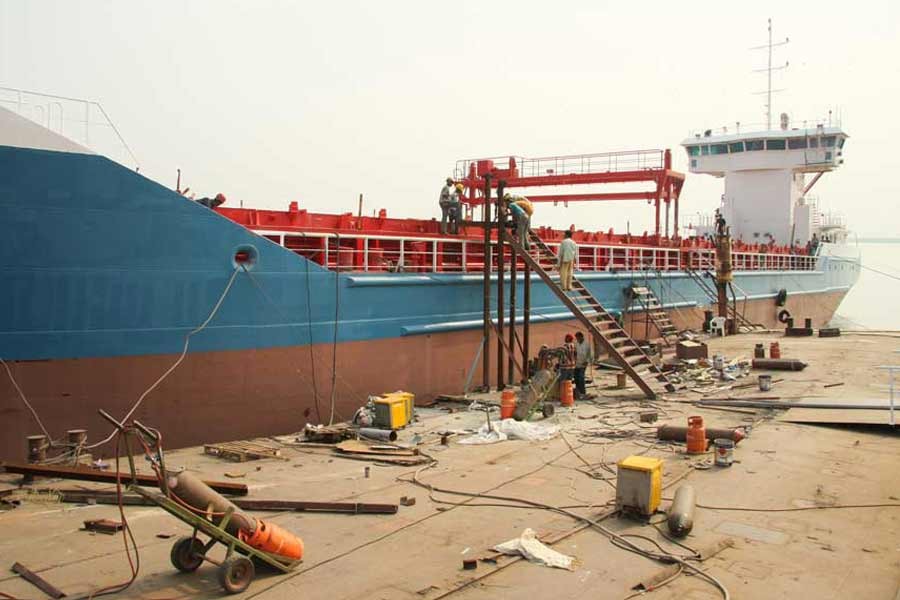 Worldwide Shipbuilding Boom and Bangladesh’s Lost Opportunity: How Financial Mismanagement, Loan Defaults, and Weak Governance Crippled a Promising Industry
An investigative analysis by Ghulam Suhrawardi Today, the world is witnessing one of the largest shipbuilding booms in history. Many countries are profiting from it. China, South Korea, and Japan have benefited from increased demand for new vessels due to fleet renewal, changing trade routes, environmental regulations, and strong financial […]



JOB SITES
CONTENTS
LINKS
Happy New Year

Découvrez les avantages de MadCasino
Dans le monde des casinos en ligne, MadCasino se distingue par ses offres attrayantes et ses services de qualité. Que vous soyez un joueur débutant ou un parieur aguerri, vous trouverez ici une variété de jeux qui sauront satisfaire toutes vos envies. Les machines à sous, les jeux de table et les options de paris en direct sont tous disponibles pour vous offrir une expérience de jeu inégalée. De plus, le casino propose régulièrement des bonus qui permettent d'augmenter vos chances de gagner, vous offrant ainsi une excellente opportunité de maximiser vos gains.
En matière de sécurité, MadCasino est un nom de confiance. Il est entièrement licencié et régulé, ce qui garantit un environnement de jeu sûr et équitable. Les joueurs peuvent se concentrer sur leur expérience de jeu sans se soucier des problèmes de sécurité. Les transactions financières sont également sécurisées grâce à des technologies de pointe.
Les jeux proposés par MadCasino sont issus des développeurs les plus réputés de l'industrie, vous assurant des graphismes époustouflants et des mécaniques de jeu innovantes. Les joueurs peuvent également profiter d'une expérience de jeu en direct qui simule l'atmosphère d'un casino terrestre, tout en restant dans le confort de leur maison.
Enfin, la plateforme de MadCasino est optimisée pour les appareils mobiles, permettant aux joueurs de parier à tout moment et de n'importe où. Que vous soyez sur votre smartphone ou votre tablette, l'accès à vos jeux préférés n'a jamais été aussi simple. Ne manquez pas l'opportunité de découvrir ce casino exceptionnel.
Les offres de Cresus Casino
Cresus Casino est un autre acteur majeur dans le domaine des jeux en ligne, offrant des promotions généreuses et une vaste sélection de jeux. Les joueurs peuvent profiter d'une expérience de jeu enrichissante grâce aux nombreux bonus disponibles, qui sont conçus pour attirer tant les nouveaux utilisateurs que les joueurs réguliers. Ces avantages permettent non seulement de prolonger votre temps de jeu, mais aussi d'augmenter vos chances de gains conséquents.
Le casino se distingue également par sa ludothèque impressionnante, comprenant une sélection variée de machines à sous, de jeux de table et de jeux en direct. Les clients peuvent choisir parmi des titres populaires et appréciés, ainsi que des nouveautés qui enrichissent constamment l'offre. L'interface utilisateur est conviviale, rendant la navigation sur la plateforme fluide et agréable.
En termes de sécurité, Cresus Casino assure à ses joueurs un environnement de jeu fiable. La plateforme utilise des protocoles de sécurité avancés pour protéger les données personnelles et financières des utilisateurs. Cela permet aux joueurs de se sentir en sécurité tout en jouant à leurs jeux préférés.
Avec un service client réactif et professionnel, Cresus Casino s'assure que toutes vos questions et préoccupations sont traitées rapidement. Que ce soit pour des questions concernant les bonus, les retraits ou les jeux, vous bénéficierez d'une assistance rapide et efficace.
Explorez Nine Casino et ses avantages
Dans l'univers des casinos en ligne, Nine Casino a su se faire une place de choix grâce à son approche innovante et à ses nombreux avantages pour les joueurs. Les utilisateurs peuvent s'attendre à une expérience de jeu enrichissante, avec des bonus attractifs qui sont régulièrement mis à jour. Ces offres sont une excellente façon de découvrir de nouveaux jeux tout en maximisant votre potentiel de gain.
La plateforme de Nine Casino est riche en options de jeux, allant des machines à sous aux jeux de table, en passant par le live casino. Chaque jeu est conçu pour offrir une expérience immersive grâce à des graphismes de haute qualité et des fonctionnalités innovantes. Les parieurs peuvent profiter de sessions de jeu captivantes, comme s'ils étaient dans un véritable casino.
La sécurité est une priorité pour Nine Casino, qui utilise des technologies de cryptage avancées pour protéger les informations de ses joueurs. Cela garantit un environnement de jeu sûr et fiable, permettant aux utilisateurs de se concentrer sur ce qu'ils aiment le plus : jouer.
Enfin, le service clientèle fourni par Nine Casino est exceptionnel, avec des agents disponibles pour répondre à toutes vos questions et résoudre vos problèmes. Vous pourrez ainsi jouer en toute tranquillité, sachant que votre satisfaction est au cœur de leurs préoccupations.
Profitez de l'expérience Lucky31
Lucky31 est un casino en ligne qui se distingue par son approche orientée vers le joueur, offrant une multitude d'options de jeux et des bonus généreux. Que vous soyez amateur de machines à sous ou passionné de jeux de table, vous trouverez une large sélection pour satisfaire toutes vos envies de jeu. Les promotions fréquentes permettent aux joueurs de prolonger leur expérience tout en augmentant leurs chances de gains.
La convivialité de la plateforme de Lucky31 est l'un de ses plus grands atouts. Les joueurs peuvent naviguer facilement entre les différents jeux, et l'interface est conçue pour être intuitive, quel que soit le niveau d'expérience de l'utilisateur. De plus, le casino est entièrement optimisé pour les appareils mobiles, ce qui permet de parier où que vous soyez.
En matière de sécurité, Lucky31 prend les préoccupations des joueurs très au sérieux. Le casino est agréé et régulé, garantissant un environnement de jeu équitable et sécurisé. Les joueurs peuvent ainsi se concentrer sur leur expérience de jeu sans se soucier des risques liés à la sécurité.
Pour ceux qui recherchent un support client efficace, Lucky31 offre un service réactif et professionnel. Que ce soit pour des questions sur les bonus, les jeux ou les paiements, vous aurez accès à une assistance de qualité, vous garantissant une expérience de jeu fluide et agréable.