search the site


Ocean Security: South Asia and the Indian Ocean
‘Ocean Security: South Asia and the Indian Ocean’
23 Oct 2023
Nilanthi Samaranayake delivering the keynote speech
- Following is the Keynote address delivered by Nilanthi Samaranayake at the Conference on “Ocean Security: South Asia and the Indian Ocean” organised by the Regional Centre for Strategic Studies
This is the first part of a two-part series of articles.
Executive Director Melegoda,
Ambassador Chung,
Paper Presenters,
Distinguished Guests,
Good morning. My thanks to the Regional Centre for Strategic Studies and Professor Melegoda for the invitation to speak today at this conference on “Ocean Security: South Asia and the Indian Ocean.” I’m honoured to serve on RCSS’s International Research Committee and appreciate the kind introduction by Professor Wanasinghe-Pasqual. I’m also a visiting analyst at the US Institute of Peace, which is a nonpartisan, independent institute in Washington. I’m happy to provide my personal views today based on my research.
The representation of paper presenters here spans across South Asia—including Sri Lanka, Maldives, India, Pakistan—to the wider Indo-Pacific region including New Zealand, Japan, and Canada.
I’d like to congratulate the paper presenters who are conducting research and developing innovative concepts to increase our understanding of the Indian Ocean and South Asia. This work will contribute to the outcome of greater ocean security and stability.
A review of the paper topics in the program suggests a deep focus on traditional security issues, such as major power competition between India and China in the Indian Ocean, as well as analysis of the Quad construct. But there’s also an important focus on non-traditional security such as climate change, as well as trafficking and migration. The topics that will be discussed today reflect the various challenges that currently confront the Indian Ocean and South Asia.
As we begin our discussions, let’s take a step back and consider some of the prominent characteristics of the Indian Ocean. And I’ll make the case a bit later about the enablers of stability in the Indian Ocean that may be overlooked given the recent focus on the Indo-Pacific framing of the wider region.
A diverse region
The Indian Ocean is a diverse region with waters that touch multiple continents and sub-regions.
At its broadest definition, the Indian Ocean accounts for 33 countries and about 35% of the world’s population at 2.9 billion people. Here in Sri Lanka, 60,000-plus ships annually pass by the southern tip of the island which sits along the main east-west sea lanes. For the region, this means that half of the world’s container shipments transit the Indian Ocean. And one-third of the world’s bulk cargo traffic. It’s also estimated that eighty percent of the world’s maritime oil shipments transit the Indian Ocean.
Economics is clearly where the Indian Ocean derives its greatest significance. And this is not only the case for regional stakeholders, but also for global trade. It’s estimated that 75% of Indian Ocean trade is extra-regional.
There’s also been a significant degree of national and human development in the Indian Ocean that’s not often acknowledged. Fifty years ago, Indian Ocean states except for Australia were considered largely underdeveloped. Today, a review of members in the Indian Ocean Rim Association—of which Sri Lanka has just become Chair—shows most are categorised by the World Bank as middle-income economies. The majority of this group are lower middle-income countries that are trying to meet their national development goals, while facing challenges as they grow. This includes the loss of concessional assistance from multilateral development banks. Some officials have called this the price of their success.
Today, the Indian Ocean region confronts various strategic-level challenges and questions, often about China’s activities and intentions in the future and the implications for other countries, to tactical-level, maritime security challenges that are rooted here and now. These have ranged from cyclones and other natural disasters, which climate change has exacerbated, to shipping accidents; trafficking of narcotics, humans, and weapons; and illegal fishing.
Traditional and non-traditional challenges
We can also see in the news, officials from the region who are trying to manage this range of traditional and non-traditional security challenges and develop policy solutions to those challenges. For example, India has been trying to advance the subject of climate security and urge greater commitments through its presidency of the G20 and at COP27 last November through the loss and damage compensation fund for countries affected by climate disasters. In Bangladesh, Prime Minister Sheikh Hasina has discussed how the Bangladesh Navy plays “a special role in preventing smuggling and illegal fishing.” Bangladesh has also provided shelter and refuge for roughly 1 million Rohingya refugees from Myanmar and has worked with international partners to address this human security crisis for the wider Bay of Bengal region.
Meanwhile, leaders in other South Asian countries are managing a challenging environment of strategic competition, while trying to maintain their own countries’ sovereignty and freedom of action. Their public statements increasingly reflect this difficult position.
In Nepal, Prime Minister Dahal of Nepal last month said: “we cannot wade into security-related issues. It is our stated policy not to be under the umbrella of any side. Ours is a non-aligned foreign policy.” The Prime Minister is overseeing Nepal as it implements the Millenium Challenge Corporation compact with the US, while he also needed to travel to China for infrastructure development discussions.
Sri Lanka’s President Wickremesinghe in August stated: “It is imperative that we chart a course devoid of entanglement in these international rivalries, maintaining an impartial stance. Our foremost concern must be the safeguarding of our security within this sphere.” For its part, Sri Lanka is developing a standard operating procedure which officials can point to for decisions on determining ship visits. It’s for all ships, but mainly arose to address recurring questions about visiting Chinese State-owned ships. Notably, officials in recent years have resurrected language about keeping the Indian Ocean as “a zone of peace”—an idea which Sri Lanka put forth during the Cold War years of the 1960s and 70s.
Maldivian Foreign Minister in a July speech in New Delhi stated: “We are friends to all and enemies to none. Our partnership is with everyone.” With the transfer of power in Maldives next month, many are waiting to see how Maldives will manage this issue in the next administration. The president-elect also referenced the theme of sovereignty by speaking about, “our pursuit to build a better future for our country, and to ensure the sovereignty of our nation,” and how “we will be choosing to be pro-Maldives.”
While there are some challenges that are of unique focus in the contemporary era such as marine plastics pollution, the issue of managing major power rivalry is not new. In fact, the need to manage large powers is something that Smaller South Asian countries are quite familiar with historically. And not out of choice or a desire to play off powers, as is often suggested, but out of necessity while trying to meet priority national objectives.
They’ve needed to navigate regional-level and great-power rivalries throughout their modern histories. While there are limits to historical analogies, some of the issues then resonate now. For example, the Smaller South Asian countries represented strategic locations for military basing and access for large powers in the Indian Ocean in the 1950s and 60s. Yet, it’s not often remembered that Sri Lankan and Maldivian leaders’ decisions about this access directly affected large powers’ calculations about military presence in the region. This was seen in the UK, to the US, to the Soviet Union into the 1970s, and with effects in the present era—most recently seen in Mauritius’ legal battle against the UK over the Chagos Islands. Within these islands is the Diego Garcia base, which has been critical for US military operations. For some, these developments by smaller states in the Indian Ocean may be a forgotten story from the Cold War era. But these actions reflected strategic decisions and agency by smaller countries that had meaningful implications for large powers’ security strategies. These actions especially take on a new meaning in the contemporary era of strategic competition, even if some of the names have changed. For example, replace concerns about the Soviet Union or the US with China in some of these histories.
For its part, the United States has global security interests in the maritime domain, in which the Indian Ocean plays one part. Maritime strategists are currently developing concepts for the US to best approach this domain in the coming decades. This is informed by threat perceptions seen in the growth of China’s maritime forces and capability. For example, the US Secretary of the Navy Carlos Del Toro recently called for a “new maritime statecraft” in which the US aims to “prevail in this era of intense strategic competition.”
(Nilanthi Samaranayake has 25 years of experience in the nonprofit research sector. Samaranayake’s work focuses on regional security in the Indian Ocean, smaller South Asian countries, non-traditional security issues, U.S. alliances and partnerships, and small states in international affairs. Samaranayake received a master’s degree in international relations from the London School of Economics and Political Science and a bachelor’s in international studies from American University and completed a fellowship at the National Bureau of Asian Research)
–———————————————————————————-
The views and opinions expressed in this article are those of the author, and do not necessarily reflect those of this publication.
The article appeared in the Morning Lanka and is published here with permission from Nilanthi Samaranayake.
Featured Post
 বড় জাহাজ মেরামতে মাতারবাড়ীতে ১ বিলিয়ন ডলারের প্রকল্প
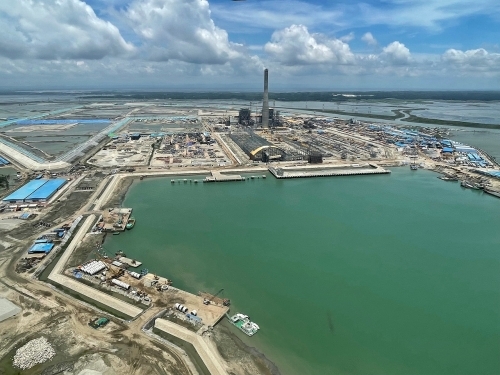
 মাতারবাড়ীতে প্রায় ১ বিলিয়ন মার্কিন ডলার ব্যয়ে পরিবেশবান্ধব ডকইয়ার্ড ও জাহাজ নির্মাণ কেন্দ্র স্থাপনের উদ্যোগে নীতিগত অনুমোদন দিয়েছে নৌপরিবহন মন্ত্রণালয়। এখন প্রকল্পটির কারিগরি ও আর্থিক মূল্যায়নের জন্য প্রস্তাবটি সরকারি-বেসরকারি অংশীদারত্ব (পিপিপি) কর্তৃপক্ষের কাছে পাঠানো হয়েছে। সম্পূর্ণ বেসরকারি অর্থায়নে সরকারি জমির মালিকানা অক্ষুণ্ন রেখে প্রকল্পটি বাস্তবায়নের পরিকল্পনা রয়েছে। বন্দর কর্তৃপক্ষ জানায়, […]
 Industry on alert over scam messages offering ships “safe passage” on Hormuz
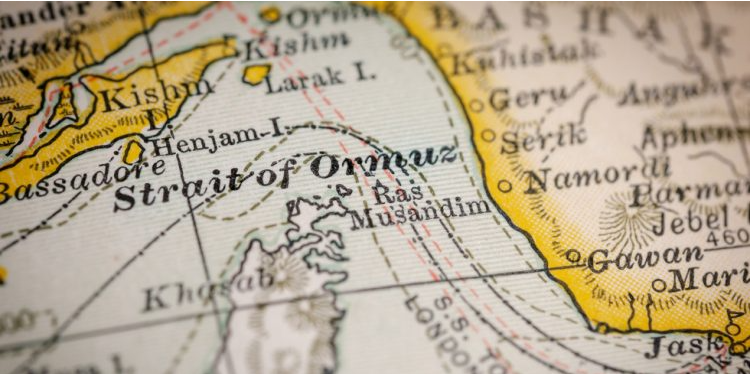
 Credit: Shutterstock Fraudulent messages offering safe passage through the Strait of Hormuz in exchange for cryptocurrency have been circulated to shipping companies with vessels stranded west of the waterway, according to MARISKS. In an alert issued on 20 April, MARISKS cautioned that unknown actors posing as Iranian authorities had contacted […]



JOB SITES
CONTENTS
LINKS
Happy New Year

Découvrez les avantages de MadCasino
Dans le monde des casinos en ligne, MadCasino se distingue par ses offres attrayantes et ses services de qualité. Que vous soyez un joueur débutant ou un parieur aguerri, vous trouverez ici une variété de jeux qui sauront satisfaire toutes vos envies. Les machines à sous, les jeux de table et les options de paris en direct sont tous disponibles pour vous offrir une expérience de jeu inégalée. De plus, le casino propose régulièrement des bonus qui permettent d'augmenter vos chances de gagner, vous offrant ainsi une excellente opportunité de maximiser vos gains.
En matière de sécurité, MadCasino est un nom de confiance. Il est entièrement licencié et régulé, ce qui garantit un environnement de jeu sûr et équitable. Les joueurs peuvent se concentrer sur leur expérience de jeu sans se soucier des problèmes de sécurité. Les transactions financières sont également sécurisées grâce à des technologies de pointe.
Les jeux proposés par MadCasino sont issus des développeurs les plus réputés de l'industrie, vous assurant des graphismes époustouflants et des mécaniques de jeu innovantes. Les joueurs peuvent également profiter d'une expérience de jeu en direct qui simule l'atmosphère d'un casino terrestre, tout en restant dans le confort de leur maison.
Enfin, la plateforme de MadCasino est optimisée pour les appareils mobiles, permettant aux joueurs de parier à tout moment et de n'importe où. Que vous soyez sur votre smartphone ou votre tablette, l'accès à vos jeux préférés n'a jamais été aussi simple. Ne manquez pas l'opportunité de découvrir ce casino exceptionnel.
Les offres de Cresus Casino
Cresus Casino est un autre acteur majeur dans le domaine des jeux en ligne, offrant des promotions généreuses et une vaste sélection de jeux. Les joueurs peuvent profiter d'une expérience de jeu enrichissante grâce aux nombreux bonus disponibles, qui sont conçus pour attirer tant les nouveaux utilisateurs que les joueurs réguliers. Ces avantages permettent non seulement de prolonger votre temps de jeu, mais aussi d'augmenter vos chances de gains conséquents.
Le casino se distingue également par sa ludothèque impressionnante, comprenant une sélection variée de machines à sous, de jeux de table et de jeux en direct. Les clients peuvent choisir parmi des titres populaires et appréciés, ainsi que des nouveautés qui enrichissent constamment l'offre. L'interface utilisateur est conviviale, rendant la navigation sur la plateforme fluide et agréable.
En termes de sécurité, Cresus Casino assure à ses joueurs un environnement de jeu fiable. La plateforme utilise des protocoles de sécurité avancés pour protéger les données personnelles et financières des utilisateurs. Cela permet aux joueurs de se sentir en sécurité tout en jouant à leurs jeux préférés.
Avec un service client réactif et professionnel, Cresus Casino s'assure que toutes vos questions et préoccupations sont traitées rapidement. Que ce soit pour des questions concernant les bonus, les retraits ou les jeux, vous bénéficierez d'une assistance rapide et efficace.
Explorez Nine Casino et ses avantages
Dans l'univers des casinos en ligne, Nine Casino a su se faire une place de choix grâce à son approche innovante et à ses nombreux avantages pour les joueurs. Les utilisateurs peuvent s'attendre à une expérience de jeu enrichissante, avec des bonus attractifs qui sont régulièrement mis à jour. Ces offres sont une excellente façon de découvrir de nouveaux jeux tout en maximisant votre potentiel de gain.
La plateforme de Nine Casino est riche en options de jeux, allant des machines à sous aux jeux de table, en passant par le live casino. Chaque jeu est conçu pour offrir une expérience immersive grâce à des graphismes de haute qualité et des fonctionnalités innovantes. Les parieurs peuvent profiter de sessions de jeu captivantes, comme s'ils étaient dans un véritable casino.
La sécurité est une priorité pour Nine Casino, qui utilise des technologies de cryptage avancées pour protéger les informations de ses joueurs. Cela garantit un environnement de jeu sûr et fiable, permettant aux utilisateurs de se concentrer sur ce qu'ils aiment le plus : jouer.
Enfin, le service clientèle fourni par Nine Casino est exceptionnel, avec des agents disponibles pour répondre à toutes vos questions et résoudre vos problèmes. Vous pourrez ainsi jouer en toute tranquillité, sachant que votre satisfaction est au cœur de leurs préoccupations.
Profitez de l'expérience Lucky31
Lucky31 est un casino en ligne qui se distingue par son approche orientée vers le joueur, offrant une multitude d'options de jeux et des bonus généreux. Que vous soyez amateur de machines à sous ou passionné de jeux de table, vous trouverez une large sélection pour satisfaire toutes vos envies de jeu. Les promotions fréquentes permettent aux joueurs de prolonger leur expérience tout en augmentant leurs chances de gains.
La convivialité de la plateforme de Lucky31 est l'un de ses plus grands atouts. Les joueurs peuvent naviguer facilement entre les différents jeux, et l'interface est conçue pour être intuitive, quel que soit le niveau d'expérience de l'utilisateur. De plus, le casino est entièrement optimisé pour les appareils mobiles, ce qui permet de parier où que vous soyez.
En matière de sécurité, Lucky31 prend les préoccupations des joueurs très au sérieux. Le casino est agréé et régulé, garantissant un environnement de jeu équitable et sécurisé. Les joueurs peuvent ainsi se concentrer sur leur expérience de jeu sans se soucier des risques liés à la sécurité.
Pour ceux qui recherchent un support client efficace, Lucky31 offre un service réactif et professionnel. Que ce soit pour des questions sur les bonus, les jeux ou les paiements, vous aurez accès à une assistance de qualité, vous garantissant une expérience de jeu fluide et agréable.