search the site


Ocean Security: South Asia and the Indian Ocean Part 2
‘Ocean Security: South Asia and the Indian Ocean’
24 Oct 2023

- Following is the keynote address delivered by international relations expert Nilanthi Samaranayake at the Conference on ‘Ocean Security: South Asia and the Indian Ocean’ organised by the Regional Centre for Strategic Studies
This is the final part of a two-part series of articles. The first was published in the 24 October issue. Click here for the first part.
Coming back to the Indian Ocean, there’s no United States (US) strategy document that’s been released which articulates Washington’s interest specifically in this region. As you know, the US has developed a national strategy focused on the wider “Indo-Pacific” region since 2017. This regional focus has evolved over the past decade, including in consultation with allies and partners, after years of being focused on the Asia-Pacific as a geographic planning construct.
A read of the three highest-level US strategy documents released last year – the National Security Strategy, National Defence Strategy, and Indo-Pacific Strategy – shows that the Indian Ocean has only one substantive reference in each of the three documents.
In the absence of a clear strategy for this region, US strategic objectives in the Indian Ocean must therefore be inferred.
Based on my personal research of the region, I see three core objectives that the US has. The first is ensuring the free flow of commerce in the Indian Ocean. This trade is critical to the global economy for hydrocarbons, containers, and bulk cargo. The US focus on this objective can be seen with the deployment of forces and personnel this summer to US Naval Forces Central Command in the Middle East, after Iran’s activity threatened merchant shipping in the Strait of Hormuz area. Despite its withdrawal from Afghanistan, the US commitment to the objective of freedom of the seas and secure sealanes appears constant.
I see the second objective as maintaining US military access to the Indian Ocean. The US is an extra-regional power with no resident territories like France has, for example. Therefore, it seeks military basing and access, not only for combat-support purposes as seen in Iraq and Afghanistan, but also to aid in the provision of humanitarian assistance and relief after disasters like the 2004 tsunami, cyclones in the Bay of Bengal, and in Mozambique.
I see the third objective as seeking to keep the Indian Ocean in its current peaceful state and not wanting it to assume greater priority for US strategic interests, given its already increased priorities in the Pacific, Arctic, and Atlantic Oceans. A review of US strategy and policy toward the Indo-Pacific suggests the primacy of US interests in the Pacific segment, given several US states and territories in this region as well as US military presence in the western Pacific. The US also has homeland defence objectives in the Pacific, Arctic, and Atlantic oceans. And Russia’s invasion of Ukraine last year highlighted the reasons behind US moves that were already underway to devote greater attention to security of the Atlantic and Arctic theatres.
US strategy and Indian Ocean
So given the United States’ priorities in these regions and constraints on allocating its resources globally, what does this mean for US security strategy in the Indian Ocean? I think this means Washington needs the Indian Ocean to be stable. It doesn’t want it to flare up into a crisis. It supports allies and partners who contribute to regional stability and has placed particular emphasis on India in its approach. And it seeks to preserve its access to the region – not only for itself, certainly, but with benefit to others.
The Freedom of Navigation programme is a visible example of the US policy to maintain freedom of the seas, and for ships and aircraft to operate where international law allows. This is a controversial programme, and is often referenced in media for freedom of navigation operations in the South China Sea. However, the programme has its origins more than 40 years ago and speaks to a core US interest of freedom of the seas.
Now for Indian Ocean countries, I think this US objective of seeking stability here aligns with the state and norms of the region, especially when compared with the more turbulent waters of the Pacific.
I see three enablers of stability in this region. First, the Indian Ocean is not characterised by rampant territorial disputes. Certainly, there are some current maritime boundary disputes, but not of the fiery kind seen to the east. Second, the shared focus on economics and secure sealanes has promoted cooperation in the Indian Ocean, as seen in counter-piracy deployments. This is even between countries whose capitals have high-profile disagreements. Yet operational-level cooperation continues at sea due to converging interests in this region. Third, the Indian Ocean has seen an embrace of international legal venues to resolve maritime boundary disputes. This is particularly the case in the Bay of Bengal, with mechanisms used and respected such as the International Tribunal for the Law of the Sea and the Permanent Court of Arbitration. This stands in contrast to the Pacific, such as the Philippines-China legal dispute in 2016. Moreover, Sri Lanka has emphasised its commitment to the UN Convention on the Law of the Sea as it’s developed standard operating procedures for visiting ships.
These enablers of stability reflect the unique strengths of the Indian Ocean and should not be forgotten when much attention is given to the wider Indo-Pacific region.
Non-traditional security challenge
In addition to these large strategic issues, the Regional Centre for Strategic Studies conference is importantly examining the various non-traditional security issues that confront the region. For example, there are sessions on the blue economy, environmental security, and irregular crime in the Indian Ocean. The waters of the western Indian Ocean prominently saw pirate attacks off the Horn of Africa roughly a decade ago, as well as the ensuing multinational naval response to escort ships and ensure secure sealanes. Through a combination of procedures implemented by the shipping industry and through naval escorts, incidents of piracy went down. This was a clear success story of cooperation in the Indian Ocean when facing a non-traditional security challenge.
Today, there’s a need for greater multinational cooperation on other non-traditional security challenges. This includes narcotics trafficking to illegal, unreported, and unregulated (IUU) fishing to gender issues. Regarding women, peace, and security (WPS), Sri Lanka earlier this year adopted its first National Action Plan to meet its obligations under the UN’s WPS resolution. In South Asia, Bangladesh had previously completed its own National Action Plan. These developments serve as examples for other South Asian countries to advance gender security and their WPS commitments.
Regarding IUU fishing, 20% of the world’s tuna catch comes from the western Indian Ocean alone, and regional countries see IUU fishing in their exclusive economic zones. But gathering robust IUU data that is collected from across the various countries in the region has been a challenge. Regional information fusion centres from Madagascar to Singapore are serving as an important next-step in trying to provide operational-level data and information-sharing where possible to work toward more fundamental policy solutions.
In another example, the busy sea lanes of the Indian Ocean have seen some of the worst shipping accidents in the past few years. At the western edge of the Indian Ocean, Mauritius declared a “state of environmental emergency” in 2020 after the MV Wakashio ship ran aground and spilled oil. Two months later, the MT New Diamond oil tanker caught fire off the east coast of Sri Lanka and leaked diesel fuel over an area of 25 miles. Then in 2021, the X-Press Pearl container ship caught fire and subsequently sank, and emptied its contents into the sea and off Sri Lanka’s western coast. It’s been called “the worst marine plastic pollution event in the world”. While greater attention has been devoted to managing natural disasters in the Indian Ocean and South Asia as well as boosting resilience, more study of human-caused incidents and the effects of marine pollution on environmental security are needed.
When examining both traditional security and non-traditional security issues, it’s also worth remembering the interconnectedness of these concepts.
In fact, we’ve seen how non-traditional security challenges and cooperation to address them can sometimes result in traditional security outcomes that were unforeseen at the time. For example, the strategic grouping known as the Quad is often framed in terms of geopolitics and its contrasts with China. Yet, this grouping had its origins in operational-level coordination between the US, India, Japan, and Australia over the provision of disaster relief after the 2004 tsunami struck the Indian Ocean. A second example is that the severity of piracy once resulted in many nations’ naval deployments to the western Indian Ocean. This included China, which gained significant experience in learning how to operate naval ships in waters far from home. The traditional security outcome of roughly 15 years of its continued deployments to the Indian Ocean is clear for multiple stakeholders in the region and in daily media headlines.
Research significant
In the context of these dynamics, your work in conducting research on South Asia and the Indian Ocean has tremendous importance. You are, in effect, writing a history of the contemporary era in your assessments. You’re identifying strategic-level and tactical-level challenges for particular countries or the wider region. And you’re developing ideas for policy solutions to the problems you’ve identified. Policymakers are busy with their various duties, so you’re informing their thinking by drawing on your research findings and time spent analysing in depth the various problems of ocean security.
I hope you all will set a goal to publish the findings of the papers that you’ll present today – in some form, if not the entire paper – and also seek multiple venues for pieces of your wider research. This is increasingly possible through the proliferation of online media outlets. Your work will inform policymakers from your respective countries and ideally contribute to ocean security and resilience.
I look forward to the opportunity that awaits you as you begin this conference and the discussions you’ll have as you get to know fellow researchers from other countries in the region; understand the national aspirations and challenges they see in the Indian Ocean and South Asia; and identify shared interests to envision ideas for regional cooperation.
Congratulations again on presenting your papers, and I wish you a successful conference.
(Nilanthi Samaranayake has 25 years of experience in the nonprofit research sector. Samaranayake’s work focuses on regional security in the Indian Ocean, smaller South Asian countries, non-traditional security issues, US alliances and partnerships, and small states in international affairs. Samaranayake received a master’s degree in international relations from the London School of Economics and Political Science and a bachelor’s in international studies from American University, and completed a fellowship at the National Bureau of Asian Research)
–———————————————————————————-
The views and opinions expressed in this article are those of the author, and do not necessarily reflect those of this publication.
Featured Post
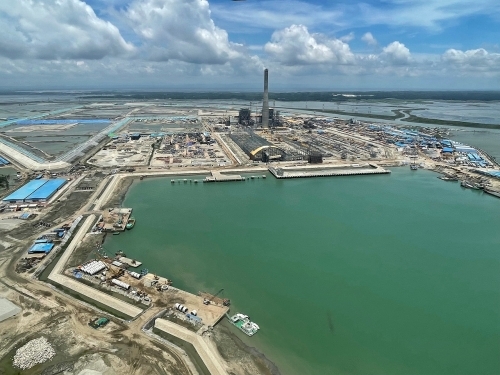 বড় জাহাজ মেরামতে মাতারবাড়ীতে ১ বিলিয়ন ডলারের প্রকল্প
 মাতারবাড়ীতে প্রায় ১ বিলিয়ন মার্কিন ডলার ব্যয়ে পরিবেশবান্ধব ডকইয়ার্ড ও জাহাজ নির্মাণ কেন্দ্র স্থাপনের উদ্যোগে নীতিগত অনুমোদন দিয়েছে নৌপরিবহন মন্ত্রণালয়। এখন প্রকল্পটির কারিগরি ও আর্থিক মূল্যায়নের জন্য প্রস্তাবটি সরকারি-বেসরকারি অংশীদারত্ব (পিপিপি) কর্তৃপক্ষের কাছে পাঠানো হয়েছে। সম্পূর্ণ বেসরকারি অর্থায়নে সরকারি জমির মালিকানা অক্ষুণ্ন রেখে প্রকল্পটি বাস্তবায়নের পরিকল্পনা রয়েছে। বন্দর কর্তৃপক্ষ জানায়, […]
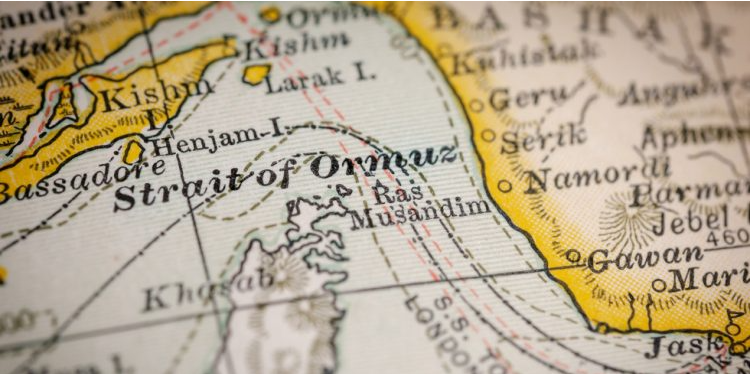 Industry on alert over scam messages offering ships “safe passage” on Hormuz
 Credit: Shutterstock Fraudulent messages offering safe passage through the Strait of Hormuz in exchange for cryptocurrency have been circulated to shipping companies with vessels stranded west of the waterway, according to MARISKS. In an alert issued on 20 April, MARISKS cautioned that unknown actors posing as Iranian authorities had contacted […]



JOB SITES
CONTENTS
LINKS
Happy New Year

Découvrez les avantages de MadCasino
Dans le monde des casinos en ligne, MadCasino se distingue par ses offres attrayantes et ses services de qualité. Que vous soyez un joueur débutant ou un parieur aguerri, vous trouverez ici une variété de jeux qui sauront satisfaire toutes vos envies. Les machines à sous, les jeux de table et les options de paris en direct sont tous disponibles pour vous offrir une expérience de jeu inégalée. De plus, le casino propose régulièrement des bonus qui permettent d'augmenter vos chances de gagner, vous offrant ainsi une excellente opportunité de maximiser vos gains.
En matière de sécurité, MadCasino est un nom de confiance. Il est entièrement licencié et régulé, ce qui garantit un environnement de jeu sûr et équitable. Les joueurs peuvent se concentrer sur leur expérience de jeu sans se soucier des problèmes de sécurité. Les transactions financières sont également sécurisées grâce à des technologies de pointe.
Les jeux proposés par MadCasino sont issus des développeurs les plus réputés de l'industrie, vous assurant des graphismes époustouflants et des mécaniques de jeu innovantes. Les joueurs peuvent également profiter d'une expérience de jeu en direct qui simule l'atmosphère d'un casino terrestre, tout en restant dans le confort de leur maison.
Enfin, la plateforme de MadCasino est optimisée pour les appareils mobiles, permettant aux joueurs de parier à tout moment et de n'importe où. Que vous soyez sur votre smartphone ou votre tablette, l'accès à vos jeux préférés n'a jamais été aussi simple. Ne manquez pas l'opportunité de découvrir ce casino exceptionnel.
Les offres de Cresus Casino
Cresus Casino est un autre acteur majeur dans le domaine des jeux en ligne, offrant des promotions généreuses et une vaste sélection de jeux. Les joueurs peuvent profiter d'une expérience de jeu enrichissante grâce aux nombreux bonus disponibles, qui sont conçus pour attirer tant les nouveaux utilisateurs que les joueurs réguliers. Ces avantages permettent non seulement de prolonger votre temps de jeu, mais aussi d'augmenter vos chances de gains conséquents.
Le casino se distingue également par sa ludothèque impressionnante, comprenant une sélection variée de machines à sous, de jeux de table et de jeux en direct. Les clients peuvent choisir parmi des titres populaires et appréciés, ainsi que des nouveautés qui enrichissent constamment l'offre. L'interface utilisateur est conviviale, rendant la navigation sur la plateforme fluide et agréable.
En termes de sécurité, Cresus Casino assure à ses joueurs un environnement de jeu fiable. La plateforme utilise des protocoles de sécurité avancés pour protéger les données personnelles et financières des utilisateurs. Cela permet aux joueurs de se sentir en sécurité tout en jouant à leurs jeux préférés.
Avec un service client réactif et professionnel, Cresus Casino s'assure que toutes vos questions et préoccupations sont traitées rapidement. Que ce soit pour des questions concernant les bonus, les retraits ou les jeux, vous bénéficierez d'une assistance rapide et efficace.
Explorez Nine Casino et ses avantages
Dans l'univers des casinos en ligne, Nine Casino a su se faire une place de choix grâce à son approche innovante et à ses nombreux avantages pour les joueurs. Les utilisateurs peuvent s'attendre à une expérience de jeu enrichissante, avec des bonus attractifs qui sont régulièrement mis à jour. Ces offres sont une excellente façon de découvrir de nouveaux jeux tout en maximisant votre potentiel de gain.
La plateforme de Nine Casino est riche en options de jeux, allant des machines à sous aux jeux de table, en passant par le live casino. Chaque jeu est conçu pour offrir une expérience immersive grâce à des graphismes de haute qualité et des fonctionnalités innovantes. Les parieurs peuvent profiter de sessions de jeu captivantes, comme s'ils étaient dans un véritable casino.
La sécurité est une priorité pour Nine Casino, qui utilise des technologies de cryptage avancées pour protéger les informations de ses joueurs. Cela garantit un environnement de jeu sûr et fiable, permettant aux utilisateurs de se concentrer sur ce qu'ils aiment le plus : jouer.
Enfin, le service clientèle fourni par Nine Casino est exceptionnel, avec des agents disponibles pour répondre à toutes vos questions et résoudre vos problèmes. Vous pourrez ainsi jouer en toute tranquillité, sachant que votre satisfaction est au cœur de leurs préoccupations.
Profitez de l'expérience Lucky31
Lucky31 est un casino en ligne qui se distingue par son approche orientée vers le joueur, offrant une multitude d'options de jeux et des bonus généreux. Que vous soyez amateur de machines à sous ou passionné de jeux de table, vous trouverez une large sélection pour satisfaire toutes vos envies de jeu. Les promotions fréquentes permettent aux joueurs de prolonger leur expérience tout en augmentant leurs chances de gains.
La convivialité de la plateforme de Lucky31 est l'un de ses plus grands atouts. Les joueurs peuvent naviguer facilement entre les différents jeux, et l'interface est conçue pour être intuitive, quel que soit le niveau d'expérience de l'utilisateur. De plus, le casino est entièrement optimisé pour les appareils mobiles, ce qui permet de parier où que vous soyez.
En matière de sécurité, Lucky31 prend les préoccupations des joueurs très au sérieux. Le casino est agréé et régulé, garantissant un environnement de jeu équitable et sécurisé. Les joueurs peuvent ainsi se concentrer sur leur expérience de jeu sans se soucier des risques liés à la sécurité.
Pour ceux qui recherchent un support client efficace, Lucky31 offre un service réactif et professionnel. Que ce soit pour des questions sur les bonus, les jeux ou les paiements, vous aurez accès à une assistance de qualité, vous garantissant une expérience de jeu fluide et agréable.