search the site


ASEAN:Overcoming the Continental-Maritime Divide
By Kwa Chong Guan 12 ctober 2023
SYNOPSIS
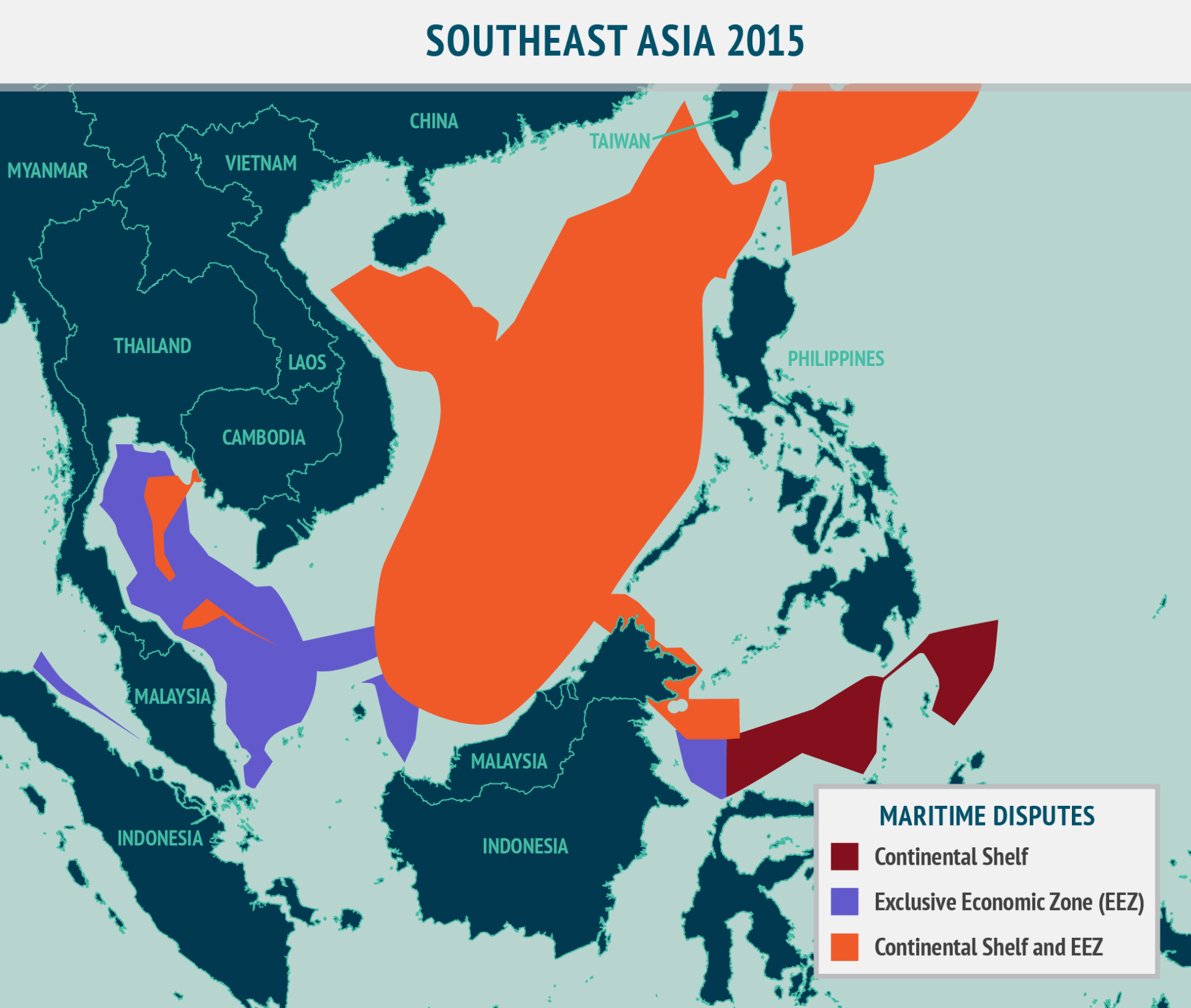
The expansion of ASEAN (Association of Southeast Asian Nations) in the 1990s brought together its founding members, a group of countries located in the maritime world of Southeast Asia, with the other countries on the mainland of the region centred around the major river systems (notably the Irrawaddy and Mekong). The growth of ASEAN conjoined two sets of modern states with divergent socio-cultural upbringing and geopolitical visions: one dependent on the seas around it and the other on the great rivers and their headwaters upon which their livelihood depended. ASEAN’s disunity and indecisiveness on critical issues it faces in the South China Sea and major power competition in the region is in part a consequence of this geographical reality.
COMMENTARY
ASEAN’s critics have had a field day over the Association’s 43rd Summit failure to respond to the crisis in Myanmar, China’s new national map reiterating its claim to the South China Sea, and the impact of US-China competition and tension among other issues confronting the region.
ASEAN is seen to be disunited and indecisive. In part, this is a consequence of ASEAN’s success as an institution, especially since the end of the Cold War when ASEAN successfully positioned itself as central to the emerging post-Cold War regional architecture, and as such, expected to be more united and decisive.
An Island World reacting to developments on its Continental North
It may however be relevant to reflect that ASEAN’s beginnings in 1967 were far more modest: to bring Malaysia, Singapore and Indonesia together in a new relationship after the end of the Indonesian Confrontation of Malaysia and to find a way for Malaysia and the Philippines to manage the latter’s claims to Sabah. ASEAN for its first decade was a forum for its foreign ministers to discuss their relations with each other.
ASEAN’s first wake-up call was North Vietnam’s conquest of South Vietnam and the Khmer Rouge takeover of Cambodia in 1975. The non-Communist members of ASEAN were now confronted by Communist “tigers” in its backyard while they were fighting local Communist parties waging People’s Wars in Malaysia, Singapore, the Philippines and Thailand, and Indonesia was still purging itself of remnants of the Indonesian Communist Party from its body politic.
ASEAN convened its first Heads of Government meeting in Bali in 1976 to consolidate its response to this growing Communist threat. A more urgent wakeup call came in 1979 when the Vietnamese army went into Cambodia and ASEAN’s founding leaders woke up to the reality that the Communist tiger in its backyard was now at their backdoor.
ASEAN supported the formation of a Coalition Government of Democratic Kampuchea (CGDK) to oppose the Vietnamese occupation of Cambodia and helped defend CGDK’s right to Cambodia’s seat at the United Nations over the next decade. ASEAN emerged from the Cold War with its political and diplomatic credentials enhanced, and confident of playing a major post-Cold War role in Southeast Asia.
ASEAN moved to bring its ten Dialogue Partners to form an ASEAN Regional Forum in 1994 to build confidence and trust as the foundation for the building of preventive diplomacy structures in the region. More significantly, ASEAN opened up its membership to the mainland Southeast Asian countries of Vietnam in 1995, Laos and Myanmar in 1997, and Cambodia in 1999.
This expansion of ASEAN’s membership to include all the territories south of China and east of India culminated in the localisation of a World War II Allied Command designation of these territories as a theatre of war which excluded the Philippines. The latter was, as a US colony, assigned to the US Pacific Ocean theatre.
Before that, Southeast Asia was the domains of Dutch, British, and French colonial empires encompassing two different worlds: a maritime world of the Dutch East Indies, the Philippines, and British Malaya with the Borneo territories of Sabah, Brunei and Sarawak, and a continental world of French Indochina, British Burma, and Siam (modern-day Thailand).
An Island and a Continental Southeast Asia Divide
It is the seas which define and connect the archipelagos of maritime Southeast Asia. Sea lanes, on which the coastal communities sailed and traded, crisscrossed these seas linking southern Chinese ports with ports on the Indian subcontinent and with ports in the Persian Gulf and the Red Sea. Maritime trade in spices and other tropical products was the foundation of the major kingdoms of Sriwijaya in South Sumatra, Sailendra in central Java, Majapahit in east Java and Melaka on the Malay Peninsula.
The historic kingdoms of mainland Southeast Asia were however defined by the great rivers on the plains on which they were located. Angkor was built on the plains of the Tonle Sap Lake which feeds on the Mekong River. The Vietnamese kingdoms of the Ly, Tran and Le dynasties were shaped by the Red River. The Thai kingdom of Sukhothai and its successor Ayutthya were located on Chao Phraya River. Bagan and its successor kingdoms of Ava and Konbaung were established on the upper reaches of the Ayeyarwady (Irrawaddy) River, while Bagu was established in the lower reaches of the Ayeyarwady.
In 2005, the Myanmar government decamped the eighteenth-century port city of Rangoon, which the British had developed into the administrative capital of British Burma and which continued to serve as Myanmar’s capital since independence in 1948. The Myanmar government relocated their capital, named Naypyidaw, inland to Pyinmana in the dry zone heartland of the country, and from where, presumably they could gaze at their inland frontiers better than at Rangoon.
The gaze of all the mainland Southeast Asian kingdoms was not south to the sea, but north, to the headwaters of the great rivers which they depended upon. Imperial China weighed more heavily on continental Southeast Asia than on maritime Southeast Asia.
The founding members of ASEAN were the maritime countries of Southeast Asia and included Thailand as the Association was a continuation of an earlier Association of Southeast Asia (ASA) set up in 1961 between Malaya, the Philippines and Thailand as an alternative regional approach to regional security from the US-backed Southeast Asia Treaty Organization (SEATO).
The expansion of ASEAN in the 1990s to include the mainland countries of the region was in a way perceived as fulfilment of ASEAN as a regional association of all the countries of “Southeast Asia”. But in adopting this World War II Allied demarcation of a theatre of military operations – inevitable in the post-World War II politics of regionalism – ASEAN has also inherited not only diverse, but divergent geopolitical framings of the region south of China and east of India.
Resilience of ASEAN
The challenge for ASEAN today is to bring more convergence to these historical and geopolitical divergences within the Association as current geopolitical forces pull the continental half and the maritime half of the Association to look at different futures, with continental ASEAN looking more northwards to the headwaters of its river systems and maritime ASEAN looking to the future in the seas around it.
The “Masterplan on ASEAN Connectivity 2025” to achieve a seamless and comprehensively connected and integrated ASEAN is a major step towards bringing more convergence between ASEAN’s diverse members as is the ASEAN Community Vision 2025. These visions and masterplans provide the institutional framework to integrate ASEAN’s diverse members. There is recognition that a resilient ASEAN will be the way forward though every member state will need to be dragged along at one time or another by a specific exigency felt at the national level.
The challenge is whether the geopolitical mindset of ASEAN member states is responding to ASEAN’s institutional visions and plans fast enough. The current approach of political expediency and consensus-based decision-making in ASEAN is no longer adequate to deal with the rapidly changing dynamics among major powers impinging on ASEAN interests in an increasingly digitalised and technology-driven global order threatened by a severe climate crisis. The survival instincts demonstrated by ASEAN leaders in the first few decades of the organisation will be germane and instructive.
Kwa Chong Guan is a Senior Fellow at S. Rajaratnam School of International Studies (RSIS), Nanyang Technological University (NTU), Singapore. He co-chairs Singapore’s membership at the Council for Security Cooperation in the Asia Pacific (CSCAP). He has an Honourary Adjunct position at the History Department of the National University of Singapore and is an Associate Fellow at the ISEAS-Yusof Ishak Institute.
ASEAN:
Overcoming the Continental-Maritime Divide
By Kwa Chong Guan
SYNOPSIS
The expansion of ASEAN (Association of Southeast Asian Nations) in the 1990s brought together its founding members, a group of countries located in the maritime world of Southeast Asia, with the other countries on the mainland of the region centred around the major river systems (notably the Irrawaddy and Mekong). The growth of ASEAN conjoined two sets of modern states with divergent socio-cultural upbringing and geopolitical visions: one dependent on the seas around it and the other on the great rivers and their headwaters upon which their livelihood depended. ASEAN’s disunity and indecisiveness on critical issues it faces in the South China Sea and major power competition in the region is in part a consequence of this geographical reality.
COMMENTARY
ASEAN’s critics have had a field day over the Association’s 43rd Summit failure to respond to the crisis in Myanmar, China’s new national map reiterating its claim to the South China Sea, and the impact of US-China competition and tension among other issues confronting the region.
ASEAN is seen to be disunited and indecisive. In part, this is a consequence of ASEAN’s success as an institution, especially since the end of the Cold War when ASEAN successfully positioned itself as central to the emerging post-Cold War regional architecture, and as such, expected to be more united and decisive.
An Island World reacting to developments on its Continental North
It may however be relevant to reflect that ASEAN’s beginnings in 1967 were far more modest: to bring Malaysia, Singapore and Indonesia together in a new relationship after the end of the Indonesian Confrontation of Malaysia and to find a way for Malaysia and the Philippines to manage the latter’s claims to Sabah. ASEAN for its first decade was a forum for its foreign ministers to discuss their relations with each other.
ASEAN’s first wake-up call was North Vietnam’s conquest of South Vietnam and the Khmer Rouge takeover of Cambodia in 1975. The non-Communist members of ASEAN were now confronted by Communist “tigers” in its backyard while they were fighting local Communist parties waging People’s Wars in Malaysia, Singapore, the Philippines and Thailand, and Indonesia was still purging itself of remnants of the Indonesian Communist Party from its body politic.
ASEAN convened its first Heads of Government meeting in Bali in 1976 to consolidate its response to this growing Communist threat. A more urgent wakeup call came in 1979 when the Vietnamese army went into Cambodia and ASEAN’s founding leaders woke up to the reality that the Communist tiger in its backyard was now at their backdoor.
ASEAN supported the formation of a Coalition Government of Democratic Kampuchea (CGDK) to oppose the Vietnamese occupation of Cambodia and helped defend CGDK’s right to Cambodia’s seat at the United Nations over the next decade. ASEAN emerged from the Cold War with its political and diplomatic credentials enhanced, and confident of playing a major post-Cold War role in Southeast Asia.
ASEAN moved to bring its ten Dialogue Partners to form an ASEAN Regional Forum in 1994 to build confidence and trust as the foundation for the building of preventive diplomacy structures in the region. More significantly, ASEAN opened up its membership to the mainland Southeast Asian countries of Vietnam in 1995, Laos and Myanmar in 1997, and Cambodia in 1999.
This expansion of ASEAN’s membership to include all the territories south of China and east of India culminated in the localisation of a World War II Allied Command designation of these territories as a theatre of war which excluded the Philippines. The latter was, as a US colony, assigned to the US Pacific Ocean theatre.
Before that, Southeast Asia was the domains of Dutch, British, and French colonial empires encompassing two different worlds: a maritime world of the Dutch East Indies, the Philippines, and British Malaya with the Borneo territories of Sabah, Brunei and Sarawak, and a continental world of French Indochina, British Burma, and Siam (modern-day Thailand).
An Island and a Continental Southeast Asia Divide
It is the seas which define and connect the archipelagos of maritime Southeast Asia. Sea lanes, on which the coastal communities sailed and traded, crisscrossed these seas linking southern Chinese ports with ports on the Indian subcontinent and with ports in the Persian Gulf and the Red Sea. Maritime trade in spices and other tropical products was the foundation of the major kingdoms of Sriwijaya in South Sumatra, Sailendra in central Java, Majapahit in east Java and Melaka on the Malay Peninsula.
The historic kingdoms of mainland Southeast Asia were however defined by the great rivers on the plains on which they were located. Angkor was built on the plains of the Tonle Sap Lake which feeds on the Mekong River. The Vietnamese kingdoms of the Ly, Tran and Le dynasties were shaped by the Red River. The Thai kingdom of Sukhothai and its successor Ayutthya were located on Chao Phraya River. Bagan and its successor kingdoms of Ava and Konbaung were established on the upper reaches of the Ayeyarwady (Irrawaddy) River, while Bagu was established in the lower reaches of the Ayeyarwady.
In 2005, the Myanmar government decamped the eighteenth-century port city of Rangoon, which the British had developed into the administrative capital of British Burma and which continued to serve as Myanmar’s capital since independence in 1948. The Myanmar government relocated their capital, named Naypyidaw, inland to Pyinmana in the dry zone heartland of the country, and from where, presumably they could gaze at their inland frontiers better than at Rangoon.
The gaze of all the mainland Southeast Asian kingdoms was not south to the sea, but north, to the headwaters of the great rivers which they depended upon. Imperial China weighed more heavily on continental Southeast Asia than on maritime Southeast Asia.
The founding members of ASEAN were the maritime countries of Southeast Asia and included Thailand as the Association was a continuation of an earlier Association of Southeast Asia (ASA) set up in 1961 between Malaya, the Philippines and Thailand as an alternative regional approach to regional security from the US-backed Southeast Asia Treaty Organization (SEATO).
The expansion of ASEAN in the 1990s to include the mainland countries of the region was in a way perceived as fulfilment of ASEAN as a regional association of all the countries of “Southeast Asia”. But in adopting this World War II Allied demarcation of a theatre of military operations – inevitable in the post-World War II politics of regionalism – ASEAN has also inherited not only diverse, but divergent geopolitical framings of the region south of China and east of India.
Resilience of ASEAN
The challenge for ASEAN today is to bring more convergence to these historical and geopolitical divergences within the Association as current geopolitical forces pull the continental half and the maritime half of the Association to look at different futures, with continental ASEAN looking more northwards to the headwaters of its river systems and maritime ASEAN looking to the future in the seas around it.
The “Masterplan on ASEAN Connectivity 2025” to achieve a seamless and comprehensively connected and integrated ASEAN is a major step towards bringing more convergence between ASEAN’s diverse members as is the ASEAN Community Vision 2025. These visions and masterplans provide the institutional framework to integrate ASEAN’s diverse members. There is recognition that a resilient ASEAN will be the way forward though every member state will need to be dragged along at one time or another by a specific exigency felt at the national level.
The challenge is whether the geopolitical mindset of ASEAN member states is responding to ASEAN’s institutional visions and plans fast enough. The current approach of political expediency and consensus-based decision-making in ASEAN is no longer adequate to deal with the rapidly changing dynamics among major powers impinging on ASEAN interests in an increasingly digitalised and technology-driven global order threatened by a severe climate crisis. The survival instincts demonstrated by ASEAN leaders in the first few decades of the organisation will be germane and instructive.
Kwa Chong Guan is a Senior Fellow at S. Rajaratnam School of International Studies (RSIS), Nanyang Technological University (NTU), Singapore. He co-chairs Singapore’s membership at the Council for Security Cooperation in the Asia Pacific (CSCAP). He has an Honourary Adjunct position at the History Department of the National University of Singapore and is an Associate Fellow at the ISEAS-Yusof Ishak Institute.
Featured Post
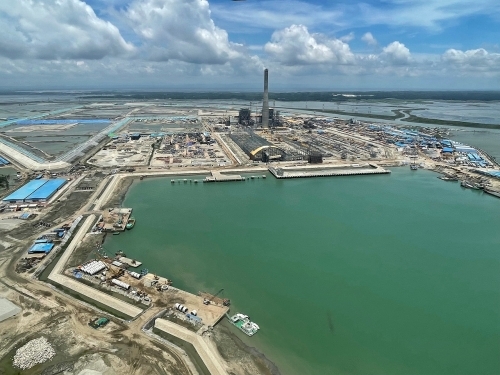 বড় জাহাজ মেরামতে মাতারবাড়ীতে ১ বিলিয়ন ডলারের প্রকল্প
 মাতারবাড়ীতে প্রায় ১ বিলিয়ন মার্কিন ডলার ব্যয়ে পরিবেশবান্ধব ডকইয়ার্ড ও জাহাজ নির্মাণ কেন্দ্র স্থাপনের উদ্যোগে নীতিগত অনুমোদন দিয়েছে নৌপরিবহন মন্ত্রণালয়। এখন প্রকল্পটির কারিগরি ও আর্থিক মূল্যায়নের জন্য প্রস্তাবটি সরকারি-বেসরকারি অংশীদারত্ব (পিপিপি) কর্তৃপক্ষের কাছে পাঠানো হয়েছে। সম্পূর্ণ বেসরকারি অর্থায়নে সরকারি জমির মালিকানা অক্ষুণ্ন রেখে প্রকল্পটি বাস্তবায়নের পরিকল্পনা রয়েছে। বন্দর কর্তৃপক্ষ জানায়, […]
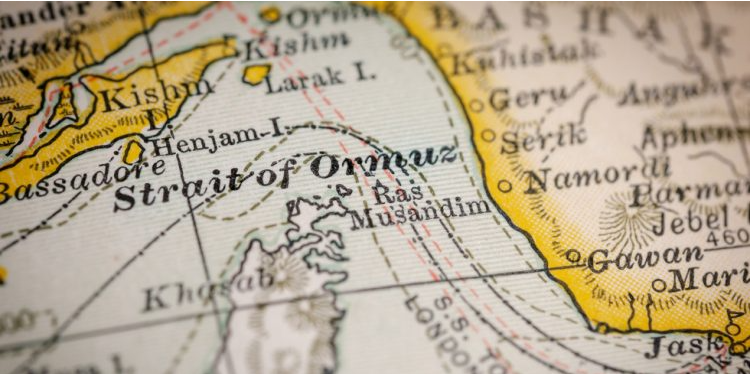 Industry on alert over scam messages offering ships “safe passage” on Hormuz
 Credit: Shutterstock Fraudulent messages offering safe passage through the Strait of Hormuz in exchange for cryptocurrency have been circulated to shipping companies with vessels stranded west of the waterway, according to MARISKS. In an alert issued on 20 April, MARISKS cautioned that unknown actors posing as Iranian authorities had contacted […]



JOB SITES
CONTENTS
LINKS
Happy New Year

Découvrez les avantages de MadCasino
Dans le monde des casinos en ligne, MadCasino se distingue par ses offres attrayantes et ses services de qualité. Que vous soyez un joueur débutant ou un parieur aguerri, vous trouverez ici une variété de jeux qui sauront satisfaire toutes vos envies. Les machines à sous, les jeux de table et les options de paris en direct sont tous disponibles pour vous offrir une expérience de jeu inégalée. De plus, le casino propose régulièrement des bonus qui permettent d'augmenter vos chances de gagner, vous offrant ainsi une excellente opportunité de maximiser vos gains.
En matière de sécurité, MadCasino est un nom de confiance. Il est entièrement licencié et régulé, ce qui garantit un environnement de jeu sûr et équitable. Les joueurs peuvent se concentrer sur leur expérience de jeu sans se soucier des problèmes de sécurité. Les transactions financières sont également sécurisées grâce à des technologies de pointe.
Les jeux proposés par MadCasino sont issus des développeurs les plus réputés de l'industrie, vous assurant des graphismes époustouflants et des mécaniques de jeu innovantes. Les joueurs peuvent également profiter d'une expérience de jeu en direct qui simule l'atmosphère d'un casino terrestre, tout en restant dans le confort de leur maison.
Enfin, la plateforme de MadCasino est optimisée pour les appareils mobiles, permettant aux joueurs de parier à tout moment et de n'importe où. Que vous soyez sur votre smartphone ou votre tablette, l'accès à vos jeux préférés n'a jamais été aussi simple. Ne manquez pas l'opportunité de découvrir ce casino exceptionnel.
Les offres de Cresus Casino
Cresus Casino est un autre acteur majeur dans le domaine des jeux en ligne, offrant des promotions généreuses et une vaste sélection de jeux. Les joueurs peuvent profiter d'une expérience de jeu enrichissante grâce aux nombreux bonus disponibles, qui sont conçus pour attirer tant les nouveaux utilisateurs que les joueurs réguliers. Ces avantages permettent non seulement de prolonger votre temps de jeu, mais aussi d'augmenter vos chances de gains conséquents.
Le casino se distingue également par sa ludothèque impressionnante, comprenant une sélection variée de machines à sous, de jeux de table et de jeux en direct. Les clients peuvent choisir parmi des titres populaires et appréciés, ainsi que des nouveautés qui enrichissent constamment l'offre. L'interface utilisateur est conviviale, rendant la navigation sur la plateforme fluide et agréable.
En termes de sécurité, Cresus Casino assure à ses joueurs un environnement de jeu fiable. La plateforme utilise des protocoles de sécurité avancés pour protéger les données personnelles et financières des utilisateurs. Cela permet aux joueurs de se sentir en sécurité tout en jouant à leurs jeux préférés.
Avec un service client réactif et professionnel, Cresus Casino s'assure que toutes vos questions et préoccupations sont traitées rapidement. Que ce soit pour des questions concernant les bonus, les retraits ou les jeux, vous bénéficierez d'une assistance rapide et efficace.
Explorez Nine Casino et ses avantages
Dans l'univers des casinos en ligne, Nine Casino a su se faire une place de choix grâce à son approche innovante et à ses nombreux avantages pour les joueurs. Les utilisateurs peuvent s'attendre à une expérience de jeu enrichissante, avec des bonus attractifs qui sont régulièrement mis à jour. Ces offres sont une excellente façon de découvrir de nouveaux jeux tout en maximisant votre potentiel de gain.
La plateforme de Nine Casino est riche en options de jeux, allant des machines à sous aux jeux de table, en passant par le live casino. Chaque jeu est conçu pour offrir une expérience immersive grâce à des graphismes de haute qualité et des fonctionnalités innovantes. Les parieurs peuvent profiter de sessions de jeu captivantes, comme s'ils étaient dans un véritable casino.
La sécurité est une priorité pour Nine Casino, qui utilise des technologies de cryptage avancées pour protéger les informations de ses joueurs. Cela garantit un environnement de jeu sûr et fiable, permettant aux utilisateurs de se concentrer sur ce qu'ils aiment le plus : jouer.
Enfin, le service clientèle fourni par Nine Casino est exceptionnel, avec des agents disponibles pour répondre à toutes vos questions et résoudre vos problèmes. Vous pourrez ainsi jouer en toute tranquillité, sachant que votre satisfaction est au cœur de leurs préoccupations.
Profitez de l'expérience Lucky31
Lucky31 est un casino en ligne qui se distingue par son approche orientée vers le joueur, offrant une multitude d'options de jeux et des bonus généreux. Que vous soyez amateur de machines à sous ou passionné de jeux de table, vous trouverez une large sélection pour satisfaire toutes vos envies de jeu. Les promotions fréquentes permettent aux joueurs de prolonger leur expérience tout en augmentant leurs chances de gains.
La convivialité de la plateforme de Lucky31 est l'un de ses plus grands atouts. Les joueurs peuvent naviguer facilement entre les différents jeux, et l'interface est conçue pour être intuitive, quel que soit le niveau d'expérience de l'utilisateur. De plus, le casino est entièrement optimisé pour les appareils mobiles, ce qui permet de parier où que vous soyez.
En matière de sécurité, Lucky31 prend les préoccupations des joueurs très au sérieux. Le casino est agréé et régulé, garantissant un environnement de jeu équitable et sécurisé. Les joueurs peuvent ainsi se concentrer sur leur expérience de jeu sans se soucier des risques liés à la sécurité.
Pour ceux qui recherchent un support client efficace, Lucky31 offre un service réactif et professionnel. Que ce soit pour des questions sur les bonus, les jeux ou les paiements, vous aurez accès à une assistance de qualité, vous garantissant une expérience de jeu fluide et agréable.