search the site


The rival to the Panama Canal that was never built
The rival to the Panama Canal that was never built
(Image credit: Getty Images)
By Chris Baraniuk25th August 2023
The Panama Canal is essential to global trade, but a recent drought has left large numbers of ships waiting to pass along it, raising questions about whether an alternative route between the Atlantic and Pacific oceans is needed.
I
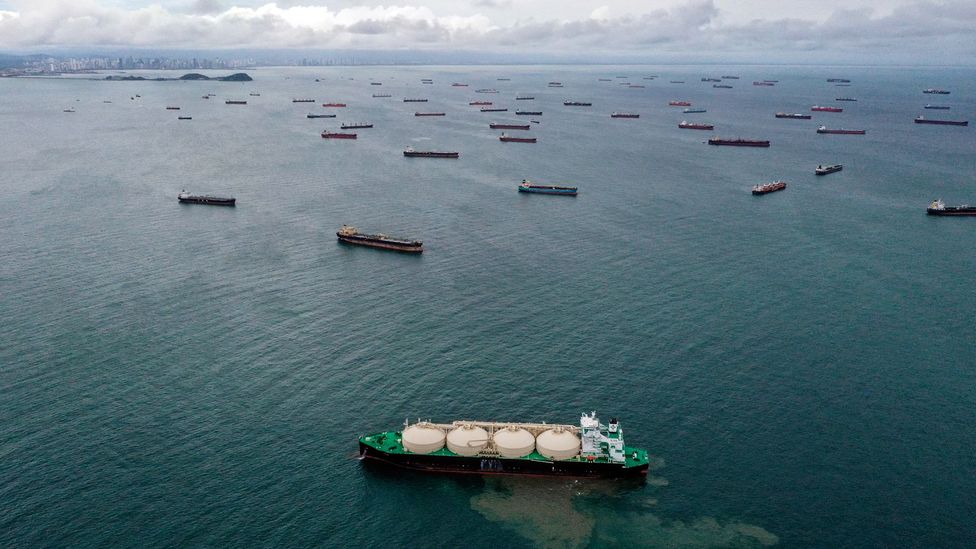
It is a traffic jam on a colossal scale. More than 200 ships, according to some estimates, float there, just waiting. Some are loaded with containers stuffed full of items including furniture, consumer goods or building materials. Some carry oil or gas. Others are transporting grain. They are all due to travel through one of the world’s most famous bottlenecks – a vital gateway for global shipping – the Panama Canal.
A highly unusual drought, right in the middle of Panama’s supposed wet season, has lowered water levels in two reservoirs that supply the canal. As a result, operators have had to restrict the size and number of ships that pass through its system of locks each day.
In our “just-in-time” global economy, the markets trading these goods can’t wait for long. An estimated $270bn (£210bn) worth of cargo passes along the canal each year en route to over 170 countries. Some of the ships have already chosen to take detours in a bid to avoid the delays.
“It’s unprecedented, and it’s a cause for concern,” says Michelle Wiese Bockmann, senior analyst at global maritime trade experts Lloyd’s List Intelligence. The situation, she explains, could push up freight costs, especially for fuels such as liquefied natural gas, potentially affecting consumer prices.
It’s at times like this that old ideas tend to resurface – what if there were another way to get from the Pacific to the Atlantic via ship?
In the early 1900s, the United States had two options: build a canal across Nicaragua, or, through Panama. The US Senate voted for the Panama option. It was a relatively easy choice – the route was shorter and, unlike Nicaragua, there wasn’t a string of active volcanoes in the way to contend with.
And yet the idea of a Nicaraguan Canal has never gone away. Just a decade ago, a Chinese businessman championed a huge project that intended to build such a canal by the end of the 2010s. Despite much fanfare, it never materialised. But the crippling drought now affecting the Panama Canal, and the threat of additional climate change-related water supply issues in the coming years, has prompted some to question whether a second canal in Nicaragua – or routes through other nearby Central American countries – might not be such a bad idea after all.
It is “technically feasible”, says Jean-Paul Rodrigue at Hofstra University, who has studied the long history of discussions around building the canal a Nicaraguan Canal. But there are many obstacles. “The problem is the distances involved are much longer, significantly longer,” he says.
Any such route would likely take the form of two canals linking Lake Nicaragua to the Pacific in the west, and to the Atlantic in the east. One of these canals would be around 15 miles (25km) long and the other, connecting to the Atlantic, would be even longer – around 60 miles (100km). The Panama Canal, which itself comprises the artificial Lake Gatún in its middle, has a total length of 50 miles (80km). It lies along the Isthmus of Panama, the narrowest section of land that separates the Pacific Ocean from the Caribbean Sea in the Atlantic Ocean.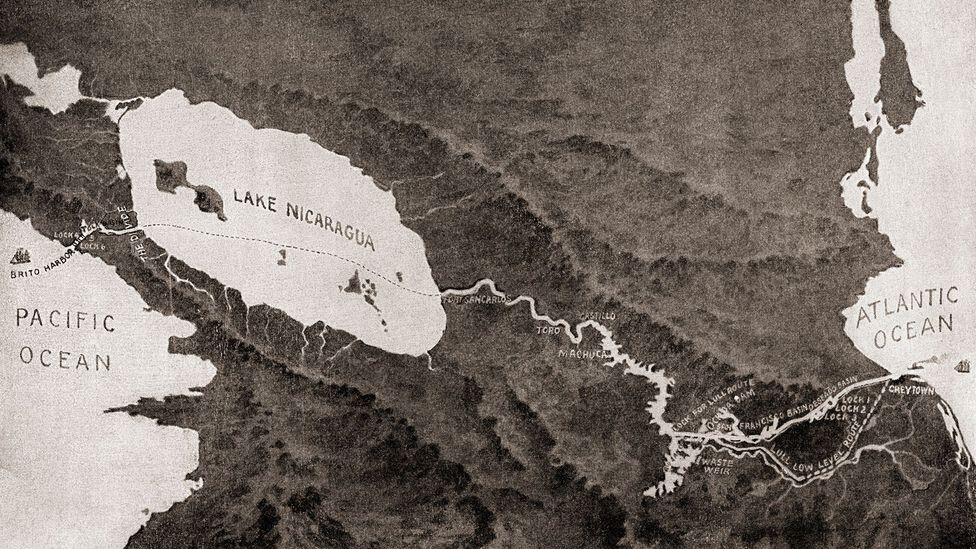
Plans for the Nicaraguan Canal have been around for more than 150 years (Credit: Getty Images)
Estimates of how much it would cost to build a Nicaraguan Canal vary but if you’ve got upwards of $40bn (£31bn) in your bank account, suggests Rodrigue, you might just about be able to do it. That’s about twice the cost of London’s new Crossrail railway, which can carry around 200 million passengers every year. Investors interested in a Nicaragua Canal project would have to be assured of a steady flow of ships for years to come, Rodrigue adds, since it is the transit fees from those vessels that would allow the new canal to generate income for its owners.
Even if that were guaranteed, there would undoubtedly be environmental consequences associated with such a megaproject. In the past, opponents of the idea have cited destruction of rainforest and wetland, contamination of Lake Nicaragua’s freshwater, and disruption to important waterways in the vicinity as potential ramifications.
Despite these hurdles, some have tried to do it. In 2013, a Chinese firm called HKND signed an agreement with the Nicaraguan government, which granted the company a 50-year right to build the canal, renewable for a further 50 years. However, the handshakes and overtures have so far come to nothing. HKND closed its office in Hong Kong in 2018. Attempts by the BBC to contact the firm were also unsuccessful. HKND’s website now redirects to an online gambling page.
Sarah McCall Harris wrote a PhD thesis detailing resistance to the project from local communities in Nicaragua while she was at the University of Denver. “It tended to be led by women,” she says. “Many people were interested in doing what they could to voice their concern and protest.” She notes how some residents felt that the whole scheme lacked transparency and sufficient environmental safeguards, something HKND rejected at the time. McCall Harris, who now works for Centenary College of Louisiana, even questions whether Nicaragua was genuinely committed to the plans. Given the involvement of a Chinese company, perhaps the Nicaraguan government was more interested in posturing – and showing the US it could make other partners, she says.
Although work appears to have stalled, Nicaraguan officials insist that the project is not dead. During a visit to Belarus in May, Nicaragua’s foreign minister claimed the scheme was still running and he indicated that Belarus could become involved with it somehow. No firm commitment from Belarus has materialised, to date. (In 2014, Belarus’s then-foreign minister expressed an interest in supplying machinery for the project.)
Regarding the prospect of a Nicaraguan Canal, Bockmann does not mince her words. The plan is “absolute rubbish”, she says, pointing out the lack of progress on the concept over many years.
But are there any alternatives? It’s worth noting that the existing Panama Canal is an extraordinary feat of engineering. “It’s quite incredible,” says Julian Bommer, a professor of civil engineering at Imperial College London in the UK. “These container ships fit into the locks like a glove, with inches to spare either side.”
Passage via the older lock system consumes around 500 million litres (110 million gallons) of water while the new route requires 200 million litres (40 million gallons) per ship
This industrial ballet happens dozens of times every day, though the current drought means that the daily throughput of Panamax-sized ships has fallen from 23 to 16 via one set of locks and remains at the standard 10 ships per day for Neopanamax-sized vessels, which must use a larger set of locks that became operational in 2016.
These devices are like giant liquid steps that allow ships to travel uphill and then down again, as well as forwards. At the highest point of the system, Lake Gatún, vessels are around 26m (85ft) above sea level.
You might also like:
- Why container ships won’t get any bigger
- How close are we to flying cars?
- The people who rescue the world’s biggest ships
The new series of locks were designed as part of the Panama Canal expansion project, which aims to conserve water by catching and re-using some of it. Passage via the older lock system consumes around 500 million litres (110 million gallons) of water while the new route requires 200 million litres (40 million gallons) per ship. But the drought has undermined the purpose of the expansion project by limiting the number and size of vessels that can pass through.
Bockmann notes that it’s actually common for vessels to wait for passage through the canal – 149 were waiting on 22 August last year, according to data from Seasearcher.com. It’s just that the current level of 201 ships waiting to transit on 22 August this year is unusually high. The Panama Canal operator says that in normal circumstances up to 90 ships might be queued for transit at one time. Its own count of the current traffic jam differs from figures reported elsewhere – at the time of writing, the operator claimed 120 vessels were waiting to pass through.
Those in charge of the canal have already suggested that they may need to accelerate plans to excavate a third reservoir in order to ensure water supplies in the coming years. That could provide one solution and Bommer notes that, despite being a large undertaking all of its own, constructing a new reservoir would pale in comparison to building a whole new canal. Maintaining water resources for the Panama Canal, in general, is hugely important since the reservoirs are also used for drinking water in the area. If Lake Gatún, for instance, were to drain, it would take multiple years of rainfall – at normal rates of precipitation – to refill it, says Bommer.
In the past, there have been proposals to construct canals, including sea-level canals that would not need multiple locks, either in Panama or other nearby countries. While large canals are eye-wateringly expensive to build, there are other schemes that could give the Panama Canal competition in the years to come. Take Mexico’s plan for a land bridge – a huge system of railways, highways and pipelines, linking the west coast of the country to the east coast. The Mexican government first announced plans for the project in 1975, and has recently prioritised investment in it again, despite opposition from local communities.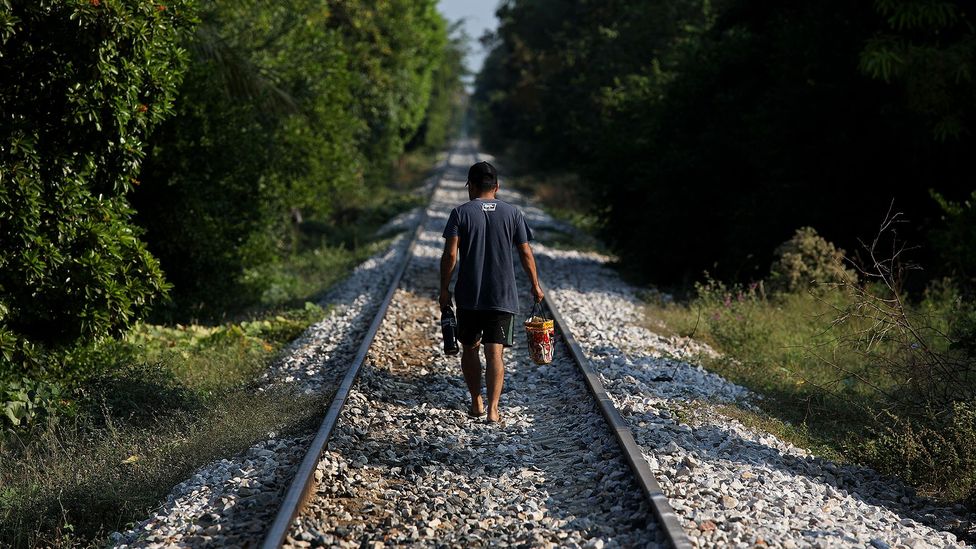
Mexico hopes to use rail to create an Interoceanic Corridor between ports that will be a rival route to the Panama Canal (Credit: Getty Images)
In Colombia, there is a proposal to build an underground maglev railway to transfer containers. Automated ports could load the containers onto maglev trains, which would then whisk them off to an automated port on the other side of the country – in less than 30 minutes.
There is already a land bridge across the United States, notes Rodrigue. Freight trains ferry containers via rail between the Pacific Coast and the Atlantic Coast where they can then, for example, catch a ship to onward destinations.
What about the Northwest Passage, a sea route through the Arctic north of North America? Because of climate change, ice coverage there is now getting so low during the summer that ships can sometimes pass through relatively safely. However, Rodrigue baulks at the idea of the container shipping industry adopting this route to any great extent.
“You have services and you run them all the time, year-round,” he says. “With the Arctic routes, the Northwest Passage in particular, it’s only open for a couple of months, if you’re lucky.” Environmental concerns abound here too, and the attractiveness of the route may also depend on whether the Canadian government chooses to charge a fee for transit through its waters.
Hiccups at the Panama Canal this summer may have prompted renewed interest in alternatives to this strategically significant waterway. But all of them, especially the long-running concept of a Nicaraguan Canal, present huge financial and engineering challenges that don’t evaporate just because there’s a periodic drought.
“Once the situation has abated, if there’s more rain and normal conditions, I would expect this idea will again vanish from the spotlight – until next time,” says Rodrigue.
Featured Post
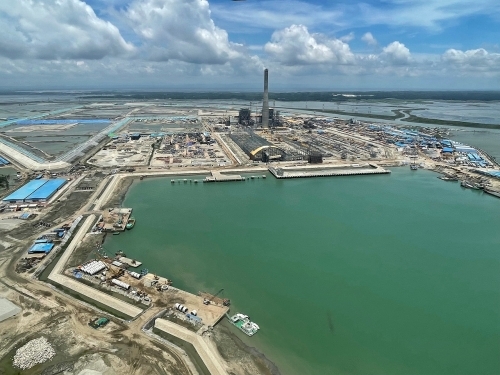 বড় জাহাজ মেরামতে মাতারবাড়ীতে ১ বিলিয়ন ডলারের প্রকল্প
 মাতারবাড়ীতে প্রায় ১ বিলিয়ন মার্কিন ডলার ব্যয়ে পরিবেশবান্ধব ডকইয়ার্ড ও জাহাজ নির্মাণ কেন্দ্র স্থাপনের উদ্যোগে নীতিগত অনুমোদন দিয়েছে নৌপরিবহন মন্ত্রণালয়। এখন প্রকল্পটির কারিগরি ও আর্থিক মূল্যায়নের জন্য প্রস্তাবটি সরকারি-বেসরকারি অংশীদারত্ব (পিপিপি) কর্তৃপক্ষের কাছে পাঠানো হয়েছে। সম্পূর্ণ বেসরকারি অর্থায়নে সরকারি জমির মালিকানা অক্ষুণ্ন রেখে প্রকল্পটি বাস্তবায়নের পরিকল্পনা রয়েছে। বন্দর কর্তৃপক্ষ জানায়, […]
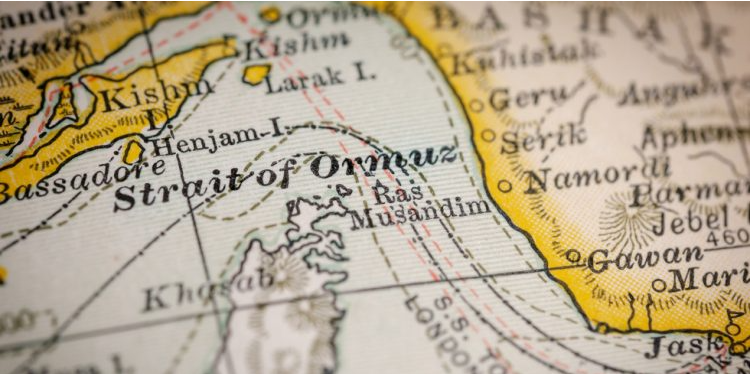 Industry on alert over scam messages offering ships “safe passage” on Hormuz
 Credit: Shutterstock Fraudulent messages offering safe passage through the Strait of Hormuz in exchange for cryptocurrency have been circulated to shipping companies with vessels stranded west of the waterway, according to MARISKS. In an alert issued on 20 April, MARISKS cautioned that unknown actors posing as Iranian authorities had contacted […]



JOB SITES
CONTENTS
LINKS
Happy New Year

Découvrez les avantages de MadCasino
Dans le monde des casinos en ligne, MadCasino se distingue par ses offres attrayantes et ses services de qualité. Que vous soyez un joueur débutant ou un parieur aguerri, vous trouverez ici une variété de jeux qui sauront satisfaire toutes vos envies. Les machines à sous, les jeux de table et les options de paris en direct sont tous disponibles pour vous offrir une expérience de jeu inégalée. De plus, le casino propose régulièrement des bonus qui permettent d'augmenter vos chances de gagner, vous offrant ainsi une excellente opportunité de maximiser vos gains.
En matière de sécurité, MadCasino est un nom de confiance. Il est entièrement licencié et régulé, ce qui garantit un environnement de jeu sûr et équitable. Les joueurs peuvent se concentrer sur leur expérience de jeu sans se soucier des problèmes de sécurité. Les transactions financières sont également sécurisées grâce à des technologies de pointe.
Les jeux proposés par MadCasino sont issus des développeurs les plus réputés de l'industrie, vous assurant des graphismes époustouflants et des mécaniques de jeu innovantes. Les joueurs peuvent également profiter d'une expérience de jeu en direct qui simule l'atmosphère d'un casino terrestre, tout en restant dans le confort de leur maison.
Enfin, la plateforme de MadCasino est optimisée pour les appareils mobiles, permettant aux joueurs de parier à tout moment et de n'importe où. Que vous soyez sur votre smartphone ou votre tablette, l'accès à vos jeux préférés n'a jamais été aussi simple. Ne manquez pas l'opportunité de découvrir ce casino exceptionnel.
Les offres de Cresus Casino
Cresus Casino est un autre acteur majeur dans le domaine des jeux en ligne, offrant des promotions généreuses et une vaste sélection de jeux. Les joueurs peuvent profiter d'une expérience de jeu enrichissante grâce aux nombreux bonus disponibles, qui sont conçus pour attirer tant les nouveaux utilisateurs que les joueurs réguliers. Ces avantages permettent non seulement de prolonger votre temps de jeu, mais aussi d'augmenter vos chances de gains conséquents.
Le casino se distingue également par sa ludothèque impressionnante, comprenant une sélection variée de machines à sous, de jeux de table et de jeux en direct. Les clients peuvent choisir parmi des titres populaires et appréciés, ainsi que des nouveautés qui enrichissent constamment l'offre. L'interface utilisateur est conviviale, rendant la navigation sur la plateforme fluide et agréable.
En termes de sécurité, Cresus Casino assure à ses joueurs un environnement de jeu fiable. La plateforme utilise des protocoles de sécurité avancés pour protéger les données personnelles et financières des utilisateurs. Cela permet aux joueurs de se sentir en sécurité tout en jouant à leurs jeux préférés.
Avec un service client réactif et professionnel, Cresus Casino s'assure que toutes vos questions et préoccupations sont traitées rapidement. Que ce soit pour des questions concernant les bonus, les retraits ou les jeux, vous bénéficierez d'une assistance rapide et efficace.
Explorez Nine Casino et ses avantages
Dans l'univers des casinos en ligne, Nine Casino a su se faire une place de choix grâce à son approche innovante et à ses nombreux avantages pour les joueurs. Les utilisateurs peuvent s'attendre à une expérience de jeu enrichissante, avec des bonus attractifs qui sont régulièrement mis à jour. Ces offres sont une excellente façon de découvrir de nouveaux jeux tout en maximisant votre potentiel de gain.
La plateforme de Nine Casino est riche en options de jeux, allant des machines à sous aux jeux de table, en passant par le live casino. Chaque jeu est conçu pour offrir une expérience immersive grâce à des graphismes de haute qualité et des fonctionnalités innovantes. Les parieurs peuvent profiter de sessions de jeu captivantes, comme s'ils étaient dans un véritable casino.
La sécurité est une priorité pour Nine Casino, qui utilise des technologies de cryptage avancées pour protéger les informations de ses joueurs. Cela garantit un environnement de jeu sûr et fiable, permettant aux utilisateurs de se concentrer sur ce qu'ils aiment le plus : jouer.
Enfin, le service clientèle fourni par Nine Casino est exceptionnel, avec des agents disponibles pour répondre à toutes vos questions et résoudre vos problèmes. Vous pourrez ainsi jouer en toute tranquillité, sachant que votre satisfaction est au cœur de leurs préoccupations.
Profitez de l'expérience Lucky31
Lucky31 est un casino en ligne qui se distingue par son approche orientée vers le joueur, offrant une multitude d'options de jeux et des bonus généreux. Que vous soyez amateur de machines à sous ou passionné de jeux de table, vous trouverez une large sélection pour satisfaire toutes vos envies de jeu. Les promotions fréquentes permettent aux joueurs de prolonger leur expérience tout en augmentant leurs chances de gains.
La convivialité de la plateforme de Lucky31 est l'un de ses plus grands atouts. Les joueurs peuvent naviguer facilement entre les différents jeux, et l'interface est conçue pour être intuitive, quel que soit le niveau d'expérience de l'utilisateur. De plus, le casino est entièrement optimisé pour les appareils mobiles, ce qui permet de parier où que vous soyez.
En matière de sécurité, Lucky31 prend les préoccupations des joueurs très au sérieux. Le casino est agréé et régulé, garantissant un environnement de jeu équitable et sécurisé. Les joueurs peuvent ainsi se concentrer sur leur expérience de jeu sans se soucier des risques liés à la sécurité.
Pour ceux qui recherchent un support client efficace, Lucky31 offre un service réactif et professionnel. Que ce soit pour des questions sur les bonus, les jeux ou les paiements, vous aurez accès à une assistance de qualité, vous garantissant une expérience de jeu fluide et agréable.