search the site


Marine Environment Protection Committee (MEPC 80), 3-7 July 2023
Marine Environment Protection Committee (MEPC 80), 3-7 July 2023
in International Shipping News,Shipping: Emission Possible 18/07/2023
The MEPC 80 session adopted the 2023 IMO Strategy on Reduction of GHG Emissions from Ships, with enhanced targets to tackle harmful emissions.
The revised IMO GHG Strategy includes an enhanced common ambition to reach net-zero GHG emissions from international shipping close to 2050, a commitment to ensure an uptake of alternative zero and near-zero GHG fuels by 2030, as well as indicative check-points for 2030 and 2040.
MEPC 80 highlights:
- Tackling climate change – 2023 IMO GHG Strategy adopted
- Energy efficiency of ships – draft amendments to IMO ship fuel oil consumption Data Collection System (DCS) approved
- Ballast water management – including approval of the Convention Review Plan and adoption of amendments to the BWM Convention
- Biofouling management – revised Guidelines adopted
- Designation of a Particularly Sensitive Sea Area in the in the North-Western Mediterranean to protect cetaceans
- Underwater noise – revised guidelines adopted
- Tackling marine litter – work on plastic pellets carriage / lost containers
- Ship-to-ship transfer – proposed Assembly resolution
- Special areas –effective date for the the Red Sea and the Gulf of Aden special areas under MARPOL Annexes I and V
- Other matters from the PPR Sub-Committee
1.Tackling climate change – cutting GHG emissions from ships
IMO has developed global regulations on energy efficiency for ships (read more here) and continues to take concrete actions to ensure that international shipping bears its fair share of responsibility in addressing climate change.
After several months of negotiations, the MEPC 80 session adopted the 2023 IMO Strategy on Reduction of GHG Emissions from Ships, with enhanced targets to tackle harmful emissions.
Life cycle GHG assessment guidelines adopted
The MEPC adopted Guidelines on life cycle GHG intensity of marine fuels (LCA guidelines). The LCA guidelines allow for a Well-to-Wake calculation, including Well-to-Tank and Tank-to-Wake emission factors, of total GHG emissions related to the production and use of marine fuels.
Interim guidance on the use of biofuels
The MEPC approved an MEPC circular on Interim guidance on the use of biofuels under regulations 26, 27 and 28 of MARPOL Annex VI (DCS and CII).
Next steps – intersessional working group
The MEPC agreed terms of reference for a future ISWG-GHG meeting as well as the next steps for a comprehensive impact assessment of candidate GHG reduction measures.
The sixteenth session of the Intersessional Working Group on the Reduction of GHG Emissions from Ships (ISWG-GHG 16) is set to meet in April 2024, ahead of the MEPC 81 session.
Onboard CO2 capture
The MEPC considered a number of submissions related to onboard CO2 capture and agreed to instruct ISWG-GHG 16, if time permits, to consider the proposals related to onboard CO2 capture ahead of MEPC 81 and advise the Committee on a way forward.
The submissions include those relating to onboard carbon capture (OCC) technology and a proposal on the way forward to review the current regulatory framework and consider how to move forward to potentially accommodate onboard CO2 capture within IMO’s regulatory framework.
2. Energy Efficiency
Draft amendments to the Data Collection System (DCS) approved
The Committee approved draft amendments to MARPOL Annex VI regarding the revision of the IMO ship fuel oil consumption Data Collection System (DCS).
The ISWG-GHG 14 session in March 2023 had discussed relevant proposals, noting broad support within the Group for the inclusion of data on transport work and on enhanced level of granularity of reported data in the DCS.
The draft amendments relate to MARPOL Annex VI Appendix IX on “Information to be submitted to the IMO Ship Fuel Oil Consumption Database” (relating to regulation 27), relating to reporting of data on cargo carried. They will be put forward to MEPC 81 for adoption.
Review of the short-term measure (CII and EEXI)
The short-term GHG reduction measures, CII rating, EEXI and enhanced SEEMP, entered into force on 1 November 2022. (Read more here: FAQ – EEXI and CII – ship carbon intensity and rating system).
The MEPC approved the review plan of the CII regulations and guidelines, which must be completed at the latest by 1 January 2026. The plan foresees the timeline for the review of the short-term measure is described as follows: 1 Data gathering stage: from MEPC 80 to MEPC 82 (autumn 2024); Data analysis stage: working group at MEPC 82 to be continued by a correspondence group; and 3 Convention and Guidelines review stage: an intersessional working group between MEPC 82 and MEPC 83 (spring 2025) as well as a working group at MEPC 83.
3. Ballast water management – including approval of the Convention Review Plan and adoption of amendments to the BWM Convention
Ballast Water Management (BWM) Convention Review Plan
The MEPC approved the Convention Review Plan (CRP) under the experience‑building phase associated with the BWM Convention, including the list of priority issues to be considered in the convention review stage. This will guide the comprehensive review of the BWM Convention over the next three years and the corresponding development of a package of amendments to the Convention.
The CRP, which will be disseminated as a BWM.2 circular, envisages that the amendments developed during this comprehensive process could be adopted at MEPC 85 in Autumn 2026. The Committee re-established the Correspondence Group on Review of the BWM Convention.
BWM Convention amendments
The MEPC adopted amendments to appendix II of the Annex to the BWM Convention (Form of Ballast Water Record Book). They are expected to enter into force on 1 February 2025.
Implementing the BWM Convention
The MEPC discussed a number of matters relating to the implementation of the BWM Convention, with the main outcomes including:
- Approved a BWM.2 circular on Guidance on matters relating to ballast water record-keeping and reporting. This Guidance will assist in bringing clarity to the record-keeping and reporting process under the BWM Convention, including guidance on completing the Ballast Water Record Book, an updated example ballast water reporting form and an example form for voluntary tank-by-tank logging of ballast water operations.
- Adopted an MEPC resolution on Amendments to the Guidelines for ballast water management and development of Ballast Water Management Plans (G4).
- Adopted an MEPC resolution on Amendments to the Guidelines for ballast water exchange (G6).
- Adopted an MEPC resolution on Guidance for the use of electronic record books under the BWM Convention. This guidance aims to provide standardized information on approving an electronic record book to ensure the obligations of the BWM Convention are met and that there is a consistent approach to approving such systems.
- Approved draft amendments to regulations A-1 and B-2 of the BWM Convention concerning the use of electronic record books under the Convention and instructed the Secretariat to circulate the amendments with a view to adoption by MEPC 81.
- Approved a Protocol for verification of ballast water compliance monitoring devices. This Protocol is an important tool to support effective implementation of the BWM Convention by enabling the use of devices for a variety of purposes that satisfy a common level of quality. These include commissioning testing of ballast water management systems, port State control inspections, and ships’ self-monitoring.
- Approved a unified interpretation to the form of the International Ballast Water Management Certificate (IBWMC) and regulations B-3.5 and B-3.10 of the BWM Convention, regarding the “date of construction” for a ship which has undergone a major conversion in order to implement the BWM Convention.
- Granted Final Approval to two ballast water management systems which make use of Active Substances, granted Basic Approval to one, and extended the Final Approval of another for use in fresh water; based on the outcome of the 43rd meeting of the GESAMP Ballast Water Working Group.
4.Biofouling management – draft revised Biofouling Guidelines set for adoption
The MEPC adopted the revised Guidelines for the control and management of ships’ biofouling to minimize the transfer of invasive aquatic species (Biofouling Guidelines), following a comprehensive review of the Guidelines.
The 2023 Guidelines expand on and update the previous version, with a view to strengthening it and increasing its uptake.
Biofouling is the accumulation of aquatic organisms on wetted or immersed surfaces such as ships and other offshore structures. Good biofouling management can help protect marine biodiversity by preventing the transfer of invasive aquatic species. Keeping a ship’s hull clean can also reduce the ship’s greenhouse gas emissions by improving fuel efficiency.
The Biofouling Guidelines were first adopted in 2011 and are intended to provide a globally consistent approach to the management of biofouling. The MEPC 72 session (2018) decided to initiate a review, to take into account best practices and experience as well as the latest research.
The GEF-UNDP-IMO GloFouling Partnerships Project and the related TEST (Transfer of Environmentally Sound Technologies) Biofouling Project, funded by the Norwegian Agency for Development Cooperation (Norad), support developing countries to implement the Biofouling Guidelines and trial relevant technologies.
5. Designation of a Particularly Sensitive Sea Area
The MEPC agreed to designate a particular sensitive sea area in the North-Western Mediterranean Sea (NW Med PSSA) to protect cetaceans from international shipping.
The designation includes associated protective measures (APMs), which are recommendatory in nature and intended to be by any commercial ships and pleasure yachts from 300 gross tonnage and upwards:
- Mariners should navigate with particular caution within the NW Med PSSA, in areas where large and medium cetaceans are detected or reported, and reduce their speed to between 10 and 13 knots as voluntary speed reduction (VSR). However, a safe speed should be kept, so that proper and effective action could be taken to avoid collision and any possible negative impacts on ship’s manoeuvrability. Mariners should keep an appropriate safety distance or speed reduction measure from any large and medium cetaceans observed or detected in close quarter situation. The safety distance or speed reduction measure should be adapted to the actual navigation circumstances and conditions of the ship. Mariners should broadcast on VHF or other available means on scene, the position of medium and large cetaceans observed or detected within the designated PSSA and transmit the information and the position to a designated coastal Authority(ies).
- Mariners should report any collision with cetaceans to a designated coastal Authority(ies), which should forward this information to the International Whaling Commission (IWC) global cetacean ship strikes database.
6. Addressing underwater noise – revised guidelines adopted
The MEPC approved revised Guidelines for the reduction of underwater noise from commercial shipping to address adverse impacts on marine life.
The guidelines, issued as a circular, recognize that commercial shipping is one of the main contributors to underwater radiated noise (URN) which has adverse effects on critical life functions for a wide range of marine life, including marine mammals, fish and invertebrate species, upon which many coastal Indigenous communities depend for their food, livelihoods and cultures.
They include updated technical knowledge, including reference to international measurement standards, recommendations and classification society rules. They also provide sample templates to assist shipowners with the development of an underwater radiated noise management plan.
They provide an overview of approaches applicable to designers, shipbuilders and ship operators to reduce the underwater radiated noise of any given ship. They are intended to assist relevant stakeholders in establishing mechanisms and programmes through which noise reduction efforts can be realized. The previous guidelines were issued in 2014.
The MEPC approved the dissemination of an MEPC circular on Guidelines for underwater radiated noise reduction in Inuit Nunaat and the Arctic, developed by the Inuit Circumpolar Council (ICC). The guidelines recognize that Inuit Nunaat is a unique environment and adverse impacts to marine wildlife in this area from shipping noise may be significantly increased as a result. Sound levels throughout Inuit Nunaat are lower than elsewhere, making it more vulnerable to increases from industrial activity.
7. Tackling marine litter
Development of recommendations for the carriage of plastic pellets by sea in freight containers
The MEPC noted and concurred with the ongoing work in the Sub-Committee on Pollution Prevention and Response (PPR) to address the risks to the marine environment from plastic pellets. This risk has been highlighted by incidents, including the X-Press Pearl in 2021, during which 11,000 tonnes of plastic pellets were spilled off the shore of Sri Lanka.
The Committee noted the two-stage approach agreed by the Sub-Committee in relation to reducing the environmental risk associated with the maritime transport of plastic pellets in freight containers, namely: firstly, the development of a draft circular containing recommendations for the carriage of plastic pellets by sea in freight containers, addressing in particular packaging, notification, and stowage, to be finalized at PPR 11 following input by the Sub-Committee on Carriage of Cargoes and Containers (CCC 9, which meets 20-29 September) ,with a view to approval by MEPC 81 in 2024; and subsequently, the development of amendments to appropriate mandatory instruments, which could be informed by the experience gained from the implementation of the voluntary measures.
The MEPC noted that the PPR Sub-Committee has agreed that plastic pellets should not be carried in bulk.
Mandatory reporting of lost containers – draft MARPOL amendments set for approval
The MEPC approved, for subsequent adoption, draft amendments to MARPOL protocol I referring to a procedure for reporting lost freight containers. Containers lost overboard can be a serious hazard to navigation and safety at sea as well as to the marine environment.
The draft amendments to article V of protocol I of the MARPOL Convention– Provisions concerning reports on incidents involving harmful substances, would add a new paragraph to say that “In case of the loss of freight container(s), the report required by article II (1) (b) shall be made in accordance with the provisions of SOLAS regulations V/31 and V/32.”
Related draft SOLAS chapter V amendments were approved by the Maritime Safety Committee (MSC 107), to require the master of every ship involved in the loss of freight container(s) to communicate the particulars of such an incident to ships in the vicinity, to the nearest coastal State, and also to the flag State.
Capacity building to address marine plastic litter from ships
GloLitter Partnerships, a project between the Government of Norway, IMO and FAO is supporting developing countries, including Small Islands Developing States (SIDS) and Least Developed Countries (LDCs), in identifying opportunities for the prevention and reduction of marine litter.
8. Ship-to-ship transfers – proposed Assembly resolution
The Committee discussed a document aiming to raise awareness submission on the potential environmental risks and the consequences and concerns for the global marine pollution prevention and liability and compensation regimes relating to the increase in ship-to-ship transfers at sea. The document proposes a draft Assembly resolution to encourage and urge action, including enhanced monitoring of such operations.
The Committee agreed to forward the draft Assembly resolution to the thirty-third session of the Assembly, together with the comments and views expressed at this session, for further consideration with a view to finalization and adoption by A 33. In this regard, the Committee noted that, should Member States or international organizations have further comments or proposals in connection to this matter, they could submit documents to A 33 accordingly.
The development of the draft Assembly resolution follows discussions on this matter in the Legal Committee.
9. Special areas –effective date for the the Red Sea and the Gulf of Aden special areas under MARPOL Annexes I and V
The MEPC agreed the effective date of 1 January 2025, for the the Red Sea and the Gulf of Aden special areas under MARPOL Annexes I and V, based on information provided related to the status of available necessary reception facilities for MARPOL Annexes I and V wastes and residues, covering all the ports and terminals within the areas.
10. Other matters from the PPR Sub-Committee
Inventory of Hazardous Materials – revision of guidelines
The MEPC adopted the 2023 Guidelines for the development of the Inventory of Hazardous Materials, following amendments to the Anti-fouling Systems (AFS) Convention to include controls on cybutryne.
Operational Guide on the Response to Spills of Hazardous and Noxious Substances (HNS)
The MEPC approved the Operational Guide on the Response to Spills of Hazardous and Noxious Substances (HNS). The guidance is for first responders and decision-makers in preparation for and during a maritime incident at sea or in port, when such an incident involves HNS.
Guidelines for thermal waste treatment devices
The MEPC adopted the 2023 Guidelines for thermal waste treatment devices.
Marine diesel engine replacing a steam system – draft MARPOL Annex VI amendments
The MEPC approved draft amendments to regulation 13.2.2 of MARPOL Annex VI on a marine diesel engine replacing a steam system, with a view to adoption at MEPC 81.
Electronic bunker delivery note – Unified interpretation to regulations 18.5 and 18.6 of MARPOL Annex VI
The MEPC approved a new unified interpretation to regulations 18.5 and 18.6 of MARPOL Annex VI, for inclusion in a revision of MEPC.1/Circ.795/rev.7 on unified interpretations to MARPOL Annex VI. The unified interpretation states that the Bunker Delivery Note (BDN) is acceptable in either hard copy or electronic format.
Reduction of Volatile Organic Compound (VOC) emissions – proposed output
The MEPC agreed a scope of work on the Reduction of Volatile Organic Compound (VOC) emissions, prepared by the PPR Sub-Committee. This work would aim to investigate how the reduction of Volatile Organic Compound (VOC) emissions could contribute to the implementation of the IMO GHG Strategy and would consider how to involve terminals in the reduction of Volatile Organic Compound (VOC) emissions as well as current and potential new regulation and guidance.
Source: IMO
Featured Post
 জাহাজ নির্মাণ শিল্প: হাতছাড়া হচ্ছে অপার সম্ভাবনা
 গোলাম সোহরাওয়ার্দি প্রকাশ : ২৭ অক্টোবর ২০২৬, ০৮: ০৪আপডেট : ২৭ অক্টোবর ২০২৬, ০৯: ২৪ সারা বিশ্ব এখন জাহাজ নির্মাণের এক বিশাল জোয়ার দেখছে। চীন, দক্ষিণ কোরিয়া ও জাপানের মতো দেশগুলো এ খাত থেকে বিপুল মুনাফা কামিয়ে নিচ্ছে। নতুন বাণিজ্যিক পথ তৈরি, জাহাজের […]
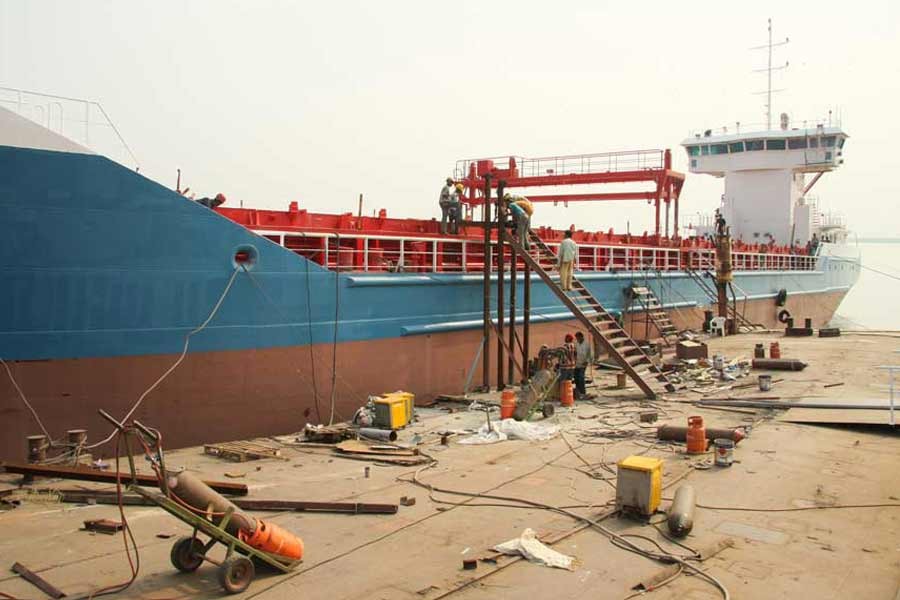 Worldwide Shipbuilding Boom and Bangladesh’s Lost Opportunity: How Financial Mismanagement, Loan Defaults, and Weak Governance Crippled a Promising Industry
An investigative analysis by Ghulam Suhrawardi Today, the world is witnessing one of the largest shipbuilding booms in history. Many countries are profiting from it. China, South Korea, and Japan have benefited from increased demand for new vessels due to fleet renewal, changing trade routes, environmental regulations, and strong financial […]


JOB SITES
CONTENTS
LINKS
Happy New Year

Découvrez les avantages de MadCasino
Dans le monde des casinos en ligne, MadCasino se distingue par ses offres attrayantes et ses services de qualité. Que vous soyez un joueur débutant ou un parieur aguerri, vous trouverez ici une variété de jeux qui sauront satisfaire toutes vos envies. Les machines à sous, les jeux de table et les options de paris en direct sont tous disponibles pour vous offrir une expérience de jeu inégalée. De plus, le casino propose régulièrement des bonus qui permettent d'augmenter vos chances de gagner, vous offrant ainsi une excellente opportunité de maximiser vos gains.
En matière de sécurité, MadCasino est un nom de confiance. Il est entièrement licencié et régulé, ce qui garantit un environnement de jeu sûr et équitable. Les joueurs peuvent se concentrer sur leur expérience de jeu sans se soucier des problèmes de sécurité. Les transactions financières sont également sécurisées grâce à des technologies de pointe.
Les jeux proposés par MadCasino sont issus des développeurs les plus réputés de l'industrie, vous assurant des graphismes époustouflants et des mécaniques de jeu innovantes. Les joueurs peuvent également profiter d'une expérience de jeu en direct qui simule l'atmosphère d'un casino terrestre, tout en restant dans le confort de leur maison.
Enfin, la plateforme de MadCasino est optimisée pour les appareils mobiles, permettant aux joueurs de parier à tout moment et de n'importe où. Que vous soyez sur votre smartphone ou votre tablette, l'accès à vos jeux préférés n'a jamais été aussi simple. Ne manquez pas l'opportunité de découvrir ce casino exceptionnel.
Les offres de Cresus Casino
Cresus Casino est un autre acteur majeur dans le domaine des jeux en ligne, offrant des promotions généreuses et une vaste sélection de jeux. Les joueurs peuvent profiter d'une expérience de jeu enrichissante grâce aux nombreux bonus disponibles, qui sont conçus pour attirer tant les nouveaux utilisateurs que les joueurs réguliers. Ces avantages permettent non seulement de prolonger votre temps de jeu, mais aussi d'augmenter vos chances de gains conséquents.
Le casino se distingue également par sa ludothèque impressionnante, comprenant une sélection variée de machines à sous, de jeux de table et de jeux en direct. Les clients peuvent choisir parmi des titres populaires et appréciés, ainsi que des nouveautés qui enrichissent constamment l'offre. L'interface utilisateur est conviviale, rendant la navigation sur la plateforme fluide et agréable.
En termes de sécurité, Cresus Casino assure à ses joueurs un environnement de jeu fiable. La plateforme utilise des protocoles de sécurité avancés pour protéger les données personnelles et financières des utilisateurs. Cela permet aux joueurs de se sentir en sécurité tout en jouant à leurs jeux préférés.
Avec un service client réactif et professionnel, Cresus Casino s'assure que toutes vos questions et préoccupations sont traitées rapidement. Que ce soit pour des questions concernant les bonus, les retraits ou les jeux, vous bénéficierez d'une assistance rapide et efficace.
Explorez Nine Casino et ses avantages
Dans l'univers des casinos en ligne, Nine Casino a su se faire une place de choix grâce à son approche innovante et à ses nombreux avantages pour les joueurs. Les utilisateurs peuvent s'attendre à une expérience de jeu enrichissante, avec des bonus attractifs qui sont régulièrement mis à jour. Ces offres sont une excellente façon de découvrir de nouveaux jeux tout en maximisant votre potentiel de gain.
La plateforme de Nine Casino est riche en options de jeux, allant des machines à sous aux jeux de table, en passant par le live casino. Chaque jeu est conçu pour offrir une expérience immersive grâce à des graphismes de haute qualité et des fonctionnalités innovantes. Les parieurs peuvent profiter de sessions de jeu captivantes, comme s'ils étaient dans un véritable casino.
La sécurité est une priorité pour Nine Casino, qui utilise des technologies de cryptage avancées pour protéger les informations de ses joueurs. Cela garantit un environnement de jeu sûr et fiable, permettant aux utilisateurs de se concentrer sur ce qu'ils aiment le plus : jouer.
Enfin, le service clientèle fourni par Nine Casino est exceptionnel, avec des agents disponibles pour répondre à toutes vos questions et résoudre vos problèmes. Vous pourrez ainsi jouer en toute tranquillité, sachant que votre satisfaction est au cœur de leurs préoccupations.
Profitez de l'expérience Lucky31
Lucky31 est un casino en ligne qui se distingue par son approche orientée vers le joueur, offrant une multitude d'options de jeux et des bonus généreux. Que vous soyez amateur de machines à sous ou passionné de jeux de table, vous trouverez une large sélection pour satisfaire toutes vos envies de jeu. Les promotions fréquentes permettent aux joueurs de prolonger leur expérience tout en augmentant leurs chances de gains.
La convivialité de la plateforme de Lucky31 est l'un de ses plus grands atouts. Les joueurs peuvent naviguer facilement entre les différents jeux, et l'interface est conçue pour être intuitive, quel que soit le niveau d'expérience de l'utilisateur. De plus, le casino est entièrement optimisé pour les appareils mobiles, ce qui permet de parier où que vous soyez.
En matière de sécurité, Lucky31 prend les préoccupations des joueurs très au sérieux. Le casino est agréé et régulé, garantissant un environnement de jeu équitable et sécurisé. Les joueurs peuvent ainsi se concentrer sur leur expérience de jeu sans se soucier des risques liés à la sécurité.
Pour ceux qui recherchent un support client efficace, Lucky31 offre un service réactif et professionnel. Que ce soit pour des questions sur les bonus, les jeux ou les paiements, vous aurez accès à une assistance de qualité, vous garantissant une expérience de jeu fluide et agréable.