search the site


Increasing complexity of stakeholder roles in southeast asian maritime security
Scott Edwards and John Bradford 20 February 2023
S. Rajaratnam School of International Studies, NTU Singapore
Different stakeholders contribute in different ways to Southeast Asian maritime security. Arguing that a better understanding of stakeholder roles and interests is required so that a more coordinated and effective maritime security policy can be developed, SCOTT EDWARDS and JOHN BRADFORD point to some of the ongoing difficulties of aligning different actors towards a common goal.
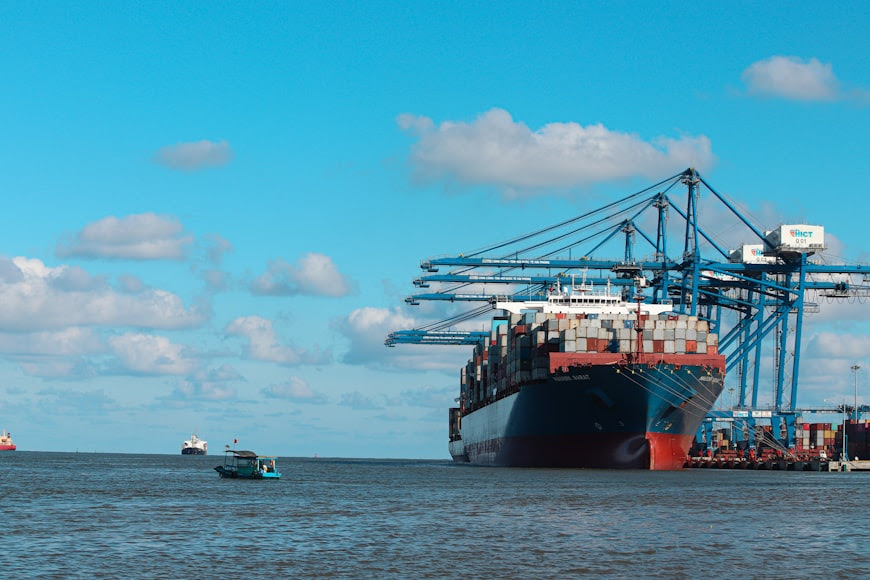
The roles and interests of various stakeholders in the maritime domain, including commercial actors such as shipping industries, need to be better understood to develop more coordinated, effective maritime security policies. Image from Unsplash.
A 2021 RSIS project exploring the varied conceptualisations of “maritime security” in Southeast Asia demonstrated the linkages and divergences among regional understandings of what maritime security comprises, and showed how it differs conceptually from security in other domains. This project highlighted the fairly comprehensive nature of Southeast Asian conceptualisation of maritime security, which, in most cases, encompasses “all risks to the prosperity of the state and nation at sea”. The region’s focus on the state and its institutions, however, belies the importance of the extensive non-state stakeholder activity in the region’s maritime domain. Indeed, it is not only states that are involved in the region’s maritime security; a multitude of actors both within and outside the state engage with the seas and oceans in different ways. Their strengths, weaknesses, perspectives, and interactions need to be better understood for more effective maritime security policymaking, and the differences need to be more closely evaluated to overcome obstacles preventing the alignment of these varied actors towards a common goal.
Coordinating different roles is likely to become increasingly important in the face of geopolitical tension in Southeast Asia’s seas. Tensions can result not just from accidents but from simply having navies operating in close proximity to one another in disputed waters. The region’s navies have found themselves having to prepare for these tensions while simultaneously undertaking constabulary roles. To relieve these pressures on the navies and reduce sensitivities regarding international disputes, coastguards and law enforcement agencies are becoming increasingly important in tackling many of the region’s maritime threats. But these actors also run the risk of politicisation as tensions mount. While non-state stakeholders should not and cannot replace such state actors entirely, greater responsibility is being put on them to act responsibly and contribute to good maritime order.
Despite these trends, policymakers often fail to sufficiently consider non-state stakeholder roles in regional security dynamics. The research community, too, has tended to focus primarily on conventional stakeholders. These include international organisations that set important norms and standards while providing spaces for cooperation, the states that provide direction and manage various government agencies and parastatal bodies, and the navies and coastguards that monitor and patrol the seas. While there are ongoing questions concerning how these stakeholders can work effectively together, their roles are generally clearer and more established than those of non-state bodies.
When turning to the roles that non-state actors play, the most important consideration is that maritime security can mean different things to these varied stakeholders, and each interacts differently with the maritime security system. The analytical surveys presented at a June 2022 RSIS workshop titled “Evolving Roles of Maritime Security Stakeholders” showed that stakeholders have particularly strong differences concerning their interests in benefitting from maritime security. Each of the stakeholders was noted to have its own obstacles to overcome, but more challenges emerged when the discussions centred on stakeholders’ roles in relation to one another.
The differences are most stark when considering those between state and non-state actors. International law — embodied in conventions such as the United Nations Convention on the Law of the Sea (UNCLOS) and the International Convention for the Safety of Life at Sea (SOLAS) — assigns states the primary responsibility for maritime security provision, as all maritime security threats impinge on state interests in some form. This means states generally take a broad approach to maritime security, focusing on a range of issues by employing various instruments of state power, including coastguards, navies and law enforcement agencies.
For commercial stakeholders, however, maritime security has traditionally been a much narrower concept, giving them a more limited interest in its provision. The shipping, extractive, and fishery industries, for example, focus their concerns only on the threats that have the potential to impact their profitability, usually in the disruption of their respective supply chains. While threats are expanding even for these profit-driven stakeholders — for example, the perils of cyber insecurity are increasingly salient — they remain narrowly focused on a distinct set of threats. Ultimately, even these stakeholders that engage with the oceans on a day-to-day basis may not perceive themselves as maritime security actors. Maritime security is just one type of interaction that they have with the oceans. Some industry stakeholders may see themselves as being part of the blue economy, focused on the growing pressures for balancing their profit-maximisation goals with maritime environmental protection than on maritime security. Nonetheless, despite their other preoccupations, increasing complexity in the maritime risk environment is driving commercial stakeholders to make greater contributions to the provision of maritime security.
The inattention to maritime security does not only apply to non-state actors. Many law enforcement agencies are oblivious of their roles as maritime actors, given that they generally are terrestrially focused. They nevertheless provide important investigative functions that could help thwart several maritime security threats.
Beyond their perceptions of their roles, another complexity is that each of these stakeholders are guided by their own detailed conventions, regulations and norms. These include the above industries that comply with a complex regime of regulations and best practices, but also non-governmental organisations (NGOs) that work from the bottom up and increasingly fulfil some state functions or hold traditional actors accountable, and the state or private port authorities that manage the gateways to the seas. Such stakeholders often have a stronger sense of what is happening in their domains due to their everyday access and the expertise that this imbues them with, making them important partners in holistic maritime security provision. However, they each generally operate within different normative frameworks.
While different interests, perceptions, and regulatory frameworks give us a fuller understanding of oceans and how they can be protected, these differences raise important questions concerning what a secure maritime domain should look like, or whose vision among the differing visions is to be prioritised. The best outcome would intuitively be a maritime domain free from all threats to all stakeholders while allowing legitimate activities to occur unimpeded. Many of the threats can be dealt with simultaneously, and not all activities are in contention with one another. Technology providers are contributing through their ability to provide critical data and threat warnings to stakeholders, often at increasingly lower costs. However, technology is not a panacea; the sharing of data derived from technology is often limited because of different understandings and interests between the various stakeholders to whom technology providers are accountable.
Significant tensions remain because of different understandings and interests. Shipping and port authorities may desire quick and efficient flows of seaborne trade, but the law enforcement’s desire to prevent the entry of illicit goods has the potential to slow this down through rigorous search procedures. The petroleum industry may want to operate without disruption, but this cannot always be reconciled with, for example, environmental NGOs’ desire to see an ocean free from exploitation. While occupations of oil rigs by environmental activists have only occurred outside of Southeast Asia so far, it is not inconceivable that such protests spread to the region as climate change effects intensify. Differing views can even arise within stakeholder groups, further complicating visions of an ideal maritime domain. For example, smaller fishing industry actors may want the larger actors regulated to reduce overfishing and to level the playing field, but any such regulation would pose a threat to large actors who want to maximise their outputs.
Such conflicting interests have very real implications for coordinating the roles of these actors to best realise their evolving contributions. Even when tensions between state authorities arise from practicalities concerning duplicated efforts and competition for resources — as occurs between some navies and coastguards — coordination and harmonisation have not been easy. When coordination is expanded outwards to non-state stakeholders — some of whom may see each other as sources of insecurity and some at best being reluctant partners — it is clear that states in the region need sufficient plans and structures in place to mediate differences. As the experience regarding ports demonstrates, coordination may be particularly difficult when forging public–private partnerships.
Extrapolating beyond the state to the regional level, coordination becomes even more complex. Navies, law enforcement agencies and coastguards each have their own regional arrangements for providing maritime security. This has led to a complex web of interaction that is continuously expanding around maritime security issues. The potentially negative consequences of bringing different actors into these interactions also need to be considered so they can be mediated. The fishery and shipping industries as well as NGOs all lobby on the international stage through unions or associations. On the one hand, such lobbying brings important perspectives to regional cooperation that were lacking in the past. On the other hand, it has the potential to further complicate regional cooperation if the sheer number of arrangements and fora becomes unwieldy. Unfortunately, these interactions are generally relatively siloed and ineffective in promoting genuine dialogue between stakeholders.
The various regional stakeholders contribute to maritime security provision in important ways. Each stakeholder community has evolved to fill a particular niche or fulfil a distinct role, and the region’s seas cannot be wholly secure without each of them providing the tools that they do. At the same time, diverging interests, perceptions, and contributions have implications for regional cooperation on maritime security provision. Achieving a secure maritime domain increasingly requires finding synergies between various stakeholders. Their sometimes-competing visions of the maritime domain suggest the need for some degree of compromise about what secure regional seas look like in practice. Conventional wisdom suggests that we start with the problems and threats, but this requires a strong understanding of what these are and how they relate to one another.
Scott EDWARDS is a research fellow at University of Leeds. John BRADFORD is a senior fellow in the Maritime Security Programme at the S. Rajaratnam School of International Studies (RSIS). This IDSS Paper is the last of 13 papers from a workshop conducted by the RSIS Maritime Security Programme regarding the evolving roles of Southeast Asia’s maritime security stakeholders.
Featured Post
 বড় জাহাজ মেরামতে মাতারবাড়ীতে ১ বিলিয়ন ডলারের প্রকল্প
 মাতারবাড়ীতে প্রায় ১ বিলিয়ন মার্কিন ডলার ব্যয়ে পরিবেশবান্ধব ডকইয়ার্ড ও জাহাজ নির্মাণ কেন্দ্র স্থাপনের উদ্যোগে নীতিগত অনুমোদন দিয়েছে নৌপরিবহন মন্ত্রণালয়। এখন প্রকল্পটির কারিগরি ও আর্থিক মূল্যায়নের জন্য প্রস্তাবটি সরকারি-বেসরকারি অংশীদারত্ব (পিপিপি) কর্তৃপক্ষের কাছে পাঠানো হয়েছে। সম্পূর্ণ বেসরকারি অর্থায়নে সরকারি জমির মালিকানা অক্ষুণ্ন রেখে প্রকল্পটি বাস্তবায়নের পরিকল্পনা রয়েছে। বন্দর কর্তৃপক্ষ জানায়, […]
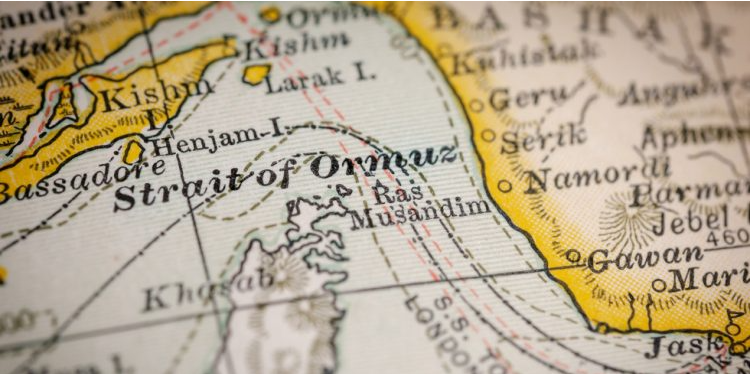 Industry on alert over scam messages offering ships “safe passage” on Hormuz
 Credit: Shutterstock Fraudulent messages offering safe passage through the Strait of Hormuz in exchange for cryptocurrency have been circulated to shipping companies with vessels stranded west of the waterway, according to MARISKS. In an alert issued on 20 April, MARISKS cautioned that unknown actors posing as Iranian authorities had contacted […]



JOB SITES
CONTENTS
LINKS
Happy New Year

Découvrez les avantages de MadCasino
Dans le monde des casinos en ligne, MadCasino se distingue par ses offres attrayantes et ses services de qualité. Que vous soyez un joueur débutant ou un parieur aguerri, vous trouverez ici une variété de jeux qui sauront satisfaire toutes vos envies. Les machines à sous, les jeux de table et les options de paris en direct sont tous disponibles pour vous offrir une expérience de jeu inégalée. De plus, le casino propose régulièrement des bonus qui permettent d'augmenter vos chances de gagner, vous offrant ainsi une excellente opportunité de maximiser vos gains.
En matière de sécurité, MadCasino est un nom de confiance. Il est entièrement licencié et régulé, ce qui garantit un environnement de jeu sûr et équitable. Les joueurs peuvent se concentrer sur leur expérience de jeu sans se soucier des problèmes de sécurité. Les transactions financières sont également sécurisées grâce à des technologies de pointe.
Les jeux proposés par MadCasino sont issus des développeurs les plus réputés de l'industrie, vous assurant des graphismes époustouflants et des mécaniques de jeu innovantes. Les joueurs peuvent également profiter d'une expérience de jeu en direct qui simule l'atmosphère d'un casino terrestre, tout en restant dans le confort de leur maison.
Enfin, la plateforme de MadCasino est optimisée pour les appareils mobiles, permettant aux joueurs de parier à tout moment et de n'importe où. Que vous soyez sur votre smartphone ou votre tablette, l'accès à vos jeux préférés n'a jamais été aussi simple. Ne manquez pas l'opportunité de découvrir ce casino exceptionnel.
Les offres de Cresus Casino
Cresus Casino est un autre acteur majeur dans le domaine des jeux en ligne, offrant des promotions généreuses et une vaste sélection de jeux. Les joueurs peuvent profiter d'une expérience de jeu enrichissante grâce aux nombreux bonus disponibles, qui sont conçus pour attirer tant les nouveaux utilisateurs que les joueurs réguliers. Ces avantages permettent non seulement de prolonger votre temps de jeu, mais aussi d'augmenter vos chances de gains conséquents.
Le casino se distingue également par sa ludothèque impressionnante, comprenant une sélection variée de machines à sous, de jeux de table et de jeux en direct. Les clients peuvent choisir parmi des titres populaires et appréciés, ainsi que des nouveautés qui enrichissent constamment l'offre. L'interface utilisateur est conviviale, rendant la navigation sur la plateforme fluide et agréable.
En termes de sécurité, Cresus Casino assure à ses joueurs un environnement de jeu fiable. La plateforme utilise des protocoles de sécurité avancés pour protéger les données personnelles et financières des utilisateurs. Cela permet aux joueurs de se sentir en sécurité tout en jouant à leurs jeux préférés.
Avec un service client réactif et professionnel, Cresus Casino s'assure que toutes vos questions et préoccupations sont traitées rapidement. Que ce soit pour des questions concernant les bonus, les retraits ou les jeux, vous bénéficierez d'une assistance rapide et efficace.
Explorez Nine Casino et ses avantages
Dans l'univers des casinos en ligne, Nine Casino a su se faire une place de choix grâce à son approche innovante et à ses nombreux avantages pour les joueurs. Les utilisateurs peuvent s'attendre à une expérience de jeu enrichissante, avec des bonus attractifs qui sont régulièrement mis à jour. Ces offres sont une excellente façon de découvrir de nouveaux jeux tout en maximisant votre potentiel de gain.
La plateforme de Nine Casino est riche en options de jeux, allant des machines à sous aux jeux de table, en passant par le live casino. Chaque jeu est conçu pour offrir une expérience immersive grâce à des graphismes de haute qualité et des fonctionnalités innovantes. Les parieurs peuvent profiter de sessions de jeu captivantes, comme s'ils étaient dans un véritable casino.
La sécurité est une priorité pour Nine Casino, qui utilise des technologies de cryptage avancées pour protéger les informations de ses joueurs. Cela garantit un environnement de jeu sûr et fiable, permettant aux utilisateurs de se concentrer sur ce qu'ils aiment le plus : jouer.
Enfin, le service clientèle fourni par Nine Casino est exceptionnel, avec des agents disponibles pour répondre à toutes vos questions et résoudre vos problèmes. Vous pourrez ainsi jouer en toute tranquillité, sachant que votre satisfaction est au cœur de leurs préoccupations.
Profitez de l'expérience Lucky31
Lucky31 est un casino en ligne qui se distingue par son approche orientée vers le joueur, offrant une multitude d'options de jeux et des bonus généreux. Que vous soyez amateur de machines à sous ou passionné de jeux de table, vous trouverez une large sélection pour satisfaire toutes vos envies de jeu. Les promotions fréquentes permettent aux joueurs de prolonger leur expérience tout en augmentant leurs chances de gains.
La convivialité de la plateforme de Lucky31 est l'un de ses plus grands atouts. Les joueurs peuvent naviguer facilement entre les différents jeux, et l'interface est conçue pour être intuitive, quel que soit le niveau d'expérience de l'utilisateur. De plus, le casino est entièrement optimisé pour les appareils mobiles, ce qui permet de parier où que vous soyez.
En matière de sécurité, Lucky31 prend les préoccupations des joueurs très au sérieux. Le casino est agréé et régulé, garantissant un environnement de jeu équitable et sécurisé. Les joueurs peuvent ainsi se concentrer sur leur expérience de jeu sans se soucier des risques liés à la sécurité.
Pour ceux qui recherchent un support client efficace, Lucky31 offre un service réactif et professionnel. Que ce soit pour des questions sur les bonus, les jeux ou les paiements, vous aurez accès à une assistance de qualité, vous garantissant une expérience de jeu fluide et agréable.