search the site


THE MARITIME SECURITY ROLES OF THE SHIPPING COMMUNITY IN SOUTHEAST ASIA
by Toh Keng Hoe 5 January 2023
The shipping community is taking an increasingly prominent role in maritime security. Whereas it was once focused on managing risk in order to maximise profits, TOH KENG HOE argues, it is increasingly contributing to wider efforts to advance maritime security goals through activities such as voluntary reporting and the implementation of industry-wide standards.

Very large container vessel entering the Cocoli locks at the Panama Canal. Maritime security concerns do not have to contradict the economic imperatives of the global shipping industry. Image from Wikimedia.
Commercial shipping accounts for about 90% of the ships at sea, and 99% by displacement. It is responsible for more than 80% of the world’s trade. Of this value, 41% are loaded in Southeast Asia. The shipping companies that operate these vessels are therefore significant stakeholders in the maritime security space. In considering maritime security, shipping companies are driven by a single metric, the maintenance of the lowest possible cost. They want routes to be safe from congestion, disaster, war and terrorism as such threats endanger potential profit.
The blockage of the Suez Canal by the grounding of the container vessel Ever Given in 2021 provides a clear example of a single event that had major impacts throughout the supply chain. Any interruptions in similar chokepoints, including Southeast Asia’s critical straits such as Malacca, Singapore, Sunda and Lombok, can have large impacts on the bottom line of the shipping companies, and much bigger ramifications for the entire supply chain. It was estimated that the Ever Given disrupted US$9.6 billion of trade each day, and the Suez Canal Authority demanded compensation of US$550 million. This incident exemplified the fundamental fears that terrorist or criminal acts could result in similar disruptions in Southeast Asia, a viewpoint shared by Singapore’s senior leaders and maritime security watchers. Other threats are less direct but can raise insurance premiums and cause disruption. These include piracy, vessels being impounded due to criminal use of containers, stowaways and conflict.
Shipping Community Perceptions of the Most Significant Maritime Security Threats
Shipping companies are contractually obligated to deliver their cargo safely and on time to the right ports. Any disruption to the supply chain is of the most significant concern. Such disruptions could be caused by a range of threats that include piracy, stowaways, the impounding of vessels due to container use during smuggling, and the closing of chokepoints due to conflict or accidents. These rank highly as concerns. Shippers, therefore, value freedom of navigation to the required ports without incurring high insurance costs, whether through premiums or the deployment of guards, to forestall these risks.
Governance of the Shipping Community’s Maritime Security Activities
The most important governance document for the shipping community is probably the 1958 convention that established the Inter-Governmental Maritime Consultative Organisation, an institution renamed as the International Maritime Organisation (IMO) in 1982. The Maritime Safety Committee (MSC) is the IMO’s highest technical body.
The more prominent of the IMO’s various conventions relate to maritime safety. These include the International Convention for the Safety of Life at Sea, commonly known as SOLAS, and the Global Maritime Distress and Safety System (GMDSS). Much more demanding, and hence more costly, are the maritime security conventions that were developed in the 2000s, specifically in response to the concerns raised in the immediate post 9-11 era, with the entry into force in July 2004 of a new security regime for international shipping. The International Ship and Port Facility Security (ISPS) Code was made mandatory under amendments to SOLAS adopted in 2002. IMO also adopted amendments to the Convention for the Suppression of Unlawful Acts Against the Safety of Maritime Navigation (SUA), 1988, and its related protocol (the 2005 SUA Protocols).
These conventions and amendments were significant as, among other things, they introduced the right of a state party to board a ship flying the flag of another state party. This right is conditional on the requesting party having reasonable grounds to suspect that the ship or a person on board the ship is, has been, or is about to be, involved in the commission of an offence under the convention.
The Shipping Community’s Operations in the Maritime Security Environment
The fear of maritime terrorism post 9-11 led to a slew of initiatives at both the regulatory and industry levels. In addition to the above maritime security conventions adopted by IMO, various groups also took action. These responses were especially tied to threats in geographical regions such as the Gulf of Aden and West Africa, but the practices they implemented have been applied in Southeast Asia as well due to the trans-regionality of international shipping.
For example, in February 2009, a group of industry actors led by BIMCO (an international shipping association representing approximately 60% of the world’s merchant shipping by tonnage) published the Best Management Practices (BMP) to deter piracy and enhance maritime security in the Red Sea, Gulf of Aden, Indian Ocean and Arabian Sea. The fifth revision, BMP5, was introduced in June 2018 and advises the industry on measures to mitigate the risk from piracy and other maritime security threats. It not only outlines the dynamic nature of maritime security threats but also covers ship protection measures as well as reporting procedures for ships and their crew, as well as shipping companies. Today, BMP protocols are largely adopted by ships transiting the Strait of Malacca.
Insurance also plays an important role in protecting shipping firms’ financial benefits and driving them to adopt best practices. The interaction between the insurance and shipping industry can apply pressure on governments to take action. Particularly important in this regard, the Joint War Committee (JWC), a group of underwriting representatives from Lloyd’s and the International Underwriting Association company markets, represents the interests of those who underwrite the marine hull war business in the London market. The JWC designated the Strait of Malacca a war risk zone in 2005, resulting in a surge in insurance premiums. It was also this designation for the Strait of Malacca that led to the formation of the Malacca Strait Patrols by the littoral states.
The Ship Security Alert Systems (SSAS) provide another tool to help enhance maritime security. The concept is similar to a bank’s panic button, a silent alarm to alert an internal security group or a third-party security company. It too alerts a designated authority but without triggering any audio-visual signal on the ship itself or to nearby vessels or directly to security forces. SSAS was determined in SOLAS Chapter XI-2, Regulation 6, and ships built on or after 1 July 2004 would have the SSAS installed.
Under ISPS, every shipping company is required to appoint a company security officer (CSO) to look after the safety and security of the ships that it operates. The CSO is responsible for the company’s ship security plan and for managing the security operations provided for in the plan.
There have also been efforts by private security companies and technology solution providers to provide options to improve ships’ responses to maritime security threats. These have generally not been well received in Southeast Asia, compared to some other regions, primarily due to the costs and regulatory concerns.
The Shipping Community and Maritime Awareness
Capacity building has generated attention for the shipping community to share information and participate in the voluntary reporting of incidents. The International Recommended Transit Corridor (IRTC) helped protect shipping from attacks in the Gulf of Aden and demonstrated the benefits of a coordinated approach towards community-based maritime security. However in Southeast Asia, the most dangerous waters are governed by the coastal states, so domestic legislation and national law enforcement solutions are more important.
Other maritime solutions focus on the commercial ships themselves. For example, following the oil spillage involving the vessel Wakashio off the coast of Mauritius, Mitsui O.S.K. Lines (MOL) voluntarily adopted remote monitoring capabilities across its 700 ships to ensure they have sufficient awareness to help prevent similar incidents in the future.
In recent years, there have been new initiatives spurred by the advent of communications and digital technology. Remote monitoring and information sharing allow the shipping community to have stronger awareness not only to boost maritime security but also to boost safety. Notably, shipping companies are experimenting with artificial intelligence–based navigation augmentation systems, which they hope could provide earlier incident warnings.
Evolution of the Shipping Community’s Maritime Security Roles
The initiatives undertaken by the shipping community directly improve maritime security. In addition to implementing regulatory activities, the community’s willingness to share information through voluntary reporting and its adoption of management best practices deny criminals the opportunity to attack.
The shipping community has taken these measured approaches to protect itself from emerging threats and conform to new compliance measures, all while seeking to minimise costs and maximise profit. Maintaining this balance will require further adaptation.
In the past decade, cyberattacks have emerged as a new threat for the shipping community. Large segments of the community remain largely traditional and slow on the uptake of digital and communications technology, but even as some turn to technology solutions, ships at sea generally remain easy targets for hackers. Poor understanding of technology and the protocols to keep such technology secure, if not addressed, will develop into a comprehensive maritime security gap.
As shown by the grounding of the Ever Given in the Suez Canal, the impact of a disruption to global supply chains ranks higher in the minds of executives leading the shipping community. Developing the perspective that achieving maritime security is not an end but rather a means to strengthening or supporting global supply chain security could help expand the shipping industry’s contribution to the Southeast Asian maritime security landscape.
Toh Keng Hoe is a Director with NCS, a multinational information technology company headquartered in Singapore. Prior to joining the company, he engaged the merchant marine sector on digitalisation as a Business Development Director with Inmarsat, the mobile satellite company. This IDSS Paper is #8 of 12 from a workshop the RSIS Maritime Security Programme conducted regarding the evolving roles of Southeast Asia’s maritime security stakeholders.
The final report of the workshop is also available online.
Featured Post
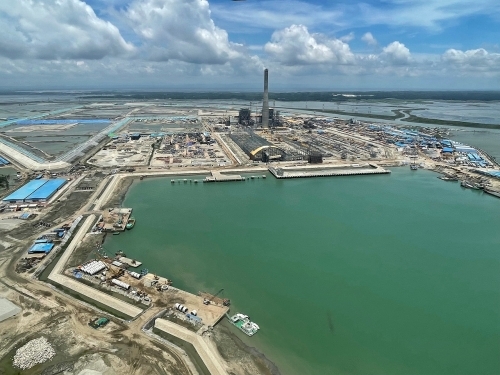 বড় জাহাজ মেরামতে মাতারবাড়ীতে ১ বিলিয়ন ডলারের প্রকল্প
 মাতারবাড়ীতে প্রায় ১ বিলিয়ন মার্কিন ডলার ব্যয়ে পরিবেশবান্ধব ডকইয়ার্ড ও জাহাজ নির্মাণ কেন্দ্র স্থাপনের উদ্যোগে নীতিগত অনুমোদন দিয়েছে নৌপরিবহন মন্ত্রণালয়। এখন প্রকল্পটির কারিগরি ও আর্থিক মূল্যায়নের জন্য প্রস্তাবটি সরকারি-বেসরকারি অংশীদারত্ব (পিপিপি) কর্তৃপক্ষের কাছে পাঠানো হয়েছে। সম্পূর্ণ বেসরকারি অর্থায়নে সরকারি জমির মালিকানা অক্ষুণ্ন রেখে প্রকল্পটি বাস্তবায়নের পরিকল্পনা রয়েছে। বন্দর কর্তৃপক্ষ জানায়, […]
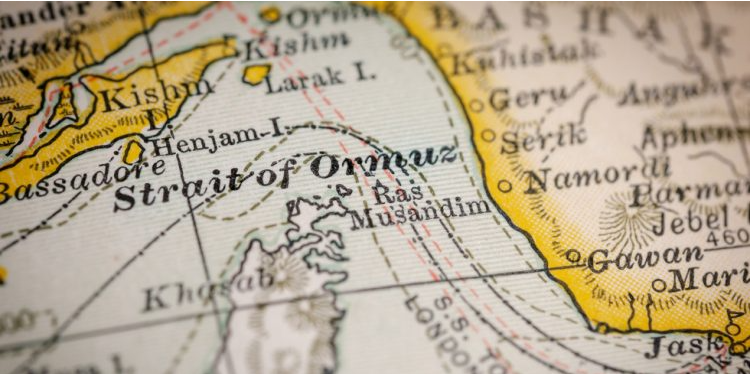 Industry on alert over scam messages offering ships “safe passage” on Hormuz
 Credit: Shutterstock Fraudulent messages offering safe passage through the Strait of Hormuz in exchange for cryptocurrency have been circulated to shipping companies with vessels stranded west of the waterway, according to MARISKS. In an alert issued on 20 April, MARISKS cautioned that unknown actors posing as Iranian authorities had contacted […]



JOB SITES
CONTENTS
LINKS
Happy New Year

Découvrez les avantages de MadCasino
Dans le monde des casinos en ligne, MadCasino se distingue par ses offres attrayantes et ses services de qualité. Que vous soyez un joueur débutant ou un parieur aguerri, vous trouverez ici une variété de jeux qui sauront satisfaire toutes vos envies. Les machines à sous, les jeux de table et les options de paris en direct sont tous disponibles pour vous offrir une expérience de jeu inégalée. De plus, le casino propose régulièrement des bonus qui permettent d'augmenter vos chances de gagner, vous offrant ainsi une excellente opportunité de maximiser vos gains.
En matière de sécurité, MadCasino est un nom de confiance. Il est entièrement licencié et régulé, ce qui garantit un environnement de jeu sûr et équitable. Les joueurs peuvent se concentrer sur leur expérience de jeu sans se soucier des problèmes de sécurité. Les transactions financières sont également sécurisées grâce à des technologies de pointe.
Les jeux proposés par MadCasino sont issus des développeurs les plus réputés de l'industrie, vous assurant des graphismes époustouflants et des mécaniques de jeu innovantes. Les joueurs peuvent également profiter d'une expérience de jeu en direct qui simule l'atmosphère d'un casino terrestre, tout en restant dans le confort de leur maison.
Enfin, la plateforme de MadCasino est optimisée pour les appareils mobiles, permettant aux joueurs de parier à tout moment et de n'importe où. Que vous soyez sur votre smartphone ou votre tablette, l'accès à vos jeux préférés n'a jamais été aussi simple. Ne manquez pas l'opportunité de découvrir ce casino exceptionnel.
Les offres de Cresus Casino
Cresus Casino est un autre acteur majeur dans le domaine des jeux en ligne, offrant des promotions généreuses et une vaste sélection de jeux. Les joueurs peuvent profiter d'une expérience de jeu enrichissante grâce aux nombreux bonus disponibles, qui sont conçus pour attirer tant les nouveaux utilisateurs que les joueurs réguliers. Ces avantages permettent non seulement de prolonger votre temps de jeu, mais aussi d'augmenter vos chances de gains conséquents.
Le casino se distingue également par sa ludothèque impressionnante, comprenant une sélection variée de machines à sous, de jeux de table et de jeux en direct. Les clients peuvent choisir parmi des titres populaires et appréciés, ainsi que des nouveautés qui enrichissent constamment l'offre. L'interface utilisateur est conviviale, rendant la navigation sur la plateforme fluide et agréable.
En termes de sécurité, Cresus Casino assure à ses joueurs un environnement de jeu fiable. La plateforme utilise des protocoles de sécurité avancés pour protéger les données personnelles et financières des utilisateurs. Cela permet aux joueurs de se sentir en sécurité tout en jouant à leurs jeux préférés.
Avec un service client réactif et professionnel, Cresus Casino s'assure que toutes vos questions et préoccupations sont traitées rapidement. Que ce soit pour des questions concernant les bonus, les retraits ou les jeux, vous bénéficierez d'une assistance rapide et efficace.
Explorez Nine Casino et ses avantages
Dans l'univers des casinos en ligne, Nine Casino a su se faire une place de choix grâce à son approche innovante et à ses nombreux avantages pour les joueurs. Les utilisateurs peuvent s'attendre à une expérience de jeu enrichissante, avec des bonus attractifs qui sont régulièrement mis à jour. Ces offres sont une excellente façon de découvrir de nouveaux jeux tout en maximisant votre potentiel de gain.
La plateforme de Nine Casino est riche en options de jeux, allant des machines à sous aux jeux de table, en passant par le live casino. Chaque jeu est conçu pour offrir une expérience immersive grâce à des graphismes de haute qualité et des fonctionnalités innovantes. Les parieurs peuvent profiter de sessions de jeu captivantes, comme s'ils étaient dans un véritable casino.
La sécurité est une priorité pour Nine Casino, qui utilise des technologies de cryptage avancées pour protéger les informations de ses joueurs. Cela garantit un environnement de jeu sûr et fiable, permettant aux utilisateurs de se concentrer sur ce qu'ils aiment le plus : jouer.
Enfin, le service clientèle fourni par Nine Casino est exceptionnel, avec des agents disponibles pour répondre à toutes vos questions et résoudre vos problèmes. Vous pourrez ainsi jouer en toute tranquillité, sachant que votre satisfaction est au cœur de leurs préoccupations.
Profitez de l'expérience Lucky31
Lucky31 est un casino en ligne qui se distingue par son approche orientée vers le joueur, offrant une multitude d'options de jeux et des bonus généreux. Que vous soyez amateur de machines à sous ou passionné de jeux de table, vous trouverez une large sélection pour satisfaire toutes vos envies de jeu. Les promotions fréquentes permettent aux joueurs de prolonger leur expérience tout en augmentant leurs chances de gains.
La convivialité de la plateforme de Lucky31 est l'un de ses plus grands atouts. Les joueurs peuvent naviguer facilement entre les différents jeux, et l'interface est conçue pour être intuitive, quel que soit le niveau d'expérience de l'utilisateur. De plus, le casino est entièrement optimisé pour les appareils mobiles, ce qui permet de parier où que vous soyez.
En matière de sécurité, Lucky31 prend les préoccupations des joueurs très au sérieux. Le casino est agréé et régulé, garantissant un environnement de jeu équitable et sécurisé. Les joueurs peuvent ainsi se concentrer sur leur expérience de jeu sans se soucier des risques liés à la sécurité.
Pour ceux qui recherchent un support client efficace, Lucky31 offre un service réactif et professionnel. Que ce soit pour des questions sur les bonus, les jeux ou les paiements, vous aurez accès à une assistance de qualité, vous garantissant une expérience de jeu fluide et agréable.