search the site


Why do containership stacks collapse and who is liable?
in Marine Insurance P&I Club News 16/06/2020

This article is an overview of the typical causes of stack collapse as well as the legal implications when dealing with the resulting liability claims.
CAUSES
Understanding causation is key to preventing incidents, but also to determine liability in individual cases.
Heavy weather has been one of the fundamental challenges for carriers since the dawn of shipping. Advanced technology for voyage planning and weather routing helps the Master, but his judgment will be questioned if an incident occurs. Containers, the securing mechanisms and container stacks are exposed to great forces when container ships move in heavy weather. Parametric- and synchronous roll resonance phenomena have caused several serious accidents to container ships during the last years.
Parametric rolling describes large spontaneous rolling motions occurring in head or stern seas and has to do with dynamics of length of ship and waves as well as the vessel’s wave encounter period. A vessel’s roll angle can increase from comfortable rolling motions to over 30 degrees in only a few cycles causing excessive acceleration on the container stacks. Synchronous rolling is caused by the ship’s rolling period becoming synchronous with the wave period. The waves may then cause resonance, meaning that the ship may lose control over the roll angels as the action of the wave rolls the vessel increasingly over.
Gard Guidance on Freight Containers, chapter 5.5
Size matters as bigger vessels move differently in the sea compared with smaller vessels. For example, investigations following the APL China incident in 1998 revealed that large box ships with large bow flares are particularly exposed to parametric rolling. Furthermore, the containers on board the largest container vessels are stowed up to 40 meters above the waterline and 60 meters wide across the deck. When ships and container stacks of these dimensions start rolling, you do not have to be a physicist to understand that container stacks will be subject to great forces when the vessel starts to move with the motions of the sea.
Ship stowage plays an important factor because weight distribution on-board also influences the vessel’s motions at sea. The GM (see box) is a measurement of the initial static stability of the vessel. It is of the utmost importance to get the GM within the right range before the voyage. This represents challenges in terms of correct cargo planning both ashore and on-board. In practice, advanced software will do most of the job, but computer programs depend on correct software development, correct data entered as well as human interaction and, ultimately, human decisions.
The metacentric height (GM) is calculated as the distance between the center of gravity of a ship and its metacenter. The metacentric height influences the natural period of rolling of a hull: A low GM will cause the vessel to roll excessively with too large movements. A high GM implies greater initial stability against overturning, but high GM is also associated with shorter periods of roll which will cause rapid movements and greater forces on the cargo stowage. Hence, the GM will have to be correct: not too high, not to low.

Cargo stowage inside containers causes problems as a container stack is only as strong as its weakest container. If cargo inside one container starts to shift, it may have a domino effect on the stack. We have seen severe cases where one piece of cargo has damaged its container structure resulting in the collapse of a complete row of containers. Therefore, the Container Securing Manual (CSM) must be followed accurately, and further stowage guidelines should be sought for problematic cargoes. One of the challenges is that container carriers largely depend on shippers, freight forwarders or their sub-contractors to pack and secure cargoes adequately. Errors are inevitable.
The container is designed to fit the purpose of containing cargo, but if exposed to excessive weight pressure from excessive loads, containers may suffer structural failure. Container shells are exposed to wear and tear, rough handling and operations which may weaken their structure. If one container fails, the rest of the stow above and around will follow.
The weight of cargo will be declared by the shippers. Mis-declaration of weight is an industry problem and may cause considerable difficulty for cargo stowage planners as they rely on cargo details as declared by the shippers. If numbers are inaccurate, or even deliberately mis-declared, the integrity of container stacks may be jeopardized.
Lashing and securing of thousands of containers in large stacks onboard is a major challenge. Failure to do it correctly may have serious consequences. In simple terms: containers on deck are attached to each other with twist locks in the four corners of the container. Further lashing rods are attached between the container stack and lashing bridges or hatch covers. Eachtwist lock and lashing rod needs to be in its right place, work and be able to withhold required forces. Inadequate securing, missing or failing twist locks and lashings that become loose are probably among the more common causes of containers lost at sea. Failures in securing have caused severe incidents.
Multiple causes often make cases complex, not least when working with liability. In most cases there are elements of several of the abovementioned causes which lead lawyers deep into legal considerations about issues such as proximate causes, intervening causes, independent sufficient causes and foreseeability.
TYPICAL LEGAL CONSIDERATIONS
Assuming that causation is established, the next step is applying the law to the particular facts. We will now look at some of the reoccurring legal issues for cargo claims and charterparty claims with a focus on seaworthiness.

Cargo claims: bills of lading and the Hague/Hague Visby Convention
Containerised cargo is usually shipped on the container shipping lines’ standard terms of carriage which usually incorporates the Hague- or Hague-Visby Convention (the Hague Visby Rules).
Whether or not the contractual carrier of cargo is liable for damage or loss of cargo will be determined by whether the carrier is in breach of his duties under the convention, or whether the damage occurred as a result of perils for which the carrier is exempt from liability.
The carrier’s fundamental duty: to properly care for the cargo
Under Hague Visby Rules, Article 3 Rule 2, the carrier shall “properly and carefully load, handle, stow, carry, keep, care for, and discharge the goods carried.” This requires the carrier to adopt a solid system to fulfil its obligation throughout the time the cargo is in the carrier’s custody. For instance, if lashings of container stacks appear to come loose during the voyage the carrier is under an obligation to correct the problem and tighten the lashings. This is a contractual obligation meaning that the contractual carrier is contractually bound even if he is not the actual carrier and in direct control of crew onboard. Generally, the carrier is not obliged to improve stowage inside the container. This responsibility will normally lie on the shipper’s side, see also Hague/Visby Rules, article 4, rule 2 (n).
When cargo is shipped in apparent good order and condition but is discharged damaged, the carrier bears the burden of proving either that the damage occurred without fault (H/V rules Article 3, rule 2), or that it was caused by an excepted peril within Article 4, rule 2
Volcafe Ltd v CSAV, 2018, UKSC 61
The “excepted perils” and non-fault provisions of the Hague/Visby Rules
1. Error in management of the ship
The Hague/Visby Rules, Article 4 Rule 2 (a) states that “neither the carrier nor the ship shall be responsible for loss or damage arising out of (…) act, neglect, or default of the master, mariner, pilot, or the servants of the carrier in the navigation or in the management of the ship.”
It might be possible for carriers to rely on negligent navigation as an excepted peril if it can be proven that there was, for example, a lack of good seamanship in deciding to sail in severe weather conditions. Also, failure to take the action necessary to prevent excessive rolling may be considered failure to properly navigate and therefore exempt the carrier from liability.
“Management of the ship” does not include management related to the cargo under English law. This principle was set out in The Gosse Millard case (Gosse Millard v Canadian Government Merchant Marine, 1927, KB 432): “If the cause of the damage is solely, or even primarily, a neglect to take reasonable care of the cargo, the ship is liable, but if the cause of the damage is a neglect to take reasonable care of the ship, or some part of it, as distinct from the cargo, the ship is relieved from liability”. This means that if a container stack collapse is solely caused by error in cargo stowage, there is no exemption from liability for the carrier based on the Hague/Visby Rules, Article 4 rule 2 (a).
2. Perils of the sea
The Hague/Visby Rules, Article 4, rule 2 (c) states that “Neither the carrier nor the ship shall be responsible for loss or damage arising out of (…) perils, dangers and accidents of the sea or other navigable waters” In Scrutton on Charter Parties and Bills of Lading, 20th Edition, Article 112, Justice Scrutton has defined such perils to include “perils peculiar to the sea or to a ship at sea, which could not be foreseen and guarded against by the shipowner or his servants as necessary or probable incidents of the adventure” Hence, the starting point under English law is that such a peril must be “of the sea” in the sense that the loss must be attributed to natural causes.
The criteria “could not be foreseen” means that the peril must be beyond what is reasonably foreseeable and could be avoided by the carrier. This has naturally made the “perils of the sea” defence increasingly more difficult for carriers as technology has developed. For general weather conditions throughout the voyage, carriers will usually be expected to have the necessary equipment to avoid the peril. However, the defence remains possible. For example,unusually high or challenging waves may be considered unforeseeable and exempt the carrier from liability. Experts have debated whether parametric rolling or resonance, which can occur in even moderate weather conditions, is foreseeable. The forces on container stacks may for example be considerably higher if the vessel experiences resonant rolling in moderate weather than in more usual rolling and pitching in exceptional extreme conditions. The legal landscape is yet to be completely clarified.
3. No fault or privity of the carrier
Hague/Visby Rules, Article 4, rule 2 (q) exempts the carrier form liability for damage occurring “without the actual fault or privity of the carrier, or without the actual fault or neglect of the agents or servants of the carrier.” This is usually referred to as the “catch all exception” and, crucially, carriers can rely on this exception if they are able to prove that there was no fault on their part. In container stack collapse cases, the carrier may typically argue there is no fault on his part if the fundamental duties to care for the cargo is fulfilled, and thereby refute liability under the contract of carriage. The “non fault” exception is extended to fault by the carriers’ servants.
Bill of Lading claims and seaworthiness
The Hague/Visby Rules, Article 3, rule I (a) sets out one of the fundamental duties of the carrier: “The carrier shall be bound before and at the commencement of the voyage to exercise due diligence to make the ship seaworthy.” The Hague-Visby Convention governs carriage of goods under contracts of carriage but is often incorporated in charter contracts by way of “paramount clauses”. A question of seaworthiness may, however, differ from Bill of Lading claims and charter party disputes.
An important point for claims under Bills of Lading is that “seaworthy” will also mean “cargoworthy” under English law. See for instance Bills of Lading, Sir Richard Aikens, Richard Lord and Michael Bools ch. 10.99. This means that the carrier’s obligations as to seaworthiness may vary in respect of different cargo consignments under different contracts of carriage: the containers, storage and stowage must be fit for purpose. If not, the carrier may be in breach of the Hague/Visby Rules, Article 3, rule I (a).
Charterparty claims and seaworthiness
Ultimate liability for damages and liabilities arising out of a container stack collapse case will often end up as a discussion regarding seaworthiness between (contractual) carriers of cargo and the actual carrier (the shipowner) under charterparty contracts. The shipowner’s fundamental duty to exercise due diligence to make the ship seaworthy may follow by both terms of contract and background/case law. This was discussed in FC Bradley & Sons Ltd. v. Federal Steam Navigation Co. (1926) 24, LLOYD’S REP 446.
The classic definition of seaworthiness is that “the ship must have the degree of fitness which an ordinary careful owner would require his vessel to have at the commencement of her voyage having regard to all the probable circumstances of it”.
A question which often arises in container stack collapse cases is to what extent the ship and equipment was sound and correctly applied upon departure and whether it was fit to withstand the ordinary perils of the sea. Hence, seaworthiness will be considered in context with what the owner could reasonably foresee in terms of occurring sea perils. For instance, inadequacies with regard to the vessel’s lashing and securing equipment in a stack collapse case could be enough to render the vessel unseaworthy. In the Moore case it was held that “if cargo, whilst properly stowed, is not properly lashed and in consequence shifts so as to undermine the vessel’s stability, the vessel will be unseaworthy at the outset” (Moore v. Lunn (1922) 11 L1. L. Rep. 86,92) .
Furthermore, if there is an excessive top heavy stow on departure which compromises the stability of the container stack itself, the vessel may arguably be in unseaworthy condition due to the error in stowage.
Ship documents such as a sound passage and weather routing are a frequently visited elements in causation debates following container stack collapse incidents where heavy weather plays a part. The recent court decision in the CMA-CGM Libra case (Alize 1954 v Allianz Elmentar Versicherungs AG (“the CMA CGM Libra”))
examines how poor passage planning can cause a navigational error, which in turn may render the vessel unseaworthy. The CMA-CGM Libera case is a different case scenario (grounding), and the discussions in heavy weather stack collapse cases will differ as there are usually several causative factors. Passage planning and seaworthiness may, however, occasionally be relevant for determining liability in a stack collapse scenario if it transpires that failure in passage planning is causative.
In addition to cargo claims and the legal implications under bills of lading, liability for environmental damages has been high on the agenda in connection with the severe incidents in recent years. When containers and cargo drift in the ocean or end up on shorelines, authorities will usually turn to the “waste producer” which is usually considered to be the shipowner or operator of the vessel. The waste should be, and will be, removed. The ultimate liability for the costs and losses will often end up in dispute under charterparties.
To conclude, the law often applied in stack collapse cases is over one hundred years old and made to fit, sometimes uncomfortably, with modern ships and technologies. Regrettably, container stack collapse cases have serious consequences considering both monetary losses, ship safety and environmental impact. We fear carriers, insurers, lawyers, judges, and arbitrators will continue to be challenged by the complexity of container stack collapse cases for years to come.
Source: Gard (http://www.gard.no/web/updates/content/29869691/why-do-containership-stacks-collapse-and-who-is-liable-)
Featured Post
 বড় জাহাজ মেরামতে মাতারবাড়ীতে ১ বিলিয়ন ডলারের প্রকল্প
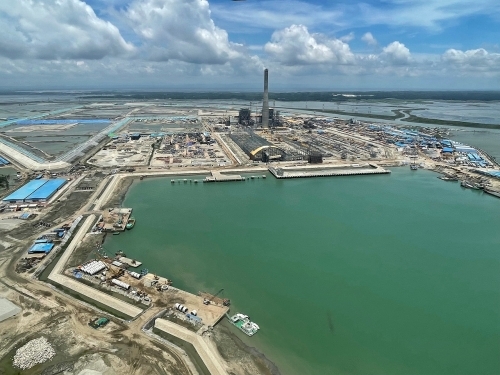
 মাতারবাড়ীতে প্রায় ১ বিলিয়ন মার্কিন ডলার ব্যয়ে পরিবেশবান্ধব ডকইয়ার্ড ও জাহাজ নির্মাণ কেন্দ্র স্থাপনের উদ্যোগে নীতিগত অনুমোদন দিয়েছে নৌপরিবহন মন্ত্রণালয়। এখন প্রকল্পটির কারিগরি ও আর্থিক মূল্যায়নের জন্য প্রস্তাবটি সরকারি-বেসরকারি অংশীদারত্ব (পিপিপি) কর্তৃপক্ষের কাছে পাঠানো হয়েছে। সম্পূর্ণ বেসরকারি অর্থায়নে সরকারি জমির মালিকানা অক্ষুণ্ন রেখে প্রকল্পটি বাস্তবায়নের পরিকল্পনা রয়েছে। বন্দর কর্তৃপক্ষ জানায়, […]
 Industry on alert over scam messages offering ships “safe passage” on Hormuz
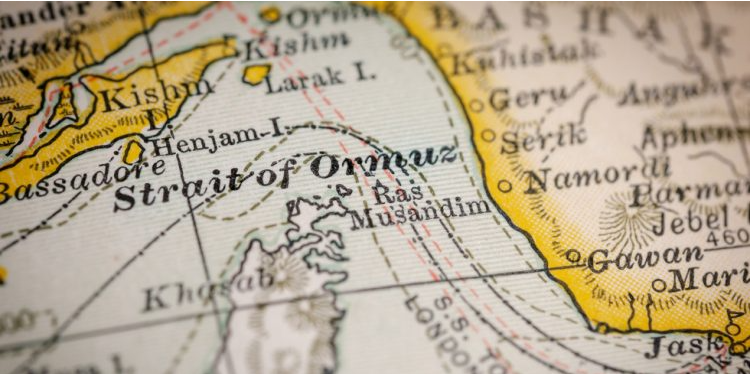
 Credit: Shutterstock Fraudulent messages offering safe passage through the Strait of Hormuz in exchange for cryptocurrency have been circulated to shipping companies with vessels stranded west of the waterway, according to MARISKS. In an alert issued on 20 April, MARISKS cautioned that unknown actors posing as Iranian authorities had contacted […]



JOB SITES
CONTENTS
LINKS
Happy New Year

Découvrez les avantages de MadCasino
Dans le monde des casinos en ligne, MadCasino se distingue par ses offres attrayantes et ses services de qualité. Que vous soyez un joueur débutant ou un parieur aguerri, vous trouverez ici une variété de jeux qui sauront satisfaire toutes vos envies. Les machines à sous, les jeux de table et les options de paris en direct sont tous disponibles pour vous offrir une expérience de jeu inégalée. De plus, le casino propose régulièrement des bonus qui permettent d'augmenter vos chances de gagner, vous offrant ainsi une excellente opportunité de maximiser vos gains.
En matière de sécurité, MadCasino est un nom de confiance. Il est entièrement licencié et régulé, ce qui garantit un environnement de jeu sûr et équitable. Les joueurs peuvent se concentrer sur leur expérience de jeu sans se soucier des problèmes de sécurité. Les transactions financières sont également sécurisées grâce à des technologies de pointe.
Les jeux proposés par MadCasino sont issus des développeurs les plus réputés de l'industrie, vous assurant des graphismes époustouflants et des mécaniques de jeu innovantes. Les joueurs peuvent également profiter d'une expérience de jeu en direct qui simule l'atmosphère d'un casino terrestre, tout en restant dans le confort de leur maison.
Enfin, la plateforme de MadCasino est optimisée pour les appareils mobiles, permettant aux joueurs de parier à tout moment et de n'importe où. Que vous soyez sur votre smartphone ou votre tablette, l'accès à vos jeux préférés n'a jamais été aussi simple. Ne manquez pas l'opportunité de découvrir ce casino exceptionnel.
Les offres de Cresus Casino
Cresus Casino est un autre acteur majeur dans le domaine des jeux en ligne, offrant des promotions généreuses et une vaste sélection de jeux. Les joueurs peuvent profiter d'une expérience de jeu enrichissante grâce aux nombreux bonus disponibles, qui sont conçus pour attirer tant les nouveaux utilisateurs que les joueurs réguliers. Ces avantages permettent non seulement de prolonger votre temps de jeu, mais aussi d'augmenter vos chances de gains conséquents.
Le casino se distingue également par sa ludothèque impressionnante, comprenant une sélection variée de machines à sous, de jeux de table et de jeux en direct. Les clients peuvent choisir parmi des titres populaires et appréciés, ainsi que des nouveautés qui enrichissent constamment l'offre. L'interface utilisateur est conviviale, rendant la navigation sur la plateforme fluide et agréable.
En termes de sécurité, Cresus Casino assure à ses joueurs un environnement de jeu fiable. La plateforme utilise des protocoles de sécurité avancés pour protéger les données personnelles et financières des utilisateurs. Cela permet aux joueurs de se sentir en sécurité tout en jouant à leurs jeux préférés.
Avec un service client réactif et professionnel, Cresus Casino s'assure que toutes vos questions et préoccupations sont traitées rapidement. Que ce soit pour des questions concernant les bonus, les retraits ou les jeux, vous bénéficierez d'une assistance rapide et efficace.
Explorez Nine Casino et ses avantages
Dans l'univers des casinos en ligne, Nine Casino a su se faire une place de choix grâce à son approche innovante et à ses nombreux avantages pour les joueurs. Les utilisateurs peuvent s'attendre à une expérience de jeu enrichissante, avec des bonus attractifs qui sont régulièrement mis à jour. Ces offres sont une excellente façon de découvrir de nouveaux jeux tout en maximisant votre potentiel de gain.
La plateforme de Nine Casino est riche en options de jeux, allant des machines à sous aux jeux de table, en passant par le live casino. Chaque jeu est conçu pour offrir une expérience immersive grâce à des graphismes de haute qualité et des fonctionnalités innovantes. Les parieurs peuvent profiter de sessions de jeu captivantes, comme s'ils étaient dans un véritable casino.
La sécurité est une priorité pour Nine Casino, qui utilise des technologies de cryptage avancées pour protéger les informations de ses joueurs. Cela garantit un environnement de jeu sûr et fiable, permettant aux utilisateurs de se concentrer sur ce qu'ils aiment le plus : jouer.
Enfin, le service clientèle fourni par Nine Casino est exceptionnel, avec des agents disponibles pour répondre à toutes vos questions et résoudre vos problèmes. Vous pourrez ainsi jouer en toute tranquillité, sachant que votre satisfaction est au cœur de leurs préoccupations.
Profitez de l'expérience Lucky31
Lucky31 est un casino en ligne qui se distingue par son approche orientée vers le joueur, offrant une multitude d'options de jeux et des bonus généreux. Que vous soyez amateur de machines à sous ou passionné de jeux de table, vous trouverez une large sélection pour satisfaire toutes vos envies de jeu. Les promotions fréquentes permettent aux joueurs de prolonger leur expérience tout en augmentant leurs chances de gains.
La convivialité de la plateforme de Lucky31 est l'un de ses plus grands atouts. Les joueurs peuvent naviguer facilement entre les différents jeux, et l'interface est conçue pour être intuitive, quel que soit le niveau d'expérience de l'utilisateur. De plus, le casino est entièrement optimisé pour les appareils mobiles, ce qui permet de parier où que vous soyez.
En matière de sécurité, Lucky31 prend les préoccupations des joueurs très au sérieux. Le casino est agréé et régulé, garantissant un environnement de jeu équitable et sécurisé. Les joueurs peuvent ainsi se concentrer sur leur expérience de jeu sans se soucier des risques liés à la sécurité.
Pour ceux qui recherchent un support client efficace, Lucky31 offre un service réactif et professionnel. Que ce soit pour des questions sur les bonus, les jeux ou les paiements, vous aurez accès à une assistance de qualité, vous garantissant une expérience de jeu fluide et agréable.