
search the site


Lines on water cannot save Bay of Bengal fisheries
Lines on water cannot save Bay of Bengal fisheries
Countries along the Bay of Bengal have finalised their EEZs, but in the absence of active cooperation, fishers continue to be jailed in other countries while overfishing continues
Fishing in Bangladesh’s exclusive economic zone (EEZ) in the Bay of Bengal [image by: Mohammad Arju]
Mohammad Arju, May 15, 2020
Bangladesh, India, and Myanmar have agreed their borders in the Bay of Bengal, but neither fish, nor fishers are bound by the lines on the Exclusive Economic Zone (EEZ) map. The fish do not know. In the hope of a better catch, fishers cross boundaries, knowingly or unknowingly. As more boats chase fewer fish, clashes are common.
Fishers based in Cox’s Bazar and Patuakhali fish harbours in Bangladesh say that, traditionally, they used to fish along side vessels from other countries in the deep sea. Now, as it is becoming harder to find fish, foreign fishers are unwelcome competitors. Authorities have seized vessels from Sri Lanka and arrested fishers off the shores of Bangladesh. Sometimes the conflicts are dealt with more directly. The sinking of smaller vessels sometimes goes unreported, said several trawler skippers from Chittagong on the condition of anonymity.

Conservationists and fisheries managers warn that if countries cannot transform conflict into collaboration it is not just the safety of the fishers at stake: the dwindling number of fish in the bay could disappear.
With eight countries bordering the Bay of Bengal, around 200 million people live along its coasts. Most of them depend on the fish for their food and livelihood, and a majority of the fishers are below the poverty line. But the fisheries of the Bay of Bengal have been under pressure for decades and are now severely depleted. Hundreds of large vessels are overfishing at an unsustainable rate and local fishermen say authorities often turn a blind eye.
No cooperation
The failure of the Bay of Bengal countries to cooperate over fisheries and wildlife risks undermining many conservation measures taken on the national level, experts say.
There have been attempts to foster cooperation. India has the Bay of Bengal Initiative for Multi-Sectoral Technical and Economic Cooperation (BIMSTEC). The Global Environment Facility and UN Food and Agricultural Organisation (FAO) set up a process to promote sustainable fishing among the eight countries, but not much has changed on the water.
Tensions and arrests at sea
Bangladeshi fishers view their government’s annual 65-day fishing ban as unjust, because they say fleets from neighbouring countries fish in Bangladesh’s waters during the ban. Officials say it is to protect spawning fish and rejuvenate fish stocks.
Mahatub Khan Badhon, a lecturer of zoology at the University of Dhaka, said, “The perception of uneven enforcement of the marine fishing ban affects the compliance of fishers and encourages fishers to delegitimise any such management measures.” Badhon believes that ramping up enforcement is not the answer. Arresting and putting foreign fishers in jail, whether by Bangladesh, India or Myanmar, only increases human suffering. There is no evidence from past decades that it helps conservation or reduces conflicts over fishing.
Overfishing continues
While a large number of artisanal or small-scale fishers are locked up in foreign jails for months, overfishing continues in the bay. As Nur Islam Majhi from Chittagong put it, “There are always others who will cross boundaries with a hope that there are more fish in the sea.” As a skipper of an artisanal gillnetter, he has two decades of fishing experience and numerous encounters with boats from other countries just south of Mongla port.
Many of the small scale fishing boats have minimal sophisticated equipment, and it is easy to believe that they do not know where the limits of the EEZs lie [image by: Mohammad Arju]Last year, the Bangladesh coast guard arrested over 519 Indian fishers and seized 32 boats off the coast in Patuakhali – more than 125 km inside the Bangladesh EEZ. This was during the 65-day ban on marine fishing, which kept Bangladeshi fishers stuck on land. The Indian fishers were sent back. But not everyone is so lucky. Statistics from the Bangladesh coast guard show that in recent years more than a thousand Indian fishers were held and spent months in jail before release. On the other hand, it is difficult to find the numbers of Bangladeshi fishers jailed in other countries. When Bangladeshi fishers are arrested in Myanmar it can take years before they return home.
Ignoring international law
By jailing fishers countries are not following norms set down by international law, experts say. Yugraj Singh Yadava, director of the intergovernmental organisation of the Bay of Bengal Programme, says that the international law of the sea clearly directs countries not to jail or deliver any other corporal punishment to foreign fishers arrested in EEZs. Headquartered in Chennai, the body is pushing for closer regional cooperation over sustainable fisheries among the Bay of Bengal countries.
Article 73 of the United Nations Convention on the Law of the Sea (UNCLOS) says: “arrested vessels and their crews shall be promptly released upon the posting of a reasonable bond or other security.” The law and subsequent international agreements also have provisions for bilateral agreements, information sharing and other sorts of collaboration to avoid the suffering of fishers and protect fish that travel across national maritime boundaries. Yadava said, “International laws provide enough guidance to States to deal with the issue. However, none of the countries in the region are doing so.”
Mohammed Latifur Rahman, director of Bangladesh’s marine fisheries office, agrees. There is no effective collaboration among countries except a few opportunities for dialogues, he said. He hoped that India, which has the longest coastline along the Bay of Bengal, could help neighbours conduct collaborative explorations and studies on joint fish stocks. “We need processes and mechanisms for data sharing and a functional platform to cooperate in marine fisheries management,” he said.
Back in 2012, a study commissioned by the UN FAO’s Bay of Bengal Large Marine Ecosystem project made several recommendations to deal with the arrest and repatriations of fishers, including joint patrols.
The Bay of Bengal Large Marine Ecosystem Project is the only internationally funded initiative to facilitate transboundary collaboration for marine fisheries and environmental issues. But more than one decade after its launch, very few of the recommendations have been accepted by the respective governments.
In the long run, countries will need bilateral or multilateral agreements for the repatriation of fishers. The roles of employers, vessel owners, and governments need to be clarified. Countries also need to regularly inform artisanal fishers of the issues involved.
Fish don’t do borders
Many fish stocks regularly move between EEZs of two or more countries to feed or to spawn. Yadava explained that a few fish species like the Indian mackerel and the threadfin bream are distributed along the entire bay. Some other species like Hilsa and the Bombay duck are primarily found in specific areas. Smaller pelagic fish, such as anchovies, herrings and Hilsa, migrate through the coastal waters of two or more countries. Some small pelagic fish, like the rainbow sardine, are found along the coastlines of all the Bay of Bengal countries.
Even demersal species such as lobsters, sea cucumbers and reef fish disperse across boundaries during larval stages. For example, lobsters may travel thousands of kilometres from their place of birth to the site of an adult settlement. “Harvesting activities of one country significantly affects the harvesting opportunities of other countries sharing the [same] resource,” Yadava said.
“No studies have been conducted yet to identify fish stocks straddling across multiple EEZs,” said Mohammad Sharif Uddin, principal scientific officer of Bangladesh’s Marine Fisheries Survey Management Unit. “During the last joint working group meeting with India there was no progress on fisheries.”
Threatened marine animals
There may be some hope of this changing. Six Bay of Bengal countries have now joined the 1995 United Nations Fish Stocks Agreement. The most recent entrant was Thailand, which ratified the agreement in 2017. Myanmar and Malaysia have still not joined yet. The agreement is about implementing UNCLOS provisions relating to the conservation and management of straddling and migratory fish stocks.
One of the significant parts of managing fisheries is reducing bycatch and conserving highly threatened species of marine animals. Badhon explained that species of sharks, rays, and sawfish migrate across large swathes of sea. Migratory species such as whale sharks, hammerhead sharks and sea turtles often get caught in fishing gear along with commercially important fish.
Steps taken by one country to protect migratory species won’t have the desired results unless other countries in the region follow suit, Yadava explained.
“Some of the countries protect these animals, but the scale of operation is not uniform. Without harmonised policy by all the countries in the region, conservation by one country alone may have limited benefits,” Yadava said.
The dugong inhabits the Palk Bay and the Gulf of Mannar, another transboundary area shared by India and Sri Lanka. The two countries are yet to agree on suitable strategies to protect this iconic species from threats from fishing operations.
Yadava added that active collaboration and joint management is essential if the fisheries of the Bay of Bengal are to be sustained. The countries are – in principle – not opposed, but as they drag their feet both the fish and fishers in the Bay of Bengal continue to suffer.
Mohammad Arju is an independent journalist based in Bangladesh
The article appeared in the Thirdpole
Featured Post
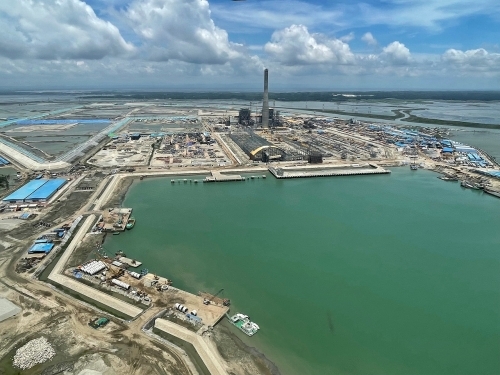 বড় জাহাজ মেরামতে মাতারবাড়ীতে ১ বিলিয়ন ডলারের প্রকল্প
 মাতারবাড়ীতে প্রায় ১ বিলিয়ন মার্কিন ডলার ব্যয়ে পরিবেশবান্ধব ডকইয়ার্ড ও জাহাজ নির্মাণ কেন্দ্র স্থাপনের উদ্যোগে নীতিগত অনুমোদন দিয়েছে নৌপরিবহন মন্ত্রণালয়। এখন প্রকল্পটির কারিগরি ও আর্থিক মূল্যায়নের জন্য প্রস্তাবটি সরকারি-বেসরকারি অংশীদারত্ব (পিপিপি) কর্তৃপক্ষের কাছে পাঠানো হয়েছে। সম্পূর্ণ বেসরকারি অর্থায়নে সরকারি জমির মালিকানা অক্ষুণ্ন রেখে প্রকল্পটি বাস্তবায়নের পরিকল্পনা রয়েছে। বন্দর কর্তৃপক্ষ জানায়, […]
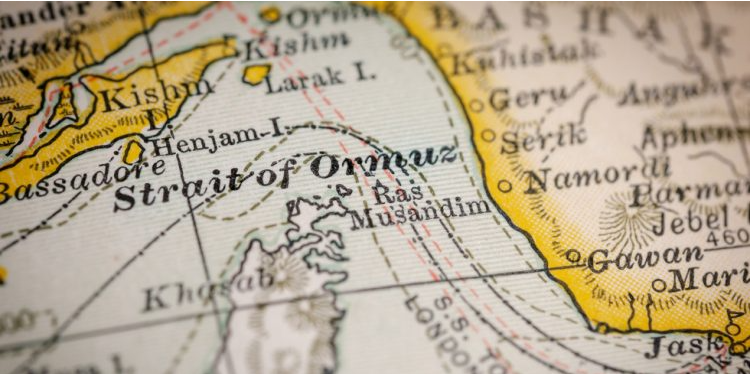 Industry on alert over scam messages offering ships “safe passage” on Hormuz
 Credit: Shutterstock Fraudulent messages offering safe passage through the Strait of Hormuz in exchange for cryptocurrency have been circulated to shipping companies with vessels stranded west of the waterway, according to MARISKS. In an alert issued on 20 April, MARISKS cautioned that unknown actors posing as Iranian authorities had contacted […]



JOB SITES
CONTENTS
LINKS
Happy New Year

Découvrez les avantages de MadCasino
Dans le monde des casinos en ligne, MadCasino se distingue par ses offres attrayantes et ses services de qualité. Que vous soyez un joueur débutant ou un parieur aguerri, vous trouverez ici une variété de jeux qui sauront satisfaire toutes vos envies. Les machines à sous, les jeux de table et les options de paris en direct sont tous disponibles pour vous offrir une expérience de jeu inégalée. De plus, le casino propose régulièrement des bonus qui permettent d'augmenter vos chances de gagner, vous offrant ainsi une excellente opportunité de maximiser vos gains.
En matière de sécurité, MadCasino est un nom de confiance. Il est entièrement licencié et régulé, ce qui garantit un environnement de jeu sûr et équitable. Les joueurs peuvent se concentrer sur leur expérience de jeu sans se soucier des problèmes de sécurité. Les transactions financières sont également sécurisées grâce à des technologies de pointe.
Les jeux proposés par MadCasino sont issus des développeurs les plus réputés de l'industrie, vous assurant des graphismes époustouflants et des mécaniques de jeu innovantes. Les joueurs peuvent également profiter d'une expérience de jeu en direct qui simule l'atmosphère d'un casino terrestre, tout en restant dans le confort de leur maison.
Enfin, la plateforme de MadCasino est optimisée pour les appareils mobiles, permettant aux joueurs de parier à tout moment et de n'importe où. Que vous soyez sur votre smartphone ou votre tablette, l'accès à vos jeux préférés n'a jamais été aussi simple. Ne manquez pas l'opportunité de découvrir ce casino exceptionnel.
Les offres de Cresus Casino
Cresus Casino est un autre acteur majeur dans le domaine des jeux en ligne, offrant des promotions généreuses et une vaste sélection de jeux. Les joueurs peuvent profiter d'une expérience de jeu enrichissante grâce aux nombreux bonus disponibles, qui sont conçus pour attirer tant les nouveaux utilisateurs que les joueurs réguliers. Ces avantages permettent non seulement de prolonger votre temps de jeu, mais aussi d'augmenter vos chances de gains conséquents.
Le casino se distingue également par sa ludothèque impressionnante, comprenant une sélection variée de machines à sous, de jeux de table et de jeux en direct. Les clients peuvent choisir parmi des titres populaires et appréciés, ainsi que des nouveautés qui enrichissent constamment l'offre. L'interface utilisateur est conviviale, rendant la navigation sur la plateforme fluide et agréable.
En termes de sécurité, Cresus Casino assure à ses joueurs un environnement de jeu fiable. La plateforme utilise des protocoles de sécurité avancés pour protéger les données personnelles et financières des utilisateurs. Cela permet aux joueurs de se sentir en sécurité tout en jouant à leurs jeux préférés.
Avec un service client réactif et professionnel, Cresus Casino s'assure que toutes vos questions et préoccupations sont traitées rapidement. Que ce soit pour des questions concernant les bonus, les retraits ou les jeux, vous bénéficierez d'une assistance rapide et efficace.
Explorez Nine Casino et ses avantages
Dans l'univers des casinos en ligne, Nine Casino a su se faire une place de choix grâce à son approche innovante et à ses nombreux avantages pour les joueurs. Les utilisateurs peuvent s'attendre à une expérience de jeu enrichissante, avec des bonus attractifs qui sont régulièrement mis à jour. Ces offres sont une excellente façon de découvrir de nouveaux jeux tout en maximisant votre potentiel de gain.
La plateforme de Nine Casino est riche en options de jeux, allant des machines à sous aux jeux de table, en passant par le live casino. Chaque jeu est conçu pour offrir une expérience immersive grâce à des graphismes de haute qualité et des fonctionnalités innovantes. Les parieurs peuvent profiter de sessions de jeu captivantes, comme s'ils étaient dans un véritable casino.
La sécurité est une priorité pour Nine Casino, qui utilise des technologies de cryptage avancées pour protéger les informations de ses joueurs. Cela garantit un environnement de jeu sûr et fiable, permettant aux utilisateurs de se concentrer sur ce qu'ils aiment le plus : jouer.
Enfin, le service clientèle fourni par Nine Casino est exceptionnel, avec des agents disponibles pour répondre à toutes vos questions et résoudre vos problèmes. Vous pourrez ainsi jouer en toute tranquillité, sachant que votre satisfaction est au cœur de leurs préoccupations.
Profitez de l'expérience Lucky31
Lucky31 est un casino en ligne qui se distingue par son approche orientée vers le joueur, offrant une multitude d'options de jeux et des bonus généreux. Que vous soyez amateur de machines à sous ou passionné de jeux de table, vous trouverez une large sélection pour satisfaire toutes vos envies de jeu. Les promotions fréquentes permettent aux joueurs de prolonger leur expérience tout en augmentant leurs chances de gains.
La convivialité de la plateforme de Lucky31 est l'un de ses plus grands atouts. Les joueurs peuvent naviguer facilement entre les différents jeux, et l'interface est conçue pour être intuitive, quel que soit le niveau d'expérience de l'utilisateur. De plus, le casino est entièrement optimisé pour les appareils mobiles, ce qui permet de parier où que vous soyez.
En matière de sécurité, Lucky31 prend les préoccupations des joueurs très au sérieux. Le casino est agréé et régulé, garantissant un environnement de jeu équitable et sécurisé. Les joueurs peuvent ainsi se concentrer sur leur expérience de jeu sans se soucier des risques liés à la sécurité.
Pour ceux qui recherchent un support client efficace, Lucky31 offre un service réactif et professionnel. Que ce soit pour des questions sur les bonus, les jeux ou les paiements, vous aurez accès à une assistance de qualité, vous garantissant une expérience de jeu fluide et agréable.