search the site


STARTING OF PORT OF CHALNA AFTER INDEPENDENCE OF BANGLADESH.
PORT OF CHALNA
STARTING OF PORT OF CHALNA AFTER INDEPENDENCE OF BANGLADESH.

by Captain Mohammad Belayet Hussain (1N) 1 February 2020
Port of Chalna was established on December 11, 1954 at Chalna, about 11 miles upstream of Mongla and named Chalna Anchorage. It was administered by the Central Government of Pakistan. In December 1971, there were six Pilots in addition to Harbour Master and Port Director plus Port Engineer, administrative staff, and other officers. The Port Director, Harbour Master, pilots, and some other officers were either from West Pakistan or were local Urdu speaking people. They all left before the surrender of Pakistan Army.
Occupation of Bangladesh ended on the Final Victory of Bangladesh and surrender of Pakistan Army on December 16, 1971.
Capt. Zahir Uddin Mahmood and I happened to be in Dhaka at that time. We were on leave for our Master’s Examination. After about 3/4 days of Victory Day, there was an announcement on Bangladesh Betar calling all Merchant Navy Officers to report to Capt. M. Shafi at IWTA office. The next day I reported to Capt. M. Shafi at his office. Since there was no BSC or ships in BD at the time, I took permission to go to my village home outside Dhaka, leaving my contact address at his office.
After about 3-4 days, my batch mate and brother-in-law Capt. Zahir Uddin Mahmood arrived at my village home with message from Capt. Q.A.B.M. Rahman and Capt. M. Shafi for me to report to BSC office in Dhaka and to proceed to Khulna to open the Port of Chalna to shipping.
The next day, in the beginning of the week of January 1972, we arrived in Dhaka and reported to BSC office. We met up with Capt. Q.A.B.M. Rahman, Capt. M. Shafi and Mr. M.A. Hossain of BSC in the office.
Capt. Rahman told us to proceed to Khulna immediately and told us to somehow open the port to shipping as Pilot as soon as possible. We informed him that we had no Master’s Certificate as well as no experience in Piloting as we sailed only as Chief Officers. His reply was “You will learn and gain experience”. He also told us that no one else was available at the moment and our Prime Minster, Tajuddin Ahmed, did not want any foreigners to be employed as long as Bangladeshis were available. Capt. Rahman also informed us that we might not receive any salary until The Government of Bangladesh settled down to normal working conditions. He told us “You will work for the country at the moment and later you will work for yourself as well as the country”.
At the same time, Capt. M. Shafi handed over two tickets for us to go to Khulna by Rocket Steamer that will leave Dhaka that evening. He also told us to report to Mr. M.A. Quddus, the Port Director and Capt. Sufi Mohammad Ashraful Islam, Harbour Master for assignment.
Zahiruddin Mahmood and I arrived in Khulna the next morning (possibly on January 04, 1972) and reported to Port Director and Harbour Master as advised. We were accommodated at the Harbour Master’s residence as Capt. S.M.A. Islam was staying alone. (Though the exact dates are hard to recall, this happened before Bangabondhu Shaikh Mujibur Rahman’s arrival Dhaka from Pakistani prison). When our families arrived in the 2nd week of January 1972, we moved to our quarters next to those of the Harbour Master.
Informatively, on the Rocket Steamer, we met Mr. Sanaullah Chowdhury (who later became a Ship Owner) who was leading a delegation of Scindia Shipping Co. of India. We also met BJMC Chairman, Mr. Matiur Rahman, both coming to see the Port condition themselves.
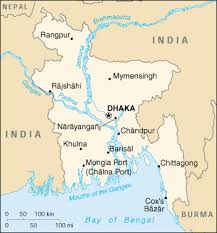
On arrival Khulna, we observed:
The Port had the following officers: Port Director M.A. Quddus, Harbour Master Capt. S.M.A. Islam, Port Engineer (Civil – Hydraulic) Sanwar Hossain, Accounts Officer Mr. Zoha, Administration Officer Mr. Harun ur Rashid, Labour Officer Mr. Latif, and Wireless Officer Mr. Bhuiyan (Father of Capt. Zillur Rahman Bhuiyan). A Pilot, Mr. M.A. Taher, known as Taher Master (holding Inland Master Certificate), was experienced in piloting small vessels from Mongla to Roosevelt Jetty at Khulna and back. He also had some experience of piloting small vessels from Hiron Point to Mongla and back. Later, I believe sometime in later 1973, Doza Master, holding an Inland Master Certificate was allowed to pilot smaller vessels from Mongla to Khulna and back, as well as piloting vessels from Hiron Point to Mongla and back when there were more arrival and departures.
The entirety of Pussur River was in chaos, being devasted and damaged by the Indian Air Force bombings and strafings 3-4 days before Final Victory. All the port launches, tugboats, and Pilot Vessels were damaged and put out of commission due to strafing by Indian Airforce jets. Fairway anchorage and passage to Hiron Point were badly mined by Indian as well as Pakistan Navies during the war.
Many ships, ocean-going and on coastal trades were sunk or damaged. Even 2 Indian Navy Gunboats that hoisted the Pakistani Flag and entered the Pussur River were also sunk near Khulna. In the port area from Bajua to Fairway, eight ocean-going ships were sunk, six at Mongla, one at Hiron Point Anchorage, and one just outside the Fairway channel. The M.V. Mustali was sunk at the Mooring Buoy No.8 in a fully loaded condition. The sunken foreign flag ship anchored at Hiron Point anchorage was also fully loaded with jute goods. In addition, some coastal trade vessels were also sunk.
In the mid-to-late year of 1972, a contract to clear the port and her approaches was given through the United Nations to a consortium of Salvage Operators of Netherland, West Germany, Japan, and Singapore. They brought two floating cranes, one having an 800-ton capacity and the other having a 600-ton capacity. Salvage operators cut the sunken ships into pieces and picked up the pieces by the cranes and put the pieces on the riverbanks. The sunken ship at the Mooring Buoy No.8 and the other sunken ship at the Hiron Point anchorage were pushed down to about 60 feet below the river bottom by use of explosives, thus making navigation safe over them. By mid-1973, the wreck removals from Fairway to Bajua were completed.
Shipping Agents: Multi-national and local Agents were ready to handle ships as soon as the Port was declared open. The prominent Shipping Agents were Bangladesh Shipping Corporation, Agent for Shipping Corporation of India, Atlas Shipping for Scindia Shipping Lines, India, Mackinon Mackenzie, Shaw Wallace, ULA, Gladstone Wyle, James Finlay, Birds Bangladesh, M.M. Ispahani.
Stevedores: The owners of most of the stevedoring Companies were West Pakistanis. Most of them left or were hiding before or after the 16th of December 1971. Supervisors from these Companies applied for Stevedoring Licenses as soon as the Port office started functioning. As to my knowledge, about 100 applications were submitted for issuance of Stevedoring Licenses. After Scrutiny, most of them were issued licenses.
Immediately after Victory Day, the Indian Navy was engaged in mine sweeping of the Fairway anchorage and the passageway to Hiron Point. 3-4 days after we joined, a wooden motorboat belonging to Khulna Newsprint Mills was arranged for our trip to Fairway Buoy, 68 miles from Mongla to inspect condition of navigational channels. Capt. S.M.A. Islam, M. Belayet Hussain, Zahir Uddin Mahmood, and Taher Master made the trip from Khulna to Fairway Buoy and back to Khulna. The boat had no bed nor any toilet and only had two long seats. We learned that the Indian Navy Mine Sweepers were still working at the Fairway channel. It took us 2 days to make a round trip to Khulna.
By about January 20, 1972, the Fairway and River passages were declared safe for navigation. Accordingly, the MV Vishwa Bijoy belonging to the Shipping Corporation of India was scheduled to call Mongla to load cargo for UK – Continent on January 26, the Republic Day of India.
Capt. S.M.A. Islam, Zahir Uddin Mahmood, M Belayet Hussain, and Taher Master arrived at Fairway Buoy using the wooden boat and boarded the MV Vishwa Bijoy on the morning of 26th January 1972. With the beginning of flood tide, we proceeded towards Mongla under the Pilotage of Taher Master. We were his assistants under training. We arrived Mongla safely at about noon time. The vessel was moored at Mooring Buoy No 5. On completion of mooring operations, Port Director Mr. M.A. Quddus boarded the vessel to welcome her Command, Captain Narang, and his crew. Capt. Narang offered all of us lunch.
Informatively, previously before independence, inward vessels were boarded by Pilots at Hiron Point and they also disembarked there. Inward vessels were given instructions by Harbour Master on wireless telegraphy about how and when to cross the Fairway Channel and arrive at the Hiron Point. Outward vessels were given instructions by outward Pilot about how and when to weigh anchor at Hiron Point and proceed to Sea for vessel’s destination. We also followed the same procedures for all vessels calling Mongla.
Communication between Port and ships were on radio telegraphy via Khulna Radio. The Port had one Radio Station at Hiron Point and one at Mongla for communication with incoming as well as outgoing ships. Instructions to incoming ships were passed via Hiron Point Radio Station free of charges. Since there was no shore electricity at Hiron Point, a Generator was being used to operate Radio Station from 0600-0800, 1000-1200, 1400-1600, 1800-2000, and 2200-2300 hour daily.
Soon after, ships started coming to Mongla port to load cargo as well as discharge food grains. Z.U. Mahmood and I did 2 ships under Taher Master from Hiron Point to Mongla and Hiron Point, i.e. one up and one down. We were then assigned to do Piloting jobs independently. I believe my first ship was a UK Flag Bank Line ship to be piloted from Hiron Point to Mongla. I boarded the vessel with a trembling heart. I informed the Captain about nil experience in piloting. I requested him to watch my actions and he encouraged me to continue piloting without fear. Thankfully, we arrived in Mongla safely and moored her to a Mooring Buoy properly. I thanked God for my success. I received the best help and tips regarding Piloting and Ship-handling from Capt. Somesh Chowdhury, Master of MV Indian Strength of Indian Steam Navigation Co. Ltd. He was an ex-Hoogly Pilot of Calcutta Port with vast experience. I followed his advice in my life onboard for many ships as Master for over 32 years. Zahir Uddin Mahmood also managed to bring his ship to Mongla safely and moored her to a Mooring Buoy. The first jobs gave us big moral boosts and confidence to continue as a Pilot. Our colleague Taher Master was a great help for us. He was very good in ship handling and also knew the channel very well. He advised us when to reduce speed of the vessel in the shallow area of the river to avoid squatting, especially in a fully loaded condition. He also gave us lot of tips about ship handling, anchoring, and mooring/unmooring vessels to and from Mooring Buoys as required. Soon he was promoted to the rank of Pilot (Class 1 Gazetted Officer).
In about a month, Zahir Uddin Mahood and I became fully conversant with piloting operations as well as confident in ourselves. I believe in the third month of port operations, I was onboard an outgoing Scindia ship and Taher Master was onboard another outgoing sistership of Scindia having the same designed speed. The Capt. of my ship wanted to race to see who was faster. When both ships were abreast of each other, both ships gave full engine speed for this purpose. We found that both had the same speed. But my ship won by about 10 minutes because the other ship had to make a bigger turning circle at Joymoni and Monkey Points, being on the disadvantageous side.
Piloting, both inward as well as outward vessels, both loaded and in ballast, were done in Flood tide. Light draft vessels could be brought to Mongla from Hiron Point, but it would take about 8-10 hours against the tide instead of 3-4 hours with the tide. The loaded vessel had to be piloted in flood tides only due to draft problem. Inward vessels were normally brought in flood tide to Mongla. On arrival Mongla, vessels were anchored between the No.5 and No.6 Mooring Buoy or at Bajua anchorage for turning to moor them to Mooring Buoy heading tides. Informatively, there were no jetties for cargo operation. Jetty construction with Yogoslav Government help was suspended during 1971 and was not resumed till August 1973 when I left.
Since the Port had no operating Pilot Vessels, wooden boats from Khulna Newsprint Mills were being used to embark and disembark to and from vessels. Since no accommodating Pilot Vessel was available, we had to board an incoming vessel waiting at Hiron Point for berth next day. If only one ship was available, all three of us (Pilots) were boarding the same vessel to sleep onboard. If other ships were arriving for next day berthing, the boat would transfer us from this vessel to the other vessels early in the morning. If no other ship arrived, two extra Pilots would travel to Mongla as passenger. This would help us to sail the outward vessels from Mongla thus avoiding any delay to vessels.
Pilot’s Accommodation: Mongla had a rest house to accommodate about 3-4 Pilots at a time but had no bedding. We bought our own beddings for use. In the Pre-independence days, the Port had two big Pilot Vessels with accommodation for about six Pilots with sufficient freshwater capacity. The two Pilot Vessels were stationed at Hiron Point anchorage for two weeks alternately. Pilots were using these vessels for accommodation while waiting at Hiron Point for incoming vessels. There was one building built on pillars keeping ground floor vacant with two rooms at Hiron Point Station for use as Pilot’s Rest House. Staying at this place was quite risky because the Tigers were visiting the area at night. This facility was never used by Pakistani Pilots. One room was being used by wireless operators. We got the other room cleaned up for Pilots to stay while waiting for inward vessels.
This room had three beds but no bedding. We bought beddings for our use. In verandah, there was on camp cot which could also be used. Once the Hiron Point Rest house was made ready, we started staying there instead of onboard inward vessels waiting at Hiron Point anchorage.
In February,1972 one Ferry ship from BIWTC was brought for use by Pilots at Hiron Point stay. But the Ferry had no sleeping accommodation as well as not sufficient Freshwater capacity. Therefore, the Ferry was returned to BIWTC. In March 1972 Canadian Government gave one Ferry ship – named Anticosti 1 – plying between ports in the St. Lawrence River. This ship had accommodation but insufficient Freshwater capacity, therefore unsuitable for use by Pilots. This ship was given to Bangladesh Navy when the Navy was established in Mid 1972.
We would board early in the morning to bring vessels to Mongla for berthing. After the port was opened, many ships for loading export cargo as well as discharging food grains started calling Mongla. Labour conditions were very good. They could load general cargo about 2000 mt per 24 hours. Discharging food grain was better about 3-4000 mt per day. Daily vessel arrivals and departures were five or more. Normally, it was very difficult to handle more than 3 arrivals/departures daily. As a result, each of us had to handle 3 ships daily, 2 up and 1 down or 1 up and 2 down. For that, we had to start at about 0500 hours in the morning and finish at 2200 hours at night. This way, port congestion was avoided considerably. We could accommodate about 24 vessels from South-7 anchor position to Bajua with draft of 24 feet. In March 1972, two pilots and I handled 69 vessels. We could not even visit Khulna to draw our salary. We were paid Tk 500.- per month on ad-hoc basis for three months. By March 1972, 2 Pilot transfer vessels were made operational.
Khulna – Mongla and vice versa journey was made mostly by Agents’ Launches. Sometime, in May or June, two fast pilot vessels were made operational for Khulna-Mongla transportation. In 1971, these two boats were used by Pakistan Navy as Gun Boats to petrol rivers around Khulna/Mongla. Guns were mounted on the forecastles of the boats. These boats were unsuitable for use at Hiron Point where sea was getting rough at times.
I believe in late March or early April 1972, Capt. Ferdous Alam joined the port as a Pilot. On completion of training, he was doing piloting job independently. In May 1972, the Pilots’ salary was fixed by the Ministry of Communication at Tk 1,160.- per month, enabling us to draw Tk 1,000.- maximum drawable limit at the time. Our basic salary as Chief Officer at National Shipping Corporation was Tk 1,950.- per month. K.M. Rahman joined as Pilot sometime in between December 1972 and January 1973. After he joined, there were now five Pilots. Once he completed his training period, the workload was slightly reduced. The Port was running smoothly without any berthing delay or congestion. Informatively, none of us took a Pilots’ License as we did not want to stay at this Port permanently.
I stayed at the Port till August 31, 1973. During this period, (about 20 months), I handled over 400 ships. The biggest ship I handled was a 70,000 DWT bulk carrier named M.V. Federal Bulker carrying bulk wheat after partly discharging at Chittagong Anchorage. I managed to moor this ship in about 7-8 minutes. I think believe, in the second month of our piloting, I piloted one Brokelbank vessel equipped with variable propeller and bow thruster. The captain of the vessel suggested that I could swing the ship round at No.5 buoy without anchoring. I asked him how. He told me that he would help me. In fact, he swung the ship round with the help of the bow thruster and main engines without using the anchor. Mooring was done with help of a variable pitch propeller keeping the ship speed constant to counter the current, thus keeping the ship in proper position. Harbour Master Capt. S.M.A. Islam, Pilot Zahir Uddin Mahmood, and others watched the maneuvers. On completion of mooring, when I came down to the Pilot vessel, Harbour Master and others charged me saying I took a big risk by not anchoring the vessel for swinging. My answer was: if you got the same ship, you would do the same thing. Then I explained to them the advantage of the bow thruster and variable pitch propeller.
On September 03, 1973 I joined the Bangladesh Shipping Corporation again. Immediately, I was given Command of M.V. Sylhet Ex M.V. Pasni to join her at Bombay undergoing repair. This Pakistani vessel was captured by Indian Navy in December 1971 during the war near Cochin and was berthed at Cochin Port. The vessel was given to Bangladesh in April 1972. The vessel was brought to Bombay from Cochin by BD Officers under Command of Capt. Gill, a British National. Shipyard at Bombay took eight months to complete all repairs. On completion of repairs and a successful sea trial, the vessel loaded general cargo for Chittagong and sailed in the last week of December 1973 and arrived in Chittagong in the first week of January 1974.
The experience I gained piloting ships at Port Chalna, now Mongla, helped me immensely later in my life when I sailed onboard many vessels as Master. I could arrive and depart from ports without being shaky. On arrival at a port after a long sea passage, I could anchor at the anchorage with no more than six engine movements. I embarked and disembarked sea pilots at full sea speed of 17 knots on M.V. Banglar Swapna and M.V. Banlar Kallol at US Ports.
CONCLUSION: Pioneer Mariners, Capt. Q.A.B.M. Rahman and Capt. M. Shafi requested me to write on the subject and motivated me to write. Capt. Hassan Quddus (14/N), son of Mr. M.A. Quddus, the Port Director at the time, also requested me to write. Most of the Officers involved in port operations at the time are no longer there or are too sick to do anything. Mr. M.A. Quddus, the Port Director, and Pilot Taher Master passed away some years ago. Capt. S.M.A. Islam, the Harbour Master at the time, is paralyzed and is unable to move by himself and even talk. Capt. Zahir Uddin Mahmood, the Pilot at the time, who later became Deputy Conservator and Member Operations of Mongla/Chittagong Ports and acting Chairman of Chittagong Port, is also very sick being unable to move and eat by himself. He also does not recognize friends and close relatives. Our prayers are for both of them.
Featured Post
 বড় জাহাজ মেরামতে মাতারবাড়ীতে ১ বিলিয়ন ডলারের প্রকল্প
 মাতারবাড়ীতে প্রায় ১ বিলিয়ন মার্কিন ডলার ব্যয়ে পরিবেশবান্ধব ডকইয়ার্ড ও জাহাজ নির্মাণ কেন্দ্র স্থাপনের উদ্যোগে নীতিগত অনুমোদন দিয়েছে নৌপরিবহন মন্ত্রণালয়। এখন প্রকল্পটির কারিগরি ও আর্থিক মূল্যায়নের জন্য প্রস্তাবটি সরকারি-বেসরকারি অংশীদারত্ব (পিপিপি) কর্তৃপক্ষের কাছে পাঠানো হয়েছে। সম্পূর্ণ বেসরকারি অর্থায়নে সরকারি জমির মালিকানা অক্ষুণ্ন রেখে প্রকল্পটি বাস্তবায়নের পরিকল্পনা রয়েছে। বন্দর কর্তৃপক্ষ জানায়, […]
 Industry on alert over scam messages offering ships “safe passage” on Hormuz
 Credit: Shutterstock Fraudulent messages offering safe passage through the Strait of Hormuz in exchange for cryptocurrency have been circulated to shipping companies with vessels stranded west of the waterway, according to MARISKS. In an alert issued on 20 April, MARISKS cautioned that unknown actors posing as Iranian authorities had contacted […]



JOB SITES
CONTENTS
LINKS
Happy New Year

Découvrez les avantages de MadCasino
Dans le monde des casinos en ligne, MadCasino se distingue par ses offres attrayantes et ses services de qualité. Que vous soyez un joueur débutant ou un parieur aguerri, vous trouverez ici une variété de jeux qui sauront satisfaire toutes vos envies. Les machines à sous, les jeux de table et les options de paris en direct sont tous disponibles pour vous offrir une expérience de jeu inégalée. De plus, le casino propose régulièrement des bonus qui permettent d'augmenter vos chances de gagner, vous offrant ainsi une excellente opportunité de maximiser vos gains.
En matière de sécurité, MadCasino est un nom de confiance. Il est entièrement licencié et régulé, ce qui garantit un environnement de jeu sûr et équitable. Les joueurs peuvent se concentrer sur leur expérience de jeu sans se soucier des problèmes de sécurité. Les transactions financières sont également sécurisées grâce à des technologies de pointe.
Les jeux proposés par MadCasino sont issus des développeurs les plus réputés de l'industrie, vous assurant des graphismes époustouflants et des mécaniques de jeu innovantes. Les joueurs peuvent également profiter d'une expérience de jeu en direct qui simule l'atmosphère d'un casino terrestre, tout en restant dans le confort de leur maison.
Enfin, la plateforme de MadCasino est optimisée pour les appareils mobiles, permettant aux joueurs de parier à tout moment et de n'importe où. Que vous soyez sur votre smartphone ou votre tablette, l'accès à vos jeux préférés n'a jamais été aussi simple. Ne manquez pas l'opportunité de découvrir ce casino exceptionnel.
Les offres de Cresus Casino
Cresus Casino est un autre acteur majeur dans le domaine des jeux en ligne, offrant des promotions généreuses et une vaste sélection de jeux. Les joueurs peuvent profiter d'une expérience de jeu enrichissante grâce aux nombreux bonus disponibles, qui sont conçus pour attirer tant les nouveaux utilisateurs que les joueurs réguliers. Ces avantages permettent non seulement de prolonger votre temps de jeu, mais aussi d'augmenter vos chances de gains conséquents.
Le casino se distingue également par sa ludothèque impressionnante, comprenant une sélection variée de machines à sous, de jeux de table et de jeux en direct. Les clients peuvent choisir parmi des titres populaires et appréciés, ainsi que des nouveautés qui enrichissent constamment l'offre. L'interface utilisateur est conviviale, rendant la navigation sur la plateforme fluide et agréable.
En termes de sécurité, Cresus Casino assure à ses joueurs un environnement de jeu fiable. La plateforme utilise des protocoles de sécurité avancés pour protéger les données personnelles et financières des utilisateurs. Cela permet aux joueurs de se sentir en sécurité tout en jouant à leurs jeux préférés.
Avec un service client réactif et professionnel, Cresus Casino s'assure que toutes vos questions et préoccupations sont traitées rapidement. Que ce soit pour des questions concernant les bonus, les retraits ou les jeux, vous bénéficierez d'une assistance rapide et efficace.
Explorez Nine Casino et ses avantages
Dans l'univers des casinos en ligne, Nine Casino a su se faire une place de choix grâce à son approche innovante et à ses nombreux avantages pour les joueurs. Les utilisateurs peuvent s'attendre à une expérience de jeu enrichissante, avec des bonus attractifs qui sont régulièrement mis à jour. Ces offres sont une excellente façon de découvrir de nouveaux jeux tout en maximisant votre potentiel de gain.
La plateforme de Nine Casino est riche en options de jeux, allant des machines à sous aux jeux de table, en passant par le live casino. Chaque jeu est conçu pour offrir une expérience immersive grâce à des graphismes de haute qualité et des fonctionnalités innovantes. Les parieurs peuvent profiter de sessions de jeu captivantes, comme s'ils étaient dans un véritable casino.
La sécurité est une priorité pour Nine Casino, qui utilise des technologies de cryptage avancées pour protéger les informations de ses joueurs. Cela garantit un environnement de jeu sûr et fiable, permettant aux utilisateurs de se concentrer sur ce qu'ils aiment le plus : jouer.
Enfin, le service clientèle fourni par Nine Casino est exceptionnel, avec des agents disponibles pour répondre à toutes vos questions et résoudre vos problèmes. Vous pourrez ainsi jouer en toute tranquillité, sachant que votre satisfaction est au cœur de leurs préoccupations.
Profitez de l'expérience Lucky31
Lucky31 est un casino en ligne qui se distingue par son approche orientée vers le joueur, offrant une multitude d'options de jeux et des bonus généreux. Que vous soyez amateur de machines à sous ou passionné de jeux de table, vous trouverez une large sélection pour satisfaire toutes vos envies de jeu. Les promotions fréquentes permettent aux joueurs de prolonger leur expérience tout en augmentant leurs chances de gains.
La convivialité de la plateforme de Lucky31 est l'un de ses plus grands atouts. Les joueurs peuvent naviguer facilement entre les différents jeux, et l'interface est conçue pour être intuitive, quel que soit le niveau d'expérience de l'utilisateur. De plus, le casino est entièrement optimisé pour les appareils mobiles, ce qui permet de parier où que vous soyez.
En matière de sécurité, Lucky31 prend les préoccupations des joueurs très au sérieux. Le casino est agréé et régulé, garantissant un environnement de jeu équitable et sécurisé. Les joueurs peuvent ainsi se concentrer sur leur expérience de jeu sans se soucier des risques liés à la sécurité.
Pour ceux qui recherchent un support client efficace, Lucky31 offre un service réactif et professionnel. Que ce soit pour des questions sur les bonus, les jeux ou les paiements, vous aurez accès à une assistance de qualité, vous garantissant une expérience de jeu fluide et agréable.