search the site


Climate Action: Sustainable Floating Cities
Climate Action: Sustainable Floating Cities
8 August 2019 YaleGlobal online
In anticipation of climate change’s rising seas and increased migration, the UN Human Settlements Programme explores the possibility of sustainable floating cities – and requested advanced proposals from marine engineers and related firms for the UN Climate Action Summit in September. The plan is far from fanciful considering that thousands of oil platforms and cruise ships already operate in ocean, explains Stefan Huebner, a research fellow with both Harvard University Asia Center and the Asia Research Institute at the National University of Singapore. Russia launched a floating nuclear power facility in 2018 and a Chinese shipbuilder has constructed a massive floating fish-farming facility for Norway. “These examples of mass producible floating industrial structures suggest that technology is not the challenge but rather globalization and the future of the ocean commons as well as sustainability, waste, legal issues, funding and business models,” Huebner writes. He urges designers and governments to develop sustainable standards to prevent temporary solutions from devolving into slums with long-term environmental and security hazards. – YaleGlobal
Preparing for rising seas and mass migration, the United Nations calls for ocean engineers to submit designs for sustainable floating citiesStefan HuebnerThursday, August 8, 2019
CAMBRIDGE, MASSACHUSETTS: Unconventional and seemingly extreme responses to climate change, related sea-level rise, and floods are gaining considerable attention, with the goals of creating adaptable homes and reducing mass migration.
In April, the United Nations hosted a high-level roundtable on “sustainable floating cities” in New York City, and Deputy Secretary-General Amina Mohammed requested advanced proposals for September’s UN Climate Action Summit. Ocean engineers at the Massachusetts Institute of Technology, along with architectural firms and organizations with ties to Denmark, French Polynesia and the United States, are drafting designs for such a “sustainable floating city” with a low ecological footprint. Of particular interest is a large floating structure’s resilience to floods and sea-level rise for many coastal cities, settlements near river deltas, and islands in Oceania and elsewhere in the world.
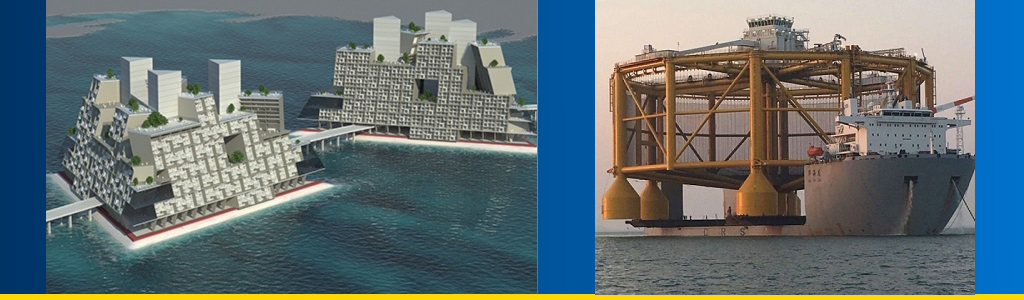
The plan is less eccentric than it might initially sound. Several thousand offshore oil platforms with living quarters and cruise ships have operated in the world’s oceans for decades. The yet undefined term “floating city” can refer to a variety of large floating structures that could be combined. Inspired by oil platforms, a free-market libertarian US-Thai couple built a small, offshore floating homestead off Phuket in Thailand earlier this year. Weeks later, the Thai navy ended that attempt to escape state control. In 2018, Russia launched a floating nuclear power plant, the Akademik Lomonosov. China Shipbuilding Industry Corporation constructed the first, semi-submersible fish farm, Ocean Farm 1, for a Norwegian company, SalMar, raising 1.5 million salmon several miles off the Norwegian coast.
These examples of mass producible floating industrial structures suggest that technology is not the challenge but rather globalization and the future of the ocean commons as well as sustainability, waste, legal issues, funding and business models.
Climate change, or rather its consequences, is not a really new element in the cost-benefit calculations. During the 1960s and 1970s, a small number of plans and prototypes for floating communities were released, and such analyses addressed temporary or permanent relocation of people, promotion of energy alternatives to carbon fuels, increased food production, and a state’s extension of judicial control over such offshore facilities. US and Japanese governmental agencies and designers wrestled with what is actually considered cost or benefit in their calculations related, for example, to cheap prices of air pollution-causing carbon fuels and aesthetic versus structurally efficient designs.
The UN roundtable panelists are in a quest for a sustainable floating city as a tool for climate action and resilient refuge. The goal is for permanent settlements rather than temporary fixes. A modular design is expected to allow growth in capacity and capability over time, similar to the growth of onshore cities over time. Design and flexibility will determine whether floating refuges turn into permanent settlements with reasonable living standards or slums, reminiscent of longstanding refugee camps intended as temporary solutions.
Inevitably, a floating city will be a centrally planned megastructure and, similar to an aircraft carrier, difficult to restructure. Aware of the problem, designers since the 1970s have argued for a plug-in system of mobile and rearrangeable trapezoid- or hexagonal-shaped floating modules, as advocated at the UN roundtable, to allow flexibility. For many, this recalls the rapid “urban renewal” development around the world during the mid-20th century. In neglecting actual human needs, the central planning and cost-benefit calculations easily led to dystopian spaces. Critics of urban-renewal projects during the 1960s, like journalist-activist Jane Jacobs, but also prominent architects, such as Christopher Alexander, pointed out that such planning and calculation failures resulted in residential spaces that were artificially separated from commercial or recreational spaces, isolating communities at night, and exacerbating crime and transportation problems.
As a reaction to urban projects in coastal cities, US designer Buckminster Fuller and his associates proposed Triton City, a floating community for unused harbor space, and released a study in 1968. That design still featured concepts that had been attacked by critics, likely because even a modular megastructure limited its flexibility: commercial and recreational space was prearranged with shops, restaurants and supermarkets in specific locations, again reducing pedestrian traffic in residential parts after daylight hours. To address crime, Triton City was proposed as a gated community, featuring guarded access points like a cruise ship. Designers must consider how choices add to social and economic problems if they aspire to offer more than dystopian, temporary solutions.
Fuller’s idea received noteworthy criticism from Gaylord Nelson, best known as the founder of Earth Day. In October 1969, this Democratic senator from Wisconsin and staunch environmentalist warned that within one decade unchecked human commercial enterprises might kill off most ocean life, and he pointed to the disastrous Santa Barbara offshore oil spill that had taken place that year. He also saw floating cities as another major threat, expressing concern that such structures could be located beyond US territorial waters – meaning that federal laws on conservation would not be applicable. The global proclamation of contiguous and exclusive economic zones ended such concerns of insufficient state control.
Enforcement of a legal framework is essential for sustainability. The Thai Navy ending the free-market libertarian experiment off Phuket illustrates that states capable of enforcing judicial control over their marine regions will do so – although this does not say anything about their offshore conservation standards. Monitoring the activities of fixed floating structures is, technically and legally, easier than monitoring transit vessels like cruise ships. Other free-market libertarian groups like the San Francisco–based Seasteading Institute therefore do not expect to escape state control without negotiations. The group focuses on building a startup floating city through private investments, without funding from the host state. In exchange, they ask for private judicial control over a special economic zone harboring the community, placing it outside the state’s tax and penal systems.
Reaching true sustainability is a related challenge. The international community, first and foremost UN agencies for now, must discuss the legal framework under which a sustainable floating city would operate as well as financing. In countries that cannot afford the funding, the choice would be between development assistance, private investment capital – with or without privately or publicly administered special economic zones – or a combination. The related legal framework must define the sustainability of economic activities, for example related to the use of huge amounts of cooling water. Regulators must consider if offshore server farms, zero-carbon nuclear power plants or waste incinerators comply. The same question is related to other economic activities like tourism.
Many structures struggle for sustainability. At the UN roundtable, participants advocated for a combination of renewable energies; hydroponics, or growing plants in a water solvent; and ocean farming. Yet, many business models of mariculture are unsustainable. For offshore wind turbines and other renewables such as solar, technical challenges like energy storage for times with low winds or night hours, may possibly be overcome via a kind of pumped hydroelectric energy storage using ocean water. In some cases, high costs for connecting to energy grids remain.
For now, floating structures are individual sites tasked with specific industrial or commercial purposes. They do not try to fully emulate cities with their intricate systems of cooperation, culture and justice around a range of vibrant activities. Supporting further research on ocean-related sustainable economic practices and on affordable, flood-resilient housing would be valuable as the United Nations considers sustainable floating cities as climate action in September – even individually, these would reduce the human impact on oceanic ecosystems and assist people living in flood-prone regions.
Stefan Huebner is a Social Science Research Council–funded Fellow at the Harvard University Asia Center and a Research Fellow at the Asia Research Institute at the National University of Singapore. He is finishing a global history of ocean industrialization and colonization projects since the early 20th century.
Featured Post
 বড় জাহাজ মেরামতে মাতারবাড়ীতে ১ বিলিয়ন ডলারের প্রকল্প
 মাতারবাড়ীতে প্রায় ১ বিলিয়ন মার্কিন ডলার ব্যয়ে পরিবেশবান্ধব ডকইয়ার্ড ও জাহাজ নির্মাণ কেন্দ্র স্থাপনের উদ্যোগে নীতিগত অনুমোদন দিয়েছে নৌপরিবহন মন্ত্রণালয়। এখন প্রকল্পটির কারিগরি ও আর্থিক মূল্যায়নের জন্য প্রস্তাবটি সরকারি-বেসরকারি অংশীদারত্ব (পিপিপি) কর্তৃপক্ষের কাছে পাঠানো হয়েছে। সম্পূর্ণ বেসরকারি অর্থায়নে সরকারি জমির মালিকানা অক্ষুণ্ন রেখে প্রকল্পটি বাস্তবায়নের পরিকল্পনা রয়েছে। বন্দর কর্তৃপক্ষ জানায়, […]
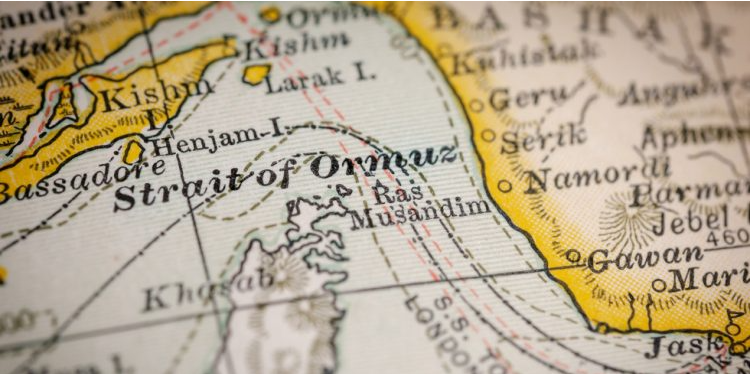 Industry on alert over scam messages offering ships “safe passage” on Hormuz
 Credit: Shutterstock Fraudulent messages offering safe passage through the Strait of Hormuz in exchange for cryptocurrency have been circulated to shipping companies with vessels stranded west of the waterway, according to MARISKS. In an alert issued on 20 April, MARISKS cautioned that unknown actors posing as Iranian authorities had contacted […]



JOB SITES
CONTENTS
LINKS
Happy New Year

Découvrez les avantages de MadCasino
Dans le monde des casinos en ligne, MadCasino se distingue par ses offres attrayantes et ses services de qualité. Que vous soyez un joueur débutant ou un parieur aguerri, vous trouverez ici une variété de jeux qui sauront satisfaire toutes vos envies. Les machines à sous, les jeux de table et les options de paris en direct sont tous disponibles pour vous offrir une expérience de jeu inégalée. De plus, le casino propose régulièrement des bonus qui permettent d'augmenter vos chances de gagner, vous offrant ainsi une excellente opportunité de maximiser vos gains.
En matière de sécurité, MadCasino est un nom de confiance. Il est entièrement licencié et régulé, ce qui garantit un environnement de jeu sûr et équitable. Les joueurs peuvent se concentrer sur leur expérience de jeu sans se soucier des problèmes de sécurité. Les transactions financières sont également sécurisées grâce à des technologies de pointe.
Les jeux proposés par MadCasino sont issus des développeurs les plus réputés de l'industrie, vous assurant des graphismes époustouflants et des mécaniques de jeu innovantes. Les joueurs peuvent également profiter d'une expérience de jeu en direct qui simule l'atmosphère d'un casino terrestre, tout en restant dans le confort de leur maison.
Enfin, la plateforme de MadCasino est optimisée pour les appareils mobiles, permettant aux joueurs de parier à tout moment et de n'importe où. Que vous soyez sur votre smartphone ou votre tablette, l'accès à vos jeux préférés n'a jamais été aussi simple. Ne manquez pas l'opportunité de découvrir ce casino exceptionnel.
Les offres de Cresus Casino
Cresus Casino est un autre acteur majeur dans le domaine des jeux en ligne, offrant des promotions généreuses et une vaste sélection de jeux. Les joueurs peuvent profiter d'une expérience de jeu enrichissante grâce aux nombreux bonus disponibles, qui sont conçus pour attirer tant les nouveaux utilisateurs que les joueurs réguliers. Ces avantages permettent non seulement de prolonger votre temps de jeu, mais aussi d'augmenter vos chances de gains conséquents.
Le casino se distingue également par sa ludothèque impressionnante, comprenant une sélection variée de machines à sous, de jeux de table et de jeux en direct. Les clients peuvent choisir parmi des titres populaires et appréciés, ainsi que des nouveautés qui enrichissent constamment l'offre. L'interface utilisateur est conviviale, rendant la navigation sur la plateforme fluide et agréable.
En termes de sécurité, Cresus Casino assure à ses joueurs un environnement de jeu fiable. La plateforme utilise des protocoles de sécurité avancés pour protéger les données personnelles et financières des utilisateurs. Cela permet aux joueurs de se sentir en sécurité tout en jouant à leurs jeux préférés.
Avec un service client réactif et professionnel, Cresus Casino s'assure que toutes vos questions et préoccupations sont traitées rapidement. Que ce soit pour des questions concernant les bonus, les retraits ou les jeux, vous bénéficierez d'une assistance rapide et efficace.
Explorez Nine Casino et ses avantages
Dans l'univers des casinos en ligne, Nine Casino a su se faire une place de choix grâce à son approche innovante et à ses nombreux avantages pour les joueurs. Les utilisateurs peuvent s'attendre à une expérience de jeu enrichissante, avec des bonus attractifs qui sont régulièrement mis à jour. Ces offres sont une excellente façon de découvrir de nouveaux jeux tout en maximisant votre potentiel de gain.
La plateforme de Nine Casino est riche en options de jeux, allant des machines à sous aux jeux de table, en passant par le live casino. Chaque jeu est conçu pour offrir une expérience immersive grâce à des graphismes de haute qualité et des fonctionnalités innovantes. Les parieurs peuvent profiter de sessions de jeu captivantes, comme s'ils étaient dans un véritable casino.
La sécurité est une priorité pour Nine Casino, qui utilise des technologies de cryptage avancées pour protéger les informations de ses joueurs. Cela garantit un environnement de jeu sûr et fiable, permettant aux utilisateurs de se concentrer sur ce qu'ils aiment le plus : jouer.
Enfin, le service clientèle fourni par Nine Casino est exceptionnel, avec des agents disponibles pour répondre à toutes vos questions et résoudre vos problèmes. Vous pourrez ainsi jouer en toute tranquillité, sachant que votre satisfaction est au cœur de leurs préoccupations.
Profitez de l'expérience Lucky31
Lucky31 est un casino en ligne qui se distingue par son approche orientée vers le joueur, offrant une multitude d'options de jeux et des bonus généreux. Que vous soyez amateur de machines à sous ou passionné de jeux de table, vous trouverez une large sélection pour satisfaire toutes vos envies de jeu. Les promotions fréquentes permettent aux joueurs de prolonger leur expérience tout en augmentant leurs chances de gains.
La convivialité de la plateforme de Lucky31 est l'un de ses plus grands atouts. Les joueurs peuvent naviguer facilement entre les différents jeux, et l'interface est conçue pour être intuitive, quel que soit le niveau d'expérience de l'utilisateur. De plus, le casino est entièrement optimisé pour les appareils mobiles, ce qui permet de parier où que vous soyez.
En matière de sécurité, Lucky31 prend les préoccupations des joueurs très au sérieux. Le casino est agréé et régulé, garantissant un environnement de jeu équitable et sécurisé. Les joueurs peuvent ainsi se concentrer sur leur expérience de jeu sans se soucier des risques liés à la sécurité.
Pour ceux qui recherchent un support client efficace, Lucky31 offre un service réactif et professionnel. Que ce soit pour des questions sur les bonus, les jeux ou les paiements, vous aurez accès à une assistance de qualité, vous garantissant une expérience de jeu fluide et agréable.