search the site


Iran: what the law of the sea says about detaining foreign ships in transit
Iran: what the law of the sea says about detaining foreign ships in transit
Andrew Serdy, University of Southampton 22 July 2019
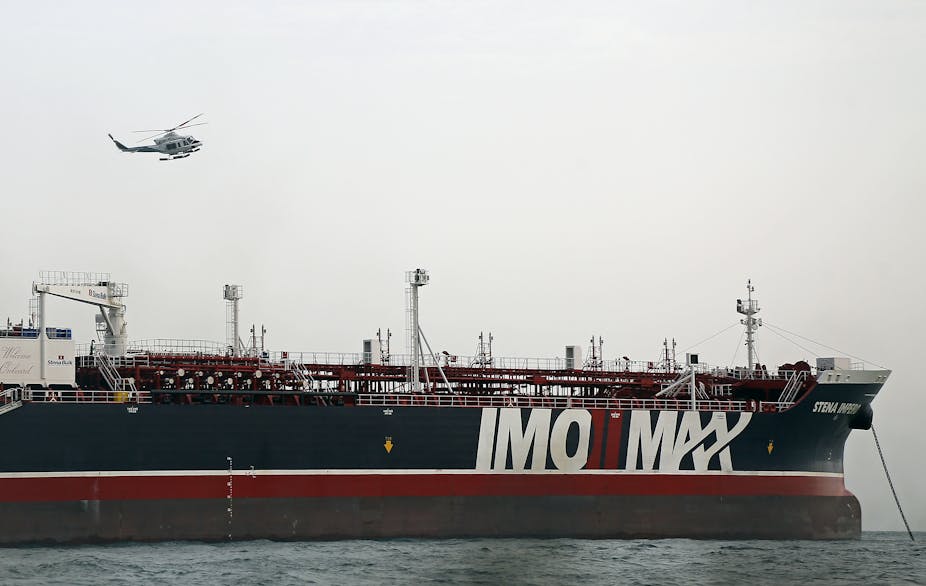
With the British ship the Stena Impero now detained in an Iranian port, under investigation for its alleged transgression against navigation regulations in the Strait of Hormuz, there are several legally curious aspects to this affair.
So far, the Iranian authorities have given only scant detail of what the unlawful actions of the UK-flagged ship were that caused them to detain it. The information seems contradictory. Some reports say the ship collided with a fishing vessel, others that the change of course ordered by Iran’s Revolutionary Guard vessel was for security reasons.
Both explanations are wanting as pretexts for interfering with merchant shipping in straits used for international navigation during peacetime.
Keeping transit flowing
The legal regime for such straits, in Part III of the UN Convention on the Law of the Sea (UNCLOS), is designed precisely in order to keep open such vital chokepoints for seaborne trade.
Under Article 44, states bordering straits may not hamper transit thought them, nor suspend passage for any reason. Article 39 obliges ships exercising the right of transit to proceed without delay through the strait, refraining from any threat or use of force against states bordering the strait.
In addition, Article 41 requires ships in transit to respect applicable sea lanes and traffic separation schemes. Such a scheme does exist in the Strait of Hormuz, adopted by the International Maritime Organization, which directs westbound traffic within the strait through Iranian territorial waters. It’s not clear where in relation to the outer limit of Iran’s territorial sea the Stena Impero was when the Iranian action took place, but Iran is not alleging the ship had no right to be where it was.
Ships in transit must also comply with generally accepted international regulations, procedures and practices for safety at sea, including the 1972 International Regulations for Preventing Collisions at Sea, and for preventing pollution.
Iran signed UNCLOS, but unlike the UK, never went on to ratify it. This raises questions as to whether Iran is even bound by anything in the treaty. If the matter were ever to go before an international court or tribunal – though that is unlikely as it would depend on Iranian consent to being sued – it would be in the UK’s interests to argue that the Part III regime, negotiated nearly 40 years ago, has also come to represent the customary international law on passage through such straits, applicable to all states. This argument would stand a reasonable chance of succeeding.
The claim by the owners of the Stena Impero that the ship was in international waters needs to be approached with scepticism. In the narrowest parts of the strait no such waters exist: all of it is within the territorial sea of either Iran or the other coastal state, Oman. Still, there is nothing in Part III that allows a coastal state to intervene and order a vessel into port – the purpose of the legal regime is to keep traffic moving, and to deal afterwards with the legal consequences of any navigational incidents.
An act of retaliation
Iran threatened to retaliate against the UK for the detention in Gibraltar in early July of the Grace I, a tanker with a cargo of Iranian oil allegedly bound for a Syrian port contrary to EU sanctions. It’s conceivable that Iran regards its act against the Stena Impero as authorised by the legal doctrine of countermeasures – but this is a rather long bow to draw.
Unlike domestic legal systems that normally frown on those who take the law into their own hands, in international law there is no police force, and to fill that gap the doctrine of countermeasures permits a limited degree of direct enforcement of obligations owed by one state to another, under a number of conditions. The most straightforward of these is proportionality: detention of one ship in response to that of another. But any defence based on countermeasures is always risky: the state advancing it is effectively admitting that its actions would otherwise be unlawful, and it depends on the accusation of prior breach by the other state being legally correct.
Yet it’s less than obvious that the UK’s detention of the Grace I did infringe Iran’s rights. It may not even be an Iranian ship: it was removed by Panama from its shipping register in late May, alongside several others, on suspicion of breaching sanctions. Unless Iran has since taken the Grace I onto its own register – of which there is no evidence to date – its only clear link with the Grace I is property in the cargo of petroleum, limiting Iran’s ability to argue its retaliation in taking the Stena Impero was a countermeasure. And it certainly isn’t, as Iran has claimed, an act of piracy.
Piracy by the definition in Article 101 of UNCLOS can be committed only beyond the territorial sea, and the Strait of Gibraltar, like the Strait of Hormuz, is narrow enough to be completely overlapped by the territorial seas of the states on either side of it. It can also only be committed for private ends by the crew or the passengers of a private ship or aircraft. So the only way piracy can be committed by a warship or state-operated helicopter is if the crew has mutinied and is engaged in plunder for profit – clearly not the case with either of the detained ships. “State piracy”, the UK’s equally overheated countercharge, doesn’t exist either.
All of the above is predicated on the law applicable in peacetime. The picture would be very different if an armed conflict were to break out between Iran and the UK, and would justify many of the acts that appear legally dubious on the analysis above. That may still happen if the escalating tension gets out hand, but we are not there yet.
Andrew Serdy, Professor of the Public International Law of the Sea, University of Southampton
This article is republished from The Conversation under a Creative Commons license. Read the original article.
Featured Post
 জাহাজ নির্মাণ শিল্প: হাতছাড়া হচ্ছে অপার সম্ভাবনা
 গোলাম সোহরাওয়ার্দি প্রকাশ : ২৭ অক্টোবর ২০২৬, ০৮: ০৪আপডেট : ২৭ অক্টোবর ২০২৬, ০৯: ২৪ সারা বিশ্ব এখন জাহাজ নির্মাণের এক বিশাল জোয়ার দেখছে। চীন, দক্ষিণ কোরিয়া ও জাপানের মতো দেশগুলো এ খাত থেকে বিপুল মুনাফা কামিয়ে নিচ্ছে। নতুন বাণিজ্যিক পথ তৈরি, জাহাজের […]
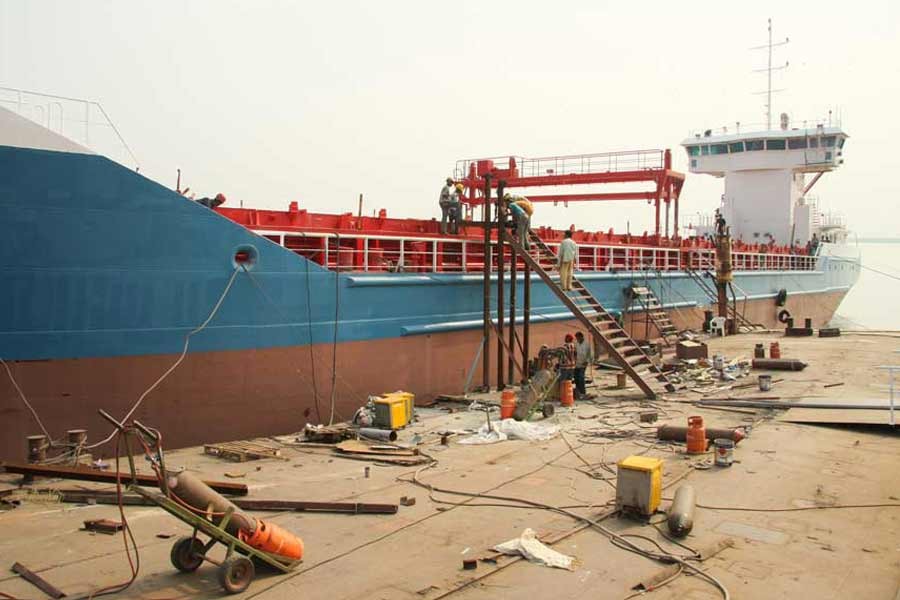 Worldwide Shipbuilding Boom and Bangladesh’s Lost Opportunity: How Financial Mismanagement, Loan Defaults, and Weak Governance Crippled a Promising Industry
An investigative analysis by Ghulam Suhrawardi Today, the world is witnessing one of the largest shipbuilding booms in history. Many countries are profiting from it. China, South Korea, and Japan have benefited from increased demand for new vessels due to fleet renewal, changing trade routes, environmental regulations, and strong financial […]



JOB SITES
CONTENTS
LINKS
Happy New Year

Découvrez les avantages de MadCasino
Dans le monde des casinos en ligne, MadCasino se distingue par ses offres attrayantes et ses services de qualité. Que vous soyez un joueur débutant ou un parieur aguerri, vous trouverez ici une variété de jeux qui sauront satisfaire toutes vos envies. Les machines à sous, les jeux de table et les options de paris en direct sont tous disponibles pour vous offrir une expérience de jeu inégalée. De plus, le casino propose régulièrement des bonus qui permettent d'augmenter vos chances de gagner, vous offrant ainsi une excellente opportunité de maximiser vos gains.
En matière de sécurité, MadCasino est un nom de confiance. Il est entièrement licencié et régulé, ce qui garantit un environnement de jeu sûr et équitable. Les joueurs peuvent se concentrer sur leur expérience de jeu sans se soucier des problèmes de sécurité. Les transactions financières sont également sécurisées grâce à des technologies de pointe.
Les jeux proposés par MadCasino sont issus des développeurs les plus réputés de l'industrie, vous assurant des graphismes époustouflants et des mécaniques de jeu innovantes. Les joueurs peuvent également profiter d'une expérience de jeu en direct qui simule l'atmosphère d'un casino terrestre, tout en restant dans le confort de leur maison.
Enfin, la plateforme de MadCasino est optimisée pour les appareils mobiles, permettant aux joueurs de parier à tout moment et de n'importe où. Que vous soyez sur votre smartphone ou votre tablette, l'accès à vos jeux préférés n'a jamais été aussi simple. Ne manquez pas l'opportunité de découvrir ce casino exceptionnel.
Les offres de Cresus Casino
Cresus Casino est un autre acteur majeur dans le domaine des jeux en ligne, offrant des promotions généreuses et une vaste sélection de jeux. Les joueurs peuvent profiter d'une expérience de jeu enrichissante grâce aux nombreux bonus disponibles, qui sont conçus pour attirer tant les nouveaux utilisateurs que les joueurs réguliers. Ces avantages permettent non seulement de prolonger votre temps de jeu, mais aussi d'augmenter vos chances de gains conséquents.
Le casino se distingue également par sa ludothèque impressionnante, comprenant une sélection variée de machines à sous, de jeux de table et de jeux en direct. Les clients peuvent choisir parmi des titres populaires et appréciés, ainsi que des nouveautés qui enrichissent constamment l'offre. L'interface utilisateur est conviviale, rendant la navigation sur la plateforme fluide et agréable.
En termes de sécurité, Cresus Casino assure à ses joueurs un environnement de jeu fiable. La plateforme utilise des protocoles de sécurité avancés pour protéger les données personnelles et financières des utilisateurs. Cela permet aux joueurs de se sentir en sécurité tout en jouant à leurs jeux préférés.
Avec un service client réactif et professionnel, Cresus Casino s'assure que toutes vos questions et préoccupations sont traitées rapidement. Que ce soit pour des questions concernant les bonus, les retraits ou les jeux, vous bénéficierez d'une assistance rapide et efficace.
Explorez Nine Casino et ses avantages
Dans l'univers des casinos en ligne, Nine Casino a su se faire une place de choix grâce à son approche innovante et à ses nombreux avantages pour les joueurs. Les utilisateurs peuvent s'attendre à une expérience de jeu enrichissante, avec des bonus attractifs qui sont régulièrement mis à jour. Ces offres sont une excellente façon de découvrir de nouveaux jeux tout en maximisant votre potentiel de gain.
La plateforme de Nine Casino est riche en options de jeux, allant des machines à sous aux jeux de table, en passant par le live casino. Chaque jeu est conçu pour offrir une expérience immersive grâce à des graphismes de haute qualité et des fonctionnalités innovantes. Les parieurs peuvent profiter de sessions de jeu captivantes, comme s'ils étaient dans un véritable casino.
La sécurité est une priorité pour Nine Casino, qui utilise des technologies de cryptage avancées pour protéger les informations de ses joueurs. Cela garantit un environnement de jeu sûr et fiable, permettant aux utilisateurs de se concentrer sur ce qu'ils aiment le plus : jouer.
Enfin, le service clientèle fourni par Nine Casino est exceptionnel, avec des agents disponibles pour répondre à toutes vos questions et résoudre vos problèmes. Vous pourrez ainsi jouer en toute tranquillité, sachant que votre satisfaction est au cœur de leurs préoccupations.
Profitez de l'expérience Lucky31
Lucky31 est un casino en ligne qui se distingue par son approche orientée vers le joueur, offrant une multitude d'options de jeux et des bonus généreux. Que vous soyez amateur de machines à sous ou passionné de jeux de table, vous trouverez une large sélection pour satisfaire toutes vos envies de jeu. Les promotions fréquentes permettent aux joueurs de prolonger leur expérience tout en augmentant leurs chances de gains.
La convivialité de la plateforme de Lucky31 est l'un de ses plus grands atouts. Les joueurs peuvent naviguer facilement entre les différents jeux, et l'interface est conçue pour être intuitive, quel que soit le niveau d'expérience de l'utilisateur. De plus, le casino est entièrement optimisé pour les appareils mobiles, ce qui permet de parier où que vous soyez.
En matière de sécurité, Lucky31 prend les préoccupations des joueurs très au sérieux. Le casino est agréé et régulé, garantissant un environnement de jeu équitable et sécurisé. Les joueurs peuvent ainsi se concentrer sur leur expérience de jeu sans se soucier des risques liés à la sécurité.
Pour ceux qui recherchent un support client efficace, Lucky31 offre un service réactif et professionnel. Que ce soit pour des questions sur les bonus, les jeux ou les paiements, vous aurez accès à une assistance de qualité, vous garantissant une expérience de jeu fluide et agréable.