search the site


Failing or Incomplete? Grading the South China Sea Arbitration
Failing or Incomplete? Grading the South China Sea Arbitration | Asia Maritime Transparency Initiative

Published: July 11, 2019
On July 12, 2016, an arbitral tribunal at the Permanent Court of Arbitration in The Hague issued its ruling in Manila’s case against Beijing’s claims in the South China Sea. Convened under the compulsory dispute settlement provisions of the United Nations Convention on the Law of the Sea (UNCLOS), the tribunal’s five arbitrators ruled overwhelmingly in the Philippines’ favor. Beijing refused to participate in the arbitration and rejected the outcome. Meanwhile, the newly-inaugurated president of the Philippines, Rodrigo Duterte, downplayed the victory in the hopes of coaxing China toward a more conciliatory policy and, as a result, international pressure on China to comply with the award has evaporated. The ruling clarified important aspects of UNCLOS and customary international law, but there was never much hope Beijing would accept its findings.
Nonetheless, many observers hoped that over time China might find politically face-saving ways to bring its claims and behavior into line with the substance of the ruling, even while rejecting the process. In the three years since the arbitral award, and since Manila’s adoption of a more accommodating policy toward Beijing, has China moved any closer to compliance? AMTI has compiled a list of actionable findings from the tribunal and assessed whether China’s recent actions are in-line with them. Overall, China is in compliance with just 2 of 11 parts of the ruling, while on another its position is too unclear to assess.
Arbitration Compliance Report Card
(Click each row for more information)
- China cannot claim historic or other rights within the “nine-dash line” beyond the territorial seas, EEZs, and continental shelves permitted by UNCLOS.
- Scarborough Shoal and high-tide features in the Spratlys generate territorial seas but not EEZs or continental shelves.
- Second Thomas Shoal and the waters around it are part of the EEZ and continental shelf of the Philippines.
- China illegally occupied Mischief Reef, which is part of the Philippine continental shelf.
- China illegally prevented the Philippines from exploiting the resources of its continental shelf.
- China violated the Philippines’ rights to fish within its EEZ.
- China failed to prevent its fishers from operating illegally in the Philippine EEZ.
- China illegally blocked traditional Filipino fishing at Scarborough Shoal.
- China allowed its fishers to illegally engage in environmentally destructive harvesting of endangered species.
- China illegally destroyed the marine environment through its island-building campaign.
- Chinese law enforcement vessels violated COLREGS by creating a risk of collision and danger to Philippine vessels.
China cannot claim historic or other rights within the “nine-dash line” beyond the territorial seas, EEZs, and continental shelves permitted by UNCLOS.
In one of the two most far-reaching decisions in the case, the arbitrators found that “the Convention [UNCLOS] defines the scope of maritime entitlements in the South China Sea, which may not extend beyond the limits imposed therein” (Judgement, para. 278). This means that “China’s claims to historic rights, or other sovereign rights or jurisdiction, with respect to…the ‘nine-dash line’ are contrary to the Convention and without lawful effect” if they extend beyond the territorial sea, exclusive economic zone (EEZ), and continental shelf to which it is entitled by UNCLOS (para. 279).
Nevertheless, the day after the arbitral award was issued, the Chinese Ministry of Foreign Affairs released a white paper which insisted, “In addition [to internal waters, territorial sea, contiguous zone, EEZ and continental shelf], China has historic rights in the South China Sea.” In the last three years, Chinese officials have spoken less often about the nine-dash line as the basis of their claim over the South China Sea, but China continues to claim ill-defined historic rights to virtually all waters and seabed in the South China Sea. It is on this basis that Chinese fishers operate in the EEZs of Vietnam, the Philippines, and Indonesia, and on which Beijing objects to all oil and gas operations within the nine-dash line, regardless of how far they lie from Chinese-claimed land features.
Back to topScarborough Shoal and high-tide features in the Spratlys generate territorial seas but not EEZs or continental shelves.
The second key finding in the case was that neither Scarborough Shoal nor any of the high-tide features in the Spratly Islands “are capable of sustaining human habitation or an economic life of their own” and “are therefore legally rocks for purposes of Article 121(3) and do not generate entitlements to an exclusive economic zone or continental shelf” (paras. 643 and 646). This means that the only EEZs and continental shelves in the South China Sea are those generated by the coastlines of the surrounding states and, possibly, some of the Paracel Islands. The Spratlys and Scarborough Shoal generate only a series of 12-nautical-mile territorial seas. Combined with the tribunal’s rejection of China’s claim to historic rights throughout the nine-dash line, this reduces the legally disputed areas around islands and reefs to the following:
It is widely believed that China claims EEZs and continental shelves from Scarborough Shoal and many, if not all, of the Spratlys, but this has not been made explicit in Chinese law or public statements. Beijing’s 2016 white paper insists that “China has, based on the Nanhai Zhudao [islands of the South China Sea], internal waters, territorial sea, contiguous zone, exclusive economic zone and continental shelf.” But it could be argued that this only means that some of the islands, particularly the Paracels, generate these entitlements. Additionally, Chinese actions in its neighbors’ EEZs can be explained by its ongoing demand for historic rights and are therefore not proof of a claim to EEZs and continental shelves from the Spratlys or Scarborough. Future developments, for instance the declaration of straight baselines around Chinese-claimed features in the Spratlys, could make Chinese non-compliance with this piece of the arbitral award more explicit, but for now Beijing’s claims remain too ambiguous for a clear assessment.
Back to topSecond Thomas Shoal and the waters around it are part of the EEZ and continental shelf of the Philippines.
The tribunal found that Second Thomas Shoal, which has been occupied since 1999 via the intentional grounding of the Philippine navy ship BRP Sierra Madre, is underwater at high-tide and generates no maritime entitlements of any kind. And because none of the Spratly Islands can generate EEZs or continental shelves, “There is, accordingly, no possible entitlement by China to any maritime zone in the area.” Second Thomas Shoal sits within 200 nautical miles of the Philippine coast and is therefore “part of the exclusive economic zone and continental shelf of the Philippines” (paras. 646 and 647). Nevertheless, China Coast Guard vessels continue to patrol near Second Thomas regularly and in May 2018 a People’s Liberation Army-Navy (PLAN) helicopter dangerously harassed a Philippine resupply mission to the Sierra Madre.
Back to topChina illegally occupied Mischief Reef, which is part of the Philippine continental shelf.
Like Second Thomas Shoal, the arbitral tribunal ruled that Mischief Reef is a low-tide feature that constitutes part of the EEZ and continental shelf of the Philippines. Further, the arbitrators found that “China has, through its construction of installations and artificial islands at Mischief Reef without the authorisation of the Philippines, breached Articles 60 and 80 of the Convention…The Tribunal further finds that, as a low-tide elevation, Mischief Reef is not capable of appropriation” (para. 1043). This is probably the most difficult part of the ruling to imagine China ever complying with because it would require abandoning its naval and air base at Mischief or securing Philippine permission to continue its occupation. In the meantime, China not only occupies the reef but seemingly continues to claim maritime entitlement to it as evidenced by its objections to U.S. freedom of navigation operations within 12 nautical miles of the facility.
Back to topChina illegally prevented the Philippines from exploiting the resources of its continental shelf.
The arbitral award concluded that Reed Bank, which is entirely underwater and sits within 200 nautical miles of the Philippines, is part of that country’s continental shelf. Referring to a specific incident in which Chinese law enforcement vessels prevented the operations of a Philippine survey ship, the tribunal found that “China has…breached Article 77 of the Convention with respect to the Philippines’ sovereign rights over the non-living resources of its continental shelf in the area of Reed Bank” (para. 716). China continues to block the Philippines from exploring for oil and gas at Reed Bank despite the ruling. In November 2018, the two sides signed a memorandum of understanding that could pave the way for oil and gas development at Reed Bank. The details have not been hashed out yet and it is possible that the agreement could pave the way for China to come into technical compliance with the ruling. If Beijing agrees to have a Chinese company invest in a Philippine service contract (SC 72) at Reed Bank under Manila’s supervision, the agreement will be consistent with the ruling. But if China insists on a joint development agreement outside of Philippine jurisdiction, it will cement its noncompliance.
Back to topChina violated the Philippines’ rights to fish within its EEZ.
The tribunal found that China violated the Philippines sovereign rights to the living resources of its EEZ, in particular “by promulgating its 2012 moratorium on fishing in the South China Sea, without exception for areas of the South China Sea falling within the exclusive economic zone of the Philippines and without limiting the moratorium to Chinese flagged vessels” (para 716). China nonetheless continues to declare a unilateral fishing ban from May to August each year covering all waters north of the 12th degree of latitude, including large sections of the EEZs of the Philippines and Vietnam. The most recent ban provoked an angry response from the office of the president of the Philippines.
Back to topChina failed to prevent its fishers from operating illegally in the Philippine EEZ.
The arbitrators determined that China had “failed to exhibit due regard for the Philippines sovereign rights with respect to fisheries in its EEZ,” citing cases in which Chinese law enforcement vessels tolerated and failed to prevent Chinese-flagged vessels from operating at Mischief and Second Thomas Shoals in 2013 (para. 757). Hundreds of Chinese fishing vessels continue to operate under the supervision of the China Coast Guard at Mischief Reef and throughout the Spratlys on a daily basis, though most spend more time serving in the maritime militia than they do fishing. In June, a Chinese fishing vessel operating in the Philippine EEZ at Reed Bank sank a Filipino fishing boat, leading to an ongoing crisis in Sino-Philippine relations. Elsewhere in the South China Sea, fishing vessels from China continue to operate with the support of the coast guard and navy as far away as Indonesia’s EEZ.
Back to topChina illegally blocked traditional Filipino fishing at Scarborough Shoal.
At Scarborough Shoal, which has a handful of rocks that break water at high-tide, the tribunal concluded that both Chinese and Filipino fishers have the right to engage in traditional fishing regardless of who ultimately has sovereignty over the shoal. But the arbitrators ruled that China had, “through the operation of its official vessels at Scarborough Shoal from May 2012 onwards, unlawfully prevented Filipino fishermen from engaging in traditional fishing” (para. 814). By late 2016, in an apparently gesture of goodwill to the Duterte government, China Coast Guard vessels stationed at Scarborough began to allow Filipino fishing vessels to operate along the exterior of the reef, though they were not permitted to fish inside the lagoon. That remains the case today, though the situation remains tense amid frequent reports of harassment and intimidation of Filipino fishers by the Chinese law enforcement personnel at the feature.
Nonetheless, this is the one aspect of the arbitral award with which China is most clearly in compliance. And that fact is so politically important to the Duterte government that the president recently claimed to have made a secret verbal agreement with President Xi Jinping in 2016 to turn a blind eye to Chinese fishing in the Philippine EEZ in exchange for Filipino fishing rights at Scarborough—in effect trading non-compliance with one part of the judgement for compliance with another.
Back to topChina allowed its fishers to illegally engage in environmentally destructive harvesting of endangered species.
The award concluded that China had, “through its toleration and protection of, and failure to prevent Chinese fishing vessels engaging in harmful harvesting activities of endangered species at Scarborough Shoal, Second Thomas Shoal and other features in the Spratly Islands, breached Articles 192 and 194(5) of the Convention” (para. 992). This was largely, though not exclusively, in reference to the large-scale extraction of endangered giant clams which destroyed or severely damaged more than 25,000 acres of shallow coral reef from 2012 to 2016, often under the eye of Chinese law enforcement vessels. After a sharp drop-off in activity after 2016, Chinese clam harvesters have returned to their destructive activities at Scarborough Shoal and throughout the Paracels, often acting within clear view of the China Coast Guard.
Back to topChina illegally destroyed the marine environment through its island-building campaign.
The tribunal found that from late 2013, China’s “island-building activities at Cuarteron Reef, Fiery Cross Reef, Gaven Reef (North), Johnson Reef, Hughes Reef, Subi Reef and Mischief Reef, breached Articles 192, 194(1), 194(5), 197, 123, and 206 of the Convention,” which mandate obligations to protect and preserve the marine environment. (para. 993) China completed its dredging and landfill work in the Spratly Islands by late 2016, and its last documented island-building anywhere in the South China Sea was in the Paracels in mid-2017. It could be argued that some of China’s ongoing activities, for instance the installation of monitoring stations on reefs in the Paracels, are still illegally damaging marine habitat without proper environmental impact assessments. But having run out of space for new landfill, China is now technically in compliance with the bulk of this section of the ruling. That could change, however, should China launch new dredging or landfill work at Scarborough Shoal or elsewhere.
Back to topChinese law enforcement vessels violated COLREGS by creating a risk of collision and danger to Philippine vessels.
Finally, the arbitrators ruled that during the 2012 standoff following their seizure of Scarborough Shoal, Chinese law enforcement vessels “created serious risk of collision and danger to Philippine vessels and personnel” which meant China had “violated Rules 2, 6, 7, 8, 15, and 16 of the COLREGS [International Regulations for Preventing Collisions at Sea] and…Article 94 of the Convention.” While there has been no repeat of these incidents at Scarborough Shoal due to Philippine authorities keeping their distance, China Coast Guard, PLAN, and maritime militia vessels continue to regularly engage in the same violations of COLREGs to create the risk of collision for foreign vessels in the South China Sea. The harassment of a Philippine resupply vessel near Second Thomas Shoal in May 2018 was one example. The dangerous actions of a PLAN ship during the USS Decatur’s freedom of navigation operation through the Paracels in October 2018 was another. And then there are the frequent violations of COLREGs by Chinese fishing vessels and state-directed militia toward both fellow claimants and outside actors.
Featured Post
 জাহাজ নির্মাণ শিল্প: হাতছাড়া হচ্ছে অপার সম্ভাবনা
 গোলাম সোহরাওয়ার্দি প্রকাশ : ২৭ অক্টোবর ২০২৬, ০৮: ০৪আপডেট : ২৭ অক্টোবর ২০২৬, ০৯: ২৪ সারা বিশ্ব এখন জাহাজ নির্মাণের এক বিশাল জোয়ার দেখছে। চীন, দক্ষিণ কোরিয়া ও জাপানের মতো দেশগুলো এ খাত থেকে বিপুল মুনাফা কামিয়ে নিচ্ছে। নতুন বাণিজ্যিক পথ তৈরি, জাহাজের […]
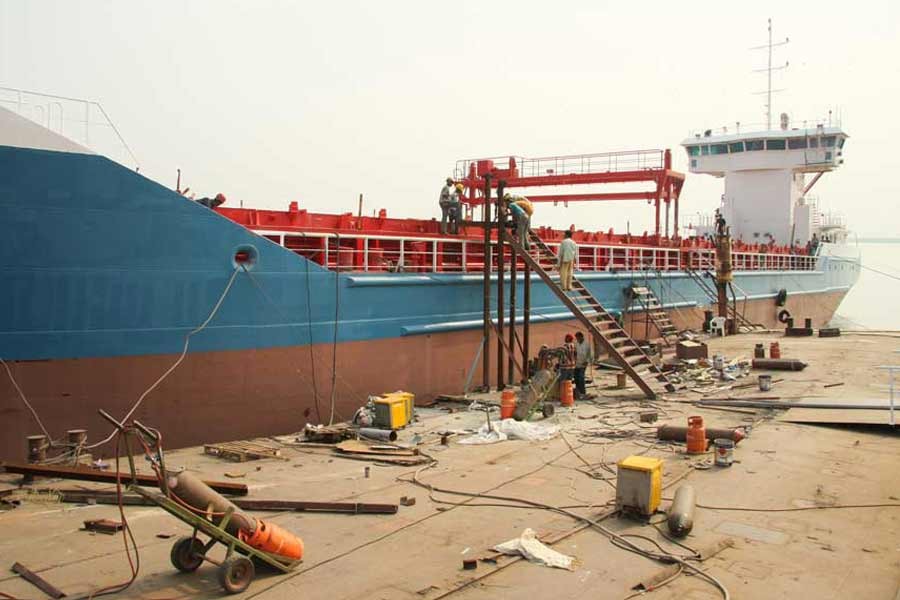 Worldwide Shipbuilding Boom and Bangladesh’s Lost Opportunity: How Financial Mismanagement, Loan Defaults, and Weak Governance Crippled a Promising Industry
An investigative analysis by Ghulam Suhrawardi Today, the world is witnessing one of the largest shipbuilding booms in history. Many countries are profiting from it. China, South Korea, and Japan have benefited from increased demand for new vessels due to fleet renewal, changing trade routes, environmental regulations, and strong financial […]



JOB SITES
CONTENTS
LINKS
Happy New Year

Découvrez les avantages de MadCasino
Dans le monde des casinos en ligne, MadCasino se distingue par ses offres attrayantes et ses services de qualité. Que vous soyez un joueur débutant ou un parieur aguerri, vous trouverez ici une variété de jeux qui sauront satisfaire toutes vos envies. Les machines à sous, les jeux de table et les options de paris en direct sont tous disponibles pour vous offrir une expérience de jeu inégalée. De plus, le casino propose régulièrement des bonus qui permettent d'augmenter vos chances de gagner, vous offrant ainsi une excellente opportunité de maximiser vos gains.
En matière de sécurité, MadCasino est un nom de confiance. Il est entièrement licencié et régulé, ce qui garantit un environnement de jeu sûr et équitable. Les joueurs peuvent se concentrer sur leur expérience de jeu sans se soucier des problèmes de sécurité. Les transactions financières sont également sécurisées grâce à des technologies de pointe.
Les jeux proposés par MadCasino sont issus des développeurs les plus réputés de l'industrie, vous assurant des graphismes époustouflants et des mécaniques de jeu innovantes. Les joueurs peuvent également profiter d'une expérience de jeu en direct qui simule l'atmosphère d'un casino terrestre, tout en restant dans le confort de leur maison.
Enfin, la plateforme de MadCasino est optimisée pour les appareils mobiles, permettant aux joueurs de parier à tout moment et de n'importe où. Que vous soyez sur votre smartphone ou votre tablette, l'accès à vos jeux préférés n'a jamais été aussi simple. Ne manquez pas l'opportunité de découvrir ce casino exceptionnel.
Les offres de Cresus Casino
Cresus Casino est un autre acteur majeur dans le domaine des jeux en ligne, offrant des promotions généreuses et une vaste sélection de jeux. Les joueurs peuvent profiter d'une expérience de jeu enrichissante grâce aux nombreux bonus disponibles, qui sont conçus pour attirer tant les nouveaux utilisateurs que les joueurs réguliers. Ces avantages permettent non seulement de prolonger votre temps de jeu, mais aussi d'augmenter vos chances de gains conséquents.
Le casino se distingue également par sa ludothèque impressionnante, comprenant une sélection variée de machines à sous, de jeux de table et de jeux en direct. Les clients peuvent choisir parmi des titres populaires et appréciés, ainsi que des nouveautés qui enrichissent constamment l'offre. L'interface utilisateur est conviviale, rendant la navigation sur la plateforme fluide et agréable.
En termes de sécurité, Cresus Casino assure à ses joueurs un environnement de jeu fiable. La plateforme utilise des protocoles de sécurité avancés pour protéger les données personnelles et financières des utilisateurs. Cela permet aux joueurs de se sentir en sécurité tout en jouant à leurs jeux préférés.
Avec un service client réactif et professionnel, Cresus Casino s'assure que toutes vos questions et préoccupations sont traitées rapidement. Que ce soit pour des questions concernant les bonus, les retraits ou les jeux, vous bénéficierez d'une assistance rapide et efficace.
Explorez Nine Casino et ses avantages
Dans l'univers des casinos en ligne, Nine Casino a su se faire une place de choix grâce à son approche innovante et à ses nombreux avantages pour les joueurs. Les utilisateurs peuvent s'attendre à une expérience de jeu enrichissante, avec des bonus attractifs qui sont régulièrement mis à jour. Ces offres sont une excellente façon de découvrir de nouveaux jeux tout en maximisant votre potentiel de gain.
La plateforme de Nine Casino est riche en options de jeux, allant des machines à sous aux jeux de table, en passant par le live casino. Chaque jeu est conçu pour offrir une expérience immersive grâce à des graphismes de haute qualité et des fonctionnalités innovantes. Les parieurs peuvent profiter de sessions de jeu captivantes, comme s'ils étaient dans un véritable casino.
La sécurité est une priorité pour Nine Casino, qui utilise des technologies de cryptage avancées pour protéger les informations de ses joueurs. Cela garantit un environnement de jeu sûr et fiable, permettant aux utilisateurs de se concentrer sur ce qu'ils aiment le plus : jouer.
Enfin, le service clientèle fourni par Nine Casino est exceptionnel, avec des agents disponibles pour répondre à toutes vos questions et résoudre vos problèmes. Vous pourrez ainsi jouer en toute tranquillité, sachant que votre satisfaction est au cœur de leurs préoccupations.
Profitez de l'expérience Lucky31
Lucky31 est un casino en ligne qui se distingue par son approche orientée vers le joueur, offrant une multitude d'options de jeux et des bonus généreux. Que vous soyez amateur de machines à sous ou passionné de jeux de table, vous trouverez une large sélection pour satisfaire toutes vos envies de jeu. Les promotions fréquentes permettent aux joueurs de prolonger leur expérience tout en augmentant leurs chances de gains.
La convivialité de la plateforme de Lucky31 est l'un de ses plus grands atouts. Les joueurs peuvent naviguer facilement entre les différents jeux, et l'interface est conçue pour être intuitive, quel que soit le niveau d'expérience de l'utilisateur. De plus, le casino est entièrement optimisé pour les appareils mobiles, ce qui permet de parier où que vous soyez.
En matière de sécurité, Lucky31 prend les préoccupations des joueurs très au sérieux. Le casino est agréé et régulé, garantissant un environnement de jeu équitable et sécurisé. Les joueurs peuvent ainsi se concentrer sur leur expérience de jeu sans se soucier des risques liés à la sécurité.
Pour ceux qui recherchent un support client efficace, Lucky31 offre un service réactif et professionnel. Que ce soit pour des questions sur les bonus, les jeux ou les paiements, vous aurez accès à une assistance de qualité, vous garantissant une expérience de jeu fluide et agréable.