search the site


Safe working on ships and vessels Health and safety
Navigation |
Safe working on ships and vessels
|
1. Introduction
- You should be aware of these hazards and avoid dangerous situations.
- You should not enter any area of a vessel that is not open to the general public without specific permission and, if necessary, supervision.
- If a recognised danger or hazard is unavoidable you should not proceed without adequate training, guidance and, where necessary, the appropriate permission from the master or owners of the vessel.
You should always refer to your national legislation and guidance.
Risk assessments and safe working practices should be available for staff working on ships or vessels.
1.1 Suitable safety equipment
- high-visibility clothing;
- life-jackets and/or ‘dry suits’;
- gloves;
- overalls;
- non-slip and anti-static footwear (usually with toe protection);
- safety helmets;
- intrinsically safe (IS) torch or working light (equipment that is safe to use in a flammable atmosphere).
If you have to enter confined spaces, additional specialist equipment (and training to use it) will be needed, including:
- personal alert safety system alarm (contains motion sensors and indicates when a person is unconscious);
- multi-gas alarm personal monitor (detects noxious gases);
- intrinsically safe (IS) radio/communications line;
- confined space rescue equipment (compressed-air breathing apparatus);
- safety harness and lifeline and location line;
- manual and automatic resuscitation system (MARS).
Health checks, training and regular refresher training are required before using compressed air breathing apparatus.
Access to vessels will normally be provided by the accommodation ladder or gangway, which must be safely secured. Where the gangway crosses water, safety nets should also be in place.
You must never attempt to board a vessel until you are sure it is safe to do so. Ladders or gangways are often slippery or iced-up. Non-slip safety footwear will reduce the risk of an accident, but you should still take care — particularly if it is dark. In addition to the guidance below, you should also read the section on working at heights.
2.1 Boarding from the quay
- the gangway or ladder is properly rigged and secured;
- it is deployed at a safe angle and extends one metre above where you are going;
- the safety nets are in place if you are crossing over water;
- if you are boarding a roll-on/roll-off ferry, you should do so via the gangway unless the vehicle ramps are the only means of access;
- where the ship’s decks are below the level of the quay, access equipment should be provided on the vessel. Do not try to jump on board — you might slip or fall;
- remember that in tidal locations the vessel might rise or fall between your arrival and departure so the access might have changed, e.g. be steeper or not reach properly. If in doubt, ask the master or the deck officer responsible to make it secure.
2.2 Boarding from another vessel
Remember: you must always wear a lifejacket when boarding one vessel from another, and take extreme care — particularly in poor weather.
2.3 Using ladders
- secure the ladder at both ends to prevent slipping;
- make sure it extends at least one metre above the place you are trying to get to and keep both hands free while climbing;
- attach tools to a tool belt and store other equipment in a bag carried over your shoulder;
- always face the ladder when climbing or descending;
- and move one rung at a time.
Take extra care if you are wearing safety clothing such as a lifejacket or hard hat in case they catch on the rungs.
2.4 Personnel carriers
- understand how the transfer is to take place and be satisfied it is safe;
- wear a lifejacket and any other safety clothing you or your manager consider necessary;
- make sure that the standby vessel and rescue boat are in attendance;
- obey all instructions given to you by the person supervising the transfer.
This type of boarding must not take place in poor (stormy) weather.
3. Working on board
Ship’s equipment: Never attempt to examine any equipment on board until you have consulted a responsible officer. Unskilled interference with safety equipment, navigational apparatus or electrical systems can affect the seaworthiness of the vessel, jeopardising the safety of the passengers and crew. You would be committing a criminal offence.
Passenger areas and crew quarters: When searching these areas, be wary of sharp objects which may be secreted in the upholstery. If you move any safety equipment, e.g. lifejackets, you must put it back before you leave the vessel.
Stowage compartments and lockers: Beware of hazardous chemicals and equipment. Look first and request assistance from the crew if you are not sure what the area contains.
Toilets: As well as presenting potential health hazards, in the form of discarded hypodermic needles, etc., toilets might contain corrosive cleaning chemicals and disinfectants. If you need to search these areas, wear appropriate safety clothing and equipment, particularly gloves, and wash your hands immediately afterwards.
Galleys: Electrical cooking equipment operates at high voltages and could be very hot. Beware of broken glass, etc. in rubbish bags and bins. Some vessels are equipped with galley lifts. These are particularly dangerous and should not be used for gaining access.
Holds: Holds can be particularly dangerous, especially if loading or unloading is in progress. Seek permission before entering. Wear appropriate safety clothing and a safety helmet. Take great care as the cargo may have shifted during the voyage, particularly if the sea has been rough.
Remember: refer to your national legislation and guidance when working in this dangerous environment.
3.1 What are the hazards?
Some of the major hazards are listed below:
| Hazard | Countermeasure |
| Working alone: There is a danger that, when working alone, you might become trapped or injured and be unable to call for assistance. | Working alone: Avoid working alone, but if you have to, maintain good communications with someone responsible for checking on your safety and always notify someone else of your intentions and location before you start. Remember to check your radio before leaving the office. |
| Lighting: It is the responsibility of the vessel’s master to provide adequate lighting — but this is not always possible. | Lighting: If adequate light is not available, e.g. by opening hatches or doorways, a suitable IS torch or working light may be used. |
| Slips and falls: The deck of the vessel might be wet or coated with oil or fish residues which add to the risk of slipping. | Slips and falls: Wear appropriate anti-static non-slip shoes/boots. Pay particular attention in the vicinity of deck machinery, where lubricants may be spilt, or if leaking cargo is identified. |
Machinery: A variety of machinery may be in use when the vessel is berthed, including:
|
Machinery: Keep well away from moving machinery and wear high-visibility clothing and a safety helmet. Remember: the operator may have a limited view, particularly in the hold. You must observe any instructions from officers or crew. Remember: in tidal basins the ship’s mooring lines may require frequent adjustment using winches. Keep well away from these operations. |
| Asbestos: Modern vessels should not contain any hazardous asbestos, but older vessels may contain asbestos as fire-proofing or thermal insulation. | Asbestos: Pay particular attention when on older vessels or vessels registered in countries with lower standards. Do not disturb any pipe-lagging or insulation. If you consider there may be a risk, leave the area immediately and notify the master. |
| Ship’s equipment: You may be offered the chance to use safety equipment supplied by the vessel. However, you should not do so unless you have been trained how to use it and are satisfied that it is in working order. | Ship’s equipment: It should not be necessary to use equipment supplied by the master of the vessel. If needed, official equipment should always be used — with the appropriate training. |
| Cold stores: Cold stores may have self-locking mechanisms and may contain a special atmosphere to preserve the goods. They are often maintained at -25 °C or lower. | Cold stores:
|
| Contact with oils and other spills: You might come across oil spills or leaking cargo. The oil or cargo could be hazardous, either by contact or by inhalation. | Contact with oils and other spills: If you see a spillage or leak from a container, check to see if it has been identified. Unless it has been absolutely ruled safe by a competent person, withdraw immediately and notify the master. Avoid all contact with spills even if they are deemed safe, as you may suffer a skin reaction. Seek proper medical attention if any symptoms occur. Remember: even chemicals that are safe on their own may react together (or with atmospheric water vapour) releasing toxic fumes or giving off sufficient heat to cause injury or start a fire. |
Excessive noise: Many items of noisy machinery may be at work on a vessel even when it is berthed, including:
|
Excessive noise: You should assess the risk and limit exposure or use ear-defenders. Prolonged exposure to even moderate noise levels can damage hearing. Remember: excessive noise can hinder communication and reduce your awareness of other hazards. |
Confined spaces: As mentioned earlier, confined spaces on board ships, including:
can pose a wide range of hazards, including toxic fumes and substances. |
Confined spaces: Never enter any confined spaces without the appropriate training and equipment. A risk assessment should always be carried out and permission sought from the master or the deck officer in charge before you enter any confined space. |
Featured Post
 জাহাজ নির্মাণ শিল্প: হাতছাড়া হচ্ছে অপার সম্ভাবনা
 গোলাম সোহরাওয়ার্দি প্রকাশ : ২৭ অক্টোবর ২০২৬, ০৮: ০৪আপডেট : ২৭ অক্টোবর ২০২৬, ০৯: ২৪ সারা বিশ্ব এখন জাহাজ নির্মাণের এক বিশাল জোয়ার দেখছে। চীন, দক্ষিণ কোরিয়া ও জাপানের মতো দেশগুলো এ খাত থেকে বিপুল মুনাফা কামিয়ে নিচ্ছে। নতুন বাণিজ্যিক পথ তৈরি, জাহাজের […]
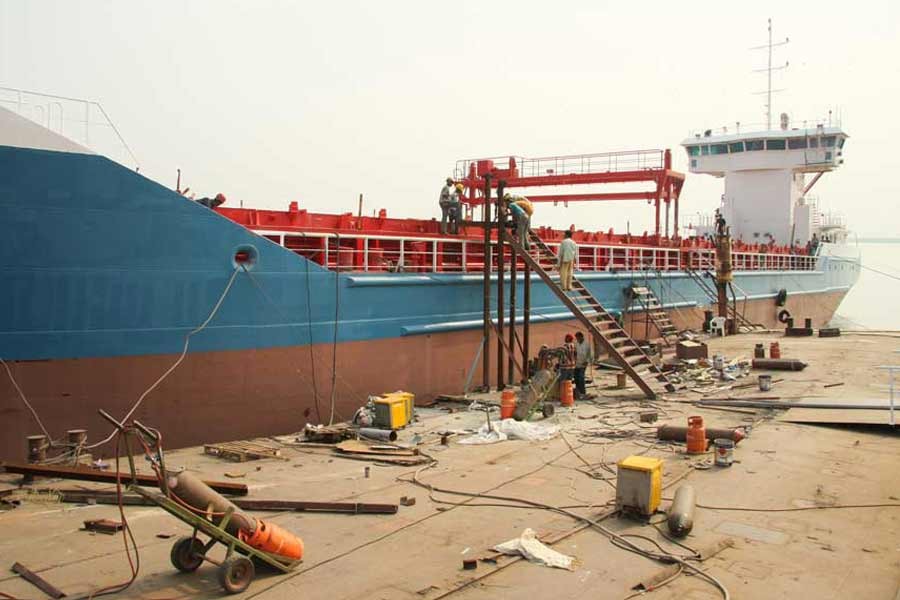 Worldwide Shipbuilding Boom and Bangladesh’s Lost Opportunity: How Financial Mismanagement, Loan Defaults, and Weak Governance Crippled a Promising Industry
An investigative analysis by Ghulam Suhrawardi Today, the world is witnessing one of the largest shipbuilding booms in history. Many countries are profiting from it. China, South Korea, and Japan have benefited from increased demand for new vessels due to fleet renewal, changing trade routes, environmental regulations, and strong financial […]



JOB SITES
CONTENTS
LINKS
Happy New Year

Découvrez les avantages de MadCasino
Dans le monde des casinos en ligne, MadCasino se distingue par ses offres attrayantes et ses services de qualité. Que vous soyez un joueur débutant ou un parieur aguerri, vous trouverez ici une variété de jeux qui sauront satisfaire toutes vos envies. Les machines à sous, les jeux de table et les options de paris en direct sont tous disponibles pour vous offrir une expérience de jeu inégalée. De plus, le casino propose régulièrement des bonus qui permettent d'augmenter vos chances de gagner, vous offrant ainsi une excellente opportunité de maximiser vos gains.
En matière de sécurité, MadCasino est un nom de confiance. Il est entièrement licencié et régulé, ce qui garantit un environnement de jeu sûr et équitable. Les joueurs peuvent se concentrer sur leur expérience de jeu sans se soucier des problèmes de sécurité. Les transactions financières sont également sécurisées grâce à des technologies de pointe.
Les jeux proposés par MadCasino sont issus des développeurs les plus réputés de l'industrie, vous assurant des graphismes époustouflants et des mécaniques de jeu innovantes. Les joueurs peuvent également profiter d'une expérience de jeu en direct qui simule l'atmosphère d'un casino terrestre, tout en restant dans le confort de leur maison.
Enfin, la plateforme de MadCasino est optimisée pour les appareils mobiles, permettant aux joueurs de parier à tout moment et de n'importe où. Que vous soyez sur votre smartphone ou votre tablette, l'accès à vos jeux préférés n'a jamais été aussi simple. Ne manquez pas l'opportunité de découvrir ce casino exceptionnel.
Les offres de Cresus Casino
Cresus Casino est un autre acteur majeur dans le domaine des jeux en ligne, offrant des promotions généreuses et une vaste sélection de jeux. Les joueurs peuvent profiter d'une expérience de jeu enrichissante grâce aux nombreux bonus disponibles, qui sont conçus pour attirer tant les nouveaux utilisateurs que les joueurs réguliers. Ces avantages permettent non seulement de prolonger votre temps de jeu, mais aussi d'augmenter vos chances de gains conséquents.
Le casino se distingue également par sa ludothèque impressionnante, comprenant une sélection variée de machines à sous, de jeux de table et de jeux en direct. Les clients peuvent choisir parmi des titres populaires et appréciés, ainsi que des nouveautés qui enrichissent constamment l'offre. L'interface utilisateur est conviviale, rendant la navigation sur la plateforme fluide et agréable.
En termes de sécurité, Cresus Casino assure à ses joueurs un environnement de jeu fiable. La plateforme utilise des protocoles de sécurité avancés pour protéger les données personnelles et financières des utilisateurs. Cela permet aux joueurs de se sentir en sécurité tout en jouant à leurs jeux préférés.
Avec un service client réactif et professionnel, Cresus Casino s'assure que toutes vos questions et préoccupations sont traitées rapidement. Que ce soit pour des questions concernant les bonus, les retraits ou les jeux, vous bénéficierez d'une assistance rapide et efficace.
Explorez Nine Casino et ses avantages
Dans l'univers des casinos en ligne, Nine Casino a su se faire une place de choix grâce à son approche innovante et à ses nombreux avantages pour les joueurs. Les utilisateurs peuvent s'attendre à une expérience de jeu enrichissante, avec des bonus attractifs qui sont régulièrement mis à jour. Ces offres sont une excellente façon de découvrir de nouveaux jeux tout en maximisant votre potentiel de gain.
La plateforme de Nine Casino est riche en options de jeux, allant des machines à sous aux jeux de table, en passant par le live casino. Chaque jeu est conçu pour offrir une expérience immersive grâce à des graphismes de haute qualité et des fonctionnalités innovantes. Les parieurs peuvent profiter de sessions de jeu captivantes, comme s'ils étaient dans un véritable casino.
La sécurité est une priorité pour Nine Casino, qui utilise des technologies de cryptage avancées pour protéger les informations de ses joueurs. Cela garantit un environnement de jeu sûr et fiable, permettant aux utilisateurs de se concentrer sur ce qu'ils aiment le plus : jouer.
Enfin, le service clientèle fourni par Nine Casino est exceptionnel, avec des agents disponibles pour répondre à toutes vos questions et résoudre vos problèmes. Vous pourrez ainsi jouer en toute tranquillité, sachant que votre satisfaction est au cœur de leurs préoccupations.
Profitez de l'expérience Lucky31
Lucky31 est un casino en ligne qui se distingue par son approche orientée vers le joueur, offrant une multitude d'options de jeux et des bonus généreux. Que vous soyez amateur de machines à sous ou passionné de jeux de table, vous trouverez une large sélection pour satisfaire toutes vos envies de jeu. Les promotions fréquentes permettent aux joueurs de prolonger leur expérience tout en augmentant leurs chances de gains.
La convivialité de la plateforme de Lucky31 est l'un de ses plus grands atouts. Les joueurs peuvent naviguer facilement entre les différents jeux, et l'interface est conçue pour être intuitive, quel que soit le niveau d'expérience de l'utilisateur. De plus, le casino est entièrement optimisé pour les appareils mobiles, ce qui permet de parier où que vous soyez.
En matière de sécurité, Lucky31 prend les préoccupations des joueurs très au sérieux. Le casino est agréé et régulé, garantissant un environnement de jeu équitable et sécurisé. Les joueurs peuvent ainsi se concentrer sur leur expérience de jeu sans se soucier des risques liés à la sécurité.
Pour ceux qui recherchent un support client efficace, Lucky31 offre un service réactif et professionnel. Que ce soit pour des questions sur les bonus, les jeux ou les paiements, vous aurez accès à une assistance de qualité, vous garantissant une expérience de jeu fluide et agréable.