Interview: Kitack Lim, Secretary-General, IMO

Comments Off on Interview: Kitack Lim, Secretary-General, IMO

Interview: Kitack Lim, Secretary-General, IMO

Trauthwein, Greg

Greg TrauthweinEditor

Gregory R. Trauthwein has covered the global maritime market for more than 25…

May 16, 2018Kitack Lim, Secretary-General, IMO. Photo: IMOKitack Lim, Secretary-General, IMO. Photo: IMO
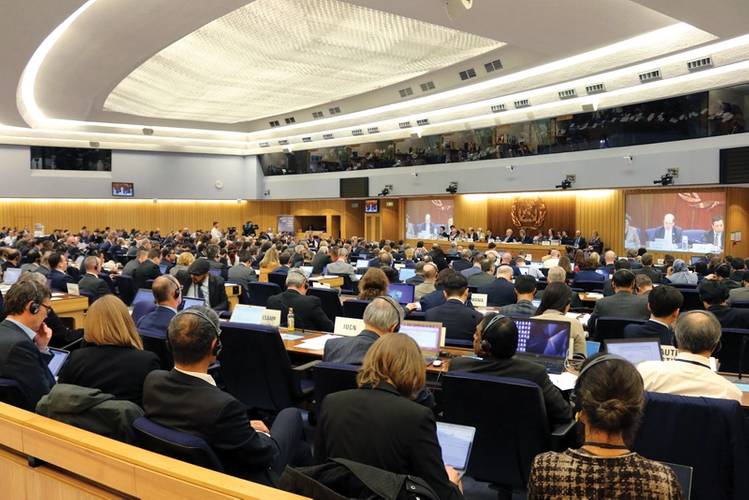
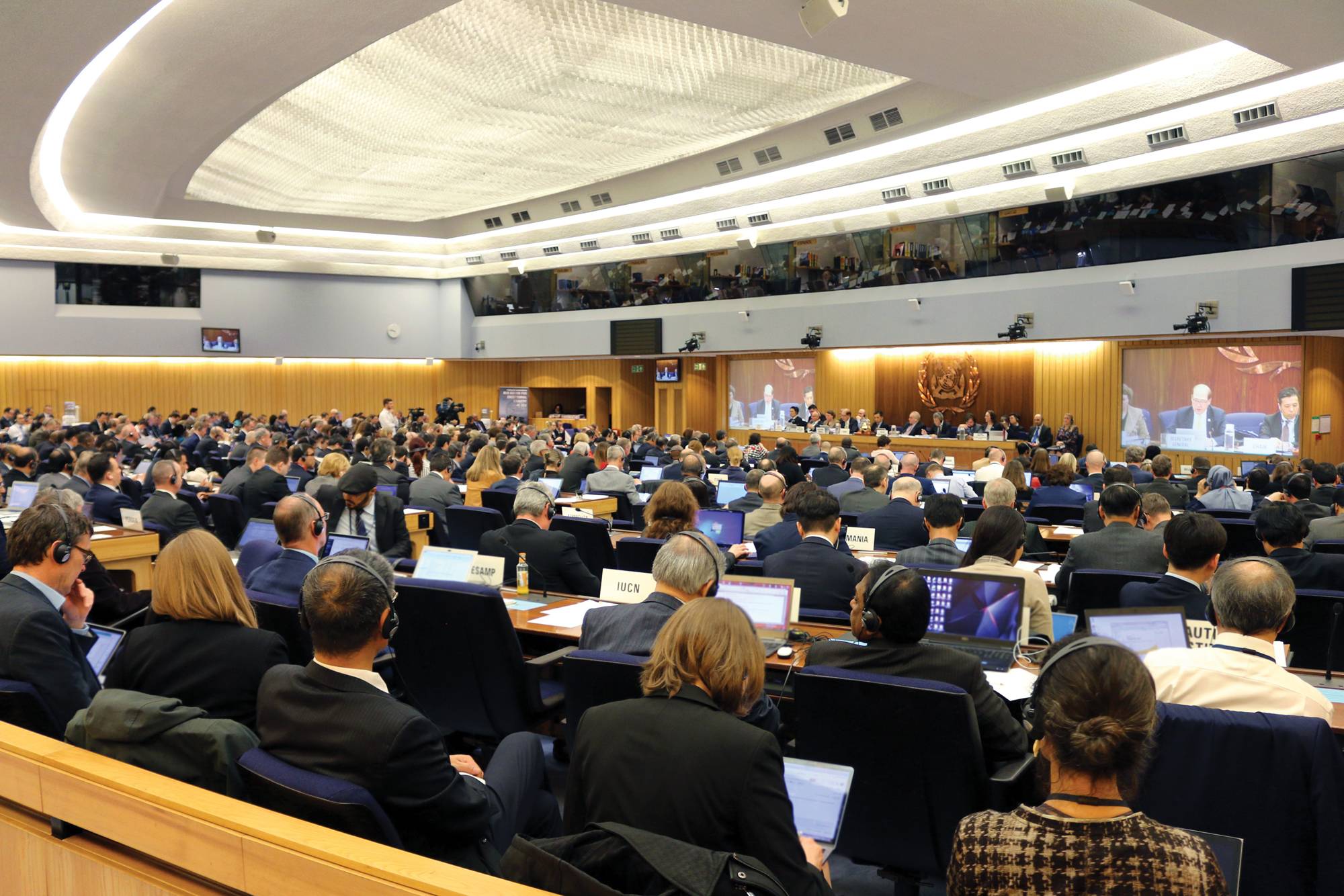
  • IMO agreed in mid-April to cut carbon emissions from ships by at least 50% by 2050 as compared to 2008 levels. The adoption of an initial strategy on the reduction of GHG emissions from ships was one of the key items on the agenda of IMO’s Marine Environment Protection Committee (MEPC 72). Photo: IMOIMO agreed in mid-April to cut carbon emissions from ships by at least 50% by 2050 as compared to 2008 levels. The adoption of an initial strategy on the reduction of GHG emissions from ships was one of the key items on the agenda of IMO’s Marine Environment Protection Committee (MEPC 72). Photo: IMO
As the International Maritime Organization (IMO) celebrates its 70th anniversary, Kitack Lim, Secretary-General, sits in his London office with a sense of satisfaction that in his two plus years at the helm of IMO tremendous strides have been made toward significant greenhouse gas emission reductions, punctuated by the recent MEPC meeting where the target was set for a 50% reduction in CO2 emissions by 2050. But the Secretary- General’s sense of satisfaction is tempered with the fact that his job has just begun and his plate is full. Decarbonization, Digitalization, Autonomous Ships, Ballast Water Management, Cyber Security, Piracy and Protecting the Seafarer … the list is long of agenda-topping items that the IMO must simultaneously digest in this historic and fast-changing period.

When Kitack Lim took the top spot at IMO as Secretary-General in 2016, he suffered no delusion regarding the job ahead. The collective global maritime industry was entering a transcendent period, still emerging from the global economic trauma of 2008 and diving headlong into an era of disruption, an era highlighted with social and financial pressures on maritime to reduce emissions, to digitalize operations to keep pace with a whirlwind of tech and logistic challenges, all the while maintaining safe and secure operations for the crews and the environment. In prioritizing his responsibilities, Lim is today laser focused on IMO’s top three challenges: Climate change, Digitalization in the shipping industry (including autonomous ships), and Seafarer issues.
Global Climate Change
“Climate change is the biggest issue facing the maritime industry,” Lim said, impacting everything from ship design to engine and fuel choice, as well as operational procedure. “Climate change has a huge impact on the ship itself, the ship management and the shipping industry as a whole.”
In Lim’s first 27 months at the helm of the world’s leading rule maker for maritime, climate change issues have been aggressively discussed and moved forward unlike any other period in maritime history. Most recently, in mid-April, the initial strategy on the reduction of greenhouse gas (GHG) emissions from ships was adopted as a key item on the agenda of the IMO’s Marine Environment Protection Committee (MEPC 72) (see related story on page 40).
While the new accord is historic, on the more immediate horizon shipping companies must devise a strategy to deal with the strict new fuel rules set to enter force in 2020. While there has been much debate regarding the rapidity of the conversion to low sulfur fuel, namely the concerns surrounding the availability of sufficient fuel supply, Lim said there will be no delay in enacting the new rule. “The entry into force of the 0.50% sulfur in fuel oil limit cannot and will not be delayed,” he said. “Legally, there is no mechanism to amend the date and for any revised date to enter into force before January 1, 2020. However, IMO Member States will work in the relevant IMO technical bodies to address any issues that might arise with regards to ensuring consistent implementation.”
Cutting to the heart of the matter, fuel availability, Lim said “a comprehensive study on availability of fuel oil was carried out by experts and overseen by a steering committee and it concluded there will be enough compliant fuel oil,” and the study was taken into account when IMO member states made the decision to go with the 2020 date for implementation.
Digitalization & Autonomous Shipping
“It has been said that the next 10 or 20 years will see as much change in shipping as we have experienced in the past 100 years,” said Lim, succinctly summarizing the speed of technology across the maritime sector. “The integration of new and advancing technologies in the regulatory framework is a key strategic direction for IMO,” Lim said, “but we need to balance the benefits derived from new and advancing technologies against safety and security concerns, the impact on the environment and on international trade facilitation, the potential costs to the industry, and their impact on personnel, both on board and ashore.”
The driver in the new maritime economy is data and digitalization; Artificial intelligence, automation, e-navigation and autonomous shipping are all being driven by digitization, which in tandem are inextricably linked to environmental issues, such as ship design, and fuel and energy efficiency.
“This will lead to new generations of ships that bring step change improvements in all the areas that IMO regulates,” said Lim. “E-navigation and cyber security are already on IMO’s agenda. We will be looking at the subject of autonomous vessels in the coming months, starting with a comprehensive scoping exercise to review current regulations and how they may or may not apply to autonomous vessels.”
Autonomous ships, in particular, are gaining wide traction as several large corporations and organizations are not only studying autonomous ship, but launching prototypes and planning for real-world production. While the technology side of the autonomous vessel equation is developing rapidly, there remain many key issues to resolve, from the regulatory to finance and insurance, to name a few.  “The value that IMO provides is as a forum gathering together all those with an interest in shipping,” said Lim. “IMO’s Maritime Safety Committee (MSC) will this year begin a scoping exercise to determine how the safe, secure and environmentally sound operation of maritime autonomous surface ships may be introduced in IMO instruments. The strong interest in this topic was evident on the lengthy discussion that it attracted, not only during the MSC meeting last year, but the extensive media coverage since.”
Lim said the scoping exercise is a starting point and is expected to touch on an extensive range of issues, including technical issues, the human element, safety, security, legal liability, interactions with ports, pilotage, responses to incidents and protection of the marine environment. In addition, the scoping exercise could include identification of whether IMO regulations preclude the operations of these type of vessels or have no applicability, and what actions would need to be taken in order to ensure that the construction and operation of maritime autonomous surface ships are carried out safely, securely, and in an environmentally sound manner. IMO’s Legal Committee is also expected to include an item on its agenda, to undertake in parallel a regulatory scoping exercise and gap analysis of conventions emanating from the Legal Committee – such as those covering liability and compensation – with respect to autonomous ships.
Disruption
Hand-in-hand with digitalization comes disruption, as many non-traditional maritime companies eye the industry for opportunities. “Digital disruption will arrive in the shipping world very soon; and, when it does, IMO must be ready,” said Lim. “This means the rules for shipping must be based firmly around goals and functions rather than prescriptive solutions. This is the only way to make sure that measures adopted by IMO are not rendered obsolete by the time-lag between adoption and entry-into-force.”
“Artificial Intelligence capabilities are accelerating rapidly and will have an important impact not only on our work but society as a whole, and are already incorporated in many products – for example, Amazon’s shopping recommendations and Tesla’s self-driving cars,” said Lim. “Advancements in technologies such as robotics, automation and big data will usher structural changes and fully autonomous ports and unmanned ships are already a reality, albeit in a very small scale. IMO will continue to remain relevant and in touch with these developments. We are addressing autonomous vessels and the readiness of our regulatory framework.”
Another key area for digital technology is e-navigation, harmonizing marine navigation systems and supporting shore services with the ultimate goal of improving safety of navigation and reducing errors by equipping users, on ships and ashore, with modern, proven tools, optimized for good decision-making.  “There are many ways in which e-navigation can offer enhanced safety, better environmental protection, improved traffic management and commercial benefits,” said Lim. “There is no doubt that both the technological advances and the advantages they can bring are continuing to evolve.”
The Seafarer
While Kitack Lim’s plate is full with a number of watershed issues surrounding ship technology, the Secretary General is clearly passionate about seafarer issues, particularly ensuring that seafarer social and human rights are a top priority. “My ambition is to create a psychological link between the IMO and the seafarer,” he said. This ambition is rooted in his view that there is a changing paradigm in the shipping industry regarding the relationship between the seafarer and the company where they work. “In the past, the ship operating company made a direct contract with the seafarer, creating a link between the seafarer and the company,” Lim said. “The seafarer would think, this is my company,” and that bond was instrumental in creating a greater sense of community, connection and security for the seafarer.
But today things have completely changed, with the emergence of middlemen, namely ship management companies, international registries and even classification societies. These three entities, particularly the ship management company, have largely been delegated direct day-to-day roles that directly impact the seafarer, and lost is that psychological connection between the seafarer and the shipping company.
“We need to look harder at the role and responsibility of the ship management company,” said Lim, noting that it is not well known or understood publicly, highlighted particularly when accidents occur. “We need to reassess the impact of these three players in terms of IMO (rules) implementations.”
As should be expected from the leader of the lead rule-making body for international shipping, Lim believes in collaboration and inclusion, with clear communication. “We need to talk, all of the relevant players, from the IMO to the ILO to NGOs, we need to communicate” on issues and look after the seafarer, a critical piece he believes in not only caring for the seafarers of today, but critical too in attracting the younger generation to a life at sea.
“I am concerned about their morale,” particularly in cases where an accident occurs and they see a captain arrested. Lim concludes that it comes down to basic human rights, and in some regards, due to the changing paradigm, “mariners do not feel protected.”
The Secretary-General is also concerned about abandonment of seafarers which unfortunately has become a more common occurrence.  Indeed, in 2017, reported abandonment cases (55) were nearly triple that in any single recent year over the past five years. While the reasons for abandonment vary, the impacts are devastating on seafarers and their families – loss of wages, inadequate food and medical attention, and an inability to be repatriated and return home to loved ones. The IMO, the International Labour Organization (ILO), the ITF and the industry have all been working to help eradicate this problem, but statistics show that it persists.
Hand-in-hand with seafarer issues is training and education, particularly as approximately 80% of ship accidents are attributable to human error. “Today’s world depends on a safe, secure and efficient shipping industry; and shipping depends on an adequate supply of (well-trained and cared-for) seafarers,” said Lim. “Seafaring is a job that demands highly trained and qualified personnel, as ships are more complex and sophisticated than ever before. Environmental pressures, the need to operate at optimum efficiency in difficult economic times and the quest for ever higher levels of safety are all factors which raise the bar with respect to the skill and competence levels of seagoing personnel.”
As the level of technology on ships evolves rapidly, Lim contends that standards of crewing and operation must keep pace, as the modern ship’s officer needs to be far more than a navigator or an engineer, and the modern ship’s crew needs to be far more than a mere worker.
“A modern ship is a highly technical workplace operating on the tight margins of commercial viability – which means that, as well as a highly-advanced technical skillset, shipboard staff now also need to have management and communication skills, IT knowledge, and be able to handle budgets and so on,” Lim said. “This places special demands on maritime education and training. Maritime education and training must be of high and consistent quality, throughout the world. Maritime education and training also needs to be skills-based, competence-based and to utilize the latest technology – simulators reflecting modern ships and up-to-date bridge layouts, for example.”
Cyber Security: With Digitalization Promise Comes Peril
As maritime enters the digitalization era and the prospect of safer, more efficient operations, caution must be taken to ensure that Cyber Security measures are in place to help avoid a catastrophic collapse of commerce at sea. “A ship’s onboard information technology and operational technology systems can be hacked just as easily as systems ashore,” said Kitack Lim, Secretary-General, IMO. “Such security breaches have the potential to do considerable harm to the safety and security of ships, ports, marine facilities and other elements of the maritime transportation system.” To lead the way, IMO has taken the initiative to raise awareness across the industry on how to tackle risks by promoting a maritime cyber risk management approach. In addition, it  has developed and agreed guidance on cyber security, issued jointly by the Maritime Safety and Facilitation Committees (MSC-FAL.1/Circ.3 Guidelines on maritime cyber risk management). As digitalization and cyber security strategies evolve rapidly, it is important to note that the guidelines are a living document rather than a static mandate, updated and evolved as need and experience require. “IMO has a remit and responsibility to identify which aspects of cyber risk management  are uniquely maritime and work on these while at same time promulgating information that is of more general application, for example on supply chain security and best practices for cyber risk management in general,” said Lim.
As published in the May 2018 edition of Maritime Reporter & Engineering News: https://magazines.marinelink.com/nwm/MaritimeReporter/201805/

Comments are closed.

Découvrez les avantages de MadCasino

Dans le monde des casinos en ligne, MadCasino se distingue par ses offres attrayantes et ses services de qualité. Que vous soyez un joueur débutant ou un parieur aguerri, vous trouverez ici une variété de jeux qui sauront satisfaire toutes vos envies. Les machines à sous, les jeux de table et les options de paris en direct sont tous disponibles pour vous offrir une expérience de jeu inégalée. De plus, le casino propose régulièrement des bonus qui permettent d'augmenter vos chances de gagner, vous offrant ainsi une excellente opportunité de maximiser vos gains.

En matière de sécurité, MadCasino est un nom de confiance. Il est entièrement licencié et régulé, ce qui garantit un environnement de jeu sûr et équitable. Les joueurs peuvent se concentrer sur leur expérience de jeu sans se soucier des problèmes de sécurité. Les transactions financières sont également sécurisées grâce à des technologies de pointe.

Les jeux proposés par MadCasino sont issus des développeurs les plus réputés de l'industrie, vous assurant des graphismes époustouflants et des mécaniques de jeu innovantes. Les joueurs peuvent également profiter d'une expérience de jeu en direct qui simule l'atmosphère d'un casino terrestre, tout en restant dans le confort de leur maison.

Enfin, la plateforme de MadCasino est optimisée pour les appareils mobiles, permettant aux joueurs de parier à tout moment et de n'importe où. Que vous soyez sur votre smartphone ou votre tablette, l'accès à vos jeux préférés n'a jamais été aussi simple. Ne manquez pas l'opportunité de découvrir ce casino exceptionnel.

Les offres de Cresus Casino

Cresus Casino est un autre acteur majeur dans le domaine des jeux en ligne, offrant des promotions généreuses et une vaste sélection de jeux. Les joueurs peuvent profiter d'une expérience de jeu enrichissante grâce aux nombreux bonus disponibles, qui sont conçus pour attirer tant les nouveaux utilisateurs que les joueurs réguliers. Ces avantages permettent non seulement de prolonger votre temps de jeu, mais aussi d'augmenter vos chances de gains conséquents.

Le casino se distingue également par sa ludothèque impressionnante, comprenant une sélection variée de machines à sous, de jeux de table et de jeux en direct. Les clients peuvent choisir parmi des titres populaires et appréciés, ainsi que des nouveautés qui enrichissent constamment l'offre. L'interface utilisateur est conviviale, rendant la navigation sur la plateforme fluide et agréable.

En termes de sécurité, Cresus Casino assure à ses joueurs un environnement de jeu fiable. La plateforme utilise des protocoles de sécurité avancés pour protéger les données personnelles et financières des utilisateurs. Cela permet aux joueurs de se sentir en sécurité tout en jouant à leurs jeux préférés.

Avec un service client réactif et professionnel, Cresus Casino s'assure que toutes vos questions et préoccupations sont traitées rapidement. Que ce soit pour des questions concernant les bonus, les retraits ou les jeux, vous bénéficierez d'une assistance rapide et efficace.

Explorez Nine Casino et ses avantages

Dans l'univers des casinos en ligne, Nine Casino a su se faire une place de choix grâce à son approche innovante et à ses nombreux avantages pour les joueurs. Les utilisateurs peuvent s'attendre à une expérience de jeu enrichissante, avec des bonus attractifs qui sont régulièrement mis à jour. Ces offres sont une excellente façon de découvrir de nouveaux jeux tout en maximisant votre potentiel de gain.

La plateforme de Nine Casino est riche en options de jeux, allant des machines à sous aux jeux de table, en passant par le live casino. Chaque jeu est conçu pour offrir une expérience immersive grâce à des graphismes de haute qualité et des fonctionnalités innovantes. Les parieurs peuvent profiter de sessions de jeu captivantes, comme s'ils étaient dans un véritable casino.

La sécurité est une priorité pour Nine Casino, qui utilise des technologies de cryptage avancées pour protéger les informations de ses joueurs. Cela garantit un environnement de jeu sûr et fiable, permettant aux utilisateurs de se concentrer sur ce qu'ils aiment le plus : jouer.

Enfin, le service clientèle fourni par Nine Casino est exceptionnel, avec des agents disponibles pour répondre à toutes vos questions et résoudre vos problèmes. Vous pourrez ainsi jouer en toute tranquillité, sachant que votre satisfaction est au cœur de leurs préoccupations.

Profitez de l'expérience Lucky31

Lucky31 est un casino en ligne qui se distingue par son approche orientée vers le joueur, offrant une multitude d'options de jeux et des bonus généreux. Que vous soyez amateur de machines à sous ou passionné de jeux de table, vous trouverez une large sélection pour satisfaire toutes vos envies de jeu. Les promotions fréquentes permettent aux joueurs de prolonger leur expérience tout en augmentant leurs chances de gains.

La convivialité de la plateforme de Lucky31 est l'un de ses plus grands atouts. Les joueurs peuvent naviguer facilement entre les différents jeux, et l'interface est conçue pour être intuitive, quel que soit le niveau d'expérience de l'utilisateur. De plus, le casino est entièrement optimisé pour les appareils mobiles, ce qui permet de parier où que vous soyez.

En matière de sécurité, Lucky31 prend les préoccupations des joueurs très au sérieux. Le casino est agréé et régulé, garantissant un environnement de jeu équitable et sécurisé. Les joueurs peuvent ainsi se concentrer sur leur expérience de jeu sans se soucier des risques liés à la sécurité.

Pour ceux qui recherchent un support client efficace, Lucky31 offre un service réactif et professionnel. Que ce soit pour des questions sur les bonus, les jeux ou les paiements, vous aurez accès à une assistance de qualité, vous garantissant une expérience de jeu fluide et agréable.